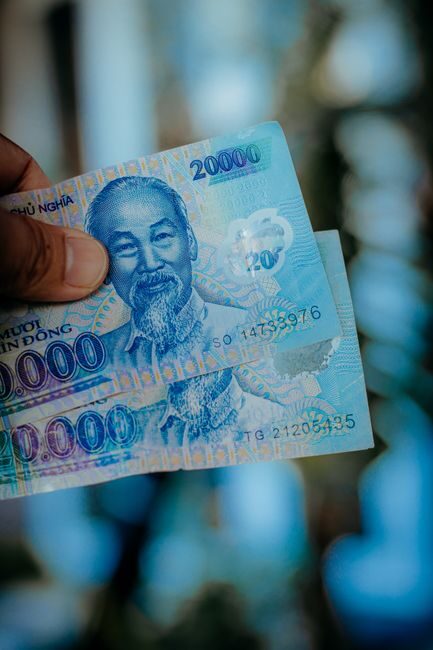
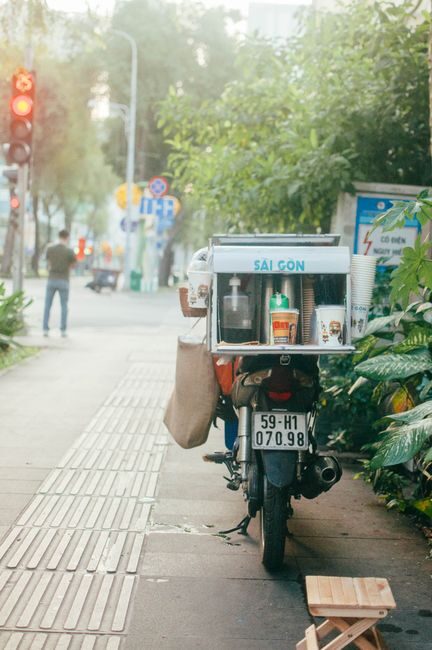
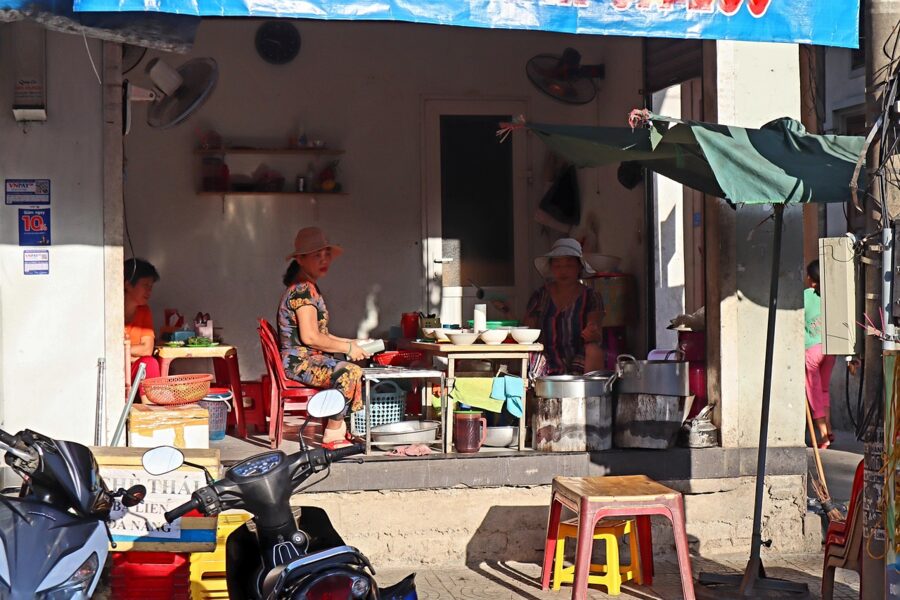
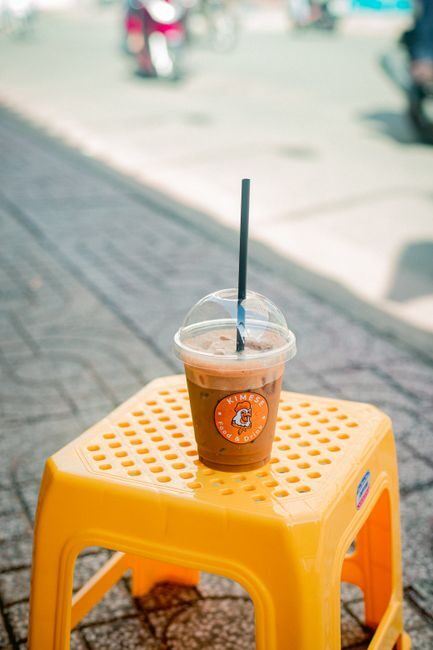
Hand a street coffee seller a blue polymer note at seven in the morning, for an iced coffee that costs less than a dollar, and watch her face. If the note is a 20,000₫, she takes it and gives you change from a biscuit tin. If it is a 500,000₫, the largest note in Vietnam and worth twenty-five times as much, she either sighs and goes down the street to find change or, now and then, gives you change for a 20,000₫ and says nothing.
The đồng is the only currency you can legally spend in Vietnam, and every price runs in thousands. A neighborhood bánh mì costs about 23,000₫, a museum ticket 60,000₫, a mid-range hotel room upward of a million. On 21 November 2026 Vietcombank was buying US dollars in cash at 25,570₫ and selling them at 25,980₫, so a workable rule is 25,600₫ to the dollar: 100,000₫ is about US$3.90, and a million is about US$39.
Saigon pays in three ways at once now. Cash still runs the pavement, a QR code taped to a pole runs the noodle stall next to it, and the malls take a tap of a foreign card or a phone. Knowing which one each place expects, and what each costs you, is most of the work.
On this page
The notes in your wallet
Vietnam has two families of banknotes in use. The six higher values, from 10,000₫ to 500,000₫, are printed on polymer, a smooth plastic film the State Bank of Vietnam introduced between December 2003 and 2006. The small values, from 100₫ to 5,000₫, are on older cotton-based paper and feel soft and limp by comparison.
| Note | Color | On the back | Material |
|---|---|---|---|
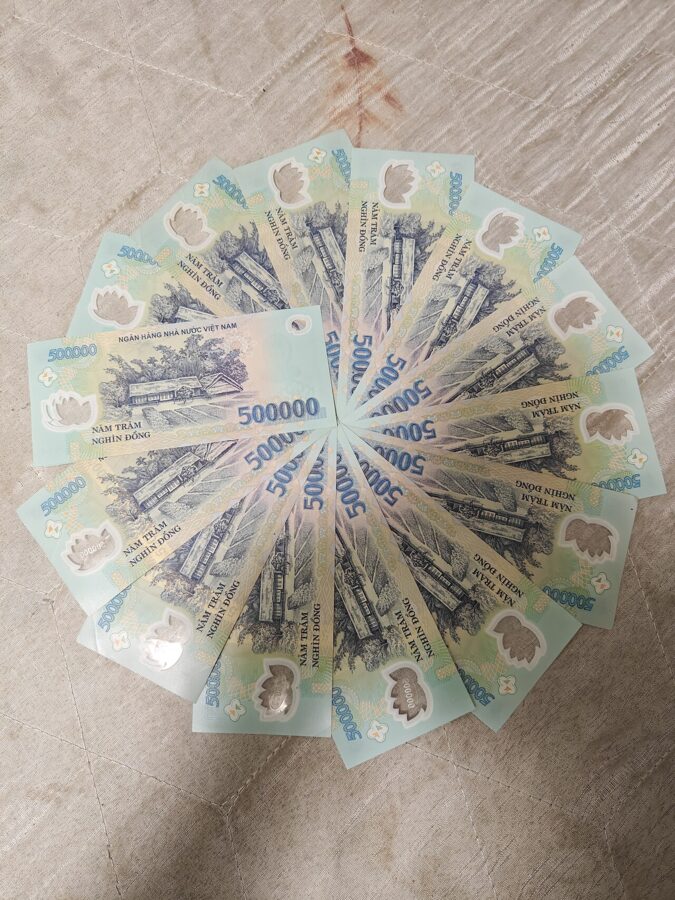
| 500,000₫ (about US$20) | Cyan-blue | Hồ Chí Minh’s family home, Làng Sen, Kim Liên, Nghệ An | Polymer, 2003 |
| 200,000₫ (about US$7.80) | Red-brown | Đỉnh Hương islet, Hạ Long Bay | Polymer, 2006 |
| 100,000₫ (about US$3.90) | Green | Khuê Văn Các, Temple of Literature, Hanoi | Polymer, 2004 |
| 50,000₫ (about US$2) | Pink to purple | Nghênh Lương Đình and Phu Văn Lâu, Huế | Polymer, 2003 |
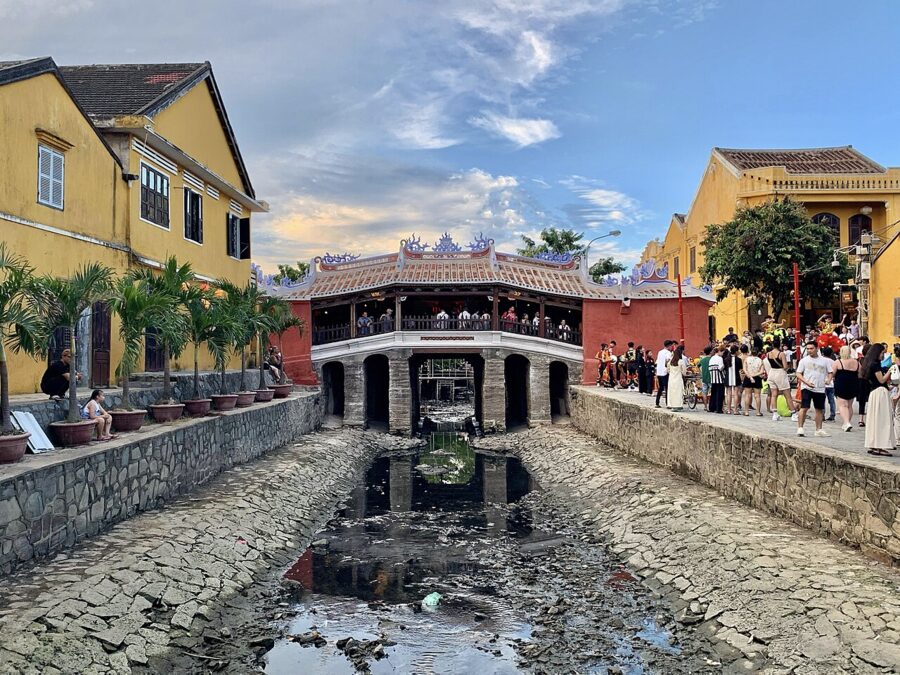
| 20,000₫ (about US$0.80) | Blue | The Japanese Covered Bridge (Chùa Cầu), Hội An | Polymer, 2006 |
| 10,000₫ (about US$0.40) | Brown on yellow | Bạch Hổ offshore oil field | Polymer, 2006 |
| 5,000₫, 2,000₫, 1,000₫ | Blue-green, brown, pale blue | Trị An dam; a textile mill in Nam Định; elephants hauling logs | Cotton paper |
| 500₫, 200₫, 100₫ | Red, red-brown, dark brown | Hải Phòng port; a rice harvest; Phổ Minh pagoda | Cotton paper, rarely seen |
The colors are the usual descriptions, and in a dim alley they blur. You do not need to study the security features to buy a coffee, but you do need to read the number on every note you hand over.

Twenty thousand or five hundred thousand?
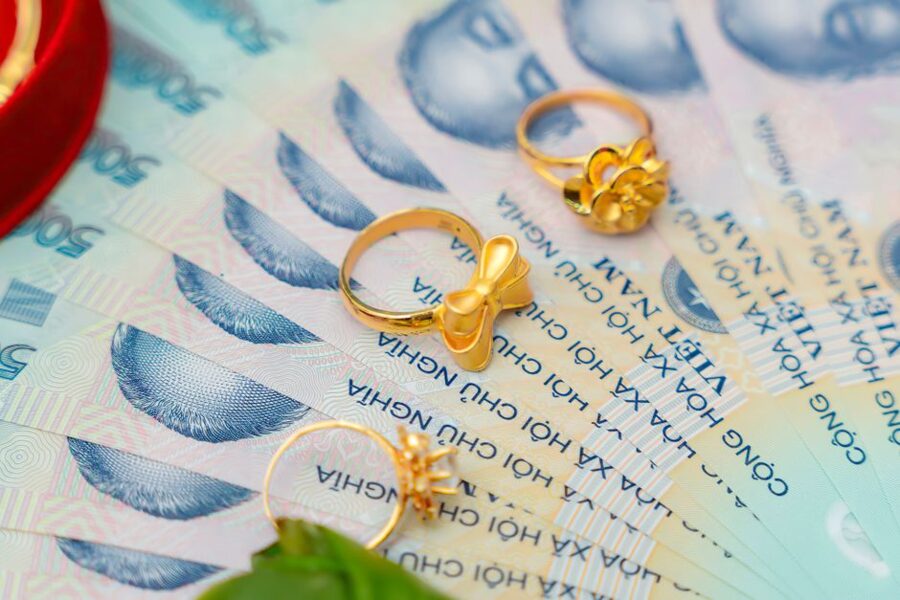
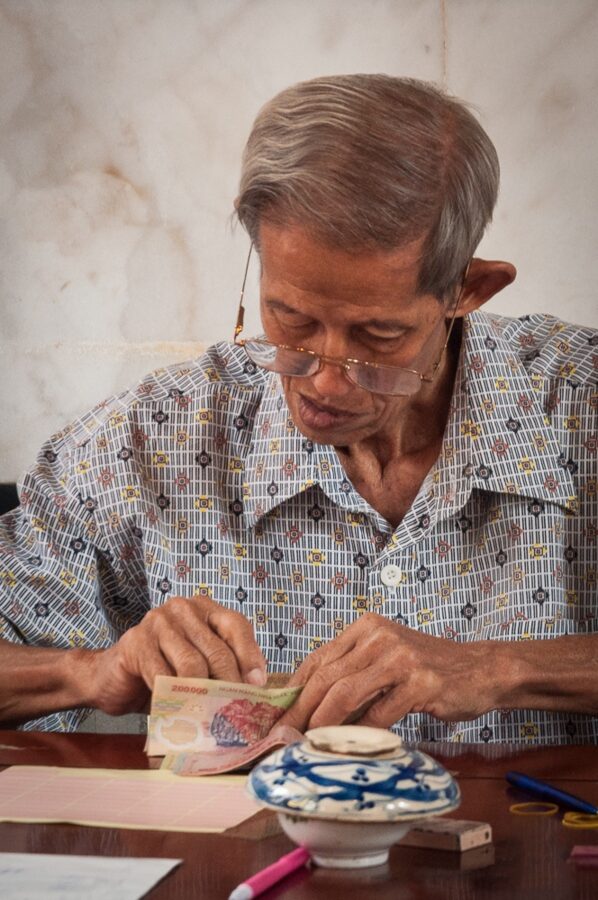
The two notes that cause trouble are the 20,000₫ and the 500,000₫. Both are blue, both are polymer, both show the same portrait on the front, and the zeros run together when you pull a wad from your pocket. One is worth about 80 US cents and the other about US$20.
Turn them over. The 20,000₫ shows a little roofed bridge over water, the Japanese Covered Bridge in Hội An; the 500,000₫ shows a low thatched house among trees. Read the number in the corner rather than trusting the color, and fold your large notes away from your small ones.

The same mistake can run the other way, to the seller’s advantage. A driver or a vendor who is handed a 500,000₫ and “sees” a 20,000₫ can give you change for the smaller note. Say the amount out loud as you hand it over (“năm trăm”, five hundred) and count your change before you walk away.
A second, less common pair is the 10,000₫ and the 200,000₫, both in browns and reds. A tired evening and a dark street are when it happens.
Coins and the small paper notes
The State Bank issued coins from 200₫ to 5,000₫ in December 2003, but shoppers never took to them, and the bank stopped putting them into circulation in April 2011. They are still legal tender and souvenir stalls sell sets of them, but you will not be handed one in change.
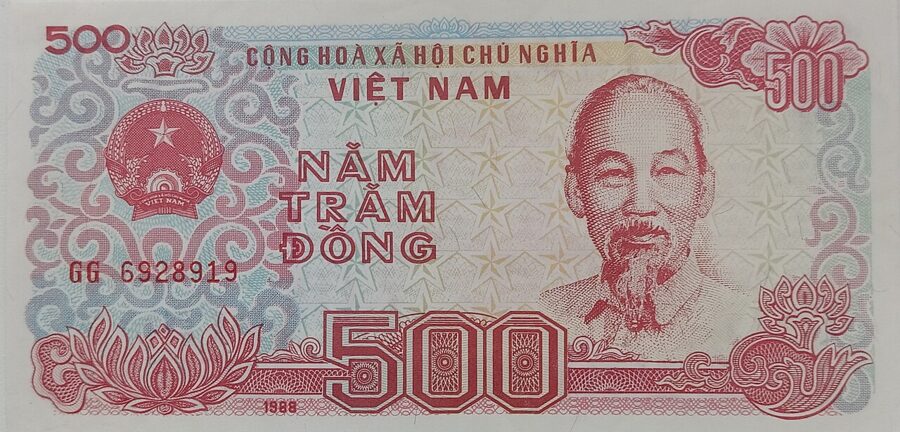
Small paper notes, the 1,000₫ to 5,000₫, are where shops round off. Supermarkets and convenience chains usually give exact change to the nearest thousand; a market seller is more likely to round to the nearest 5,000₫ or wave the difference away. Keep a few for parking, public toilets and the donation box at a pagoda.
Dropping the zeros
Nobody in Saigon says “twenty thousand đồng” in full. The thousands are understood: “hai mươi” (twenty) means 20,000₫ at a fruit stall, “năm chục” (five tens) means 50,000₫, and “một trăm” (one hundred) means 100,000₫. The word for thousand is “nghìn” in the north and “ngàn” in the south, and southerners drop it most of the time.
Written prices do the same. A menu chalked up as “45” means 45,000₫, a sign reading “35k” means 35,000₫, and a printed bill uses a dot where English uses a comma: “1.250.000đ” is one and a quarter million. You may also hear slang in the south, “xị” for a hundred thousand and “củ” (a tuber) for a million.
If you are unsure, type the price into your phone’s calculator and turn the screen to the seller. It is the most common bit of sign language in the city, and it takes the zeros out of the conversation.
A Saigon story in banknotes
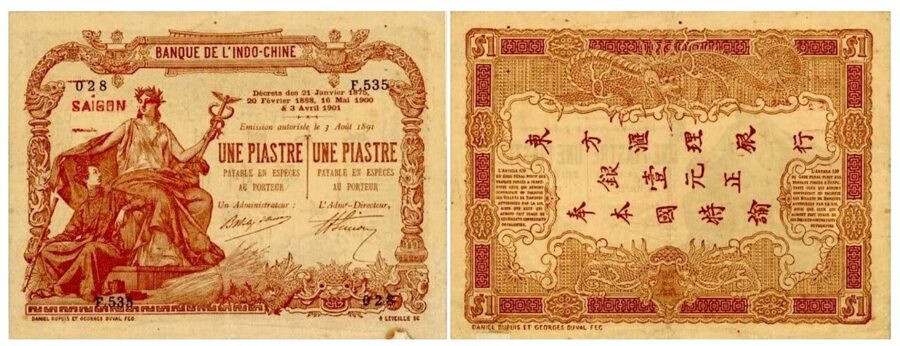
Vietnam’s paper money began in Saigon. The Banque de l’Indochine was founded in Paris in January 1875, and its first notes, printed by the Bank of France, landed in Saigon in January 1876. By 1891 the bank was printing its own piastre notes in the city, in French on one side and Chinese on the other.
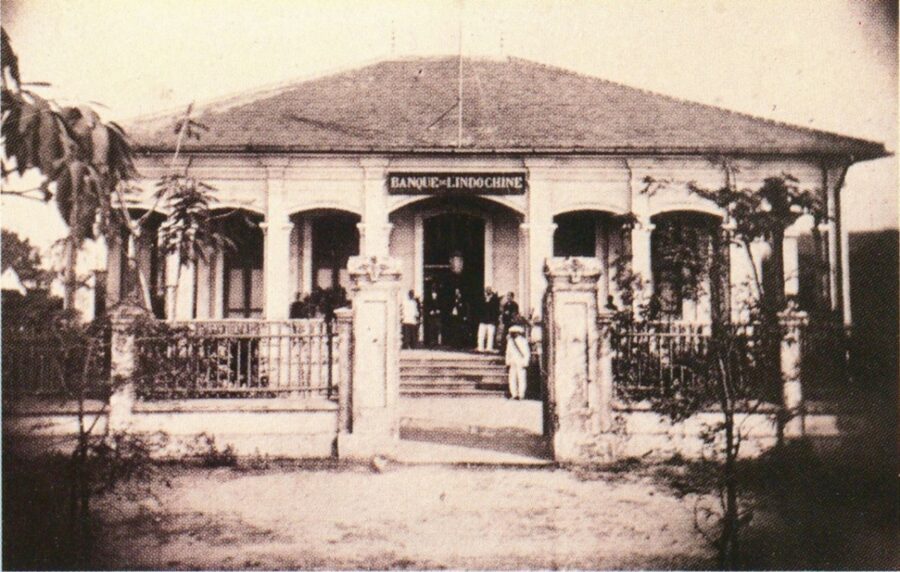
The bank’s first Saigon office was a modest colonial house. It was pulled down and replaced, on the same plot on the quay the French called the Quai de Belgique, by the building that still stands there: a neoclassical block by the architect Félix Dumail, with Cham and Khmer motifs outside and an Art Deco hall within, finished late in 1930 and inaugurated in 1931.
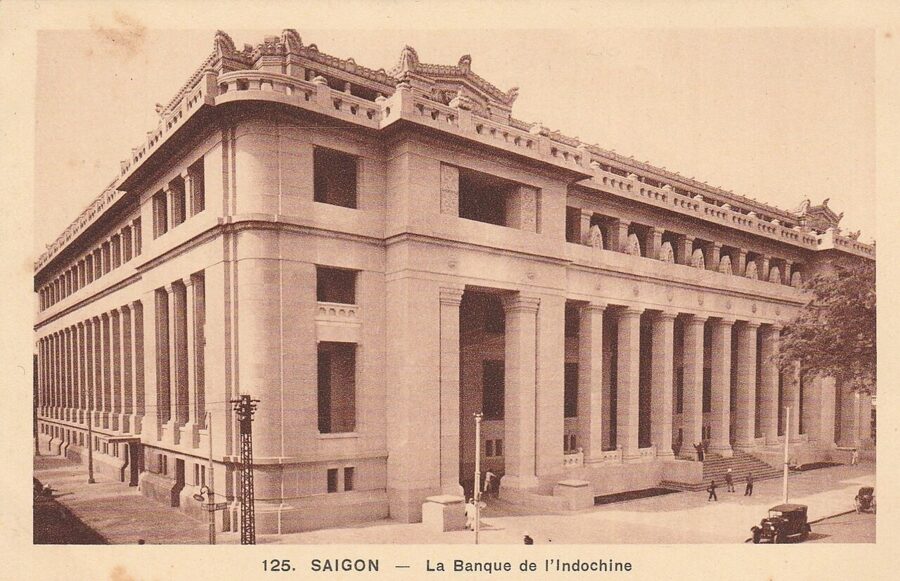
In 1955 the building passed to the National Bank of Vietnam, the central bank of the Republic of Vietnam, which issued the southern đồng. The bank put its own headquarters on its money: notes of the 1958 and 1969 series showed the building. Other southern notes carried national heroes and scenes of farming and fishing.
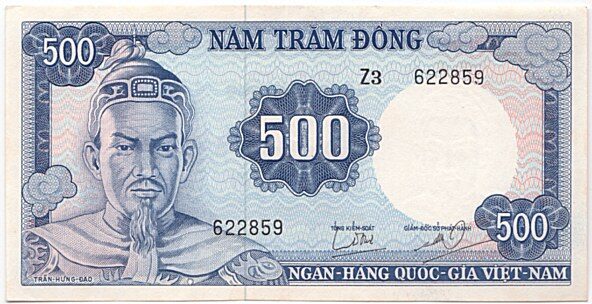
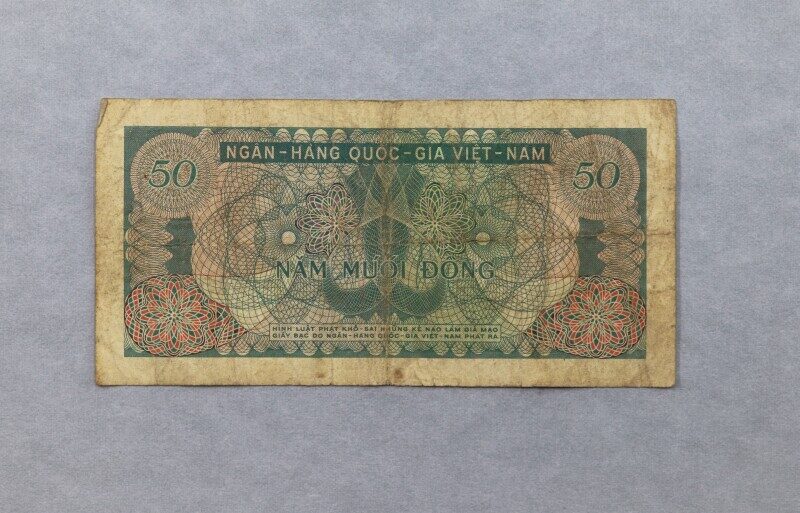
After April 1975 the southern đồng stayed in use until 22 September of that year, when it was exchanged in the south at 500 old đồng to one “liberation” đồng. The currencies of north and south were unified on 3 May 1978, and on 14 September 1985 the đồng was revalued again, ten old to one new. The inflation that followed peaked at around 700 percent in 1986, which is the long story behind all the zeros in your wallet.
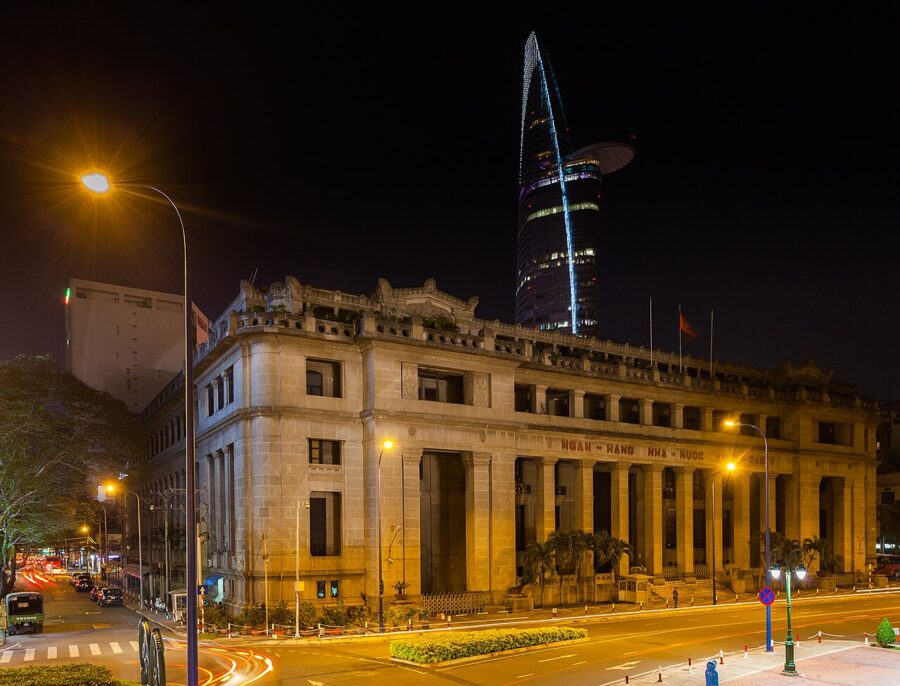
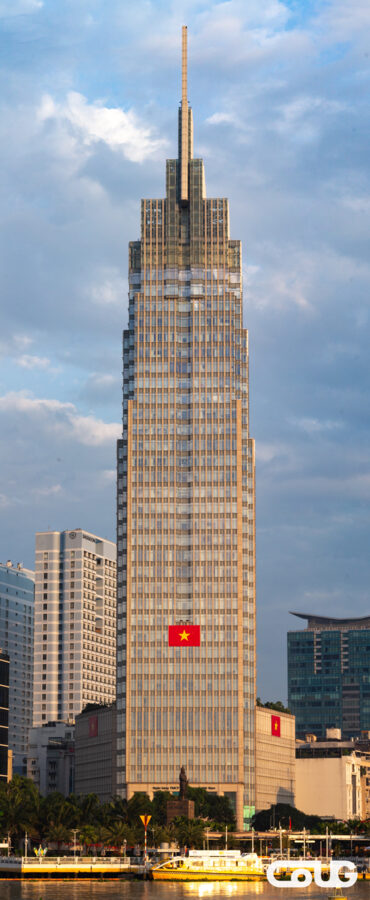
The State Bank of Vietnam took over the waterfront building in July 1976, and it is still the bank’s Ho Chi Minh City branch, listed as a national relic since 2016. It is a working office rather than a museum, so the view is from the pavement along Võ Văn Kiệt boulevard in the old District 1, ideally at dusk when the facade is lit.

Cash, cards and QR codes
Cash still works everywhere, and in some places it is the only thing that works: street stalls, small cafés, motorbike parking, market stalls, pagoda donation boxes and most of the countryside on a day trip. Cards work in hotels, malls, supermarkets, international chains and the bigger restaurants. QR codes work almost everywhere in between, for anyone with a Vietnamese bank account, which is the catch.
Where your card works
Visa and Mastercard are accepted wherever there is a card terminal, and terminals keep spreading: most convenience stores and coffee chains have one, and the ticket machines on Metro Line 1 take bank cards. Many terminals read contactless cards, so a card loaded into Apple Pay or Google Pay works wherever the reader shows the contactless symbol.
Two costs hide in a card payment. Some smaller hotels, tour agencies and shops add a surcharge for cards, commonly 2 to 3 percent, and mention it only when you hand the card over; ask first. Then there is dynamic currency conversion: a terminal or a receptionist may offer to charge you in dollars, euros or pounds at a rate they set. Always choose đồng.
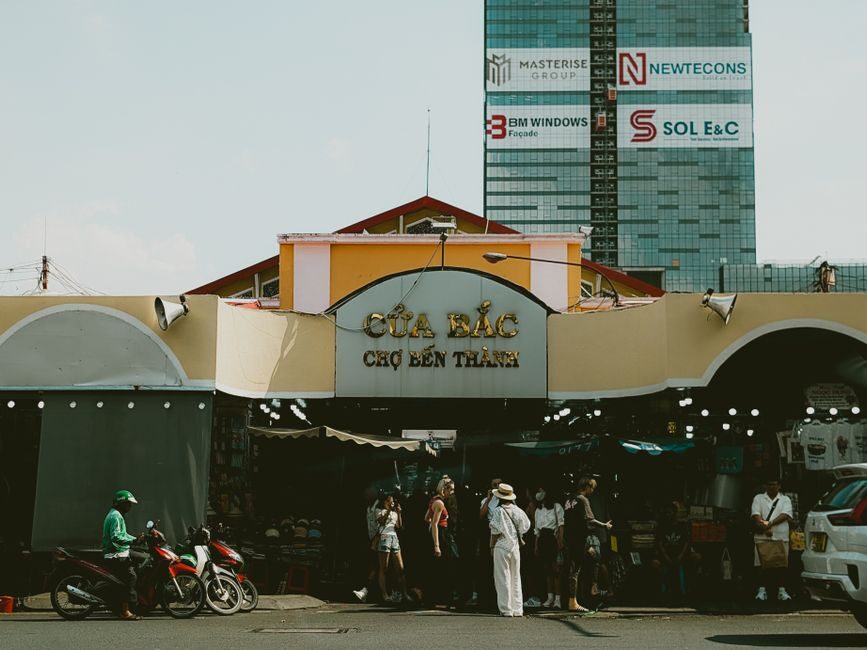
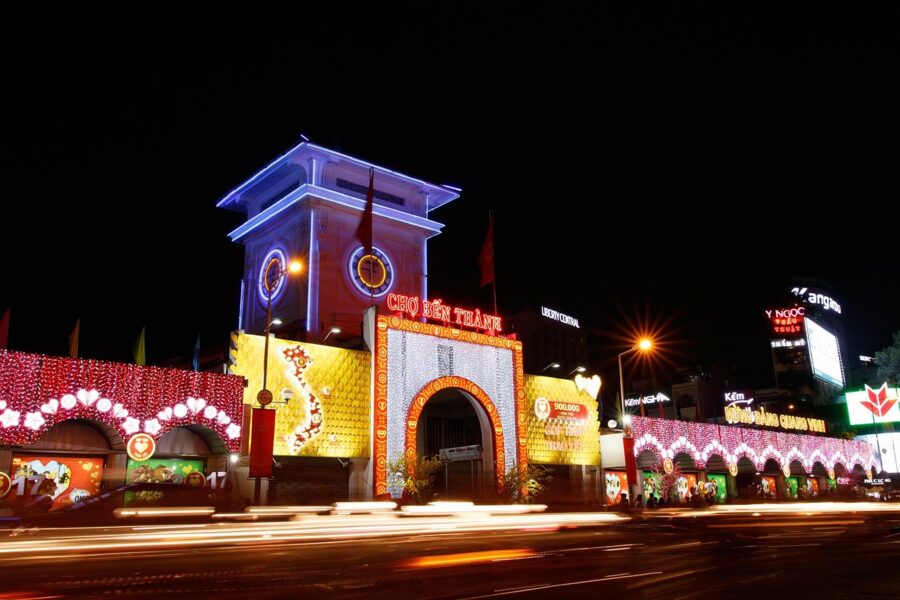
Even at Bến Thành Market (Chợ Bến Thành), a stall that takes a QR code will usually ask a foreigner for cash, because the code is for local bank apps. Count on paying cash at most market stalls, and on the price being open to discussion.
VietQR, and the foreign apps that can scan it
The square QR code taped to a stall’s pole or printed on a bill is VietQR, the national standard run by the payment network NAPAS. A Vietnamese customer scans it with any bank app and the money arrives instantly. For a visitor from the United States, Britain, Europe or Australia it is mostly useless, because a home banking app cannot pay it.
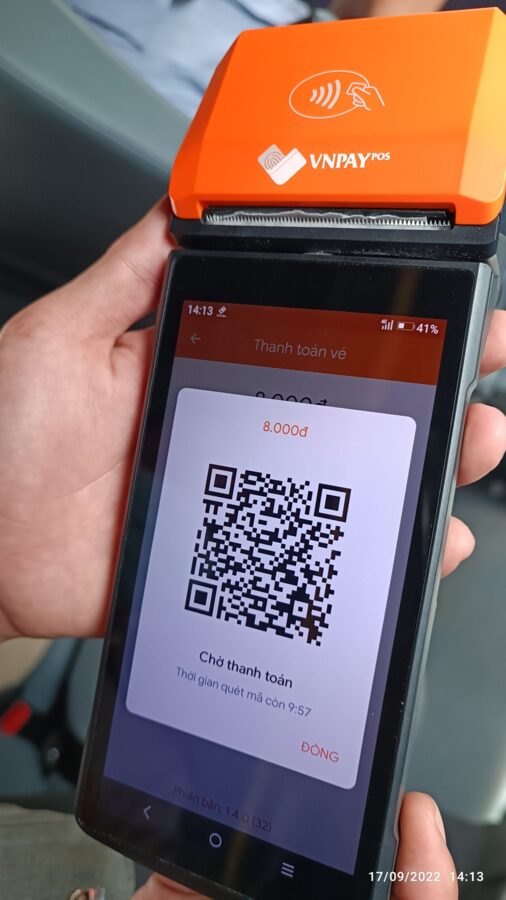
The exceptions are growing. NAPAS has linked QR payments both ways with Thailand, Laos, Cambodia and Singapore, where wallets such as LiquidPay can scan Vietnamese codes. In April 2026 it switched on Alipay for Chinese visitors, working with Vietcombank, and a link to the Korean GLN network that it says reaches more than 115 million Korean accounts; WeChat Pay followed through BVBank and BIDV. If your phone carries one of these, look for the merchant’s code and try it.
Local e-wallets such as MoMo and ZaloPay are everywhere, but they are built around a Vietnamese phone number, a local bank account and identity checks, and most short-stay visitors do without them. Expats with a residence card usually open a local bank account, which opens up VietQR at a stroke.
Ride-hailing
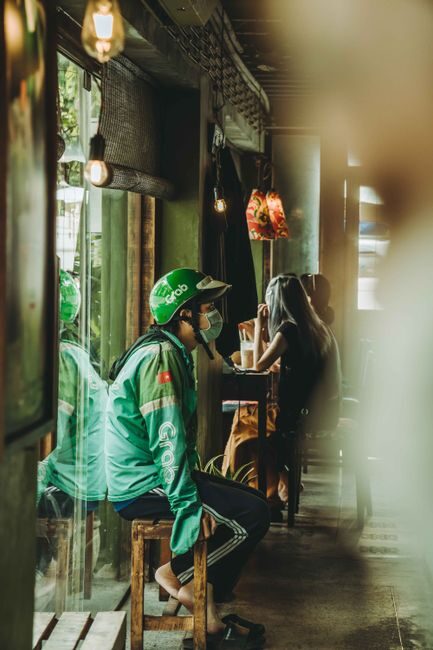
Grab, the main ride-hailing app, takes a foreign Visa, Mastercard, JCB or Amex card linked in the app, and works with a foreign phone number. You can cross the city by car or motorbike taxi without touching cash and see the price before you book. The electric-taxi company Xanh SM’s app has been reported to accept only Vietnamese cards, so carry cash if you flag one of its cars on the street.
ATMs: which banks, and what they charge
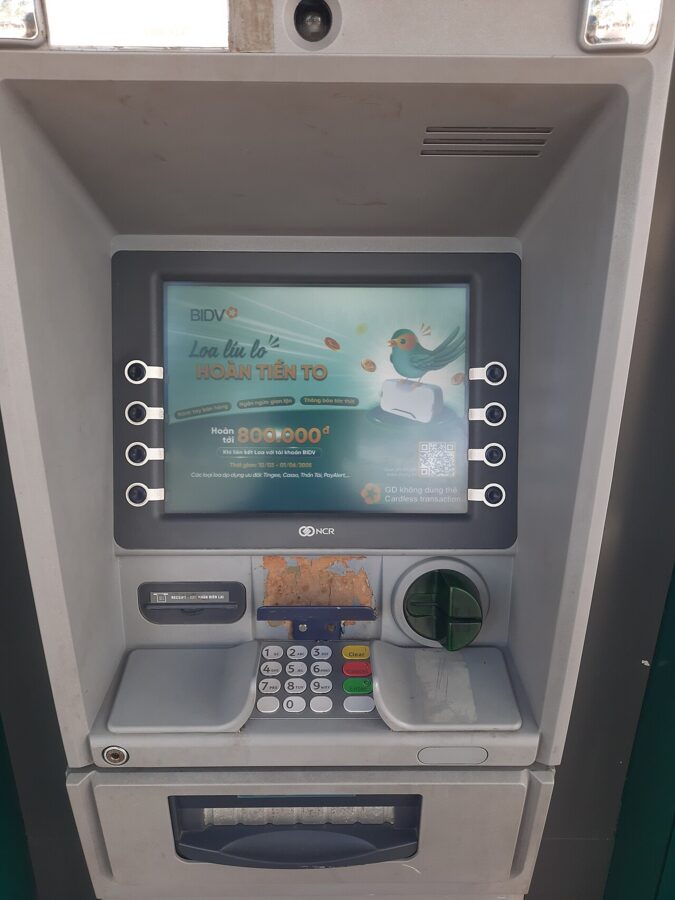
ATMs are easy to find in central Saigon, in clusters outside bank branches, malls and convenience stores. Every one dispenses only đồng, and every one shows its own fee on screen before you confirm. That screen is the most reliable fee table you will find, because the banks change their charges often and publish them unevenly.
Two banks put their foreign-card fees in writing. VietinBank charges cards issued abroad 4 percent of the withdrawal, at least 80,000₫ (about US$3.10), plus VAT, under a schedule in force since 22 April 2026. Techcombank’s card fee schedule, updated in October 2026, charges holders of other banks’ international cards 66,000₫ (about US$2.60) a withdrawal, VAT included.
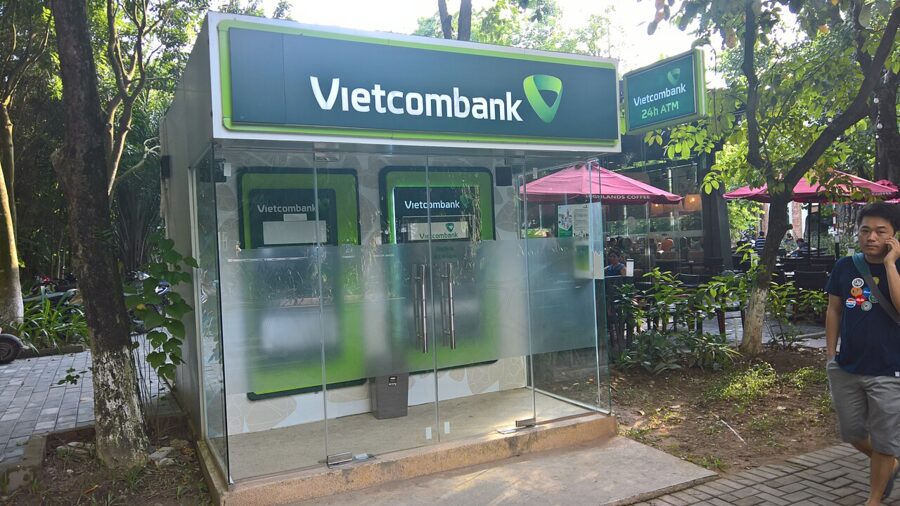

The other big banks do not publish a foreign-card fee clearly. Travelers’ reports through 2026 put Vietcombank and BIDV at a flat fee of roughly 50,000₫ to 66,000₫ a withdrawal, and VPBank is the bank most often reported to charge nothing at its own machines. None of that is a promise; read the screen and cancel if you do not like the number.
Limits per withdrawal are low, typically 2,000,000₫ to 5,000,000₫ (about US$78 to US$195), with a few machines allowing more. Because most fees are flat, taking the maximum each time is cheaper than several small withdrawals. Your own bank adds its foreign ATM fee and exchange margin on top, and that can be more than the Vietnamese bank’s charge.

Using a machine without trouble
Use machines attached to a bank branch during opening hours, so that if one keeps your card you can walk inside and ask for it. Decline any offer to convert the withdrawal into your home currency and choose to be charged in đồng. Machines swallow cards that are left in the slot too long, so take both card and cash before you turn away.
Where the machine lets you type an amount, ask for one that is not a round multiple of 500,000₫, such as 4,800,000₫, and you may get some 100,000₫ and 200,000₫ notes with it. Otherwise break the big notes at a supermarket, a convenience store or a hotel desk.

Changing money, and what the law says
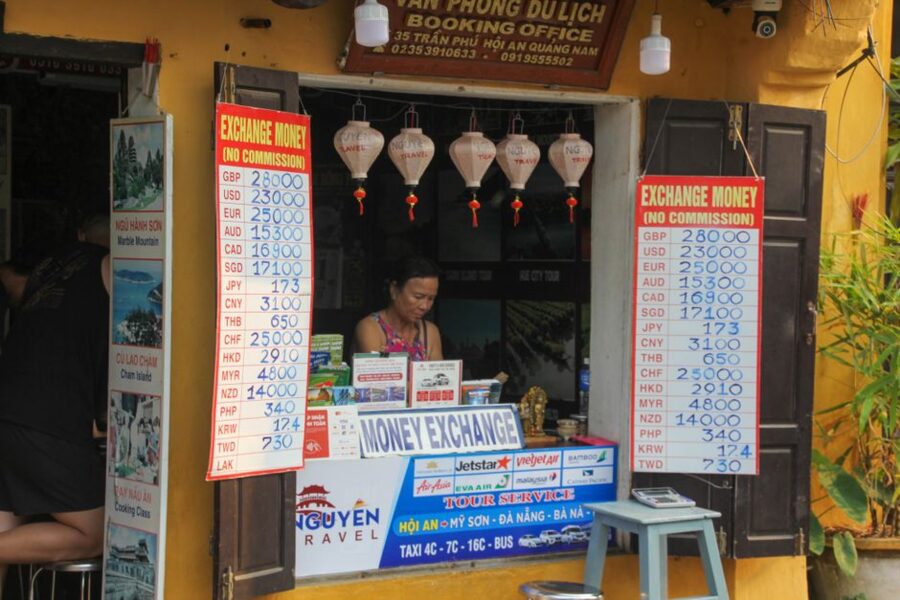
US dollars and euros are the easiest currencies to change, and clean, unmarked, recent notes get the best treatment: torn, stamped or written-on bills may be refused or bought at a discount. Larger dollar notes often fetch a slightly better rate than small ones. The pound, yen, Australian dollar and Singapore dollar appear on bank rate boards too, with a wider gap between buying and selling.
Banks and licensed exchange agents
A bank branch will change cash at its posted rate if you show your passport, and the gap between its buying and selling rates for dollars is small. Licensed exchange agents, some of them inside gold and jewelry shops, display their license and a rate board. Under the rules they may buy foreign currency from you but not sell it back, so they are a one-way door.
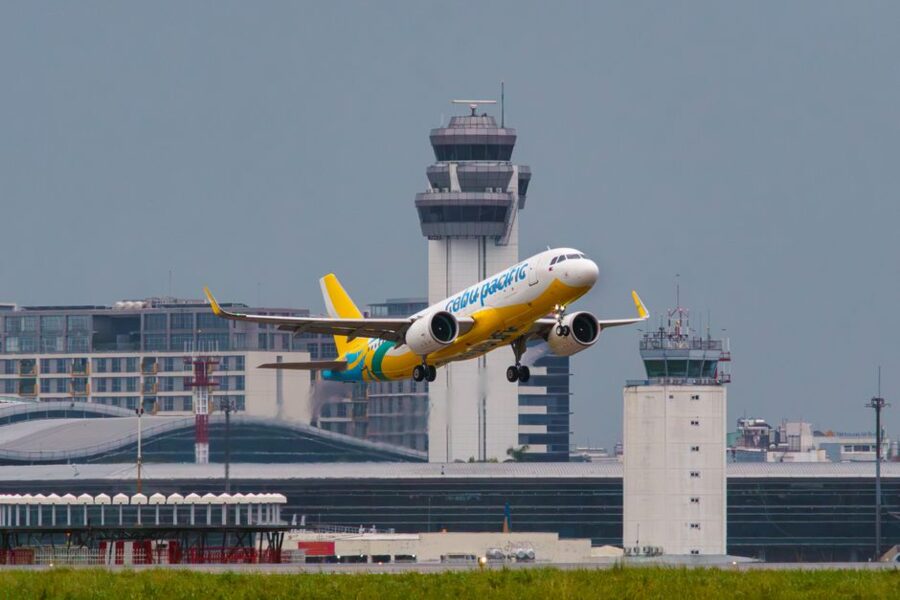
If you are getting to Ho Chi Minh City by air, there are exchange counters and ATMs in the arrivals area at Tân Sơn Nhất. Their rates are usually a little worse than in town, so change only what you need for the first day or use an ATM. The more useful advice runs the other way: the đồng is hard to change once you leave Vietnam, so spend down before your flight rather than after it.
Gold shops and the law
For decades the best rate in Saigon was found at a gold shop, and travelers still swap tips about which ones change dollars. Changing money at a shop or with a person that holds no license is an offence, though, and the penalties were rewritten by Decree 340/2025, in force since 9 February 2026. Under it, an individual who changes less than US$1,000 at an unauthorized place gets a warning; from US$1,000 to under US$10,000 the fine is 10 to 20 million đồng (about US$390 to US$780), and the money can be confiscated.
The same decree penalizes paying for goods or services in foreign currency, so a price quoted to you in dollars should be paid in đồng. The risk to a tourist is small but real, and it falls on you as well as the shop. Changing at a bank may cost you slightly more and needs nothing but your passport.
Bringing cash in and out
You can bring any amount into Vietnam, but at customs, on arrival and departure, you must declare foreign cash worth more than US$5,000, đồng over 15 million (about US$590), or 300 grams of gold or more. A decree on customs penalties in force since 1 July 2026 fines travelers who fail to declare, with fines that rise with the amount carried. Declare on arrival and keep the form if you expect to leave with cash.
What things cost in Saigon
Prices rose through 2026, pushed by a jump in fuel prices in the spring, and have mostly stayed up. These are dated figures from official price lists and recent reporting, converted at about 25,600₫ to the dollar.
| Item | Price | Source and date |
|---|---|---|
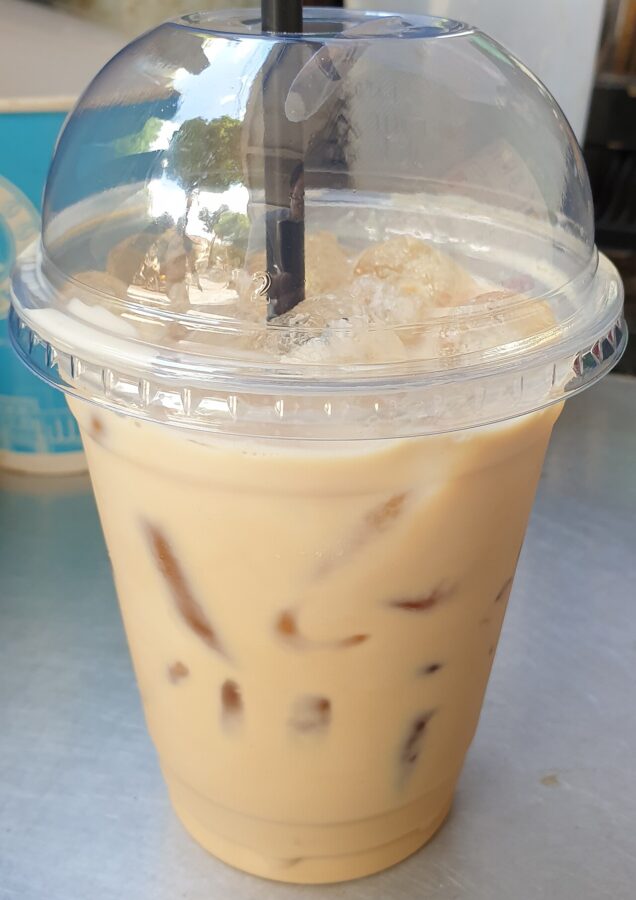
| Iced coffee with milk (cà phê sữa đá), street or local café | 20,000₫ to 35,000₫ (about US$0.80 to US$1.40) | Published travel cost survey, October 2026 |
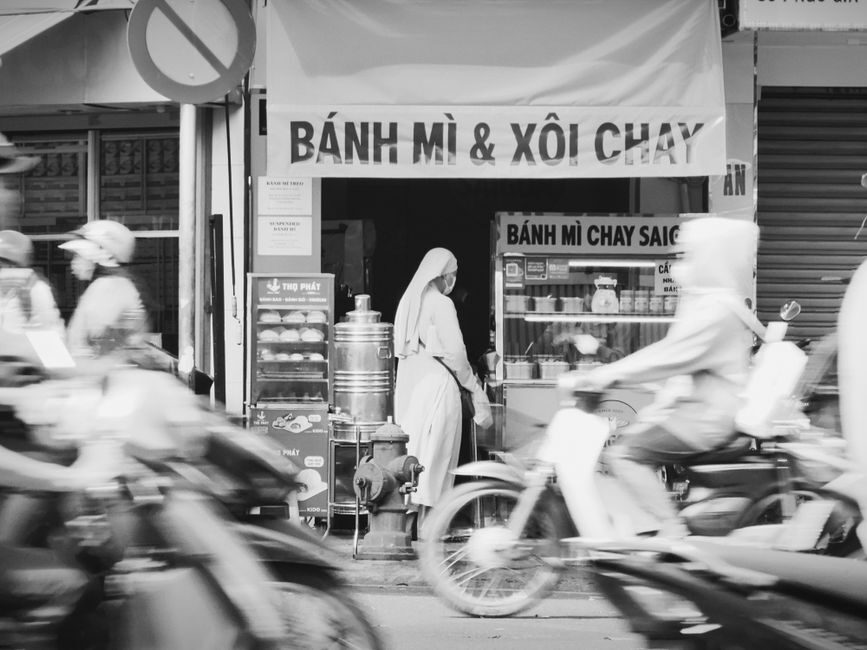
| Bánh mì, neighborhood stall | About 23,000₫ (US$0.90) | Reported price at a Bình Trưng ward stall, November 2026 |
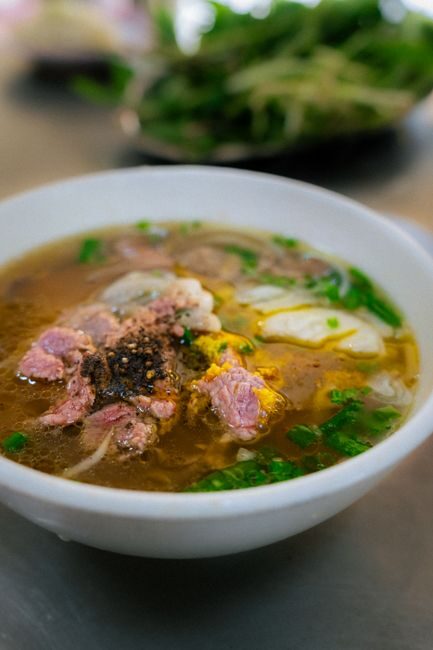
| Bowl of phở, neighborhood shop | About 50,000₫ (US$2) | Reported price at a Bình Thạnh ward shop, November 2026 |
| GrabBike motorbike taxi | 12,273₫ for the first 2 km, then 4,222₫ a km, plus a small time charge | Grab fare table, updated 8 July 2026, VAT included |
| GrabCar, 4 seats | 28,473₫ for the first 2 km, then 9,818₫ a km, plus a small time charge | Grab fare table, updated 8 July 2026, VAT included |
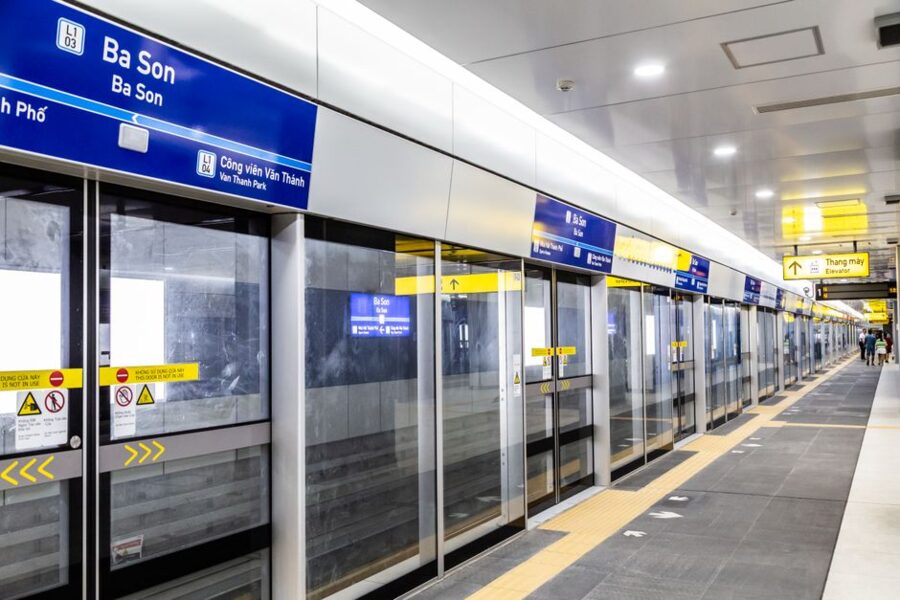
| Metro Line 1, single journey | 7,000₫ to 20,000₫ in cash (about US$0.30 to US$0.80) | Published fares, 2026 |
| War Remnants Museum | 60,000₫ (about US$2.30) | Museum price list, from 1 October 2026 |
| Museum of Vietnamese History | 60,000₫ (about US$2.30) | Museum price list, from 1 October 2026 |
| Independence Palace, palace only | 40,000₫ (about US$1.60) | Palace price list, in force since 1 August 2025 |
| Củ Chi Tunnels, foreign visitors | 135,000₫ (about US$5.30) | Site prices, from 1 February 2026 |
Grab fares in the app rise with demand, at rush hour and in rain, so the figures above are a floor rather than a quote; a ride across the center by motorbike usually comes to a few tens of thousands of đồng. The tickets are the prices posted at the War Remnants Museum, the Museum of Vietnamese History, the Independence Palace and the Củ Chi Tunnels. The city’s museums raised their fees on 1 October 2026, and many older guides still quote the old ones.

Bills, tipping and not being overcharged
VAT and service charges
Many restaurants in Ho Chi Minh City print prices that include tax, but hotels, upmarket restaurants and bars often add it at the end. A price marked “++” means service charge and VAT on top. VAT on restaurant meals and hotel rooms is 8 percent until 31 December 2026, cut from the standard 10 percent under a National Assembly resolution, and it returns to 10 percent after that unless the cut is extended.
The service charge, where there is one, appears as its own line. It goes to the business, not necessarily to the person who served you. A bill with neither line simply means the price is the price; check the total against the menu, especially for anything sold by weight, such as seafood.
Foreign visitors can reclaim VAT on goods bought in shops that run the tax-refund scheme, at the international airport when they leave, under rules updated by the Ministry of Finance from 1 July 2026. The shop issues a special refund invoice, and you show the goods, unused, with the invoice and your passport to customs at the airport, leaving plenty of time before your flight; the refund itself is paid airside.
Tipping
Like most of the city’s dos and don’ts, tipping is a matter of custom rather than rule. No one at a street stall or a local café expects it. Where you have had personal service, a small tip is welcome: a guide who has spent a full day with you, a driver on a long day trip, a hotel porter or a spa therapist.
Round up a cash taxi fare or let a motorbike driver keep the small change; it costs you little and saves both of you hunting for 2,000₫ notes. A tip handed over discreetly, folded, goes down better than one left on a table.

Avoiding overcharging
Overcharging in Saigon is usually small and almost always happens where prices are not written down: a cyclo ride, a coconut from a street seller, a market stall, a taxi flagged off the street. Agree the price before you get in, sit down or let anyone start cutting fruit, and write the figure in your phone if language is a problem. A ride-hailing app solves the taxi question completely, because the fare is fixed before you book.
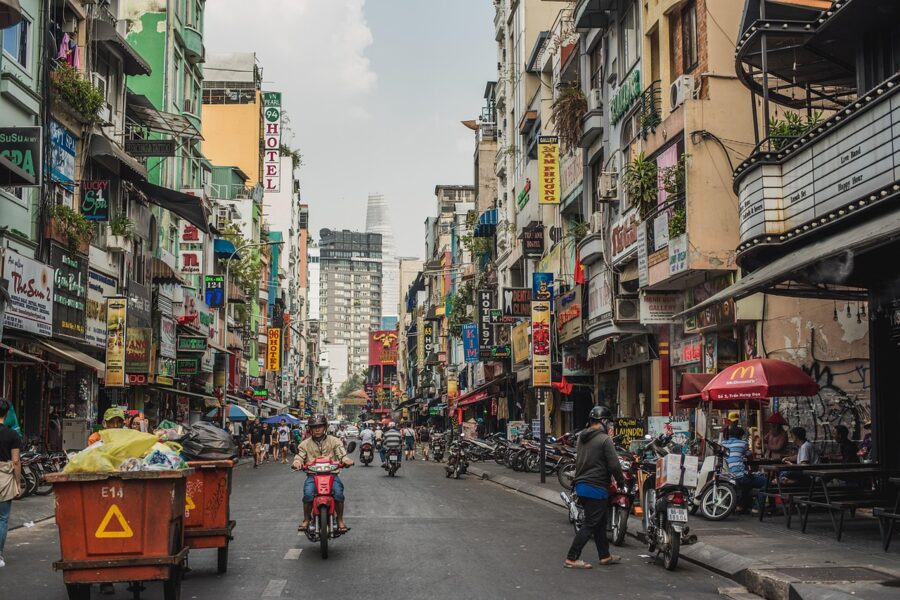
In markets, the first price is the start of a conversation, and the Bến Thành Market management office at the south gate takes complaints about stalls that cheat. Keep your large and small notes in different pockets, hand over notes one at a time, and say the value aloud. If a vendor claims you paid with a 20,000₫ when you know it was a 500,000₫, ask for the note back and look at it together.

Outside the city, plan for cash. A day trip to Cần Thơ for the floating market, or to the Cao Đài Holy See in Tây Ninh, means boats, snacks, parking and donations, nearly all paid in small notes. Fill your wallet in Saigon the night before, where ATMs are thick on the ground.
Back at the coffee seller’s motorbike, the routine is simple. Pay with the 20,000₫, not the 500,000₫; read the number before you hand it over; take your change with a nod. Keep a fold of small notes in one pocket for the day, the big ones somewhere else, and a card for the places with air conditioning.