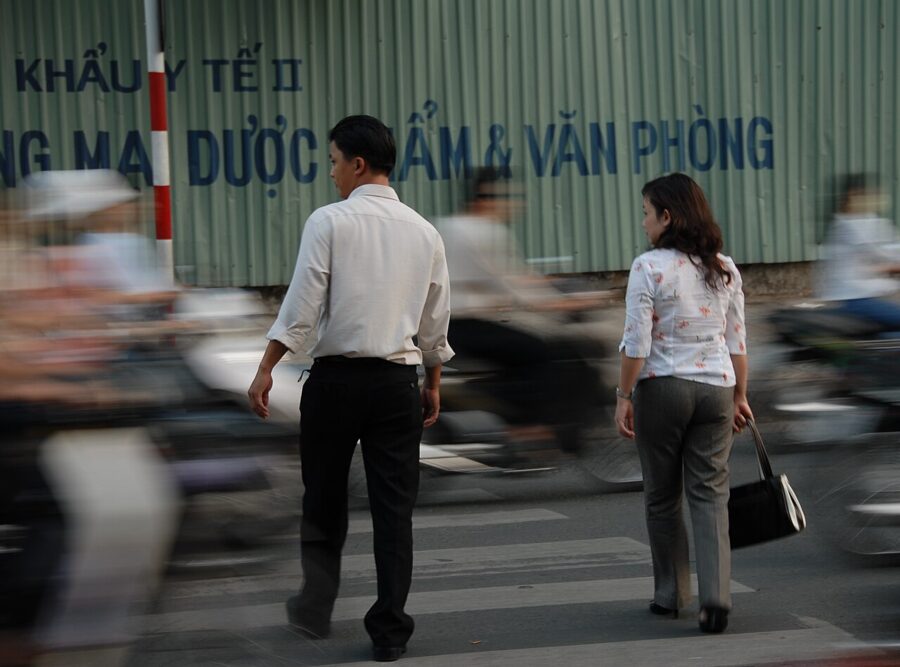
At six in the evening, when the offices along Lê Lợi Boulevard empty, a woman in a work blouse steps off the curb into a river of motorbikes and does not look at any of them. She walks at the pace of someone crossing her own kitchen. The riders bend around her the way water bends around a post, and she reaches the far side without once speeding up or stopping.
Nobody hands visitors that rule at the airport, and Saigon has dozens like it. Most are unwritten, a few are law, and almost all make sense once you see what they protect: an elder’s standing, a family’s dead, a rider’s line through traffic, a vendor’s margin. The city is easier on newcomers than Hanoi, younger and more used to foreigners, but the same codes run underneath.
Vietnam’s tourism ministry wrote some of this down in 2017, in its first code of conduct for travelers: queue, dress decently, respect local religion, drink in moderation, don’t litter. The code is advice, not law. What follows goes further, from the word you use for a woman your mother’s age to the fine for vaping, and it starts with people, because most mistakes visitors make here are mistakes about who is older.
On this page
Greetings, names and the question about your age
“Xin chào” (sin chow) works for anyone, at any hour. A right-handed handshake is normal between men, but many older women prefer a nod and a smile, so let her offer first. With an elder, a slight bow of the head while shaking, or your left hand laid under your right forearm, reads as good manners.
Vietnamese names run family name first and given name last, so Nguyễn Văn Hùng is Hùng to everyone who knows him. Close to four in ten people are called Nguyễn, which is why nobody is Mr. Nguyễn. Use the given name with a title: anh Hùng if he is a little older than you, chú Hùng if he could be your uncle.
That is why people ask your age within a minute of meeting you. Vietnamese has no neutral “you”; every sentence needs a kinship word, and choosing it means knowing who is older. Questions about marriage, children and salary are curiosity, not rudeness, and a vague answer with a smile is fine.
Calling someone over
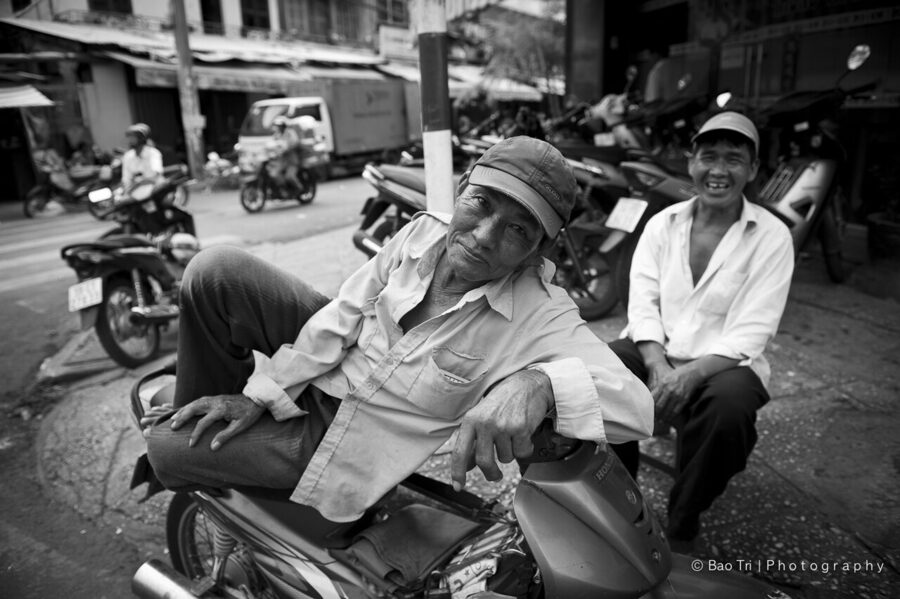
Instead of “excuse me”, people use the kinship word and “ơi” (oy): “em ơi” for a waiter younger than you, “chị ơi” or “anh ơi” for a woman or man a little older, “cô ơi” and “chú ơi” for your parents’ generation, “bà ơi” and “ông ơi” for your grandparents’. If you have no idea, the national tourism authority suggests “bạn ơi”, roughly “hey, friend”, which nobody will mind.

Hands, feet, heads and faces
Pass money, a gift or a cup of tea to an older person with both hands, or with the right hand while the left touches your right forearm. Beckon with the palm down and the fingers scooping, not with one finger pointing up. Point with an open hand or a nod, and don’t make the crossed-fingers sign, which here is rude.
The head is the highest part of the body, so don’t pat children on it. Feet are the lowest: keep them off chairs and tables, and never point your soles at an altar or a person. Hands on hips or folded arms can look like a challenge, and anything beyond holding hands draws stares.
The biggest rule is the quietest one. Raising your voice or embarrassing someone in public costs both of you face, and the person you shouted at will usually stop helping rather than give in. A smile in an awkward moment often means embarrassment, and “dạ” or “vâng” can mean “I hear you” rather than “agreed”. When something goes wrong, lower your voice.
Temples, pagodas and churches
Saigon’s places of worship are open and in constant use. A pagoda at nine on a weekday may hold a funeral prayer, a class of novice monks and a grandmother praying for a sick grandson at once. Dress as you would for someone else’s family service: shoulders and knees covered, no sheer fabric, hat off inside. A light scarf and long trousers in your daypack solve most problems.
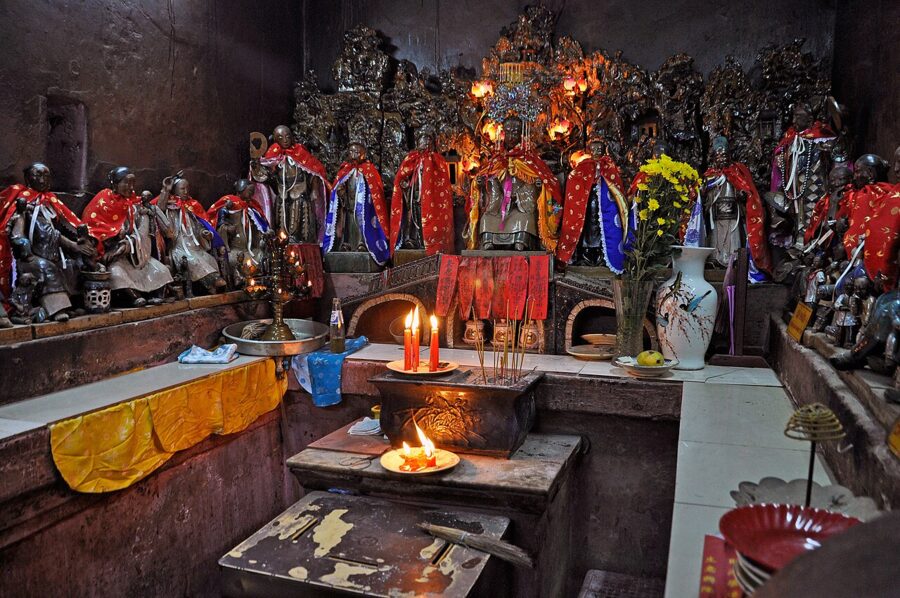

Buddhist pagodas
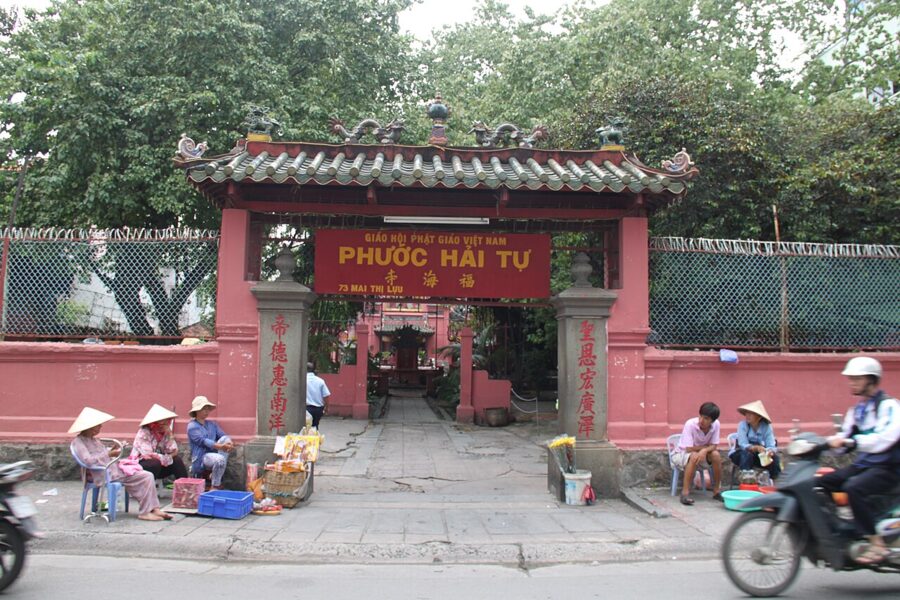
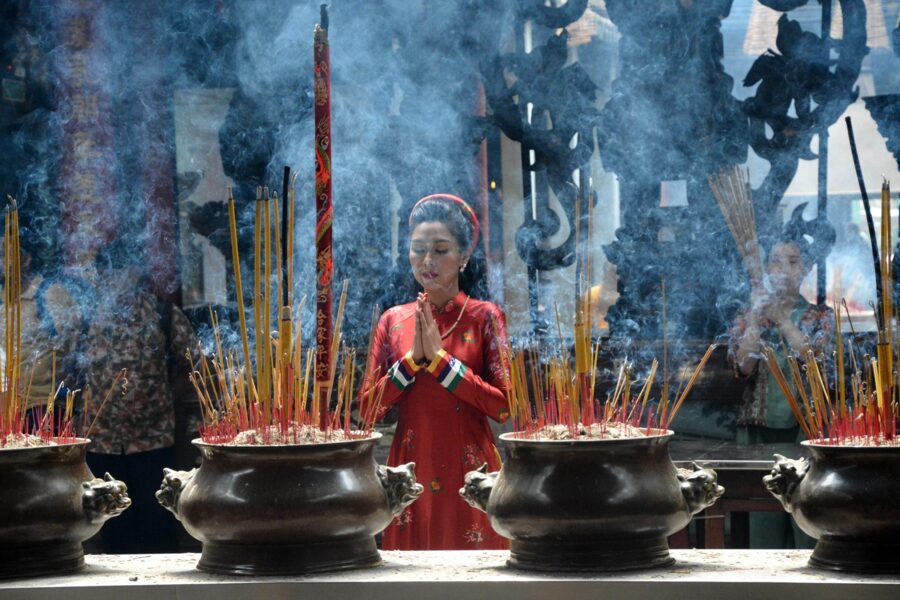
In a Vietnamese Buddhist pagoda (chùa) you take your shoes off before entering the main hall, the chánh điện, where the Buddha statues sit. Look for a row of sandals at the steps and add yours; courtyards and gardens are shoes-on. Walk around people kneeling to pray, never between them and the altar, and don’t touch statues or offerings.
Photographs are usually fine in courtyards and often in halls, but a crossed-out camera sign ends the discussion. Don’t pose with your back to a Buddha, don’t use flash at an altar, and ask before photographing monks or worshippers up close. A monk is thầy and a nun sư cô; a nod with joined palms is the right greeting, and touching them is not.
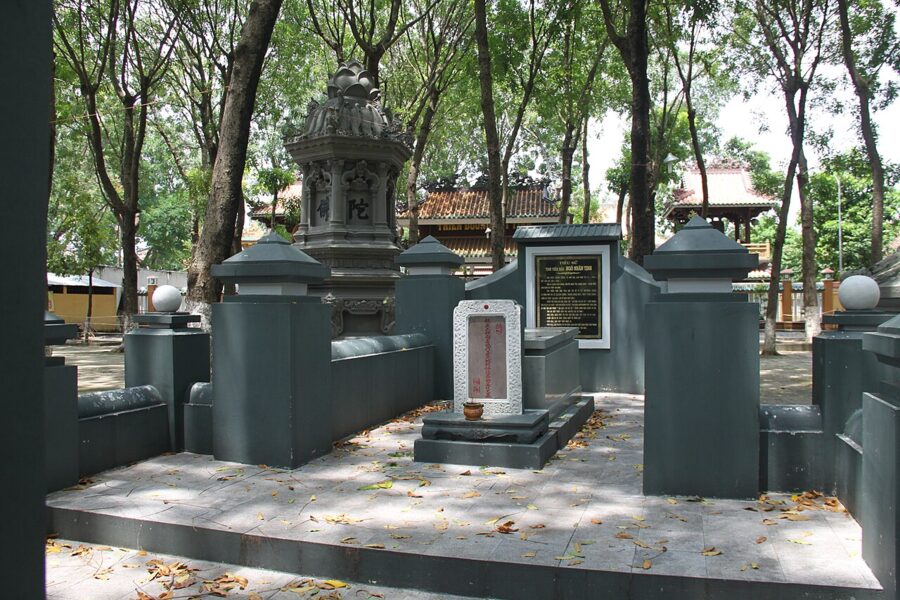
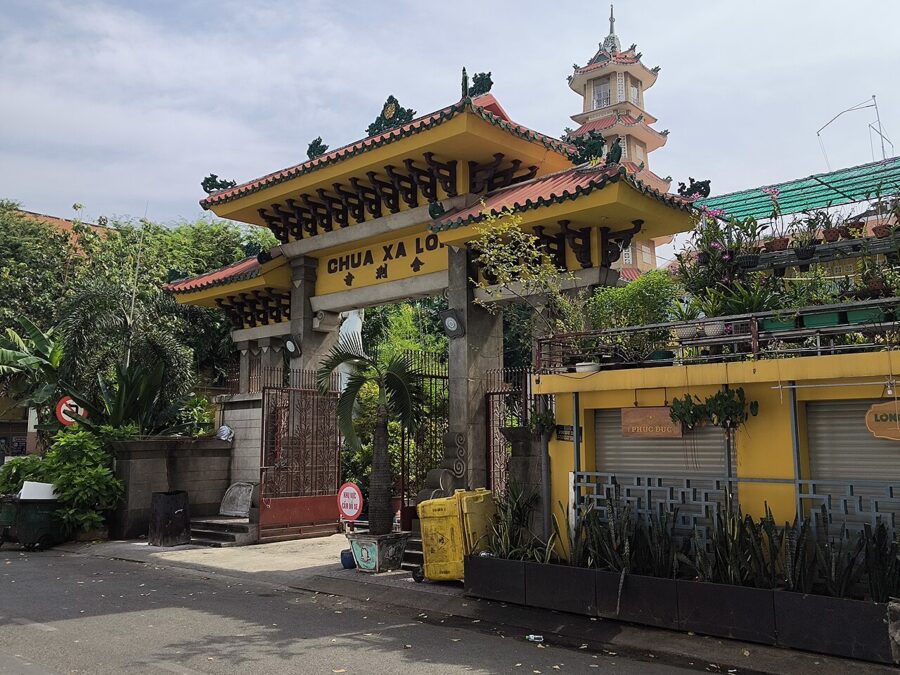

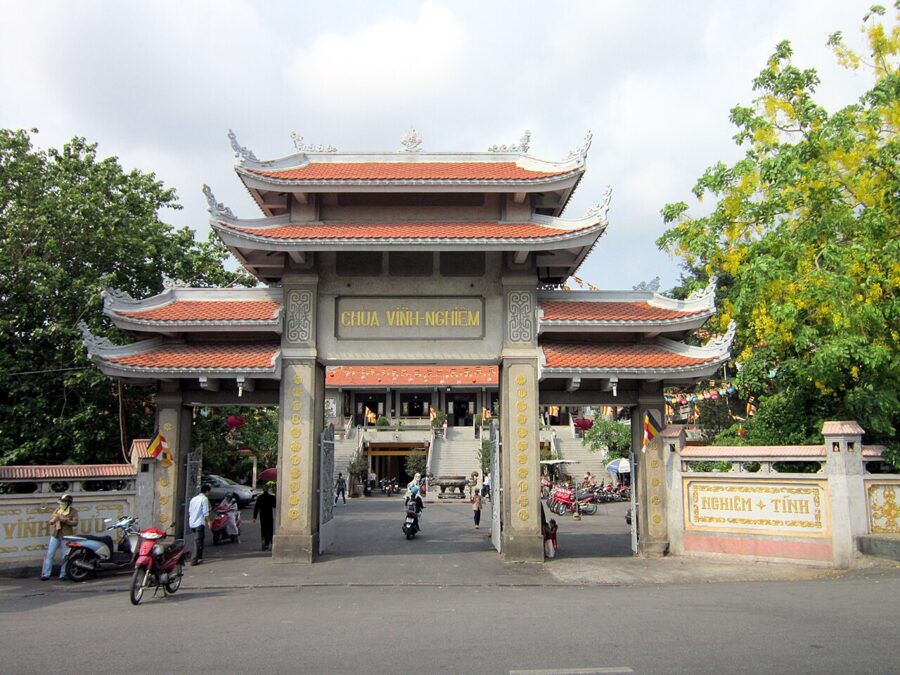
Two pagodas where you can see all this in practice are Xá Lợi Pagoda, at the center of the Buddhist protests of 1963, and Vĩnh Nghiêm Pagoda, a large modern complex with a seven-story tower. Both fill up on the first and fifteenth days of the lunar month, when many Saigonese eat vegetarian and visit a pagoda, and overflow at the full moon of the first lunar month and at Vu Lan, the full moon of the seventh.

Offerings and incense
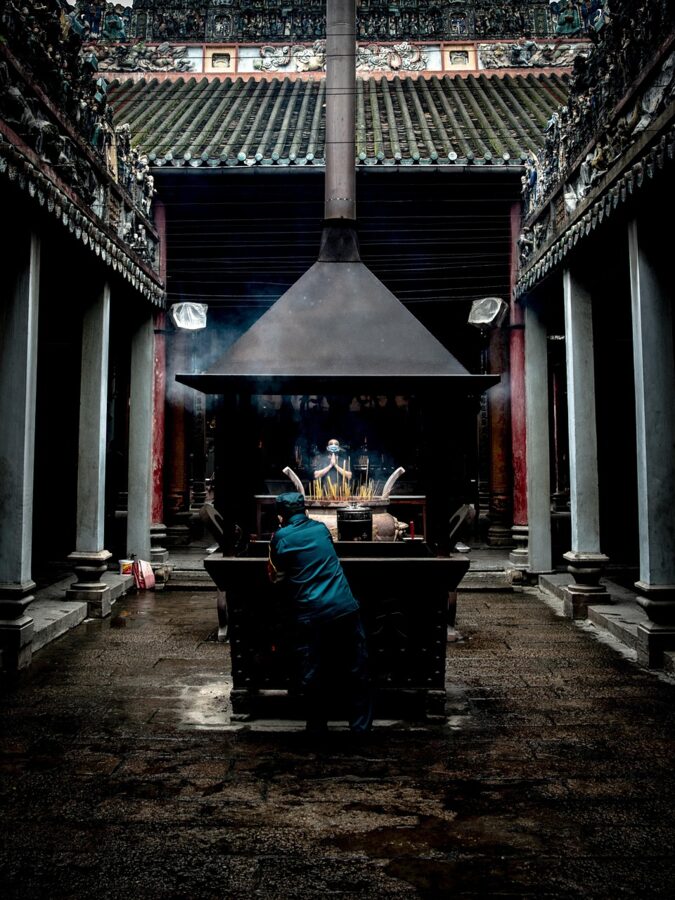
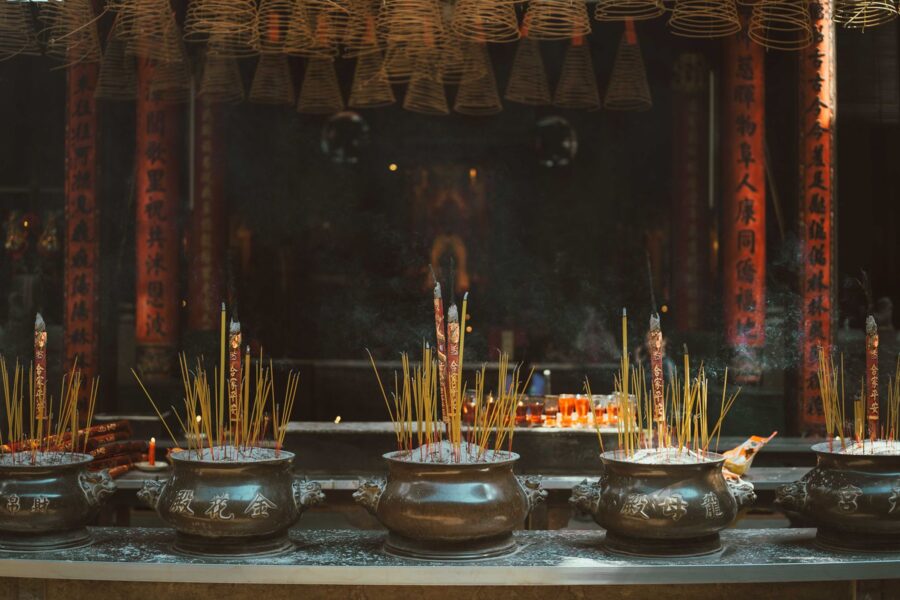
Nobody expects a visitor to make an offering, but you are welcome to. Vendors at most gates sell incense, and a donation box (hòm công đức) stands inside the hall. Light one or three sticks from the candle provided, raise them to your forehead, bow, and plant them in the main burner.
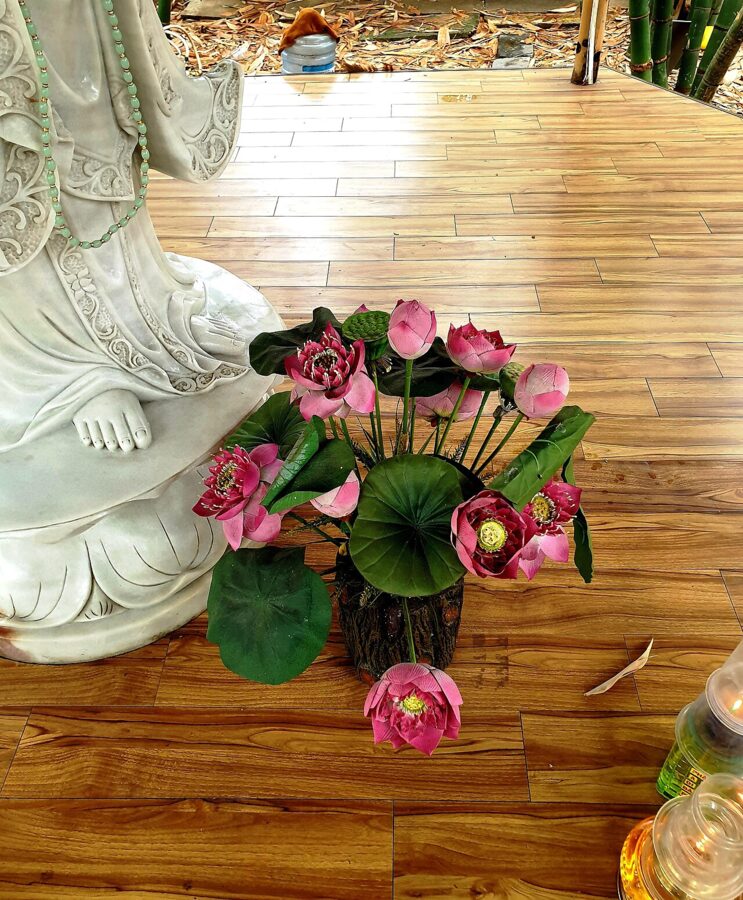
Offerings at a Buddhist altar are vegetarian: fruit, flowers, cakes, tea. Roast pork belongs on an ancestor altar, never in front of a Buddha. Don’t take fruit from an altar, and don’t move anything to improve a photograph.

Chinese temples and assembly halls
The Cantonese and Fujianese temples of Chợ Lớn follow slightly different customs. Shoes usually stay on, but step over the high wooden threshold rather than on it, and take your hat off in the main hall. At the Thiên Hậu Temple on Nguyễn Trãi Street, photograph the hanging incense coils from the courtyard rather than leaning over the offering tables.
Churches and the Cao Đài Holy See
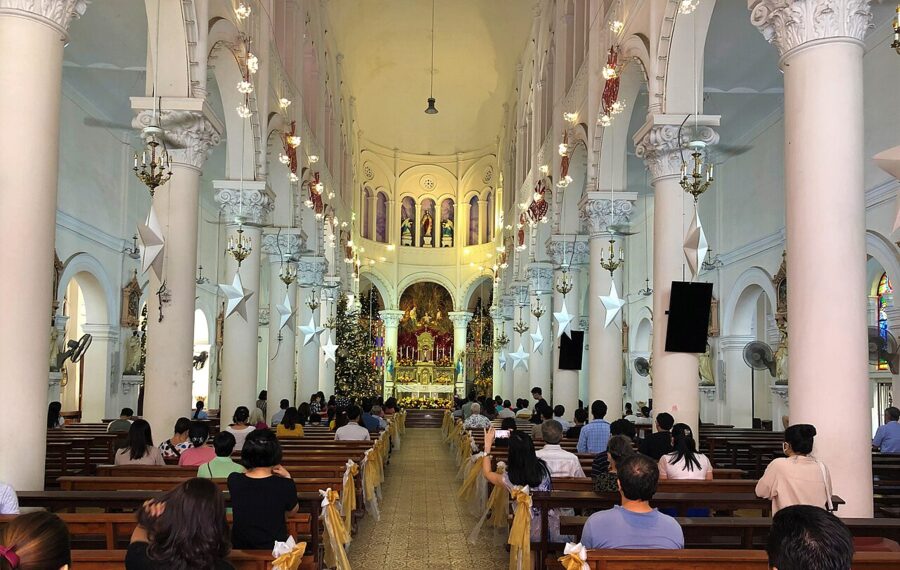
Saigon’s Catholic churches hold Masses from before dawn. Notre-Dame Cathedral has been under restoration since 2017, and the parish does not admit sightseers to the nave while work continues, though it stays open for daily Mass. At any service, arrive early, cover shoulders and knees, silence your phone, and keep photographs for outside.

At the Cao Đài Holy See in Tây Ninh, the main temple of a faith founded in the 1920s, shoes come off and men and women use separate side entrances. Visitors at the noon service are usually shown up to the gallery. Stay where the attendants put you and photograph without flash.

Altars in homes and shops
Almost every Saigon home has an ancestor altar, high on a shelf or in an upstairs room, with photographs of the dead, incense and fruit. Many shops keep a small shrine on the floor near the door to Thần Tài, the god of wealth, and Ông Địa, the earth god. Don’t step over a floor shrine, don’t point your feet at any altar, and don’t park your bag or shoes beside one.
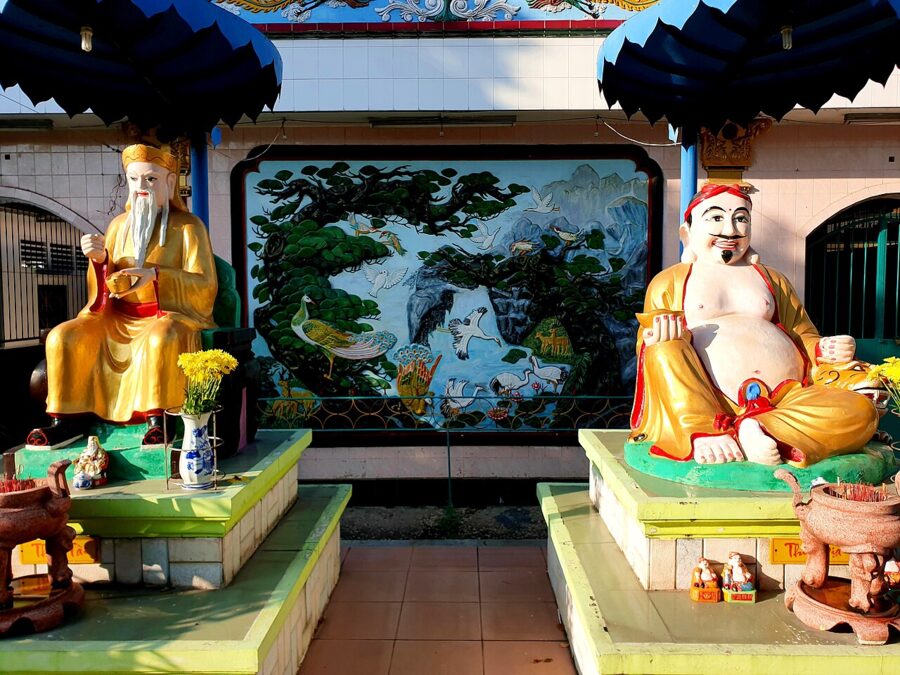

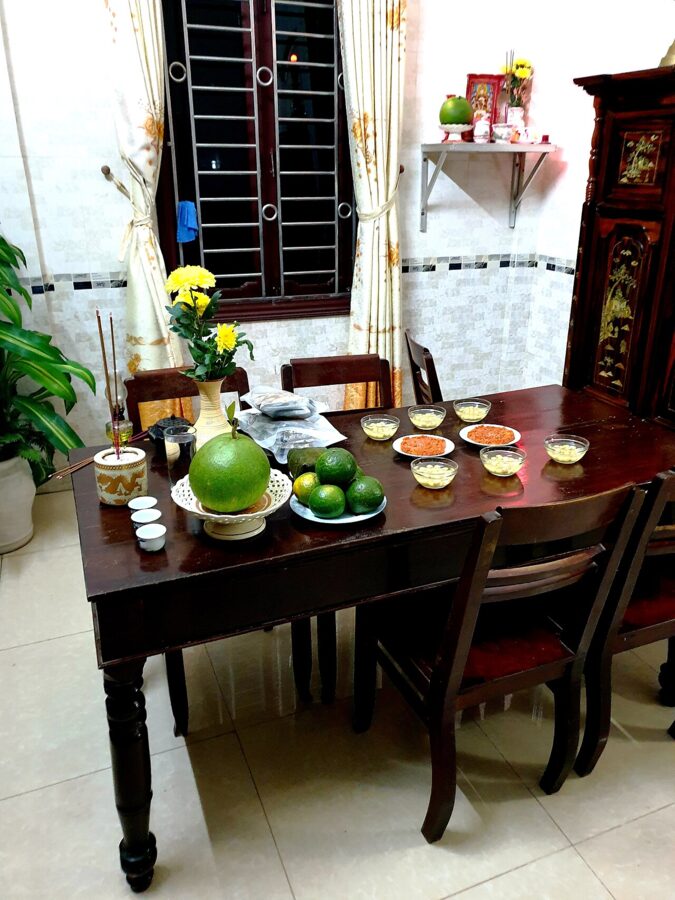
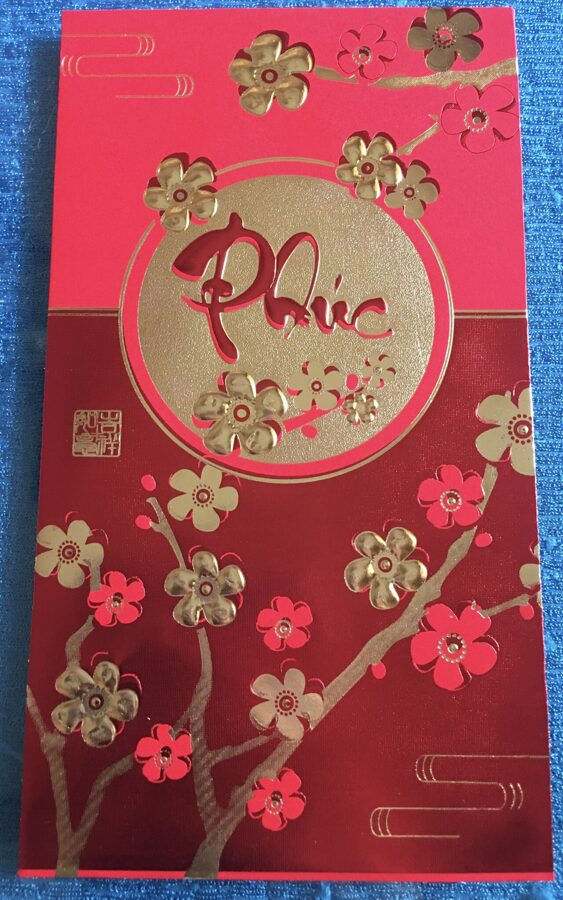
Tết, the Lunar New Year, falls on 6 February in 2027, and its customs are the strictest of the year. The first visitor through a family’s door is believed to set the year’s luck, so don’t drop in on the first morning unless invited. Red envelopes of new banknotes (lì xì) go to children, and fruit or cakes are the right gift; nothing black, which belongs to mourning.

Dress, museums and places that ask for quiet
Away from temples, Saigon dresses casually, but the old expectations hold. Men don’t walk the streets shirtless, swimwear stays at the pool, and very short shorts draw comment in markets and residential alleys. The tourism authority’s advice is simple: watch what local people wear where you are staying, and match it.
Some museums ask for a different kind of care. The War Remnants Museum shows photographs of the dead and of children born with deformities that the exhibits attribute to Agent Orange. American veterans and Vietnamese families walk the same rooms; keep your voice low, don’t pose for smiling photos with the exhibits, and don’t argue history with the staff.
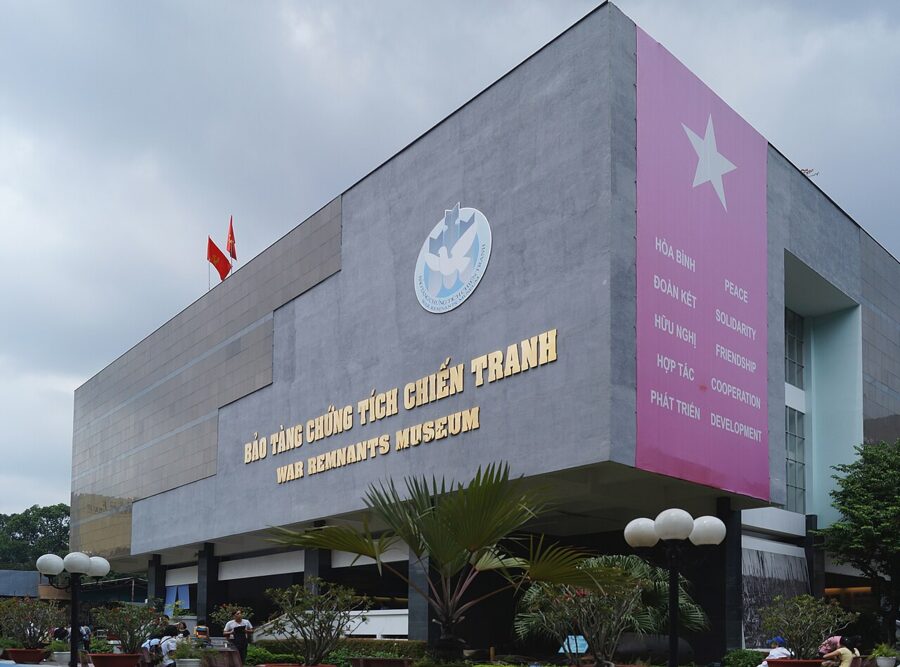

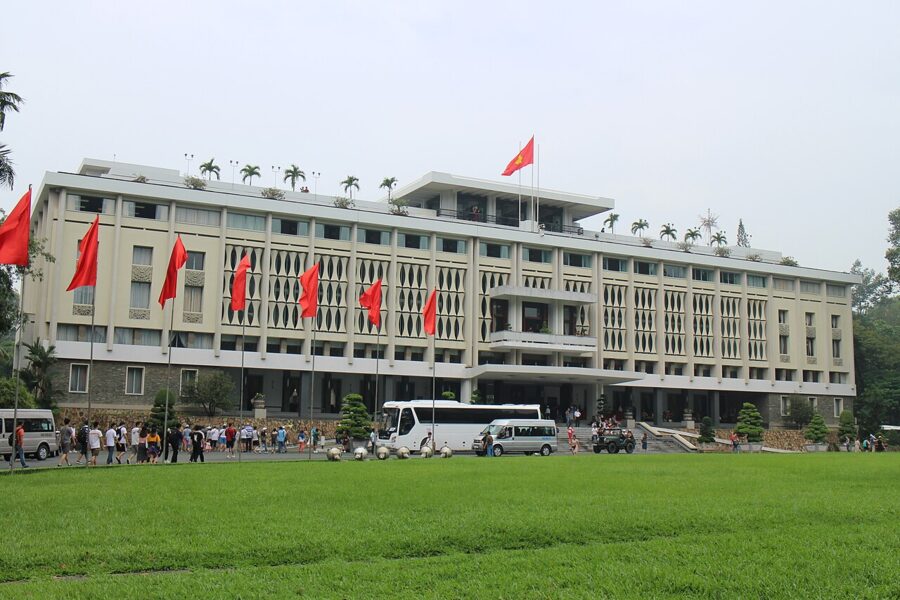
The Reunification Hall has no published dress code, but it is a state building that still hosts official events, and modest clothes avoid any trouble. The Củ Chi Tunnels and the war cemeteries outside the city are memorials before they are attractions.

Eating with others
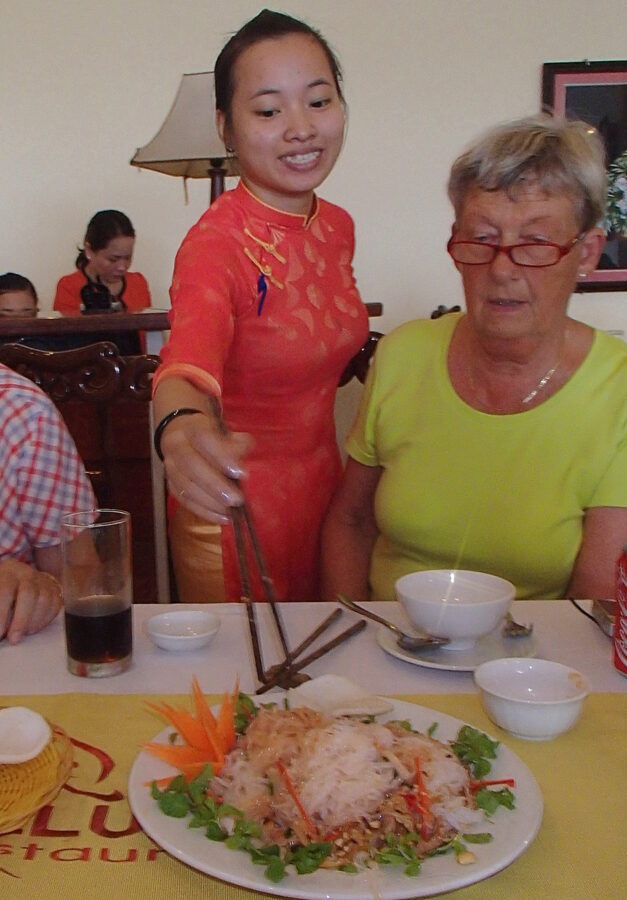
A Vietnamese meal is shared. Each person gets rice, chopsticks and a spoon, and the dishes sit in the middle for everyone. Wait for the eldest or the host to start. In many families the younger people invite the elders to eat with the word “mời” first; say “mời” to the table with a smile and you will have done better than most guests.
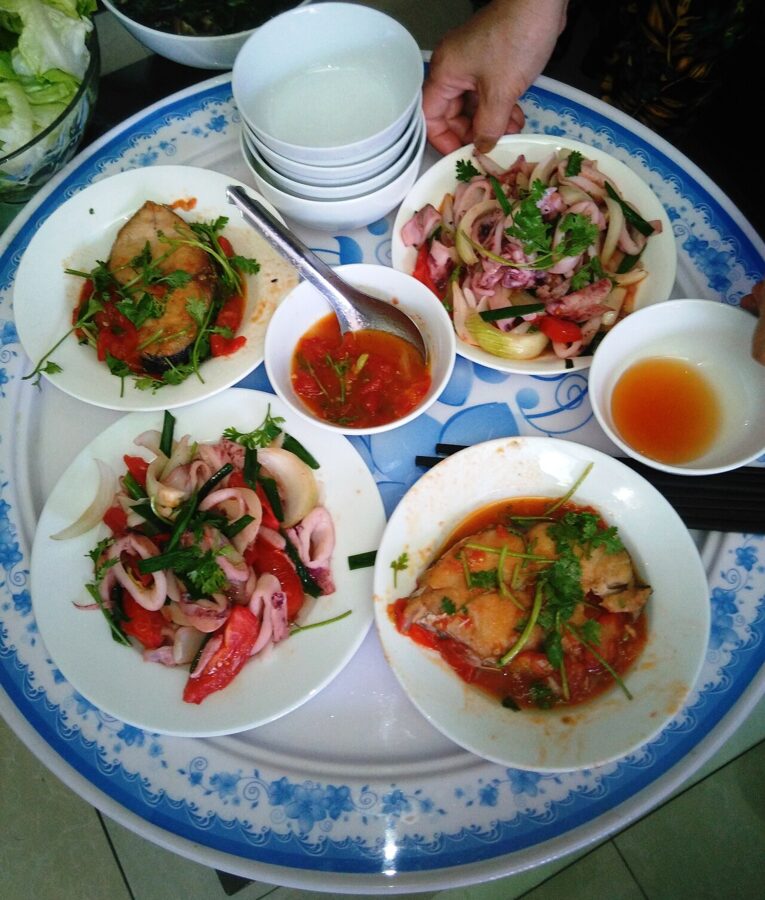
Your host will put the best pieces in your bowl, often more than once. Leave a little at the end; an empty bowl reads as “still hungry” and earns a refill. To stop, say you are full (“no rồi”, noh roy) and lay your chopsticks across the bowl.
Chopsticks and bowls
Never leave chopsticks standing upright in rice. It looks like incense planted before an altar for the dead. Don’t tap them on the bowl or use them to point. Lifting your rice bowl to your mouth is correct, and slurping noodle soup bothers nobody.

At a street stall or a plastic-stool beer joint the rules relax. Shells and bones go on the table or a tissue, used tissues often end up under it, and staff clear everything at the end. In a family home, follow the family.
Paying
Whoever made the invitation pays; if nobody clearly did, the most senior person does. Expect a friendly struggle over the bill: offer, be refused, offer again, then accept and promise to pay next time. Tipping is not a custom in ordinary restaurants, though it is welcome for guides, drivers and spa staff. The restaurants guide covers prices and service charges.
Toasting: một, hai, ba, dô
Drinking in a group is a series of toasts. Someone raises a glass and the table counts “một, hai, ba, dô” (one, two, three, drink), the “dô” said “yo” in the south and “zo” in the north. You are expected to drink whenever someone toasts you, even a sip. When you clink with an elder, hold your glass slightly lower than theirs.
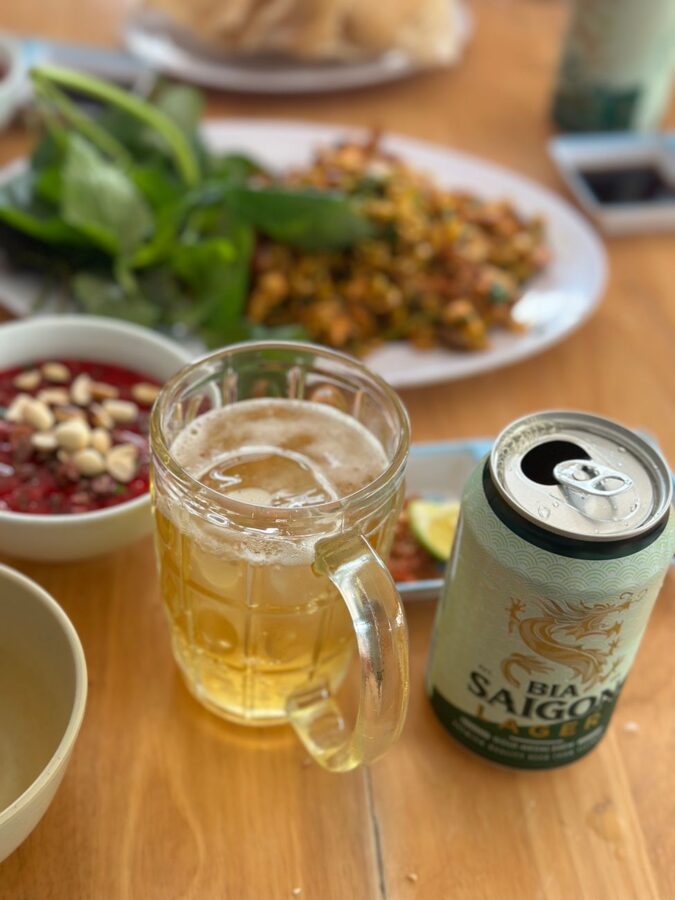
“Trăm phần trăm” (one hundred percent) means bottoms up, and a long evening includes many. You can decline by saying you are driving or that a doctor has told you not to drink, then toast with tea. Refusing flatly, or drinking alone between toasts, comes across as cold. Drinking also has legal consequences, set out below.
Crossing the street and riding a Grab bike
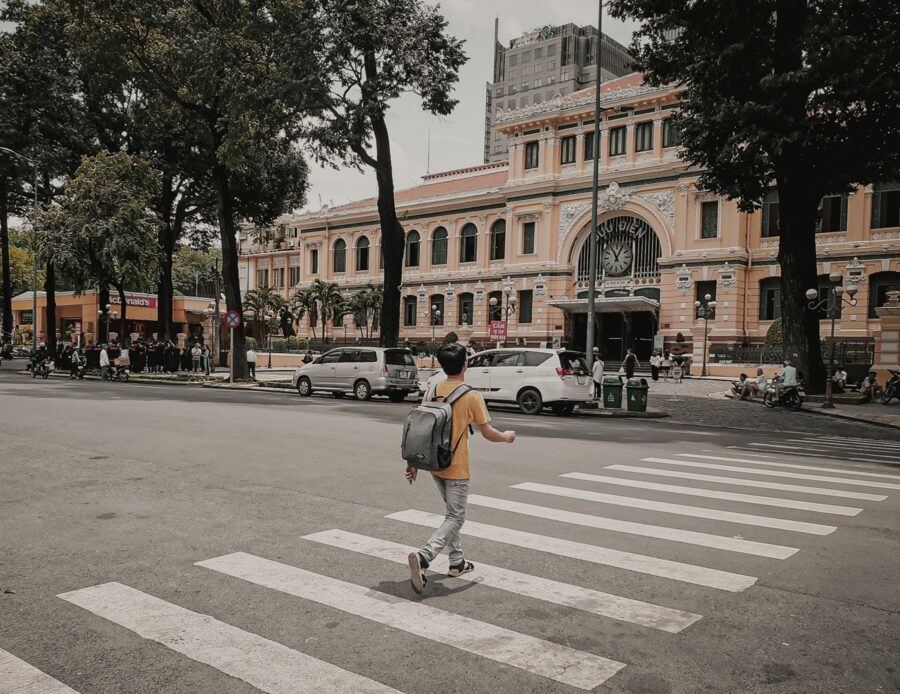
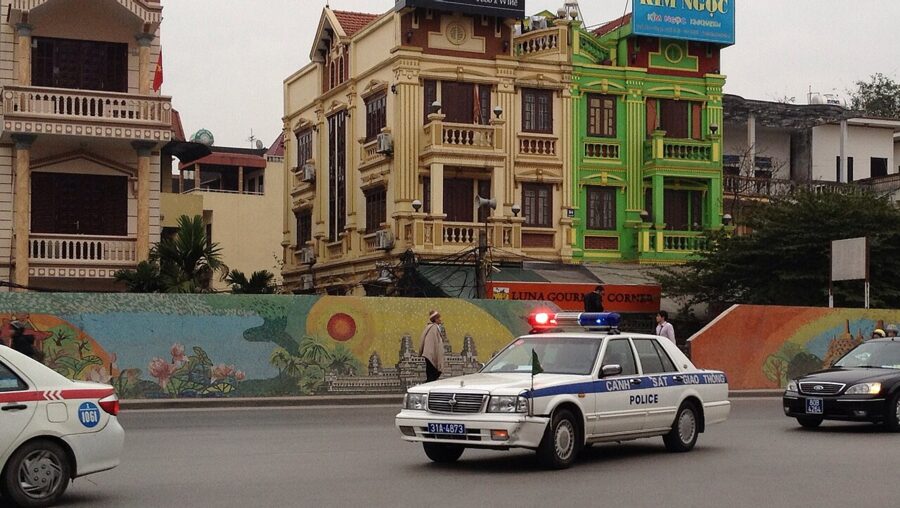
Crossing a Saigon street works because everyone can predict you. Walk at a slow, constant pace in a straight line and let the motorbikes go around you. Don’t run, don’t stop suddenly, and above all don’t step backward. A hand raised to shoulder height, palm out, helps riders see you.
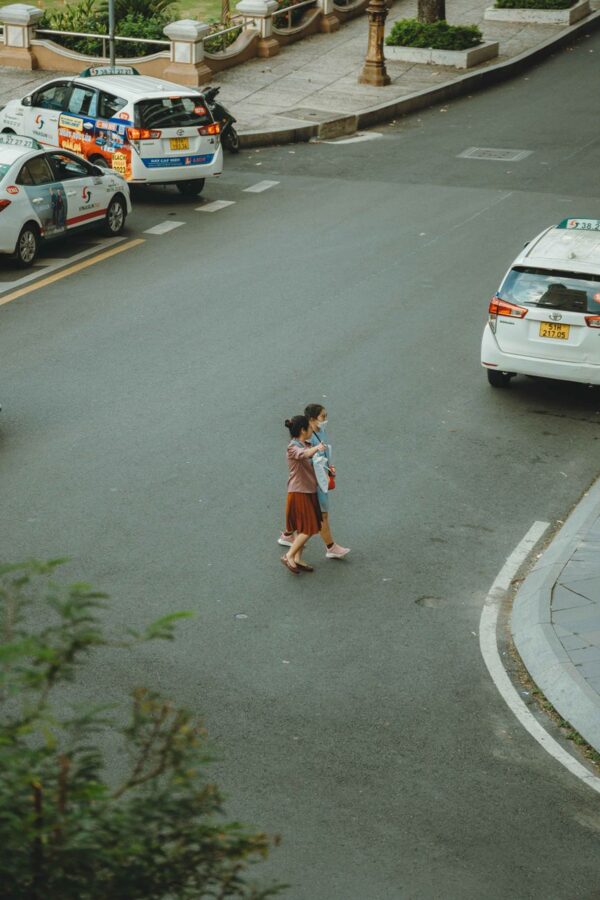
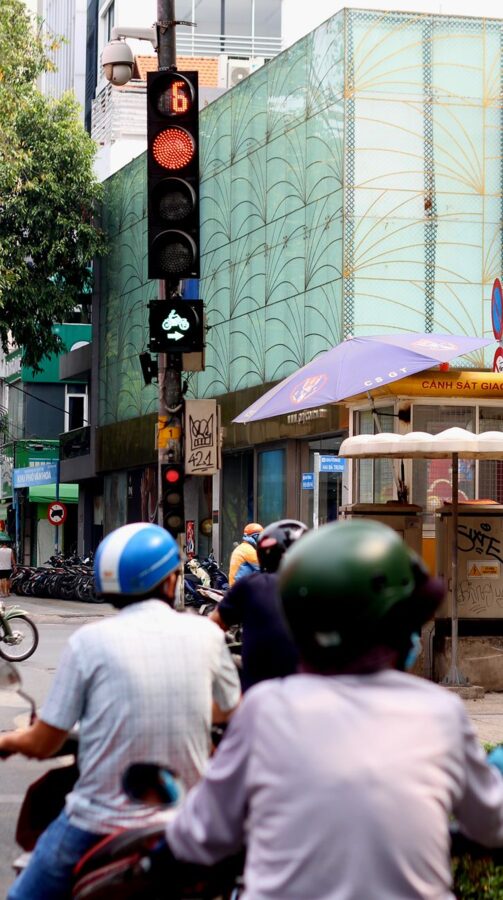
Motorbikes don’t always go the way the street says, so look both ways on one-way streets. Look again on the pavement, where riders park, cut corners and ride when the road is jammed. At big junctions such as Lê Lợi and Nguyễn Huệ, cross on the green walking light and still watch for riders turning right.
On the back of a motorbike taxi
Grab, Be and Xanh SM all run motorbike taxis booked in an app, with the price fixed before you ride. Check that the plate matches the one in the app. Wear the helmet the driver hands you and fasten the strap: the law requires one for passengers, and the police enforce it.
Sit upright, hold the grab bar behind you, and lean with the bike in corners. Keep your knees in. When you climb off, step away on the left, clear of the exhaust pipe, which burns bare calves badly enough to scar. Keep your phone in a pocket; a phone held out at the curb is the easiest thing in the city to snatch.
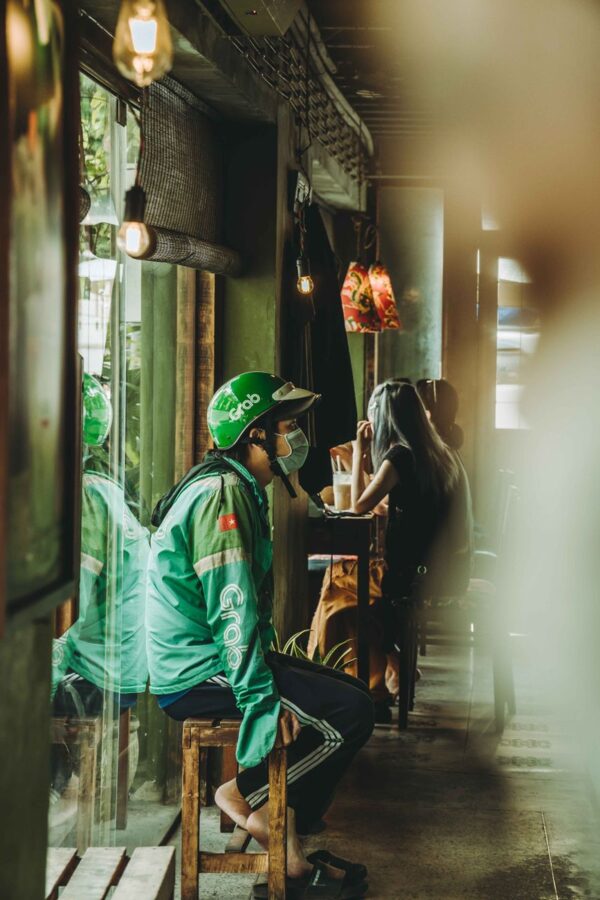
Riding a rented motorbike yourself is different. You need a licence valid in Vietnam, many travel insurers won’t pay for an accident on a bike you weren’t licensed to ride, and the drink-driving rules below apply in full.
Cameras, phones and drones
Ask before photographing people. A raised camera and a questioning look are enough, and a shake of the head is final; don’t offer money to change it. Market vendors are working and often refuse. Photograph children only with a parent’s nod.
Signs reading “khu vực cấm” (prohibited area) or “cấm quay phim chụp ảnh” (no filming or photography) mark military bases and some government buildings, and the rule is enforced. Don’t photograph soldiers or guards on duty, and if a police officer asks you to put the camera away, do it.
Drones
Leave the drone at home. New drone rules issued in late 2025 require registration with the police and a pilot licence for all but the smallest machines, and they are written around residents rather than visitors. A short-term visitor has no simple route to a legal flight.
In March 2026 authorities in Đà Nẵng seized the drone of a tourist flying over the beachfront without a permit, and fines run to tens of millions of dong. Central Saigon, with an international airport inside the city, is no place to try.
Scams and how to avoid them
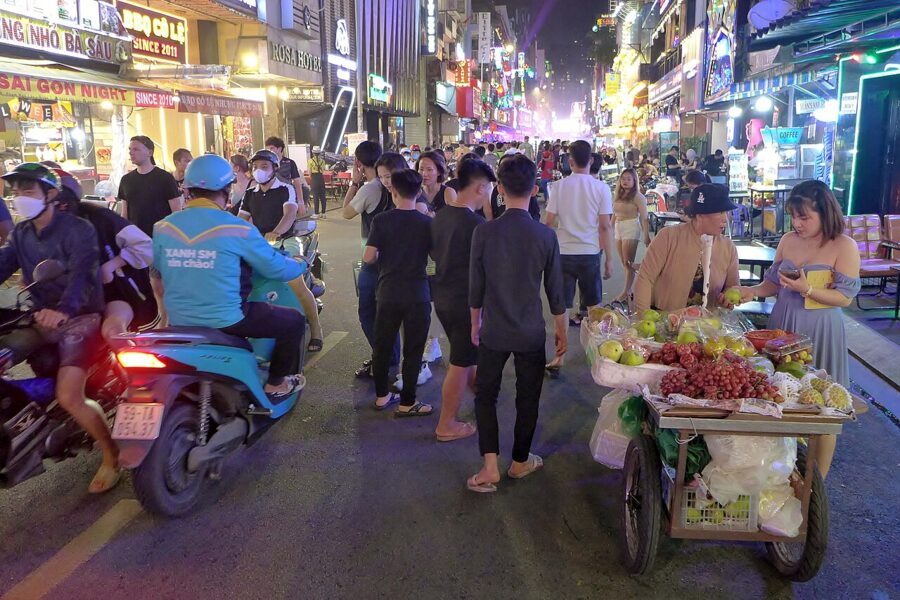
Most overcharging in Saigon is small: a tourist price a few thousand dong above the local one. The scams worth knowing cluster around Bùi Viện Street, the market streets of the center and the airport, and they work by getting you to agree before you know the price. Ask first, every time, and stay friendly.

Cyclos
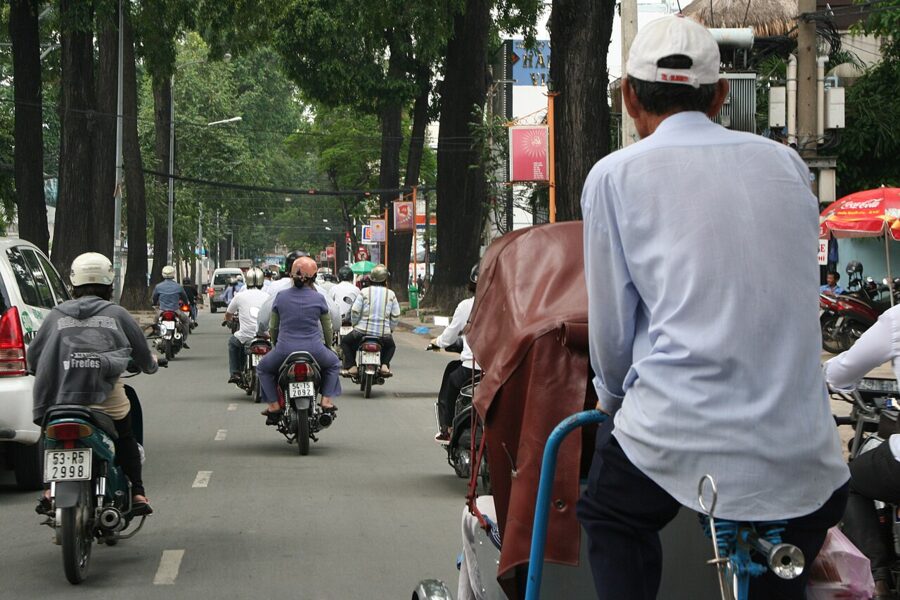
A cyclo ride through the old center is a pleasure at the right price and miserable at the wrong one. Agree the fare, the route and the time before you sit down, show the number written on your phone, and confirm whether it is per person. In a 2025 Hanoi case an Australian family paid about three times the regulated rate. Take cyclos from a stand you can find again, or through your hotel.

Shoe-shiners and coconut sellers
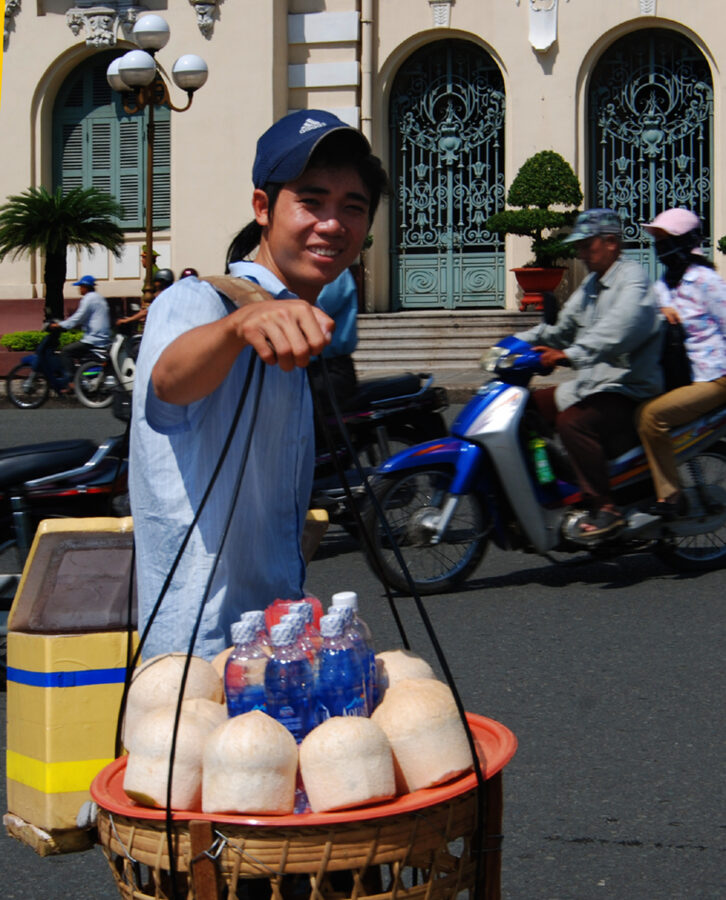
A shoe-shiner points at your sneakers, says they are coming apart, and starts gluing before you say yes; the “repair” then costs many times the quoted shine. Say “không” (no) clearly and keep walking. Fruit vendors sometimes put their shoulder pole on you for a photo, then demand payment for the photo and the fruit. A smiling refusal and a step away is enough.

Bargaining
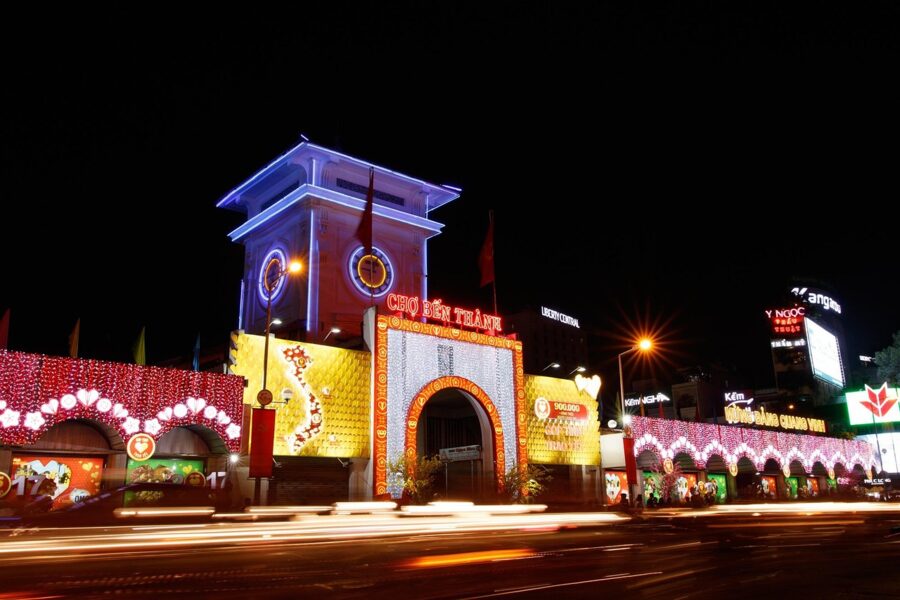
Prices at Bến Thành Market and the souvenir stalls around it are rarely marked, and bargaining is expected; food stalls, malls and anything with a printed price are fixed. Ask, offer less, settle with a smile, and don’t fight over a few thousand dong. Once a price is agreed, buy. The shopping guide has more on where prices are fixed.
Taxis
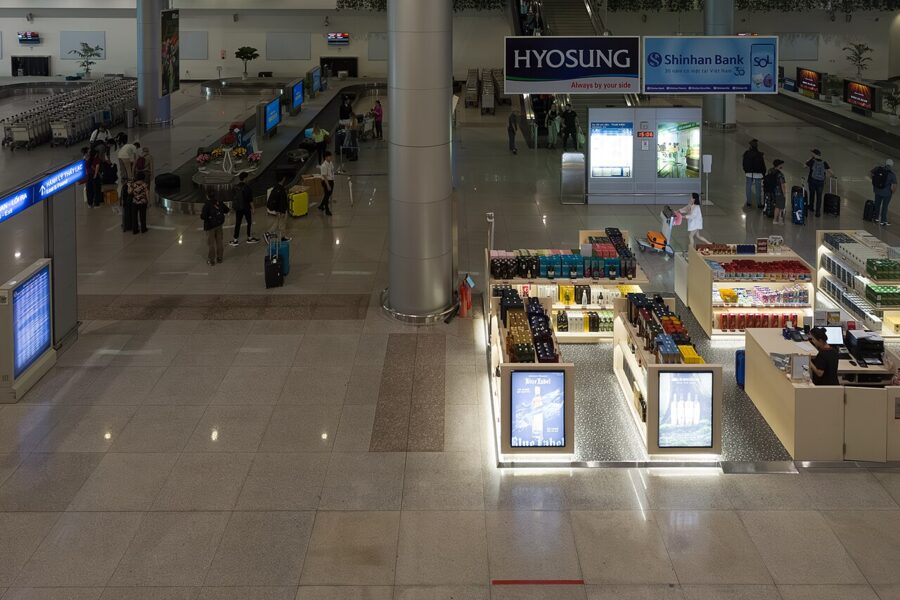
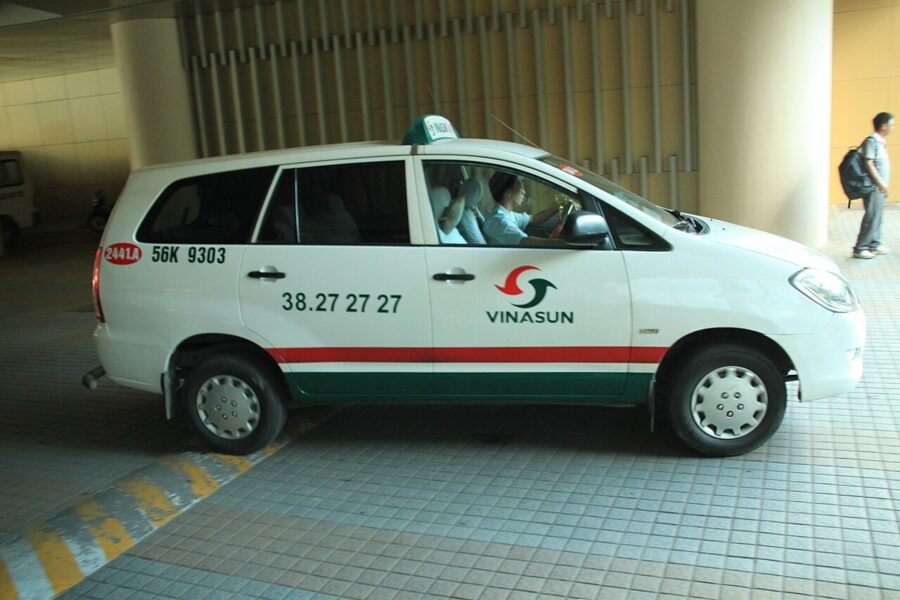
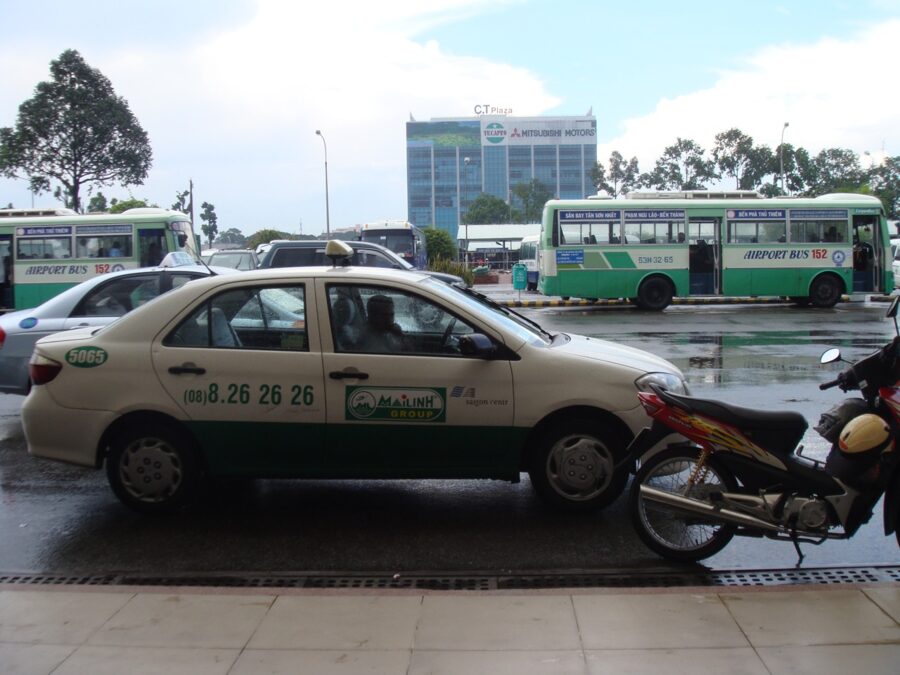
At Tân Sơn Nhất airport touts approach arriving passengers, and in August 2026 the city’s police and tourism department agreed to step up patrols against touting and overcharging. Book a car in an app or use the official taxi rank. On the street, Vinasun and Mai Linh have look-alikes with similar colors and slightly different names; read the roof sign and the door, and make sure the meter starts.


Reports from 2025 and 2026 show the worst cases: 1.4 million₫ (about US$53) for a ride of under a kilometer, a Hanoi motorbike trip at fourteen times the usual price. Both began with a driver using neither an app nor a meter.
Money and change
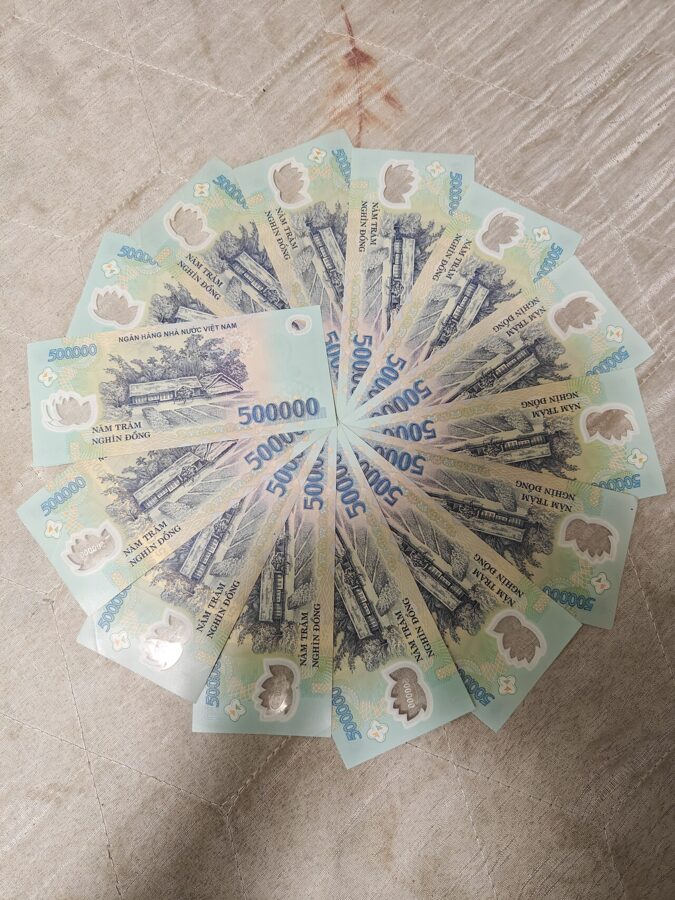
Vietnam’s polymer notes run from 10,000₫ to 500,000₫, and the blue 20,000 and the blue-green 500,000 are easy to confuse in a dim shop. Sort your notes by value, count your change, and say the amount aloud as you pay. A 500,000 note is worth about US$19, and handing it over for a 20,000 drink is the classic mistake.
Change money at a bank or a licensed counter that posts its rates; the law allows exchange only there. The banking and currency guide covers cards, ATMs and fees. Online, the city’s police warn of increasingly convincing fake booking pages for hotels, tours and tickets; book through sites you already know.
Snatch theft
Violent crime against visitors is rare; bag and phone snatching by thieves on motorbikes is not. Carry your bag across your body on the side away from the road, don’t stand at the curb reading your phone, and leave your passport in the hotel safe.
Laws that catch visitors
A few rules are strict enough to end a trip, and several changed in 2025.
Drink-driving
Any alcohol is too much. The fines under Decree 168/2024, in force since 1 January 2025 and confirmed as current by the traffic police in 2026, start at the first trace. On a motorbike, up to 50 milligrams per 100 milliliters of blood (0.25 per liter of breath) costs 2 to 3 million₫ (about US$75 to US$115). Above 80 milligrams (0.4 per liter of breath) it is 8 to 10 million₫ (about US$305 to US$380) and the loss of your licence for 22 to 24 months; in a car the top band is 30 to 40 million₫ (about US$1,140 to US$1,520), and even cyclists are fined.

Vapes and heated tobacco
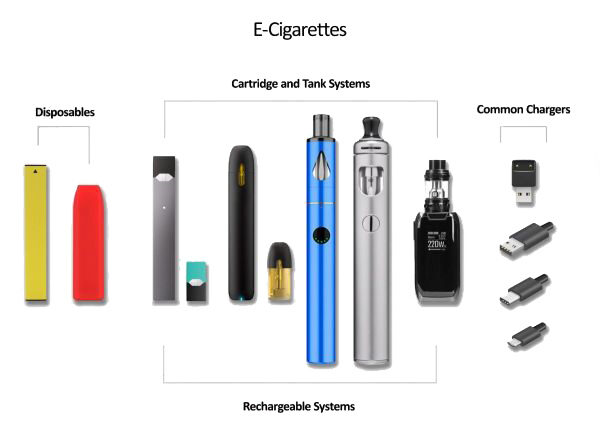
Since 1 January 2025, e-cigarettes and heated tobacco are banned in Vietnam: production, sale, import, storage, transport and use. Decree 371, in force since 31 December 2025, fines users 3 to 5 million₫ (about US$115 to US$190) and requires the device to be destroyed. There is no exception for visitors, so leave the vape at home.
Drugs
Vietnam’s drug laws are among the harshest in the region. A Penal Code amendment in force since 1 July 2025 removed the death penalty for transporting drugs, but it remains for producing and trading them, and possession of even small amounts is a criminal matter. Cannabis is illegal in every form.
Passports and registration
Every hotel, guesthouse and homestay in Ho Chi Minh City must register its guests with the police, so expect to show your passport at check-in. Carry a copy or a photo of the photo page and your visa or entry stamp. Don’t take wildlife products home, and ask for paperwork before buying anything sold as an antique.
If something goes wrong
The national emergency numbers are 113 for police, 114 for fire and rescue, and 115 for an ambulance. Ho Chi Minh City’s visitor support line is 1022, extension 8, which the city’s Department of Tourism runs for visitors’ questions and complaints, including overcharging. A photo of the receipt, the stall or the taxi number makes a complaint much easier to follow up.
If you are robbed, report it at the ward police station (công an phường); your insurer will want the report. If your passport is lost, report it to the police, then your embassy or consulate for a replacement, then the immigration office, which must issue an exit visa before you can leave. For illness or injury, the hospitals guide covers where to go.
In any dispute, keep your voice down, smile and state what you agreed. If the other side won’t move, pay what you think is fair, take a photo and walk away to report it. Then go back to Lê Lợi Boulevard at six in the evening, step off the curb at a walking pace, and let the city flow around you.