At half past nine in the morning the glass doors of Takashimaya slide open on Nam Kỳ Khởi Nghĩa street, and the first customers walk into air conditioning, Japanese packaging and prices printed on every tag. A few minutes down Lê Lợi, Bến Thành Market has been trading since dawn, and in its clothing and souvenir aisles hardly a stall shows a price. A short walk east runs Đồng Khởi, the old rue Catinat, which has been the city’s smartest shopping street since the French laid it out in the 1860s.
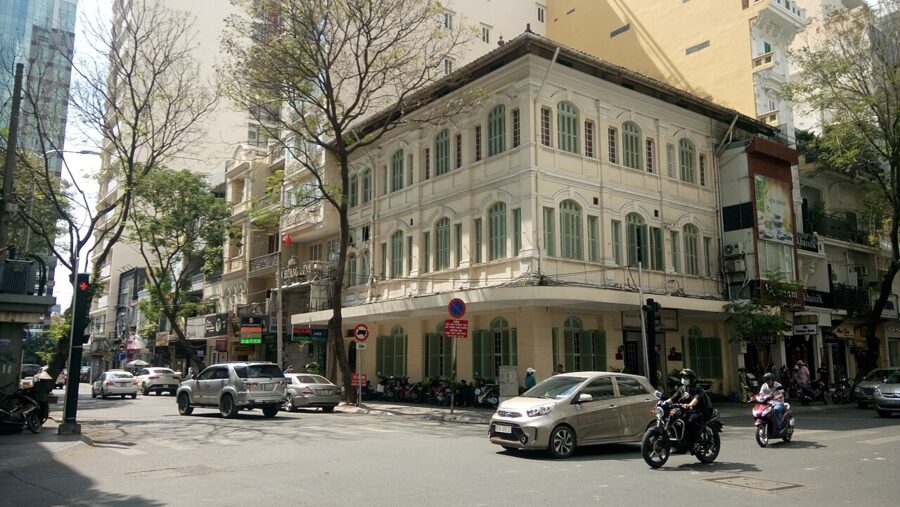

Saigon shopping works on both systems at once, and most of the trouble visitors have with it comes from not knowing which one they are in. In a mall or a branded shop you pay what the tag says. In a market, an unmarked stall or a souvenir arcade, the first price is an opening move.
The good news is that the things worth carrying home are mostly cheap, light and made here: a coffee filter, a bag of beans, a lacquer box, a silk scarf, a bowl from a kiln town an hour up the road. The less good news is that the city also sells a great many fake designer goods, and that a few of the most tempting purchases, antiques and fish sauce among them, come with rules about taking them out of the country.

On this page
What is worth carrying home
Start with what Vietnam makes well and sells cheaply. That rules out most electronics and almost all branded fashion, which cost about what they cost at home, and rules in a short list of crafts and foods that are hard to get, or expensive, anywhere else.
Lacquer: the real thing and the painted thing
Vietnamese lacquer, sơn mài, is made with sơn ta, the sap of a lacquer tree grown mainly in the northern midlands. It goes on in many thin layers over wood, each one dried and then sanded back, which is where the name comes from: mài means to grind or polish. Eggshell, mother-of-pearl, gold and silver leaf are set between the layers, and the final polish brings the colors up through the surface.
Craftsmen had used lacquer on altars, boxes and temple furniture for centuries. In the 1930s, teachers and students at the École des Beaux-Arts de l’Indochine in Hanoi turned it into a medium for painting, and painters such as Nguyễn Gia Trí made it a national art form. The best place to see what it can do is the Ho Chi Minh City Fine Arts Museum, before you buy anything.
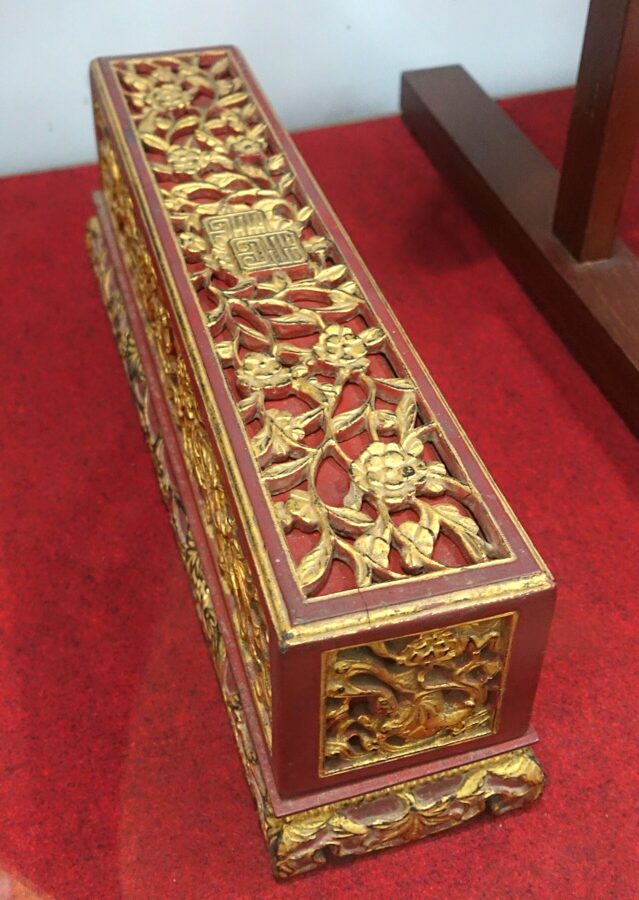
Much of the lacquerware in the souvenir trade is something else: industrial paint or resin sprayed over pressed board and given a high gloss. It is not a fraud if it is sold as what it is, and a painted bowl at a few dollars makes a fine gift. Just don’t pay real-lacquer prices for it.
The differences show if you look. Real lacquer has depth, as if the color sits under glass; painted ware looks like a coat on top. Turn a box over: the underside and the inside of a well-made piece are finished as carefully as the lid. Inlaid eggshell has a fine, irregular crackle that a printed pattern cannot fake, and a fresh solvent smell means synthetic paint.
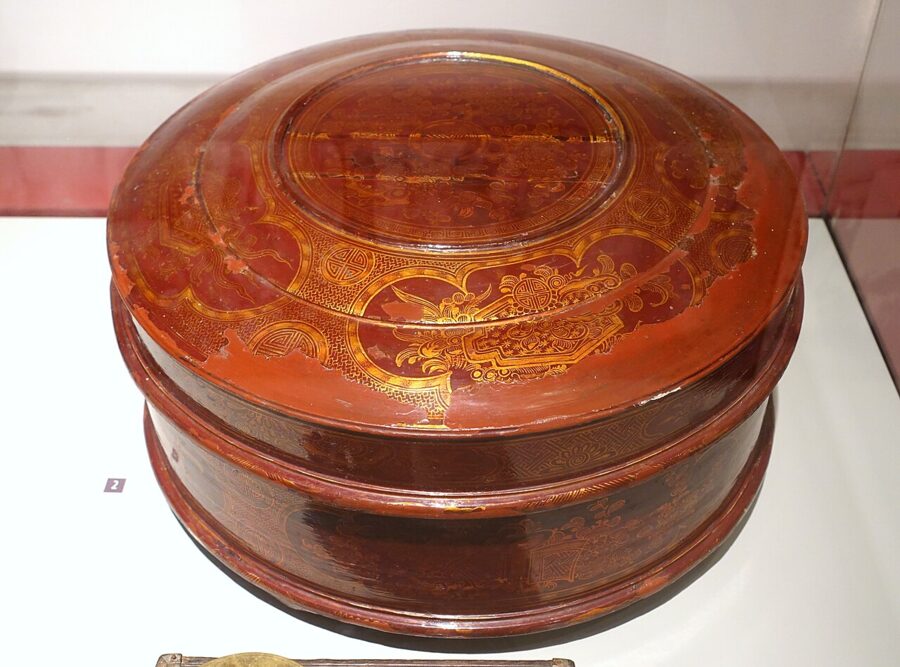
The south has its own lacquer village at Tương Bình Hiệp, now neighborhoods of Chánh Hiệp ward in the old Bình Dương province, which the city absorbed in 2025. In the center, Hanoia, a lacquer brand with a flagship at 132-134 Đồng Khởi, sells contemporary pieces at fixed prices and is open 9am to 9pm daily. It is a good place to learn what good finishing looks like, even if you buy elsewhere.
Ceramics: Bát Tràng, Biên Hòa and the kilns of Bình Dương
Three ceramic traditions meet in Saigon’s shops. Bát Tràng, a village on the Red River outside Hanoi, has made cups and bowls since at least the 15th century, when the scholar Nguyễn Trãi recorded it sending tableware to the court as tribute. Its blue-and-white and crackle-glazed wares fill shops across the country, and the quality runs from heirloom to bargain bin.
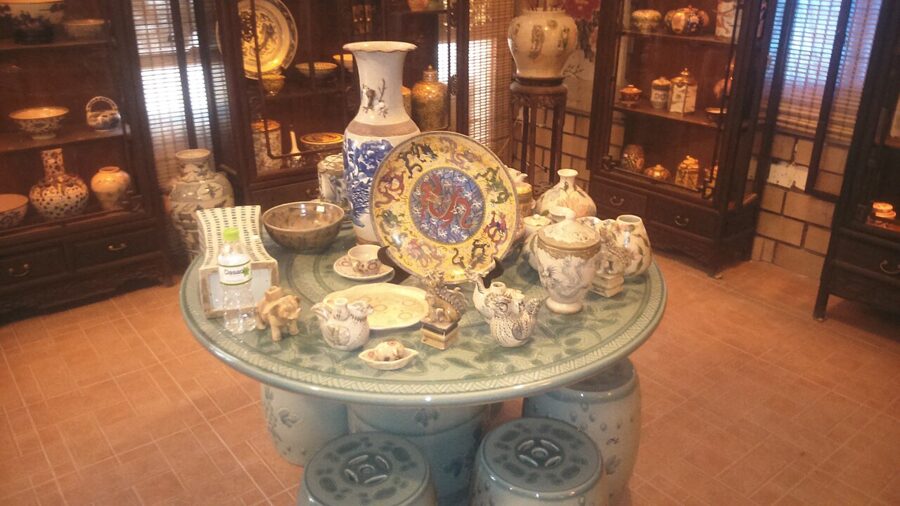

Biên Hòa, across the Đồng Nai river to the northeast, is the south’s own. Its art school, founded under the French, became known for glazes in deep greens, browns and blues, and Biên Hòa-style planters and jars are still sold all over the south. The ceramic reliefs above the gates of Bến Thành were made by the school’s potters in 1952.
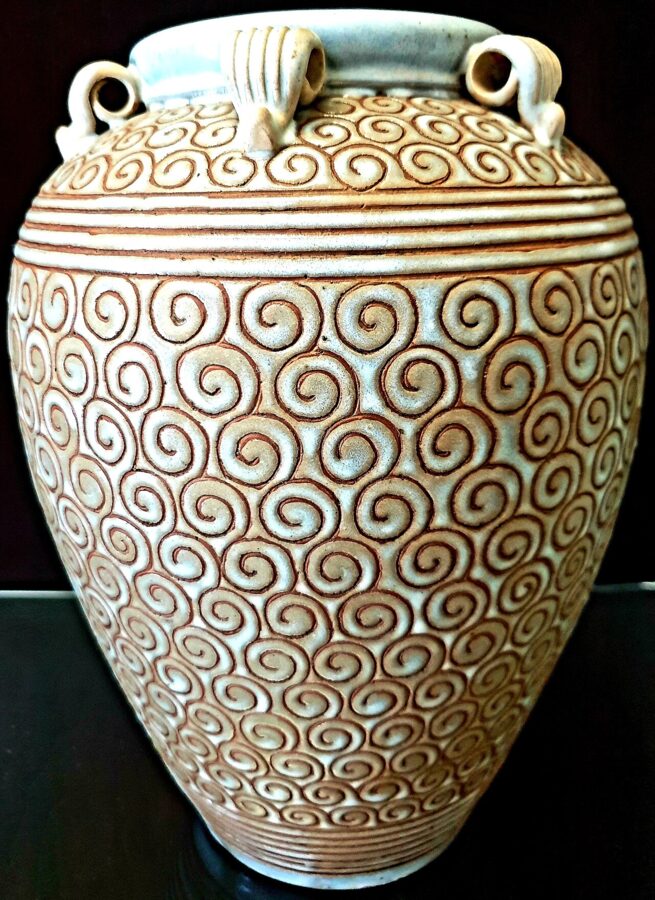
The third is closer still. Lái Thiêu, now a ward of the city in the old Bình Dương province, has fired everyday pottery for Chinese and Vietnamese households for generations: rice bowls, teapots and painted jars with roosters and flowers. Bình Dương is also home to Minh Long, the country’s best-known maker of fine porcelain, whose factory stands in Thuận An ward.
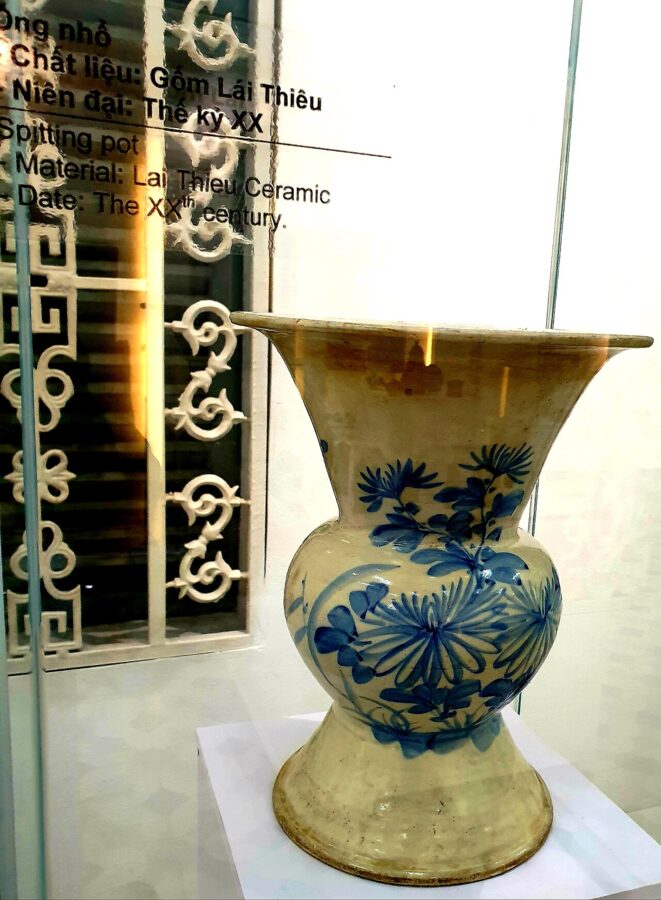
For cheap and cheerful, go to Bình Tây Market in Chợ Lớn, where the ground floor sells rice bowls, soup spoons and teacups by the dozen. For gifts that will survive a suitcase, buy small: cups, a teapot, chopstick rests, and ask the shop to wrap each piece in newspaper and bubble wrap.
Coffee and the phin
Vietnam is one of the world’s largest coffee producers, and most of it is robusta, grown in the Central Highlands around Buôn Ma Thuột in Đắk Lắk. Robusta is stronger and more bitter than arabica, which is why the Vietnamese way is to drip it slowly through a phin, a small metal filter that sits on the glass, onto a layer of sweetened condensed milk.
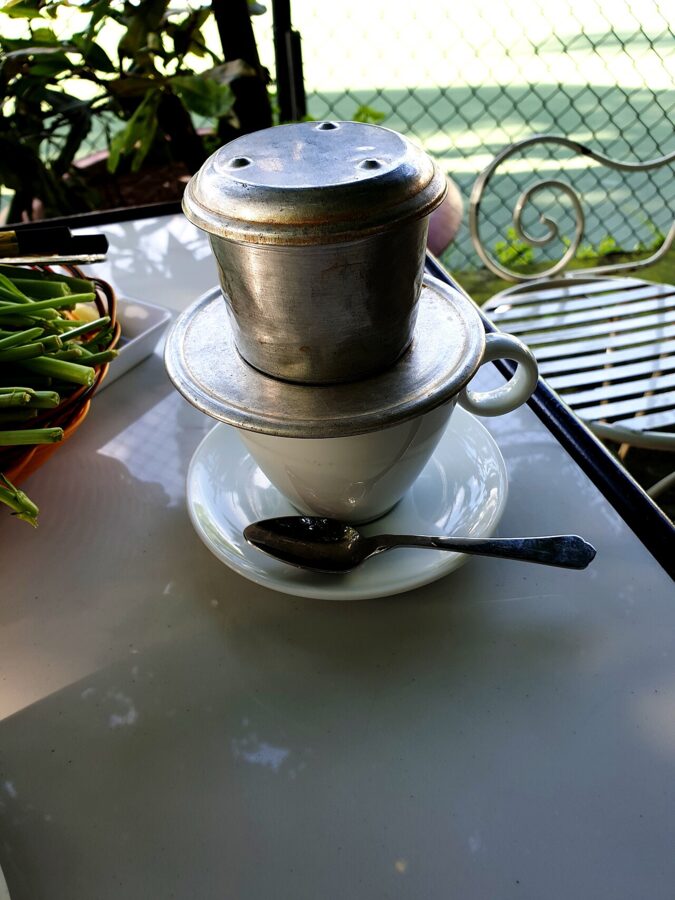
Buy the filter and a bag of ground coffee together, since the grind matters: phin coffee is ground medium-coarse, and a fine espresso grind clogs it. Ask for robusta for the classic strong, chocolatey cup, or a robusta-arabica blend if you drink it black. Many local roasts include butter or other flavorings in the roasting, so read the label if you want plain coffee.
Skip weasel coffee, cà phê chồn. The beans are passed through civets, and there is no way to tell at a market stall whether a bag sold under that name is what it claims, or simply flavored coffee at a high price. Where it is genuine, it usually comes from caged animals fed on coffee cherries, which is reason enough to leave it on the shelf.
Fish sauce, pepper and cashews
Fish sauce, nước mắm, is the base of southern cooking, and the island of Phú Quốc makes the most famous. Producers there salt the anchovies on the boat, three parts fish to one of salt, and ferment them for about a year in tall wooden vats. Phú Quốc’s name has been protected as a designation of origin in Vietnam since 2001, the island has been a special zone of An Giang province since the 2025 reorganization, and its fish-sauce making was listed as national intangible heritage in 2021.
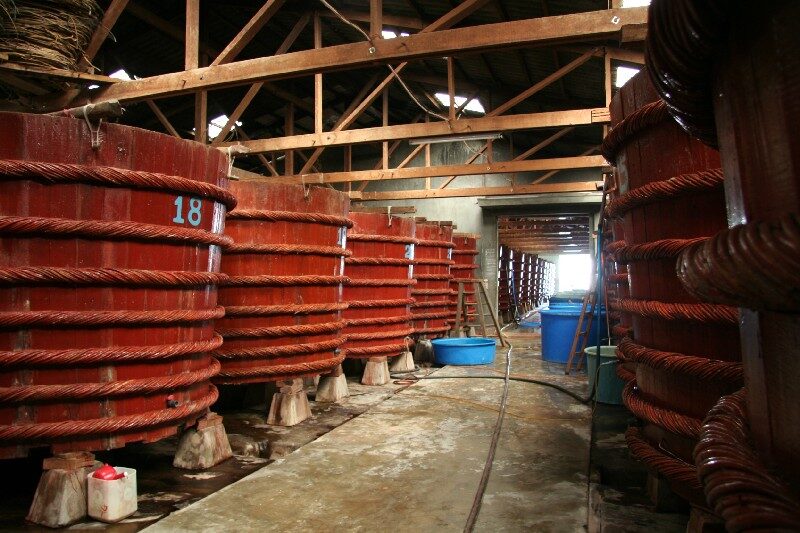

The label tells you what you are getting. Look for the protein content, độ đạm, printed in degrees: 30 or 40 is first-press and rich, while 10 or 15 is diluted kitchen sauce. Supermarkets such as Co.opmart and WinMart sell the reliable brands at fixed prices, and the airline rules on carrying it are below.
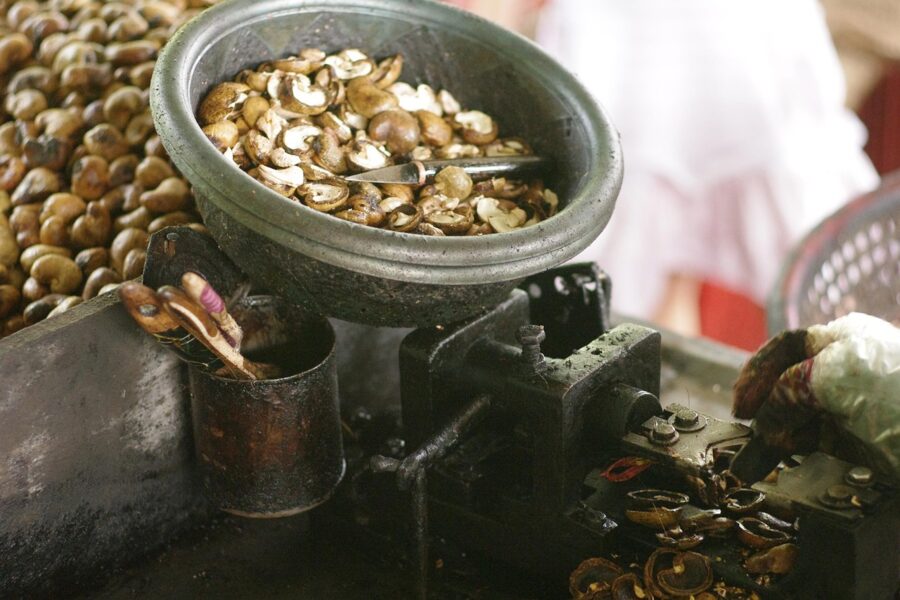
Vietnam is also the world’s biggest exporter of black pepper, and peppercorns from the Central Highlands and Phú Quốc are cheap, fresh and light. Cashews come mostly from the old Bình Phước province, now part of Đồng Nai; they are sold roasted with the papery skin on, salted or plain, in vacuum packs that travel well. Buy sealed packs with a printed date rather than nuts scooped from an open sack.
Chocolate and the newer makers
Vietnamese cacao is a small crop with a big reputation. Maison Marou, the shop of the bean-to-bar maker Marou at 169 Calmette, sells bars named for the single provinces their beans come from. It is open 9am to 10pm Monday to Thursday and until 10:30pm Friday to Sunday, and its own site lists most bars at around 200,000 to 210,000₫ (about US$8).
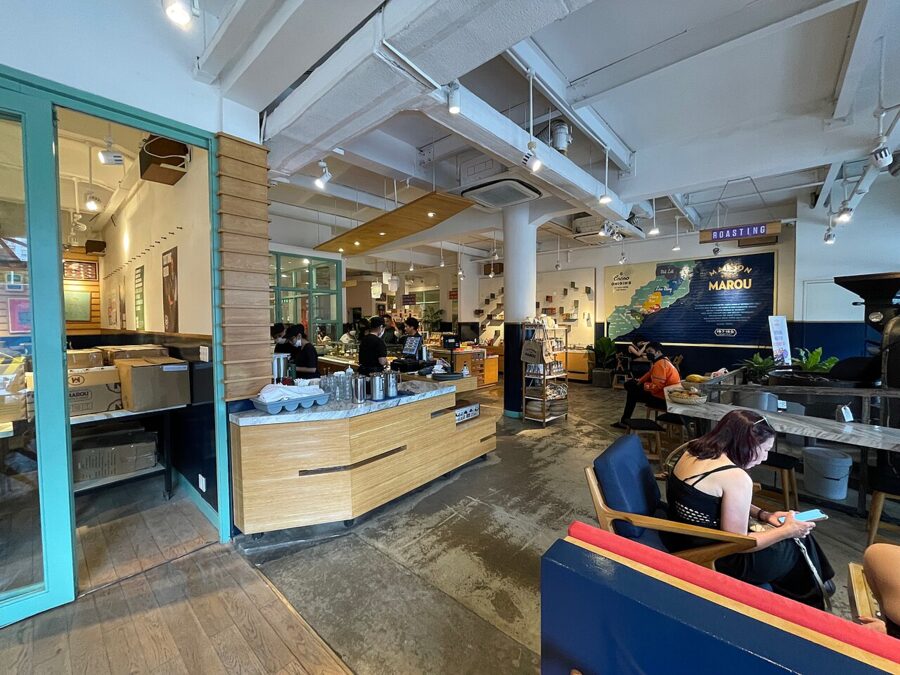

Chocolate melts in Saigon. Buy it last, keep it out of the sun, and put it in your hand luggage rather than a hold that may sit on hot tarmac.
Hats, posters and things made by designers
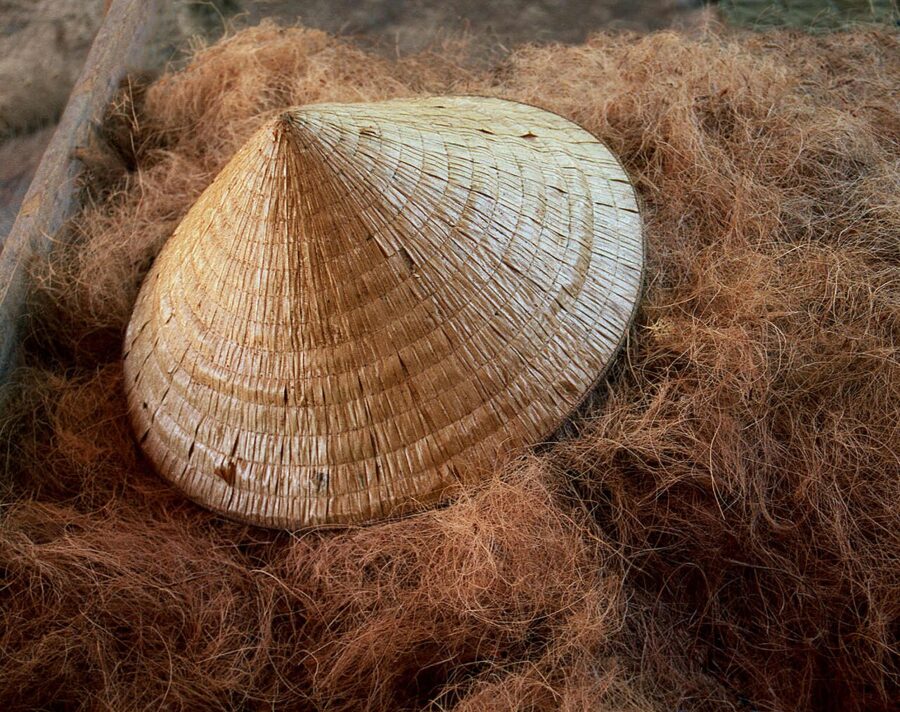
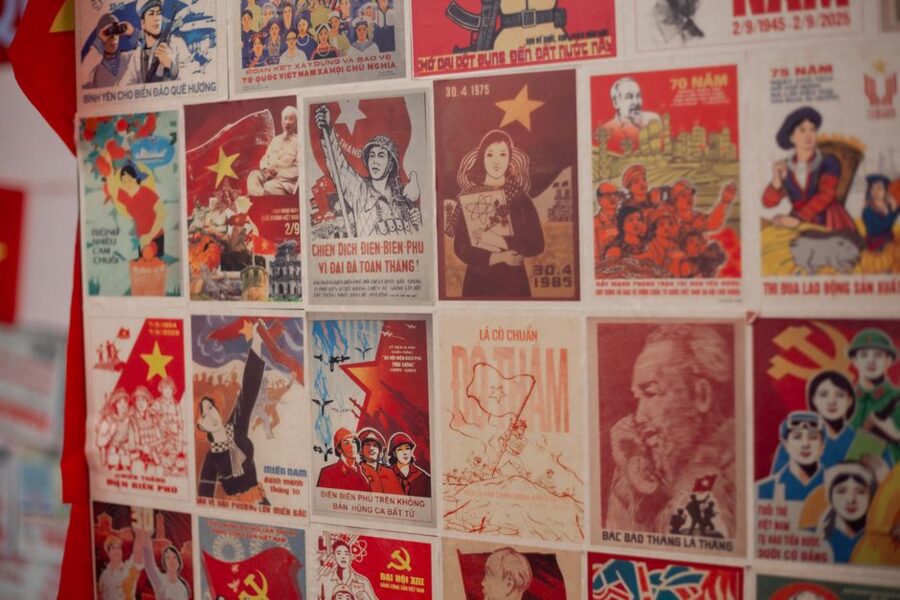
The conical hat, nón lá, is sold everywhere from Bến Thành to the airport. The palm-leaf ones are cheap and crush easily in a suitcase; a hat with a poem or picture stitched between the layers, visible when you hold it up to the light, is the better buy. Reproduction propaganda posters, sold printed or hand-painted on canvas, are another staple of the Đồng Khởi and Bến Thành shops; the hand-painted copies cost more and look it.

For souvenirs that are neither plastic nor kitsch, Saigon now has a set of design shops selling the work of local makers. OHQUAO, at 58/12 Phạm Ngọc Thạch in Xuân Hoà ward, stocks more than a hundred Vietnamese brands: tote bags, prints, stationery and homeware, open 9am to 8pm daily. Its Souvenir Dept. branch at 125 Hai Bà Trưng, open 9am to 7pm, is closer to the center.
Where to shop
Most of what a visitor buys is sold within a kilometer of Bến Thành Market. The exceptions are Chợ Lớn, twenty to thirty minutes west by Grab, and Tân Định, a short ride north.
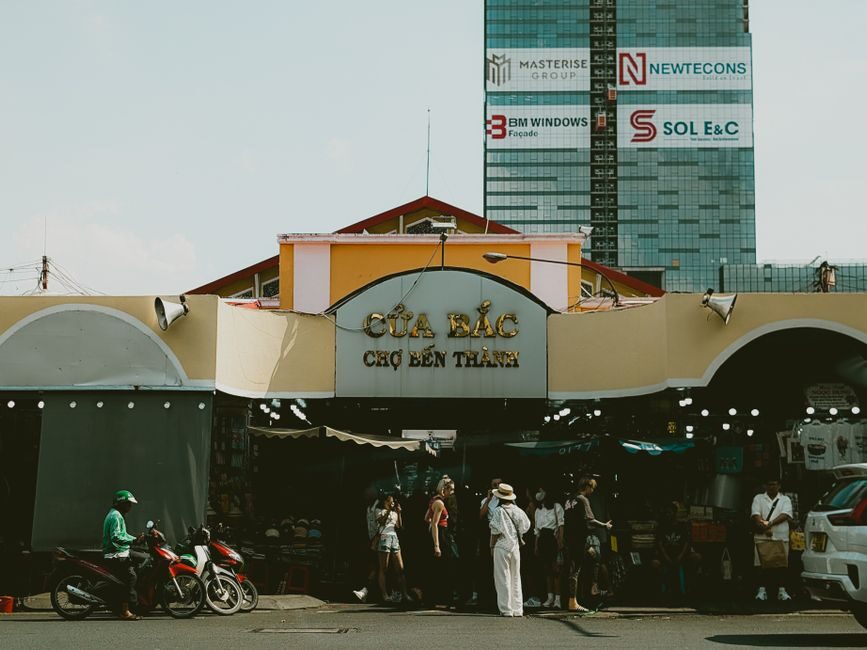
Bến Thành Market
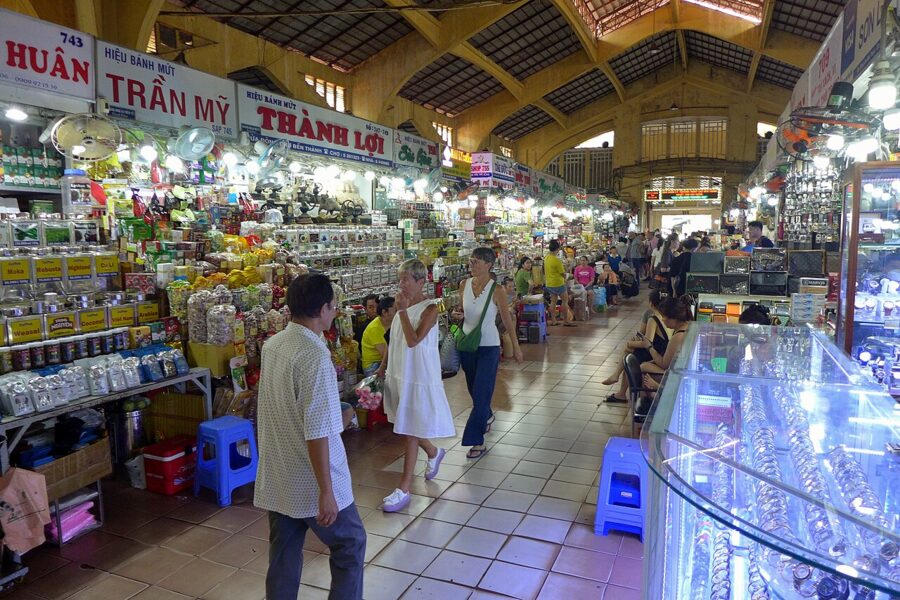
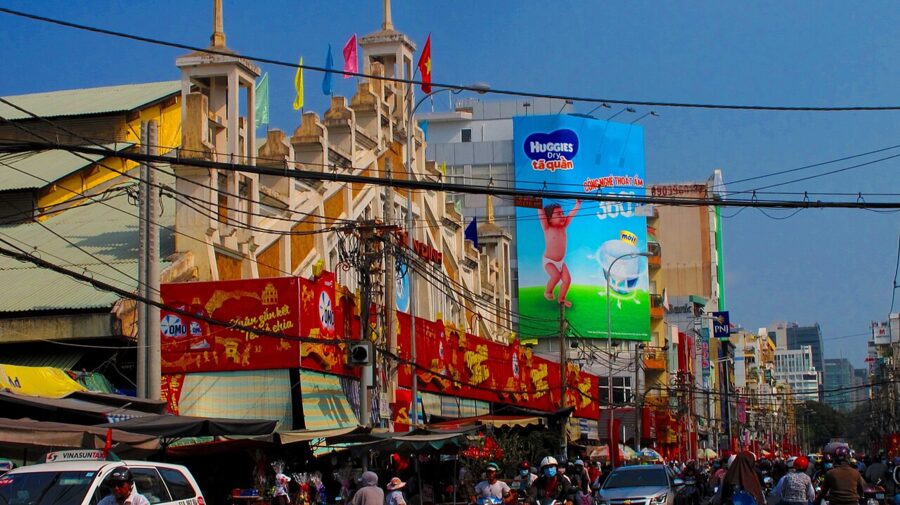
The market is the obvious start and the most expensive of the city’s markets, but it has everything under one roof and its rules work in your favor. Under the market’s regulations stalls open from 7am to 10pm, with fresh food and cooked food allowed to start at 4am. Traders are required to post prices and sell at them, and you are free to check labels, weights and quality before you buy.
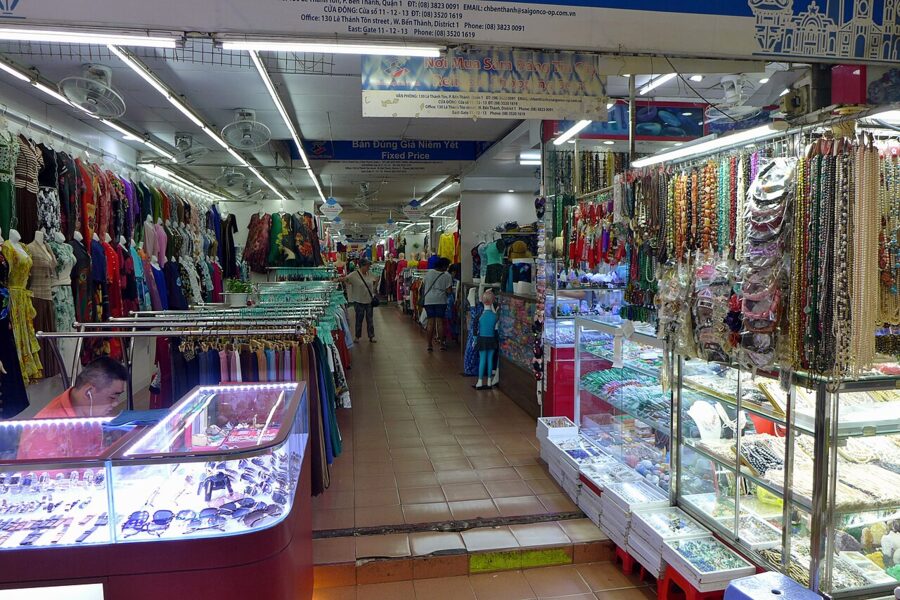

The gates sort the stock. Fabric, áo dài and ready-made clothes crowd the south gate under the clock tower; coffee, tea, dried fruit, fish sauce and spices are by the east gate on Phan Bội Châu; lacquer, ceramics and wood carving are on the west side toward Phan Chu Trinh. Every stall carries a number on a small sign, which helps when you want to find one again.
In practice, many clothing and souvenir stalls post nothing. In 2023 the management suspended a stall for seven days after a Japanese visitor filmed it asking 700,000₫ for three pairs of socks, and the management office at the south gate takes complaints.
Bình Tây and Chợ Lớn
Bình Tây Market, the big yellow hall at 57A Tháp Mười in Chợ Lớn, sells wholesale first. Prices are set for traders buying by the dozen, some stalls will not split a pack, and nobody is performing for tourists, which is the reason to come. Stalls trade from about 6am to 6pm, with shutters starting to come down from about 4pm.
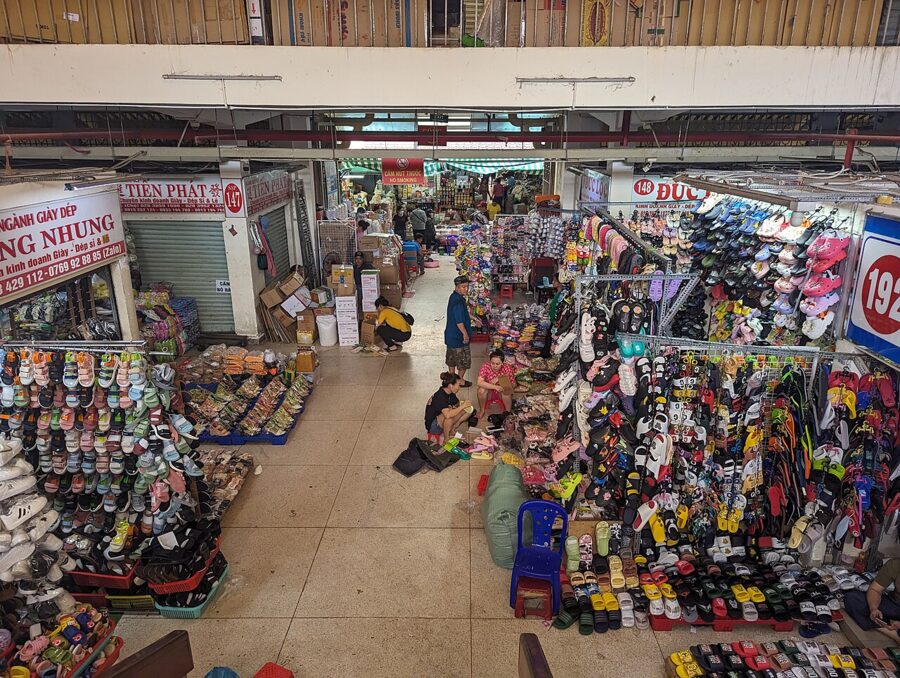
Ceramics, incense and conical hats fill the ground floor and the Tháp Mười frontage; tea, coffee, spices and dried seafood the Trần Bình side; clothing and textiles upstairs. Around the market, Chợ Lớn sorts its trades by street: herbal medicine on Hải Thượng Lãn Ông, and cloth on Trần Hưng Đạo, Đỗ Ngọc Thạnh and Dương Tử Giang, branded in January 2025 as the Soái Kình Lâm fabric street, with 96 shops and firms taking part.
Đồng Khởi and Lê Thánh Tôn
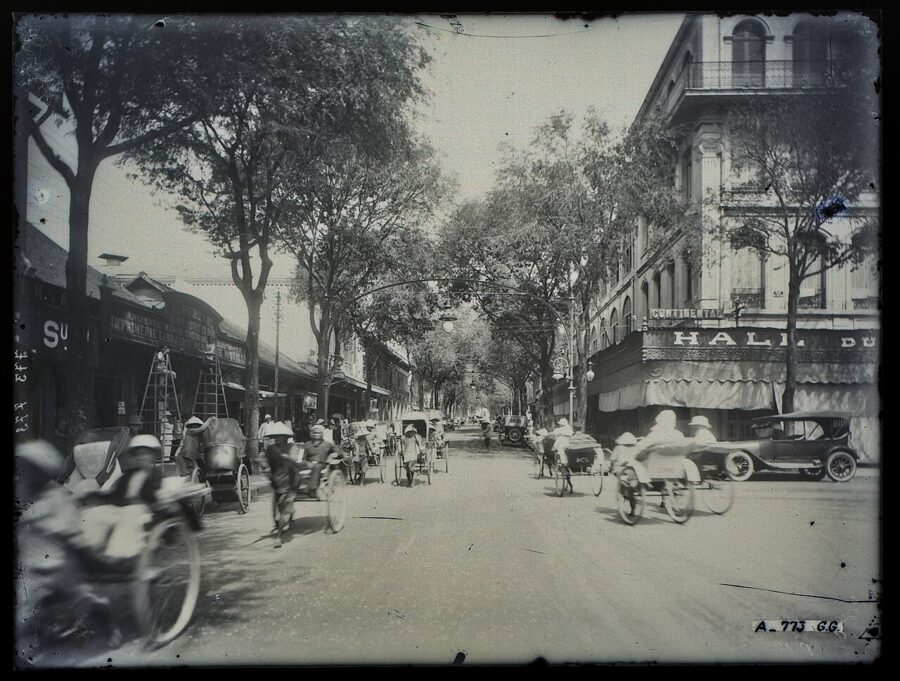
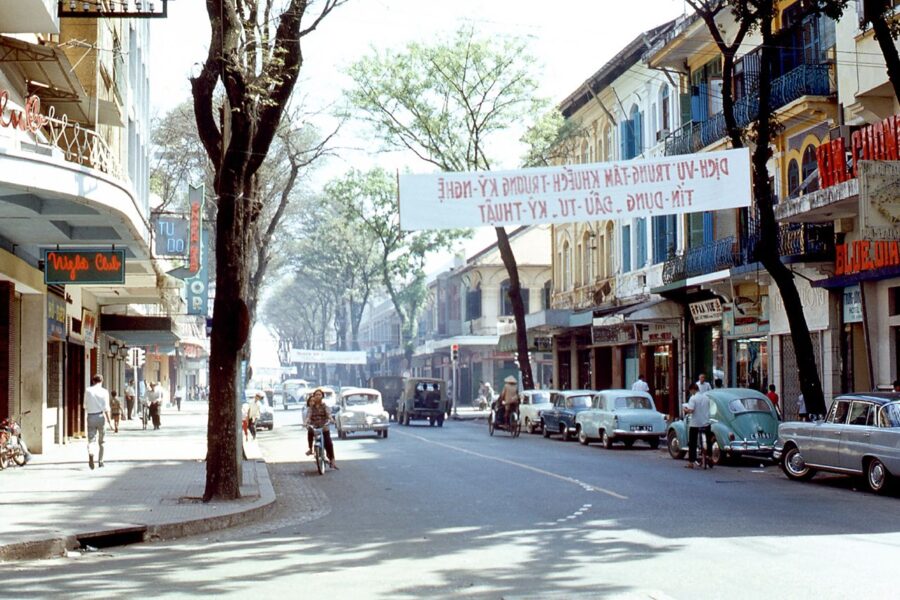
The French laid the street out as Street No. 16 and named it rue Catinat on 1 February 1865, after a marshal of Louis XIV whose name had also been given to the warship that attacked Saigon in 1859. It became the face of the colonial city: the Continental and Majestic hotels, the Givral and Brodard cafés, the Albert Portail bookshop and the Passage Eden arcade all stood on it or opened onto it.
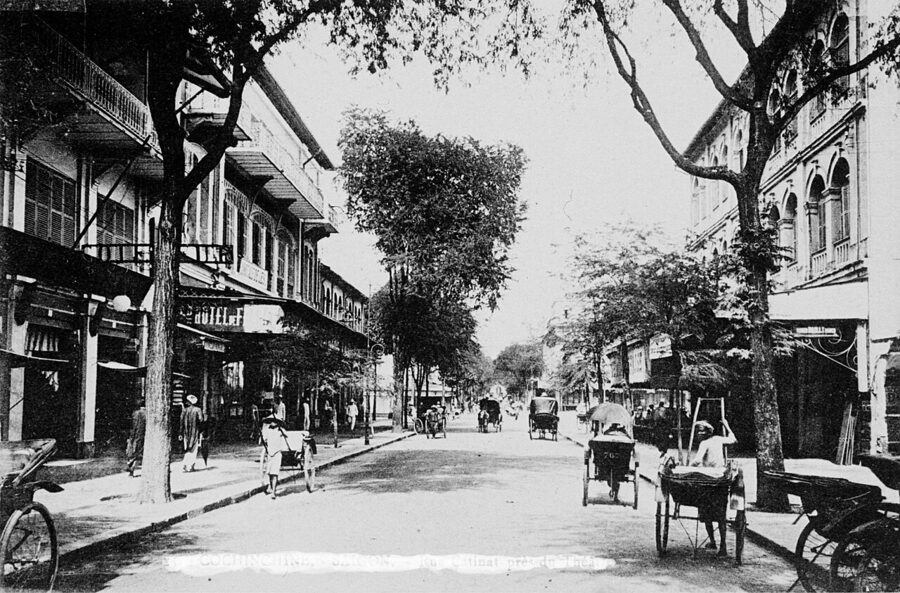
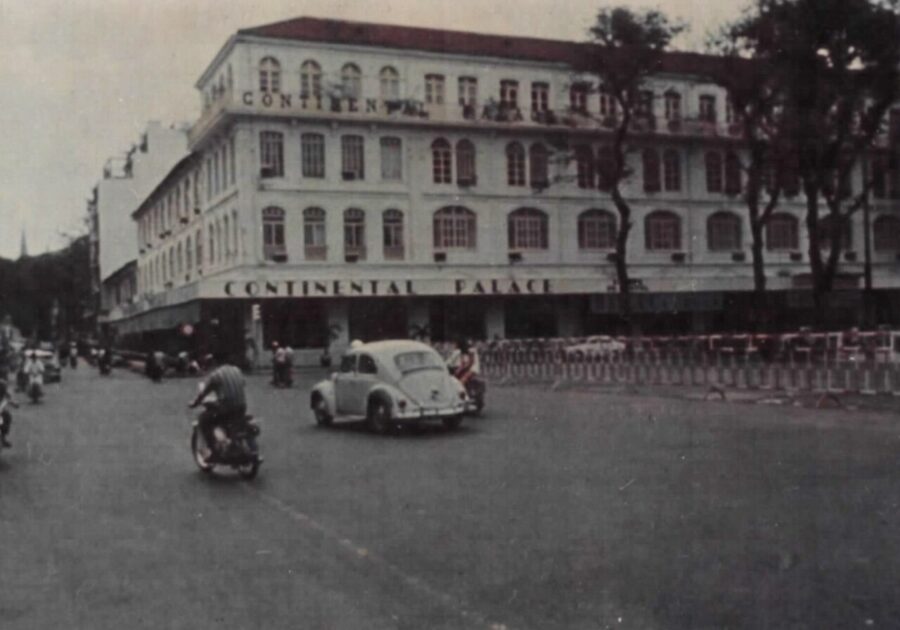
The Saigon government renamed it Tự Do, “Freedom,” in 1955, and through the 1960s it was the street of bars and boutiques that American soldiers and reporters remembered. In 1975 it became Đồng Khởi, “general uprising.” The name changed three times; the trade never stopped.
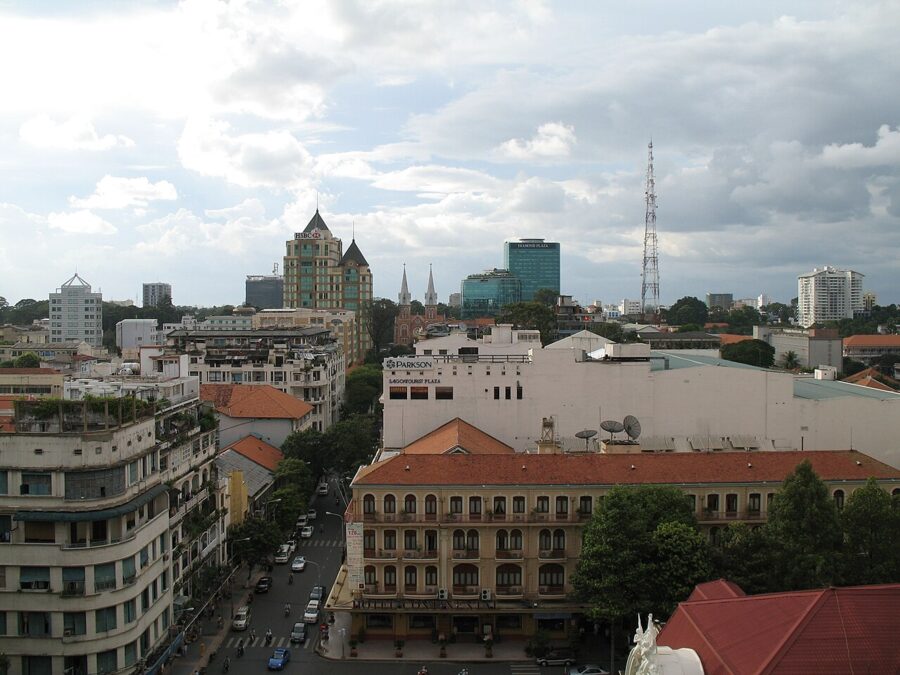

Today the stretch from Lê Lợi down to the river is the place for lacquer, silk, embroidered linen, art galleries and the better souvenir shops, most of them at fixed prices. Lê Thánh Tôn, which crosses it, adds small boutiques and the side of Vincom Center. The galleries along here sell everything from fine original work to copies of famous paintings made to order; ask which you are looking at.

Tân Định Market and the fabric trade
Tân Định Market, at 314-336 Hai Bà Trưng in Tân Định ward, is the city’s other French-era market, rebuilt by the contractor SIDEC and opened on 26 July 1927. It was known as the rich people’s market, with prices to match, and also as the biggest and cheapest place in Saigon to buy fabric remnants. Fabric is still its strength: silk, cotton, linen and suiting by the meter, much of it bought by people taking it straight to a tailor.

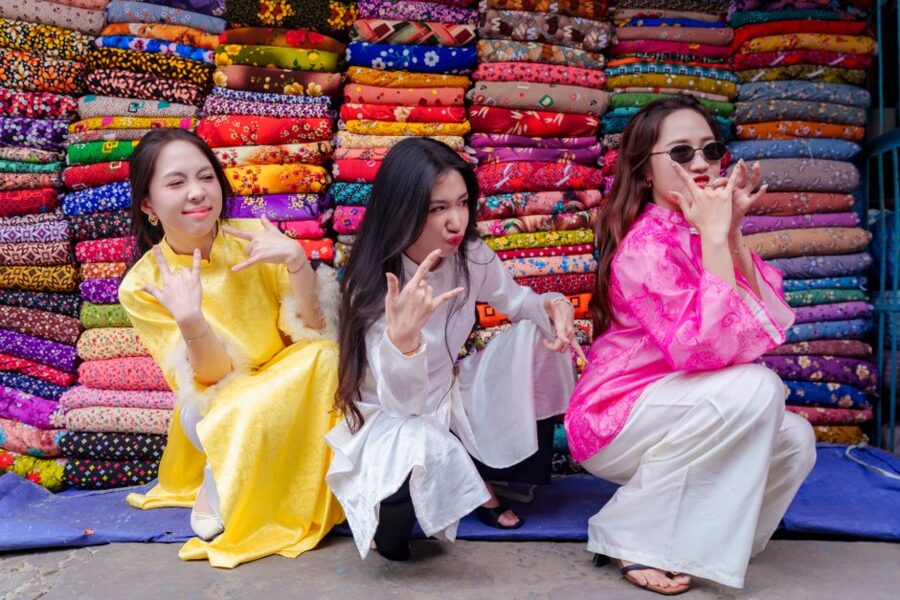
Come in the morning, before the heat builds under the roof. Fabric is priced per meter, and the sellers will tell you how many meters an áo dài, a shirt or a suit takes; ask two stalls and compare.
Dân Sinh Market and Lê Công Kiều
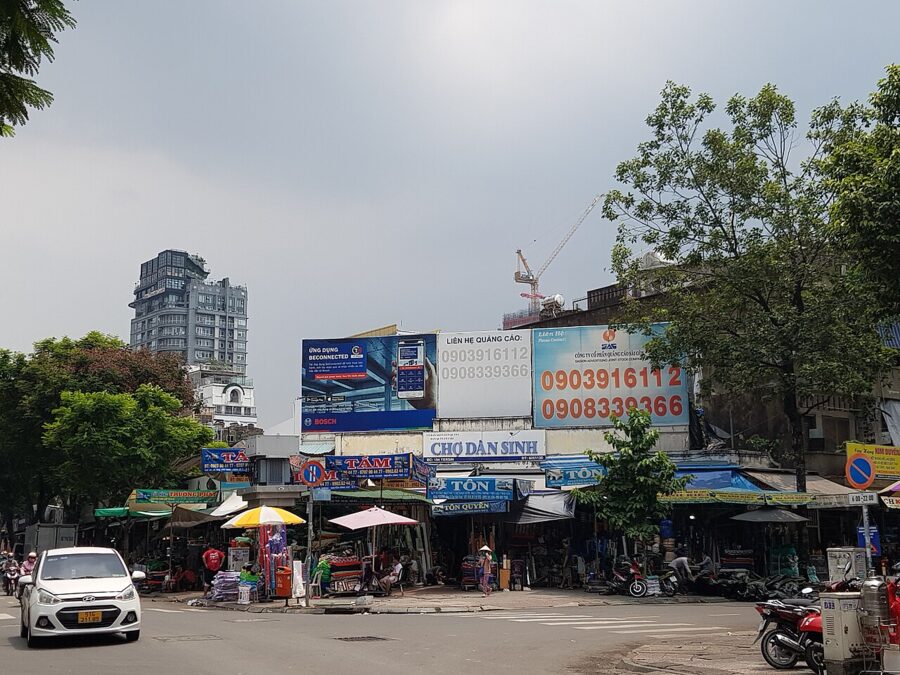
Dân Sinh Market, on the corner of Yersin and Nguyễn Công Trứ, began in late 1954 on the site of the Kim Chung gambling hall and sold used and new American military gear. After 1975 it was where people sold whatever they had; it is remembered as the place that supplied compasses to boat people before they left. Today it is mostly a hardware market, with a few stalls of army surplus, dog tags and old lighters for visitors.
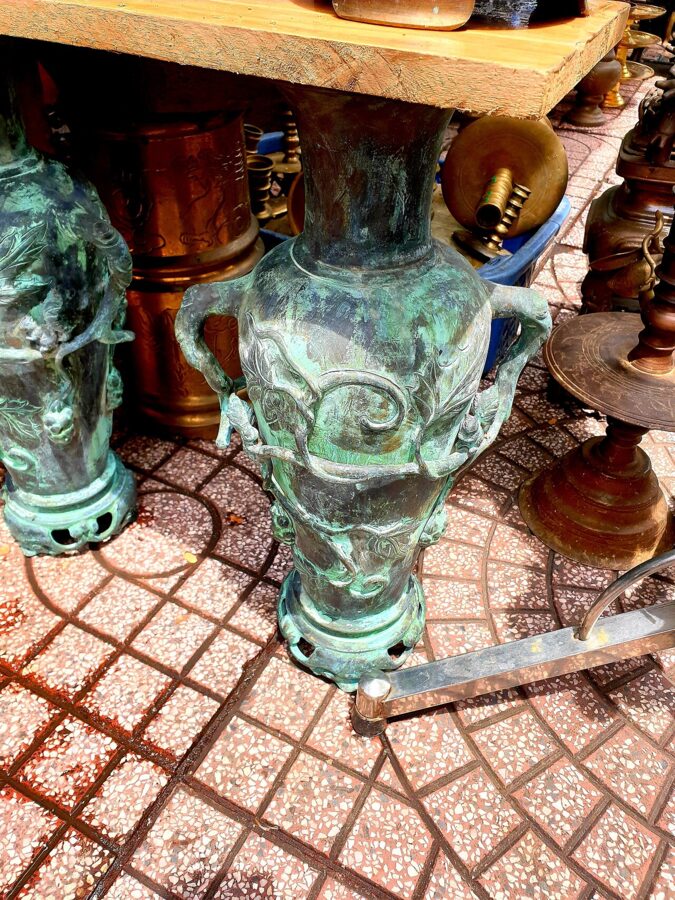
A short walk away, behind Hàm Nghi boulevard, Lê Công Kiều has been Saigon’s antiques street for decades: ceramics, bronzes, clocks, carved wood and Buddhist statues in narrow shops. Most of what is on sale is reproduction or reworked old material, which is fine as long as it is priced that way. The section on customs below explains why a genuine antique is a problem to take home anyway.

Saigon Square
Saigon Square, on Nam Kỳ Khởi Nghĩa near Lê Lợi, is a warren of small stalls selling clothes, bags, shoes, luggage, sunglasses and watches, and it is the place most visitors mean when they talk about cheap shopping in Saigon. It is also the city’s best-known source of copies. In May 2026 the city’s market inspectors reported handling 71 cases at Saigon Square and Bến Thành together, seizing 1,574 counterfeit-branded products worth more than 431 million đồng and ordering them destroyed.
Not everything here is fake: there are unbranded clothes, decent luggage and local labels at fair prices. But the “Rolex,” the “Hermès” bag and the football shirt are what they appear to be at the price. Bargain hard, check stitching and zips, and read the section on fakes before you buy anything with a famous name on it.
The malls
The malls are where you go for air conditioning, fixed prices and real brands, and for the afternoons when Saigon’s weather turns to a downpour. Saigon Centre, at 65 Lê Lợi, holds Takashimaya, the Japanese department store, whose entrance is at 92-94 Nam Kỳ Khởi Nghĩa in Sài Gòn ward. Takashimaya opens 9:30am to 9:30pm Monday to Thursday and 9:30am to 10pm Friday to Sunday and on holidays.
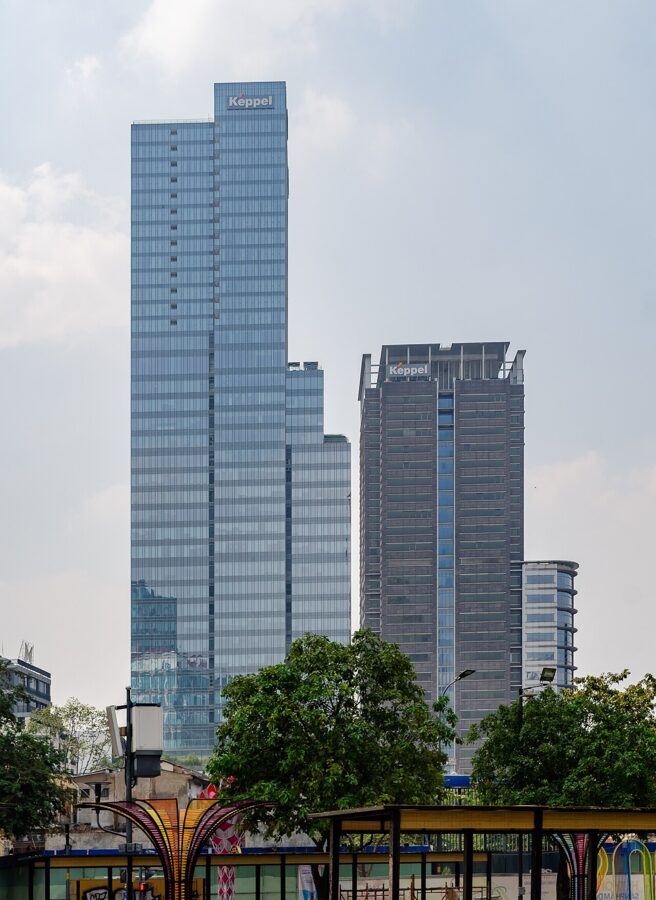

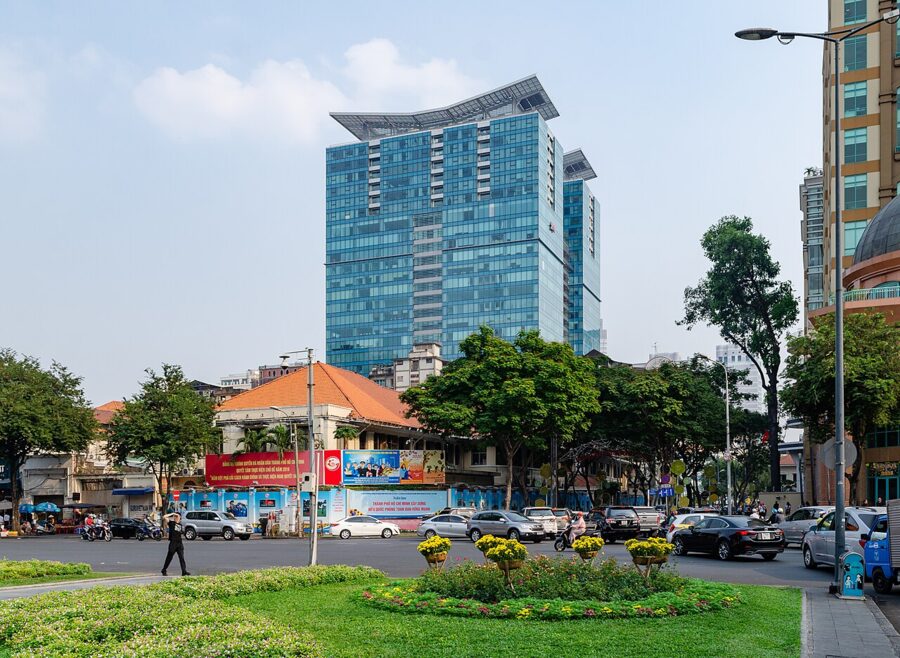
Vincom Center Đồng Khởi, at 72 Lê Thánh Tôn and 45A Lý Tự Trọng, is the other big central mall, with about 150 shops across several floors and 9:30am to 10pm opening hours. Brands cost about what they cost elsewhere in Asia; the reason to come is that the price is fixed, the stock is genuine and you can try things on in comfort.

Having clothes made
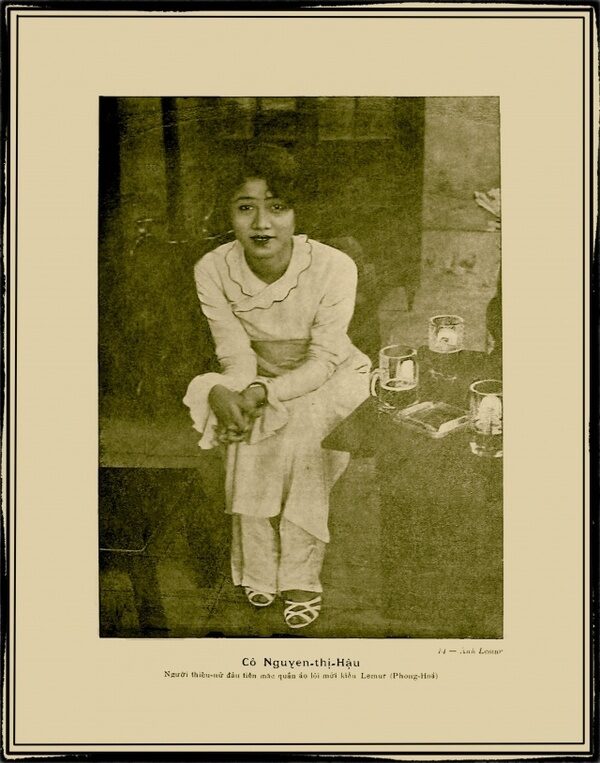
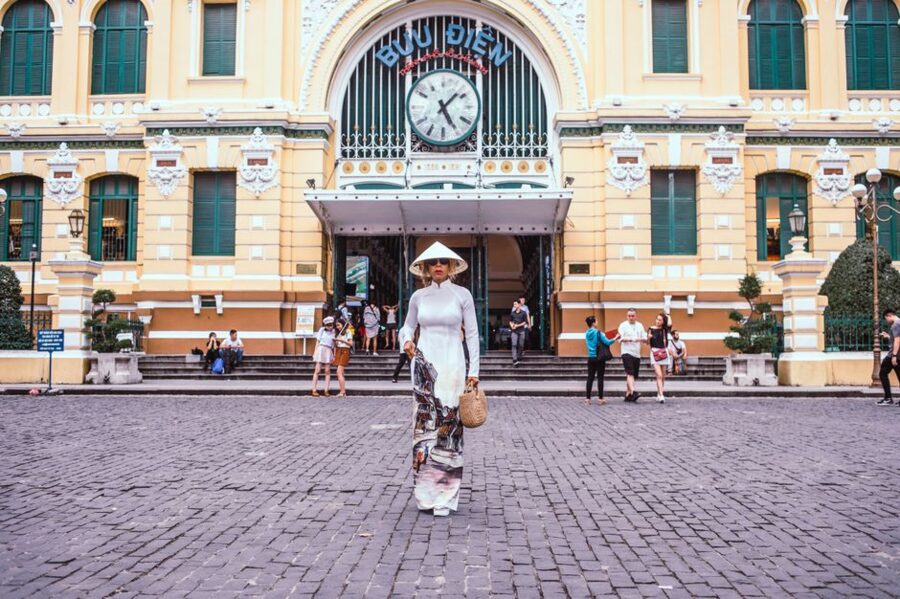
The áo dài as it is worn today goes back to a Hanoi painter, Nguyễn Cát Tường, who signed himself Le Mur. In the magazine Phong Hóa on 23 March 1934 he published a fitted, two-panel version of the old five-panel tunic, and Saigon tailors tightened the cut further in the 1950s. It is still often made to measure, which is one reason the city’s tailors are quick, practiced and cheap by Western standards.
What it costs
Prices depend on the fabric and the shop, and a newspaper report in January 2026 gives a useful scale. A shopper in the city paid about 300,000₫ (about US$11.50) a meter for silk and about 2 million đồng (about US$77) for a made-to-measure áo dài with tailoring and accessories. Ready-made áo dài sell mostly at 200,000 to 350,000₫ (US$8 to US$13), designer pieces often above 3 million đồng, and silk áo dài from established brands from about 5 million đồng (about US$190).

How long, and how many fittings
Give a tailor at least three days and plan two fittings. A shirt or an áo dài can be done faster, and many shops will promise 24 hours, but the first fitting is where most problems appear, and a rushed second fitting on your last afternoon leaves no time to fix them. Order on your first full day in the city.
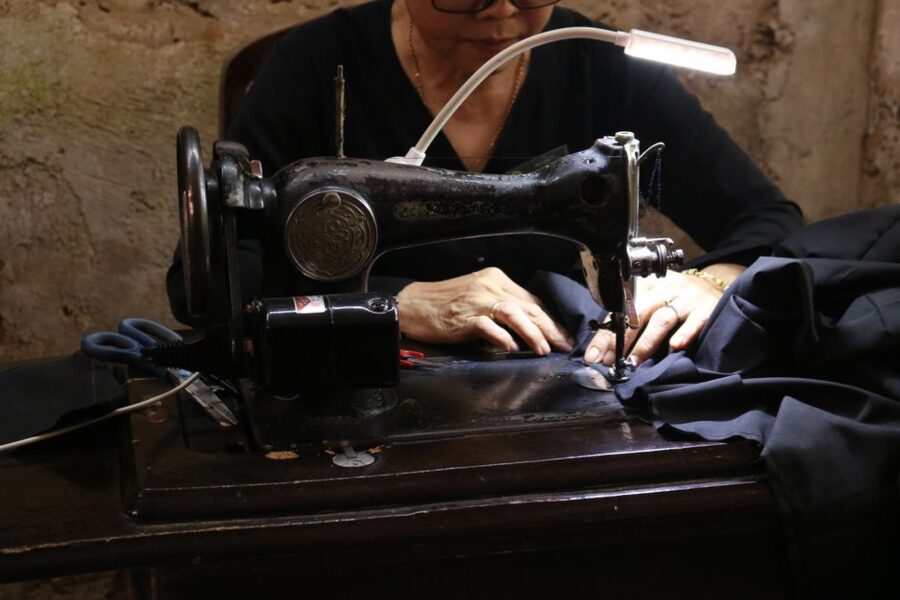
Bring a garment that fits you well and ask the tailor to copy it; it saves argument about style. Agree in writing the fabric, the price, any deposit, the collection date and what happens if the fit is wrong. Then, at the fitting, sit down, raise your arms and walk around before you say yes.
Choosing a tailor
Look at the finishing on garments in the shop: straight seams, matched patterns at the seams, buttonholes stitched rather than cut and sealed, a full lining in a jacket. A tailor who measures you carefully and asks questions is a better bet than one who promises everything by tomorrow. Before Tết the good ones stop taking new orders weeks ahead, and in December and January you should expect to wait longer.
Bargaining, fixed prices and paying
Where a price is printed, at malls, supermarkets, design shops, food stalls and the bigger dried-goods counters, pay it. Bargaining there is pointless and a little rude. Where nothing is marked, in the clothing and souvenir aisles of the markets, at Saigon Square and with street sellers, the first price is a starting point and can be several times what a local would pay.
Ask two or three stalls the price of the same thing first; the stock is often identical. Then offer well under the asking price, smile, and expect to meet somewhere in between. If you can’t agree, say cảm ơn, thank you, and walk on; you will often be called back. Don’t start bargaining for something you don’t want, and once a price is agreed, pay it.
Have the final figure typed into a calculator or phone before money changes hands, because the zeros on dong notes are easy to confuse: a 20,000₫ note and a 500,000₫ note are both blue polymer notes of a similar size. Small notes help. Cards work in malls and most fixed-price shops, and many market stalls take bank transfers by QR code, but foreign cards don’t always work with those, so carry cash for the markets.
How to spot a fake
Assume that anything with a famous brand on it at a market price is a copy. That goes for watches, handbags, sunglasses, sports shirts, sneakers and branded backpacks. The city’s own inspectors say so: Saigon Square and Bến Thành were among the main targets of a citywide campaign against counterfeits in May 2026, and in some European countries, France and Italy among them, buying or bringing in counterfeit goods can earn you a fine of your own at the border.
Silk is the commonest fake that looks like the real thing. Real silk is cool to the touch, warms in your hand and creases softly; polyester stays slippery and shines evenly. A reputable fabric seller will let you burn a thread from the edge: silk smells of burnt hair and leaves a fine ash, while polyester melts into a hard bead.
For lacquer, look for depth and a careful underside, as described above. For ceramics, unglazed foot rings and slight irregularities are normal in handmade ware; perfect, identical pieces with a printed pattern are factory-made, which is fine if the price says so. For coffee and food, buy sealed packs with a brand, an address and a date, and leave weasel coffee alone.
Antiques are the hardest case. Most “antiques” in the souvenir trade are reproductions, and a seller who presents a reproduction as old is the one committing the offense. The safe rule is to buy what you like at a price you would pay for a good copy, and get a receipt that says what it is.
Getting the VAT back at the airport
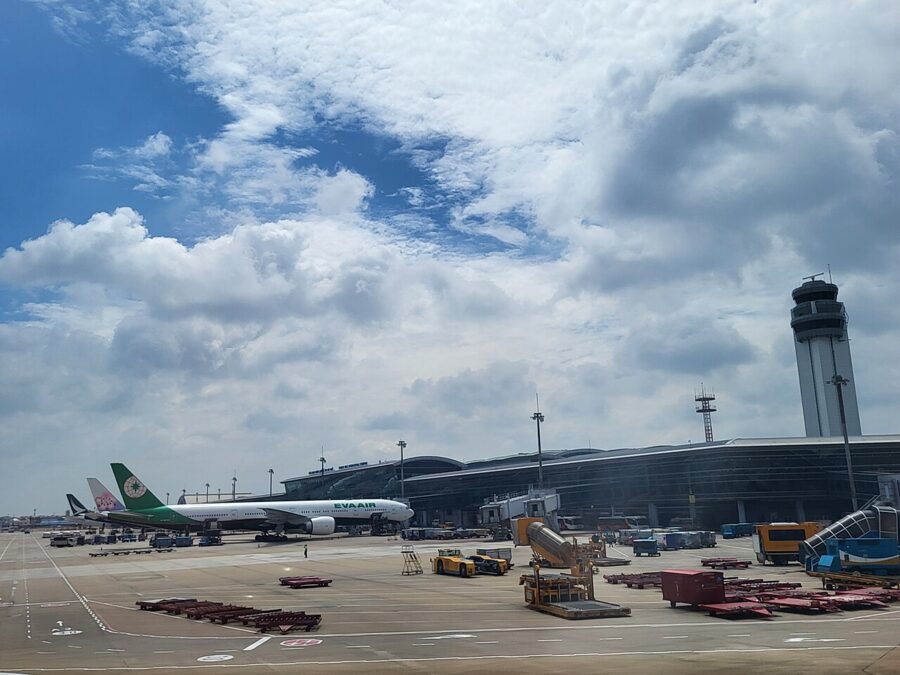
Visitors leaving Vietnam can reclaim most of the value-added tax on goods bought here, under rules updated by Circular 84/2026, which took effect on 1 July 2026 and moved the whole process onto an electronic customs system. VAT is 10 percent on most goods, cut temporarily to 8 percent until 31 December 2026.

The conditions are strict, so check them before you buy:
- You must hold a foreign passport and leave through an airport or seaport that handles refunds; Tân Sơn Nhất does.
- Buy from a shop registered to sell refund goods, and ask for the VAT invoice that doubles as a refund declaration (hóa đơn kiêm tờ khai hoàn thuế).
- Purchases from one shop on one day must total at least 2 million đồng (about US$77) to qualify.
- The invoice must be issued no more than 60 days before you leave.
- Goods must be unused and are checked by customs; present them no later than 30 minutes before departure, and in practice much earlier.
- Goods banned from export or from aircraft don’t qualify.
You get back 85 percent of the VAT, and the bank that runs the counter keeps the other 15 percent. On a 2 million đồng purchase with 8 percent VAT included, that comes to about 126,000₫ (roughly US$5), paid in dong or, if you ask, converted into a foreign currency at the bank’s rate. It is worth the queue for a tailored suit or a big lacquer order; for a few souvenirs it isn’t.
Getting it home: customs and airlines
Vietnam’s rules on what leaves the country matter for two kinds of purchase: antiques and cash. Under the Law on Cultural Heritage of 2024, in force since 1 July 2025, an antique (cổ vật) is an object of historical, cultural or scientific value at least 100 years old. The law bans the export of relics and antiques on the state’s protected lists and bans exporting antiques as a business, and under earlier rules a privately owned antique needed a permit from the Ministry of Culture to leave the country. If a piece really is that old, don’t try to fly it out.
The practical defense is paperwork. Ask any shop selling old-looking ceramics, bronzes or statues for an invoice that describes the item as a reproduction or as modern, with the shop’s name and address. It helps both at Tân Sơn Nhất and at customs at home.
Cash and gold have declaration limits on the way out. Above US$5,000 in foreign currency, or 15 million đồng in cash, you must declare it, and the same applies to 300 grams or more of gold jewelry. Under Decree 169/2026, in force since July 2026, failing to declare, or declaring falsely, can cost up to 50 million đồng.
Fish sauce is the airline problem. Vietnam Airlines asks passengers not to carry it in the cabin, and accepts up to 3 liters or 3 kg of fish sauce per person in checked baggage, in sealed and taped plastic bottles filled no more than 95 percent, packed in a sealed styrofoam box. It does not accept fish sauce in glass, or any smelly baggage on its ATR72 flights, and other airlines may refuse it entirely.
Then there is your own country’s border. Coffee, tea, sealed nuts and chocolate are usually fine, but most countries restrict meat, dried seafood, fresh fruit, seeds, wood with bark and some plant products, and Australia and New Zealand check closely. Declare food when you are asked; the fine for hiding it is far bigger than the value of a bag of dried squid.
Pack the fragile things in your hand luggage, the liquids in the hold, and the receipts where you can reach them. Then, on the last morning, go back to Bến Thành at seven, before the tour groups, and buy the coffee. Get it in a sealed bag from the east-gate counters, with a phin to go with it, and you will be drinking Saigon coffee at home within a day.