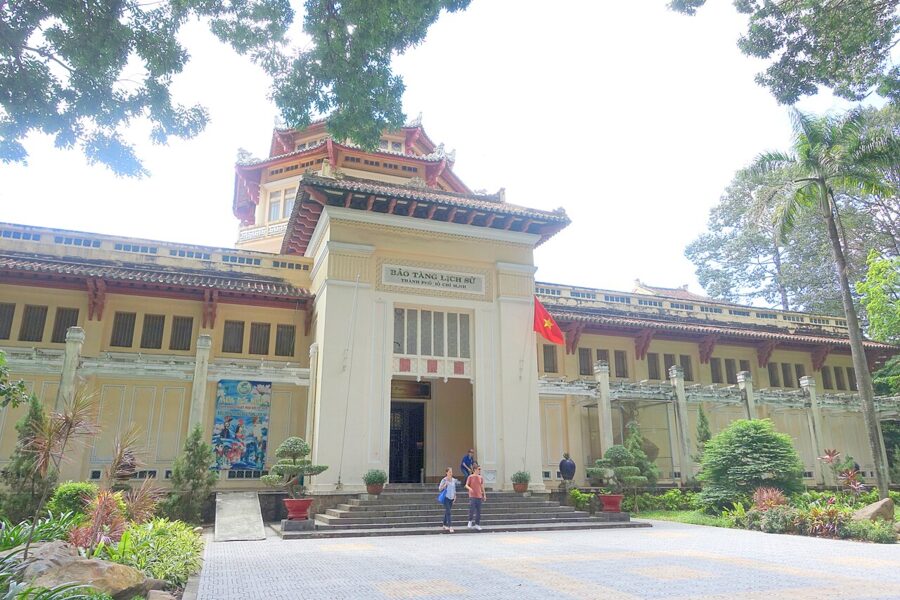
Just before 8am the octagonal tower where Lê Duẩn Boulevard runs into the zoo gates is still in shade, and the ticket window beneath it has not opened. Inside, in a five-sided glass case held at a steady 28°C, lies a woman who was buried in Saigon around 1869 and lifted out of her tomb in 1994, still wrapped in nine layers of silk and cotton. In another wing stand bronze Bodhisattvas cast by Cham founders a thousand years ago, and a wooden Buddha that lay for well over a millennium in the wet ground of the Mekong Delta. This is the Museum of Vietnamese History, officially the Ho Chi Minh City Museum of History (Bảo tàng Lịch sử Thành phố Hồ Chí Minh), and it is the oldest museum in the south of the country.
The story it tells runs from stone tools to 1945 and stops there. The wars that followed belong to the War Remnants Museum, the Reunification Hall (Dinh Độc Lập) and the Củ Chi Tunnels. What you get here instead is everything that came before: Bronze Age drums, Hindu gods from a delta kingdom that vanished in the seventh century, Cham temple sculpture, imperial robes, and the collections of two Saigon scholars who gave their lives to old pots.
Entry costs 60,000₫ (about US$2.30), the galleries are rarely crowded, and the Saigon Zoo and Botanical Garden is on the other side of the hedge. Pair the two and you have one of the best half days in central Saigon.
On this page
- A rice museum that became a history museum
- How the rooms are arranged
- Rooms 1 and 2: stone tools to bronze drums
- Rooms 3 to 5: independence and the early dynasties
- Room 6: Champa
- Room 7: Óc Eo and the kingdom of Funan
- Room 8 and the Khmer of the delta
- Rooms 9 to 12: the Lê, the Tây Sơn and the Nguyễn
- Room 15: the Xóm Cải mummy
- The collectors' rooms and Asia at the back
- Water puppets, the Hùng temple and what else runs here
- How to visit
A rice museum that became a history museum
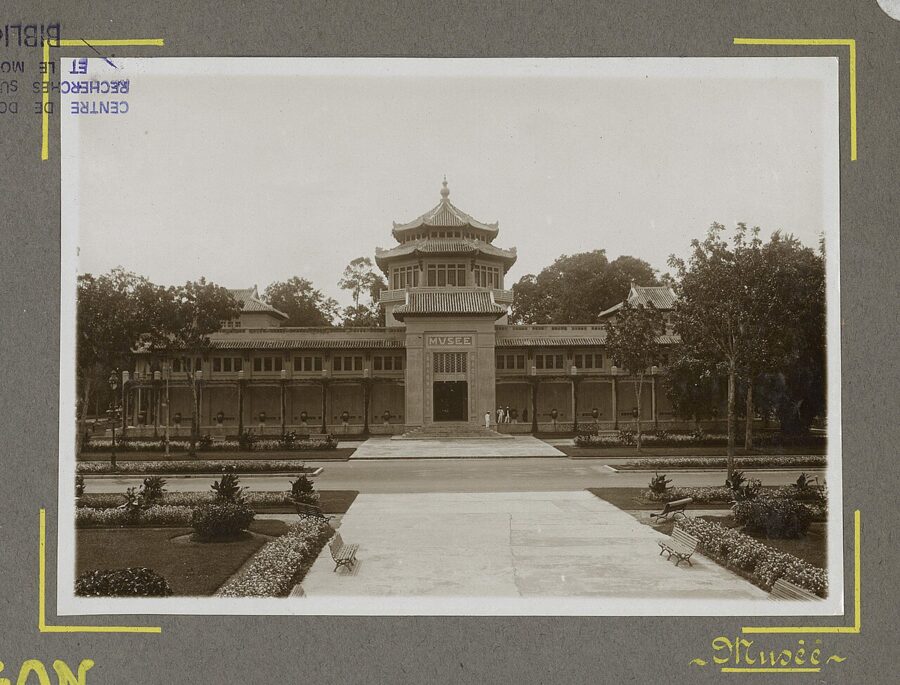
The building was never meant to hold antiquities. When the contractor Établissements Lamorte began work in 1926 on a design by the architect Auguste Delaval, the plan was a Musée du Riz, a showroom for the rice trade that made Cochinchina rich. The brief changed to an economic museum, and then to a museum of history and art, because of a dead man’s collection.
Holbé, a Saigon collector, died on 18 February 1927 and left antiquities valued at 45,000 Indochinese piastres. The Société des Études Indochinoises, a learned society whose roots went back to 1865, wanted them for the colony. Five of its members lent the money up front, a public subscription was opened to repay them, and the society asked the government for a museum to put everything in. In late November 1927 (sources give both the 24th and the 28th) the Governor of Cochinchina, Blanchard de la Brosse, signed the decree.
The first name was Musée de la Cochinchine. In August 1928 it was renamed after the governor himself, and on 1 January 1929 the Musée Blanchard de la Brosse opened with about 2,900 objects, most of them Holbé’s. It was placed under the scientific control of the École française d’Extrême-Orient in Hanoi, which is why archaeologists, not administrators, came to run it.
Delaval’s octagon
Delaval worked in what the French called the style indochinois, a colonial blend that put Chinese and Vietnamese roofs on reinforced-concrete European plans. The front building is 70 meters long and 30 wide, symmetrical, with the octagonal hall at its center. The octagon is said to echo the eight trigrams of the Book of Changes, and it rises through two tiers of curved roof tiled in interlocking yin-yang tiles, with stylized dragons and phoenixes on the ridges and a stack of four diminishing spheres on top.
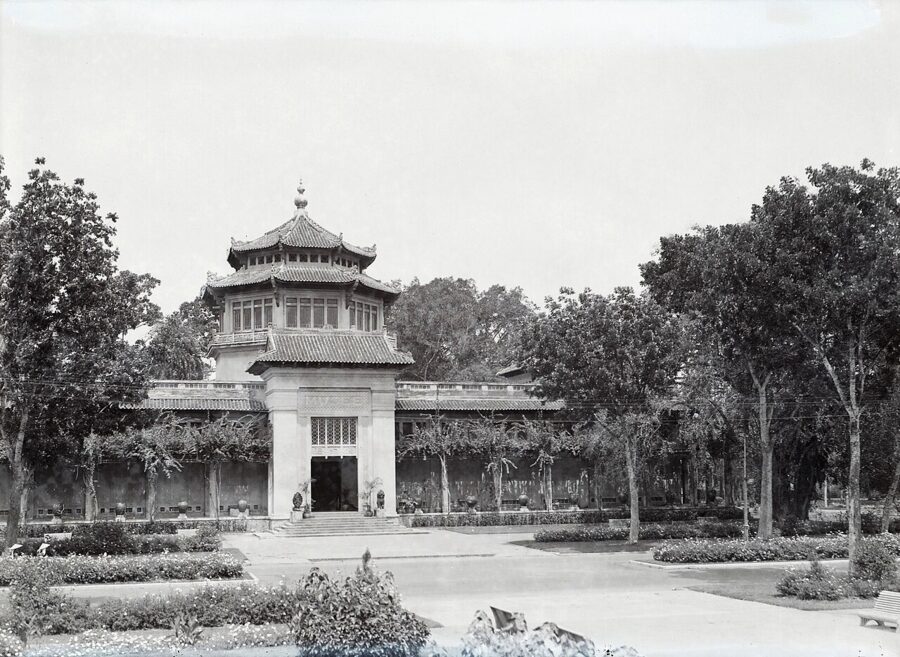
The halls are paved in patterned cement tiles and small mosaic, the main iron gate is worked with Asian motifs, and the beams under the eaves are carved as bracket sets in the manner of temple architecture. High windows just under the ceiling were designed to light the rooms naturally, and they still do much of the work on a bright morning.
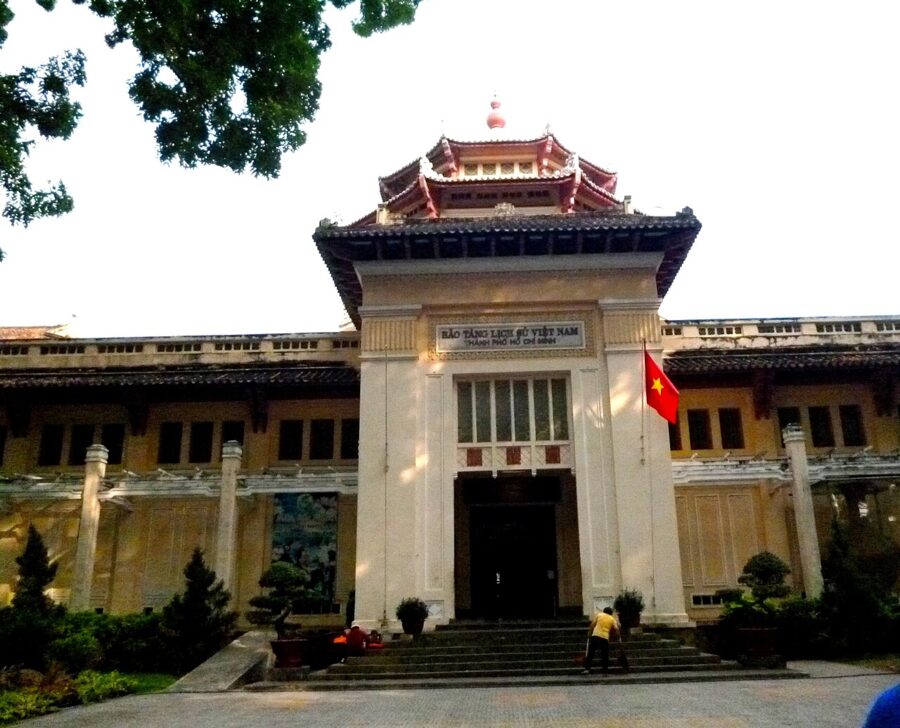

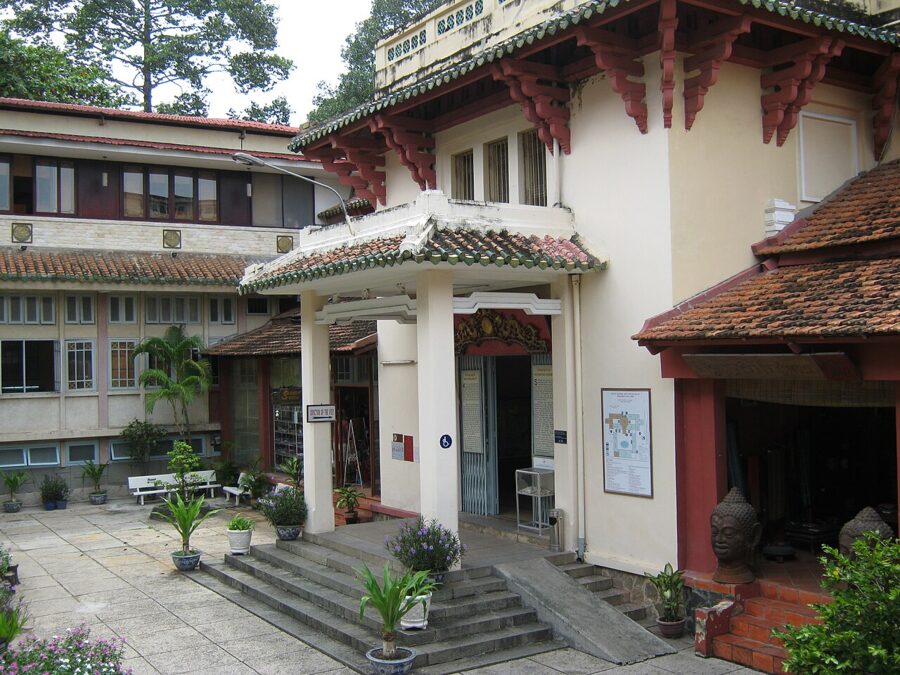

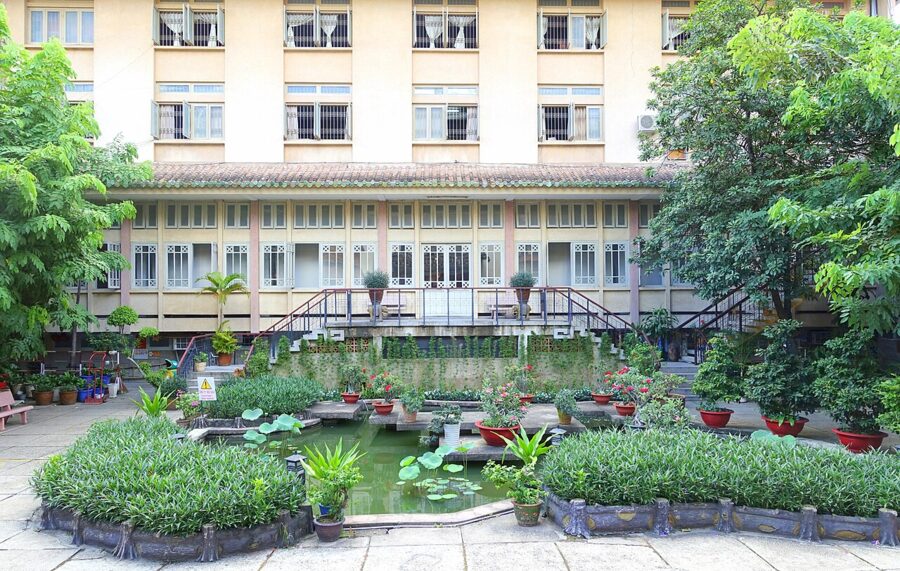
In 1970 the Saigon government needed more space and commissioned the Vietnamese architect Nguyễn Bá Lăng to add a rear building. He made it a U, joined to the old wings by two linking blocks and closed by a three-story range with double roofs and dragon heads at the corners. The courtyard in the middle holds a garden and a pond, and because the gallery doors open onto it, the rooms at the back are the airiest in the museum. The whole complex covers 6,057 square meters, and in 2012 the building was listed as a national architectural and artistic monument.
Six names in a century
After Vietnam declared independence on 2 September 1945, the new government in Hanoi renamed the museum Gia Định Bảo tàng viện in October, but French troops had already retaken Saigon in September and the decree stayed on paper. In June 1954 the French specialists left and the Saigon government took over. In May 1956 it became the National Museum of Vietnam (Viện Bảo tàng Quốc gia Việt Nam), and it reopened to the public in September 1958.
The directors in those decades read like a history of Southeast Asian archaeology. Louis Malleret ran the museum from 1932 to 1948 and in 1944 led the excavation at Óc Eo that gave the lost kingdom of Funan its place in the textbooks. Later, from 1956 to 1964, the director was Vương Hồng Sển, the Saigon scholar and collector whose own room is one of the highlights at the back of the museum.
After April 1975 the new government took the building over intact, and on 23 August 1979 the city named it the Ho Chi Minh City History Museum. For years it then went by Museum of Vietnamese History, the name still on many signs and in most English guides, before officially reverting to Ho Chi Minh City Museum of History in 2013. Taxi drivers and Grab will recognize either; the Vietnamese name, Bảo tàng Lịch sử, is the safest.
One thing did not survive the changes. Before 1975 a pair of parallel sentences in Chinese characters flanked the main door, and the second half read 越南人種博物得奇觀, roughly “in Vietnam’s peoples and natural history, a wonder to behold.” The couplet was chiseled off after 1975. A recent temporary show at the museum took its title, Cổ đổng kỳ quan, from words in the old couplet.
How the rooms are arranged
The permanent galleries are numbered 1 to 18, but the numbers do not follow the building in a straight line, and the museum itself has renumbered them more than once. A sign photographed in 2013 shows the Cambodian sculpture room as number 13; today it is room 8. Trust the signs on the doors and the floor plan at the entrance. Find-spots in this guide follow the museum’s labels, which use province names from before the 2025 mergers.
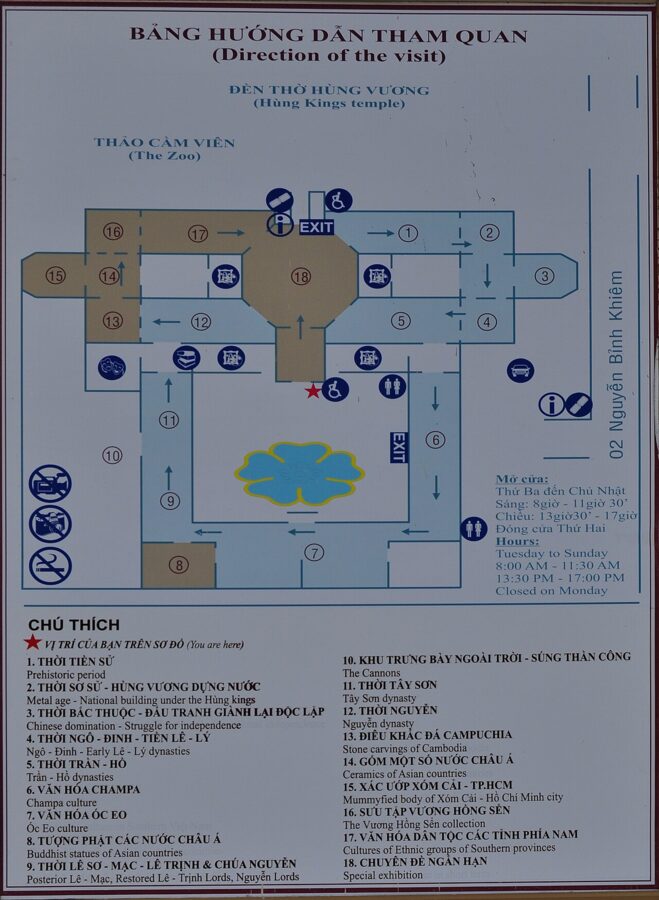

The current sequence falls into two halves. The chronological story of Vietnam runs through rooms 1 to 5, 9, 10 and 12: prehistory, the Bronze and Iron Ages, the thousand years of Chinese rule and the dynasties from the Ngô to the Nguyễn. Rooms 6, 7 and 8 interrupt it with the civilizations that occupied the center and south before the Vietnamese arrived: Champa, Óc Eo and Cambodia. Room 11 is the cannon yard outside, and rooms 13 to 18, mostly in the 1970 wing, hold the private collections, the mummy, the southern peoples and the Buddhas of Asia.
If time is short, go straight for rooms 6 and 7 and then the mummy in room 15. The first two are where the museum shows its twelve national treasures, and the third holds its most memorable single object. The dynastic rooms are worth a walk, but they lean on maps, paintings and dioramas, and the objects there are thinner than in the Cham and Óc Eo galleries.
Rooms 1 and 2: stone tools to bronze drums
Room 1 starts with the oldest claim in the building: human tools from about 500,000 years ago. The display is mostly stone axes, hoes and models of sites, including the Paleolithic site at Núi Đất in neighboring Đồng Nai province.

Room 2 spans the long stretch the museum dates from 2879 BCE to 938 CE. The first date is the traditional founding of Văn Lang by the Hùng kings, the legendary first dynasty, and the second is Ngô Quyền’s victory on the Bạch Đằng River that ended a thousand years of Chinese rule. In between come three Iron and Bronze Age cultures, one from each end of the country and one from the south.
The Đông Sơn drums
The Đông Sơn culture of the Red River and Mã River valleys, named after a village in Thanh Hóa where the French dug from 1924, cast the bronze drums that became the national emblem of Vietnamese antiquity. They are flat-topped and waisted, with four handles and a tympanum decorated in rings around a central star. On the best of them the rings carry flying herons, feathered dancers and long canoes full of warriors.
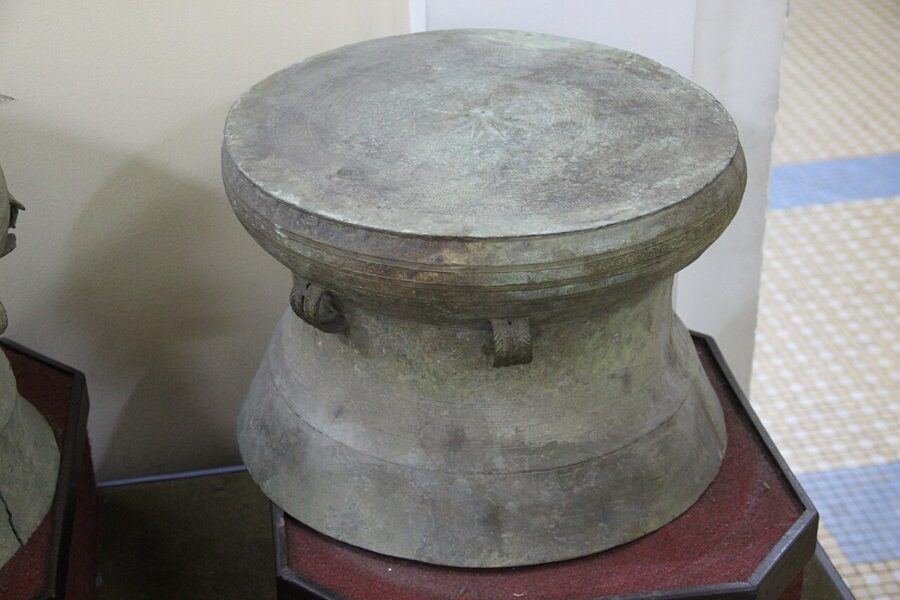
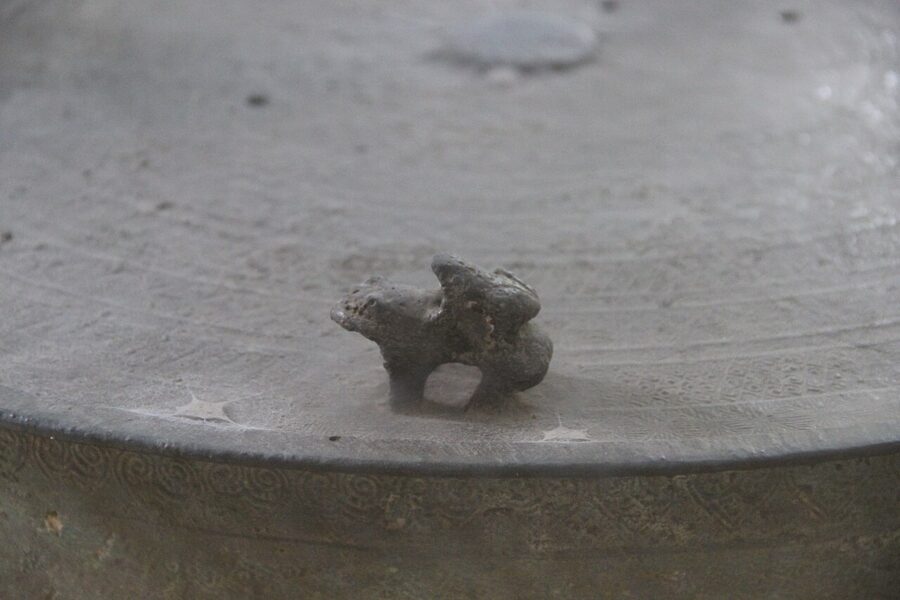
The drums in this room range from full-size ritual pieces to a miniature from Thanh Hóa. Some of the later ones carry small cast animals on the rim of the tympanum, usually read as frogs and linked to rain, which tells you what these instruments were for in a rice-growing society. A replica Đông Sơn pair also stands in the Hùng Kings Temple across the garden.
Sa Huỳnh and the city’s own prehistory
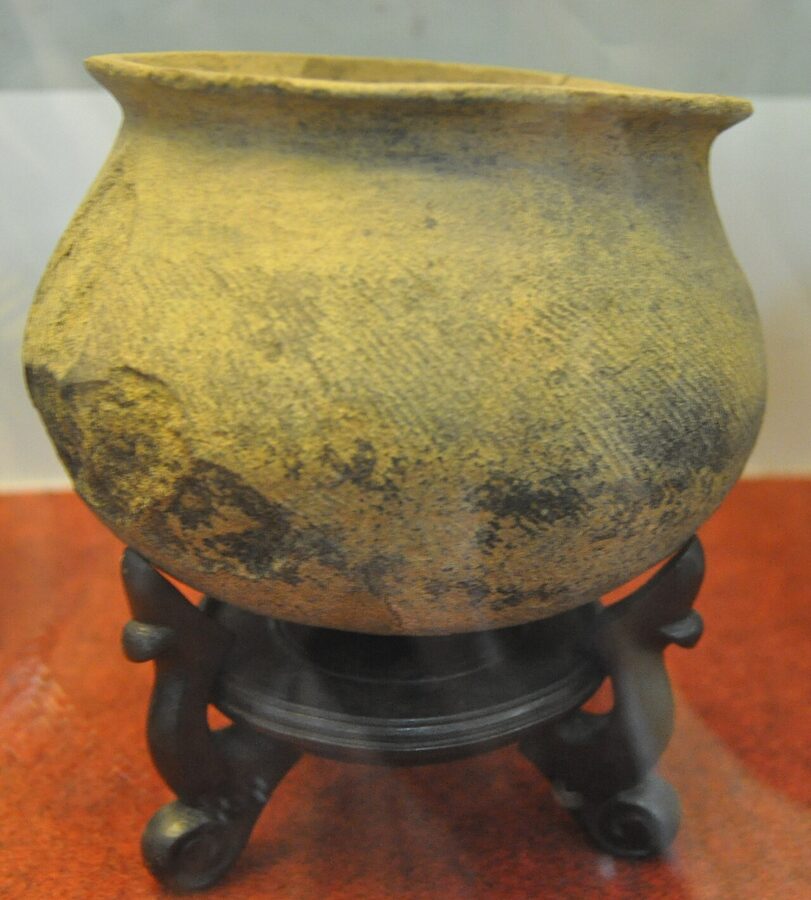
The Sa Huỳnh culture of the central coast buried its dead in large pottery jars and traded across the South China Sea; its signature ornament is an earring shaped like a double-headed animal. The Sa Huỳnh pots here are plain, built for use. The more surprising pieces come from inside today’s Ho Chi Minh City: Giồng Cá Vồ in Cần Giờ, the mangrove coast at the city’s southern edge.

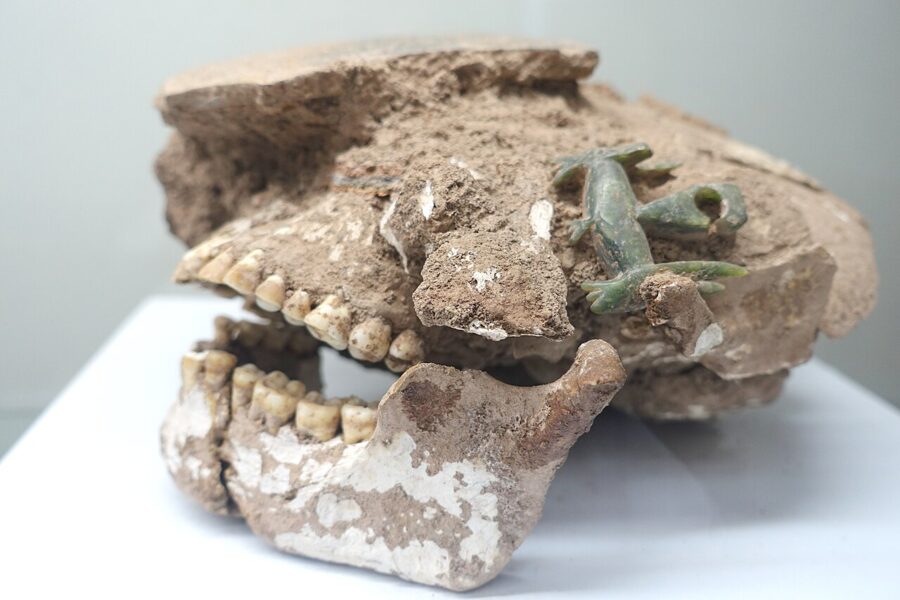
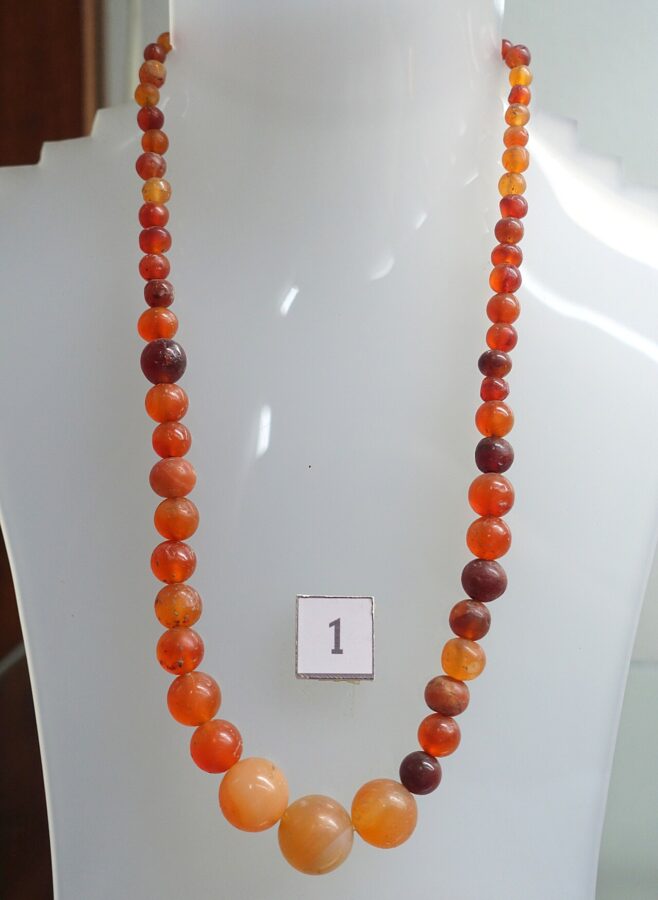
Giồng Cá Vồ was a burial ground used about 2,500 years ago. Archaeologists found burials there with agate and glass beads, shell bracelets and, on one skull, a jade earring in the double-headed animal form familiar from Sa Huỳnh sites hundreds of kilometers up the coast. The beads are carnelian and agate, much of it probably traded from India, so the people of the Saigon estuary were already part of a maritime network long before any city stood here.
Rooms 3 to 5: independence and the early dynasties
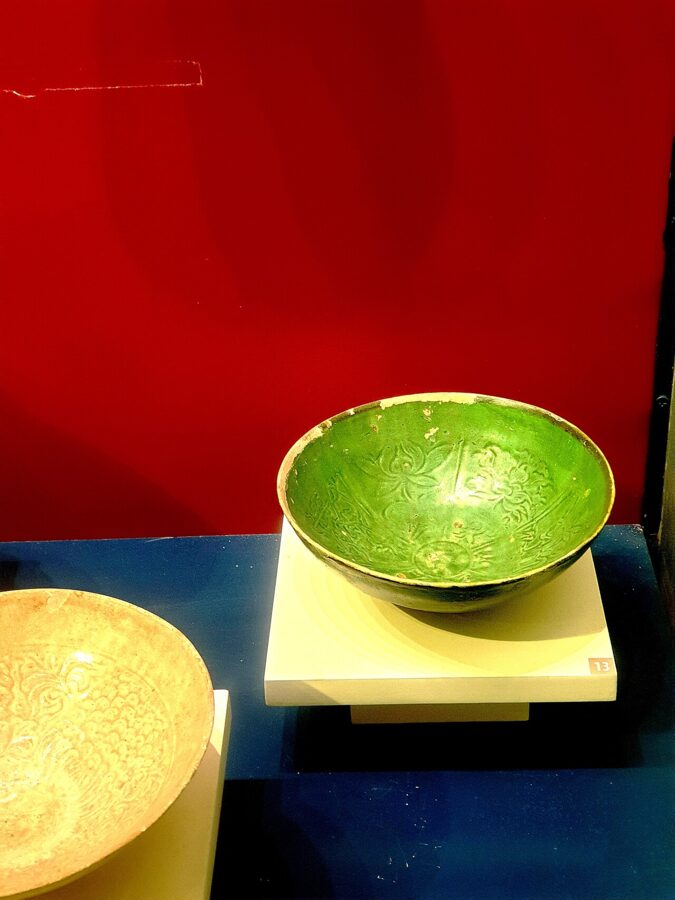
Rooms 3, 4 and 5 follow the first Vietnamese dynasties after 938: the short-lived Ngô, Đinh and Early Lê, then the Lý (1009 to 1225) and the Trần and Hồ (1226 to 1407). The Lý room is the most rewarding of the three for objects. Buddhism was the court religion, and the room has architectural terracotta, lotus finials, bodhi-leaf tiles from temple roofs and the first fine Vietnamese ceramics.
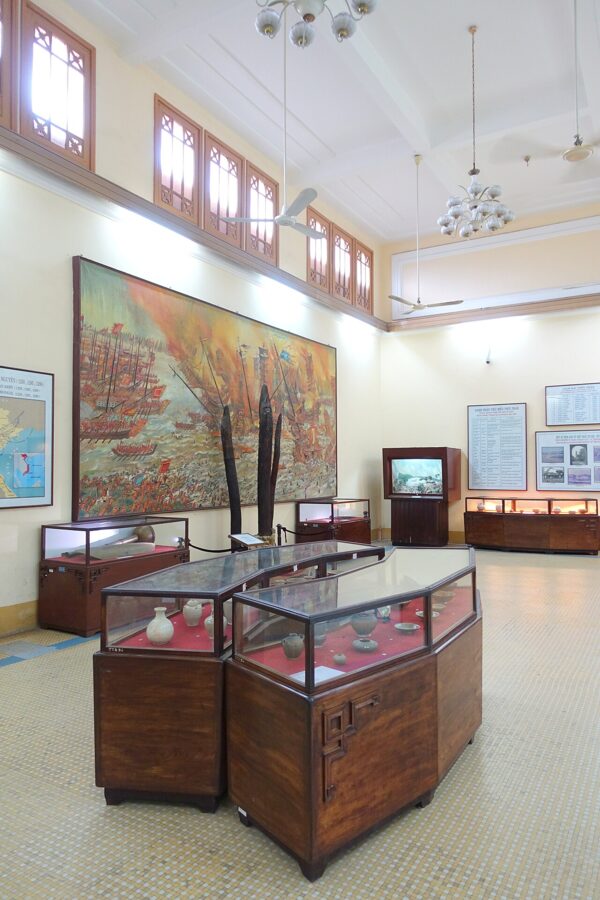
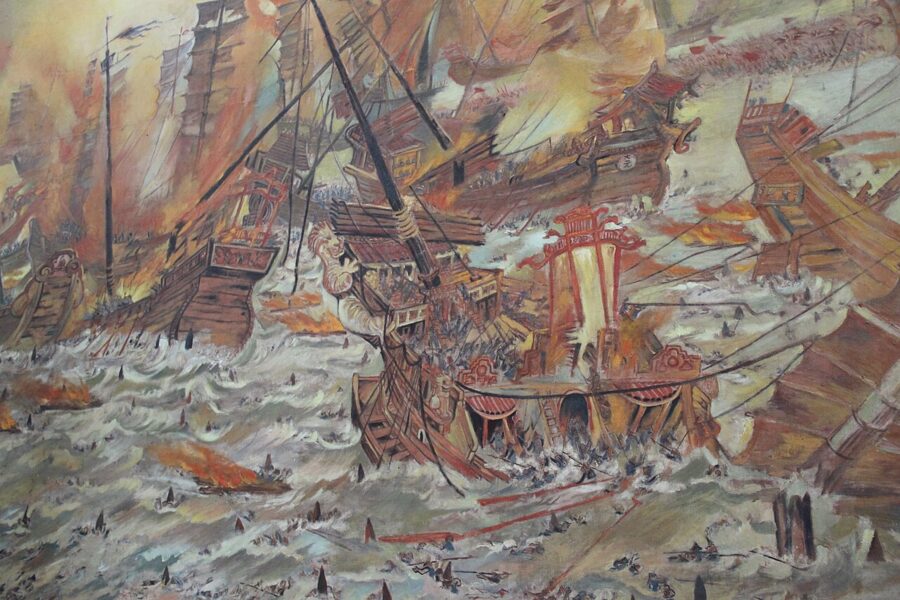
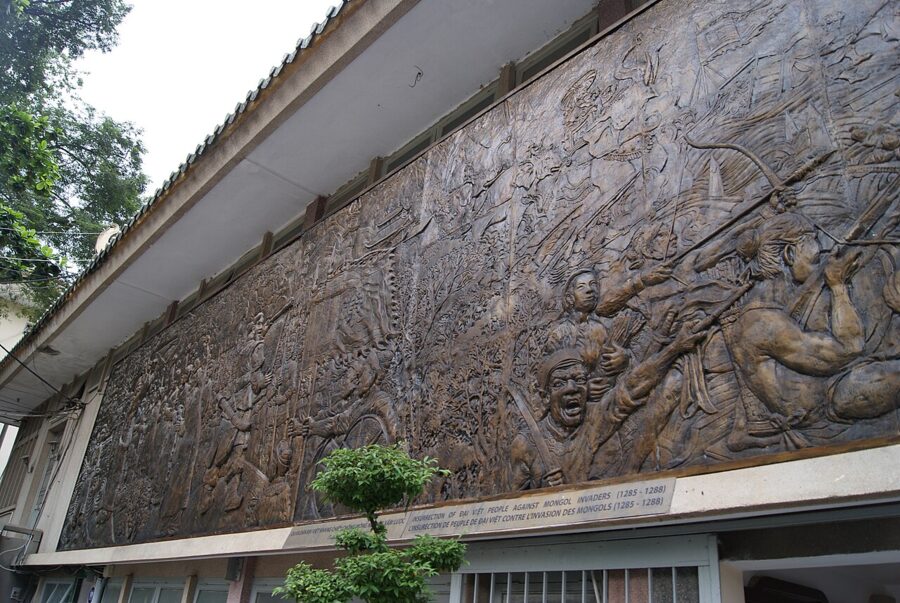
The Trần room is built around war. The Mongol Yuan empire invaded three times, in 1258, 1285 and 1287 to 1288, and the Trần held them off; the last campaign ended on the Bạch Đằng River in 1288, where Trần Hưng Đạo planted iron-tipped stakes in the riverbed and lured the Yuan fleet over them at high tide. The room displays Bạch Đằng stakes along with battle maps, glazed jars and a large painting of the ambush. The same river had served Ngô Quyền the same way in 938, which is why Vietnamese schoolchildren learn the name twice.

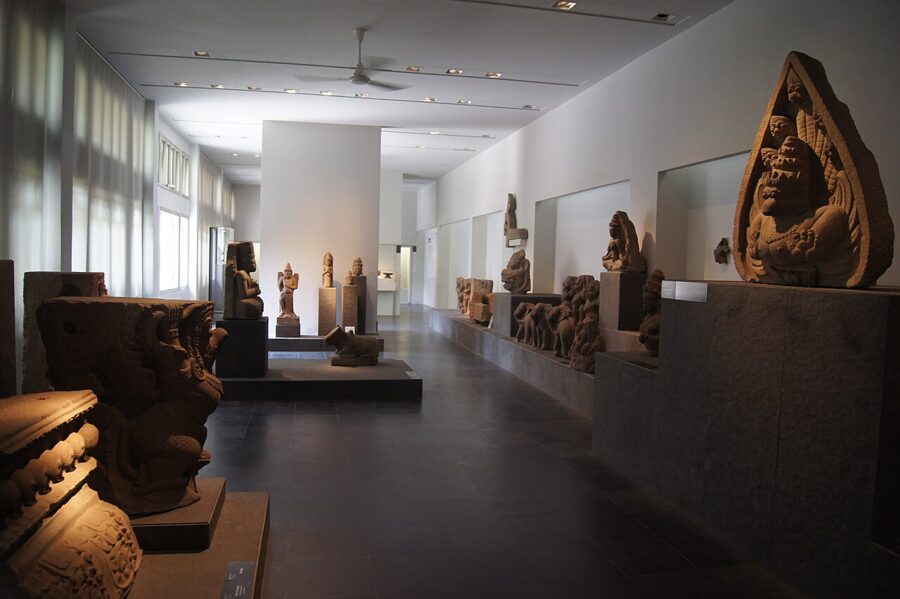
Room 6: Champa
This is the room to slow down in. Champa was a group of Hindu and Buddhist kingdoms that held the central coast of today’s Vietnam from about the second century; the museum’s dates run to the seventeenth, and the last Cham principality was not absorbed by the Nguyễn until the 1830s. Its builders left brick towers from Quảng Nam to Phan Rang, and its sculptors carved sandstone with a grace that the French collectors who founded this museum prized above everything else.

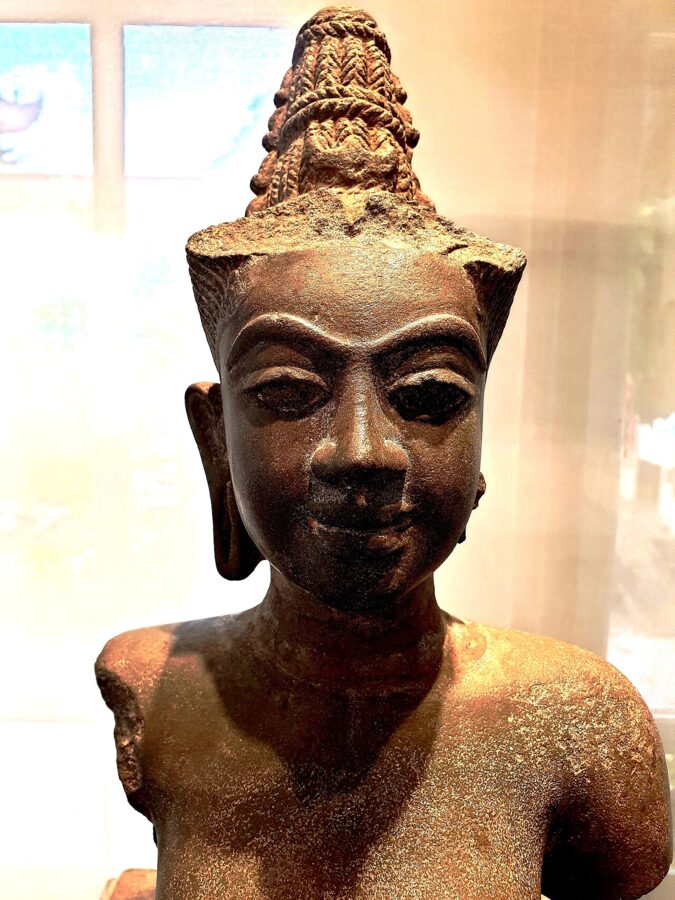
Start with the bust of the goddess Devi from Hương Quế in Quảng Nam. She wears a tall tiered headdress, her brows meet over wide eyes, and her mouth is just turning into a smile. Cham tradition, as the museum tells it, identifies her as the queen of Indravarman II, the ninth-century king who founded the Buddhist monastery at Đồng Dương, deified after her death for her care of the poor. She was among the first group of objects named national treasures in 2012.
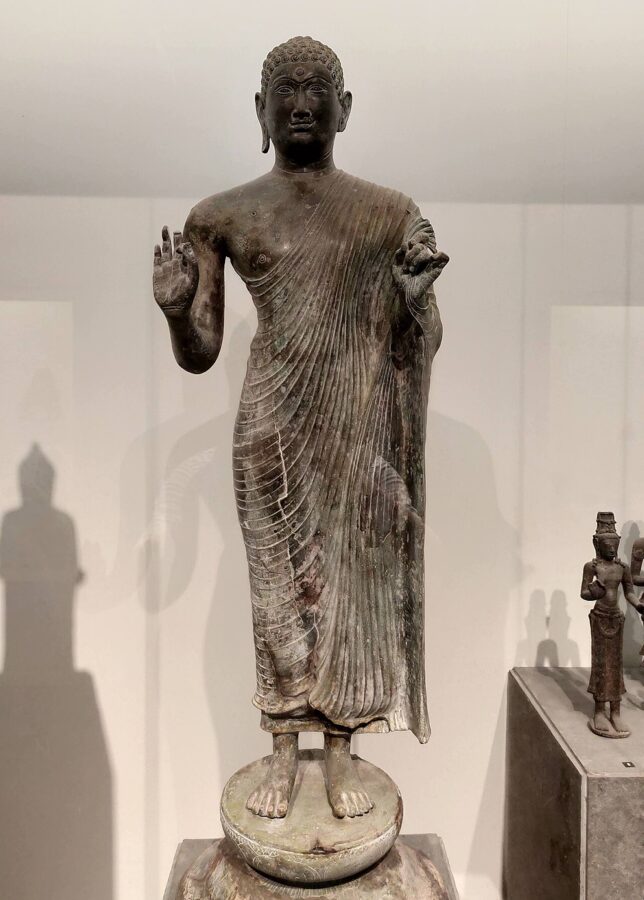
The Đồng Dương Buddha stands nearby: a bronze figure in a robe of fine rippling folds, right hand raised in the gesture of teaching, found at the site of Indravarman II’s monastery. The museum ties it to that court in the late ninth century, but the robe follows the style of Amaravati in southern India, and many scholars think the statue was made centuries earlier and brought to Champa. Either way it is often called one of the oldest Buddhist bronzes in Southeast Asia.

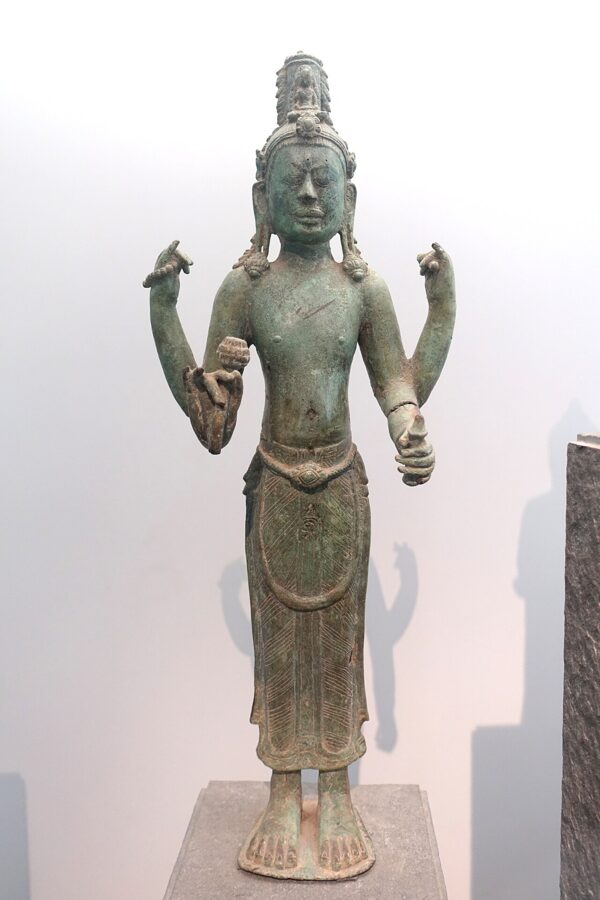
The bronze Avalokiteśvaras
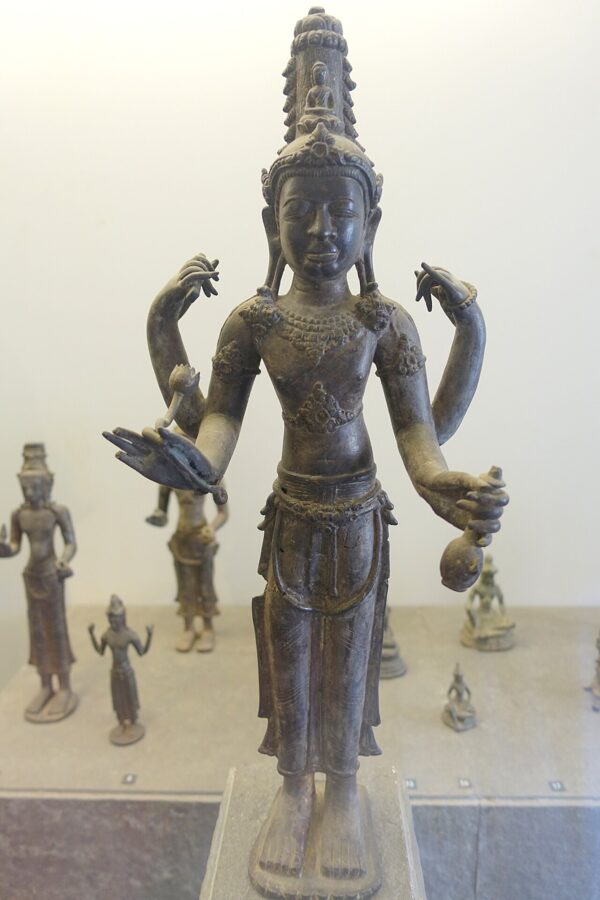
Two bronze figures of Avalokiteśvara, the Bodhisattva of compassion known in Vietnamese as Quan Thế Âm, are the finest metalwork in the building. The one from Đại Hữu in Quảng Bình, found in 1923, has four arms holding a book, prayer beads and a lotus bud, and a small seated Buddha set into its piled hair. The one from Hoài Nhơn in Bình Định, from the eighth or ninth century, is plainer in its jewelry and slimmer, and to many eyes the more beautiful of the two.
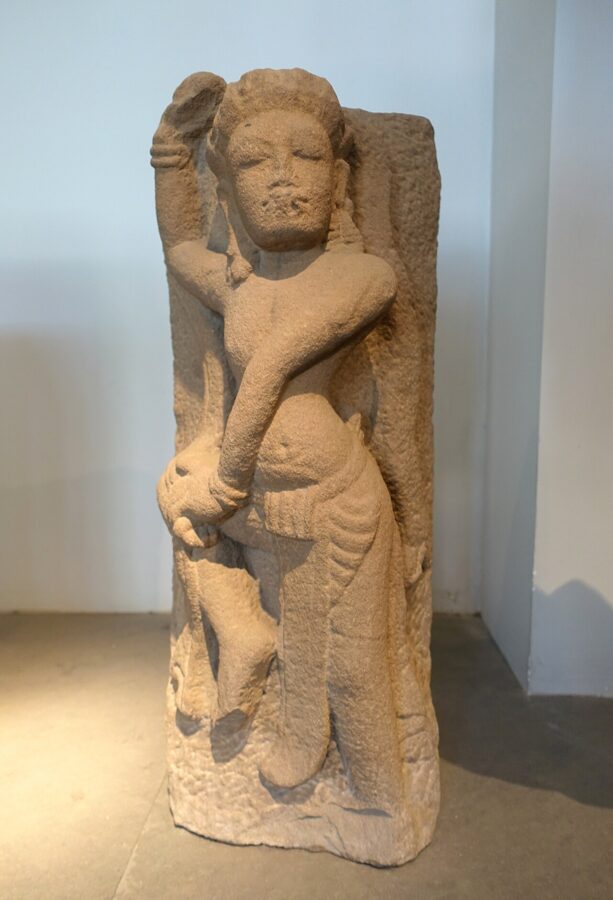
Before you leave the room, find the sandstone dancers from Trà Kiệu, the old Cham capital near Hội An. Carved in the tenth century, they balance on one leg with the other raised, and the stone still catches the movement.
Room 7: Óc Eo and the kingdom of Funan
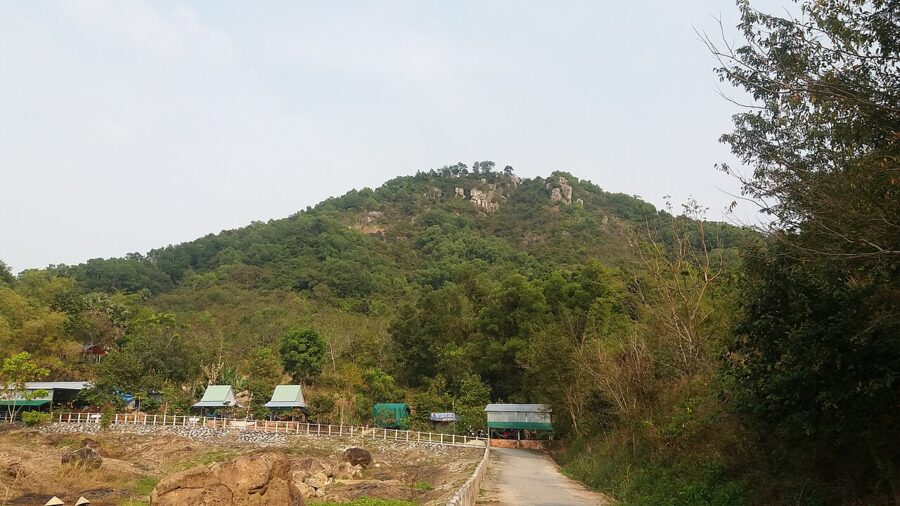
Long before there was a Saigon, the Mekong Delta was the heart of a trading state that Chinese envoys of the third century called Funan. Its main port was at Óc Eo, near the Ba Thê mountain in An Giang, where Louis Malleret, then director of this museum, excavated in 1944 and found Indian seals, a Chinese bronze mirror and a Roman gold medallion in the delta mud. The Óc Eo culture lasted from the first to the seventh century and then disappeared into the swamps and rice fields, which is why so many of its statues survived.

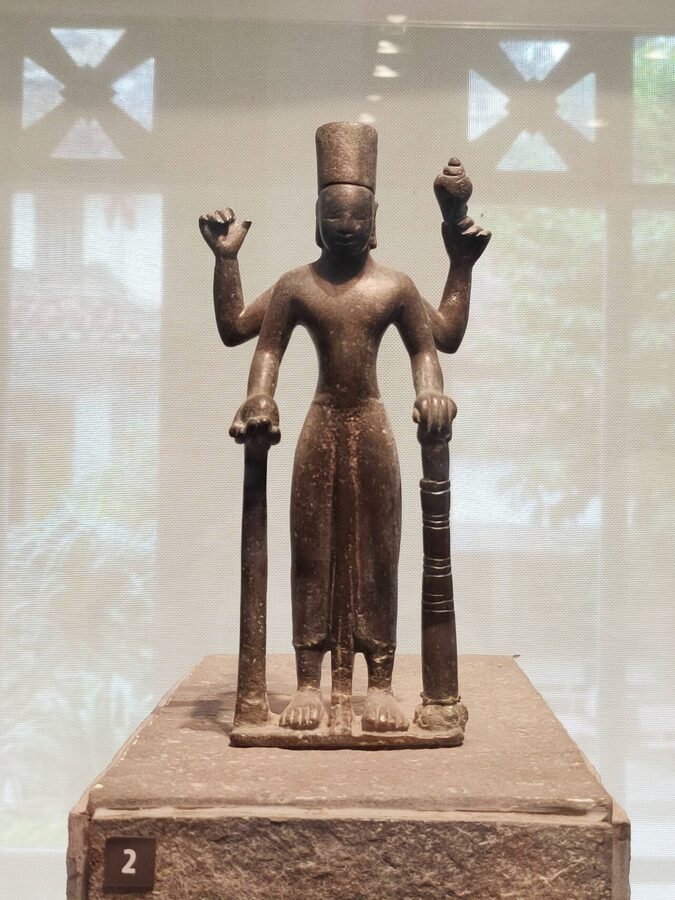

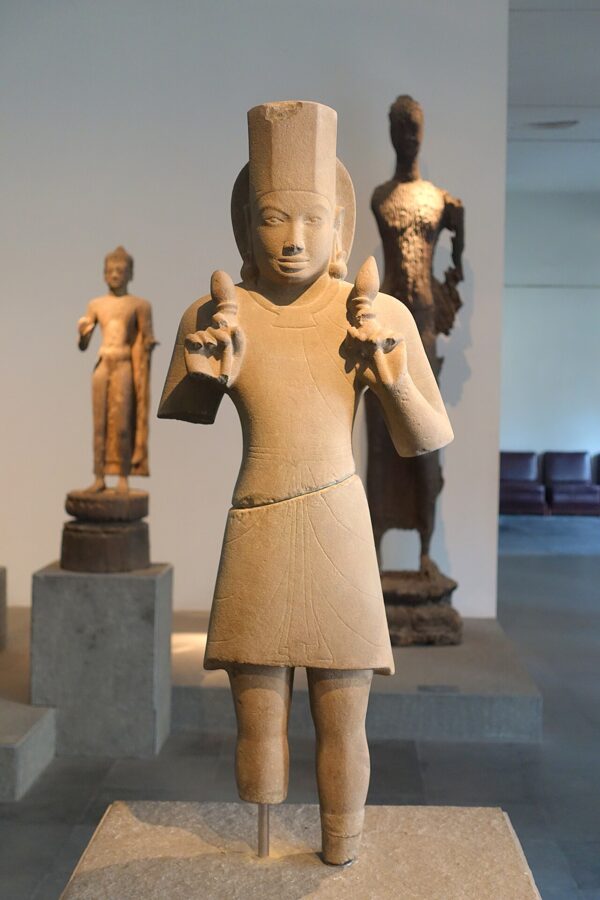
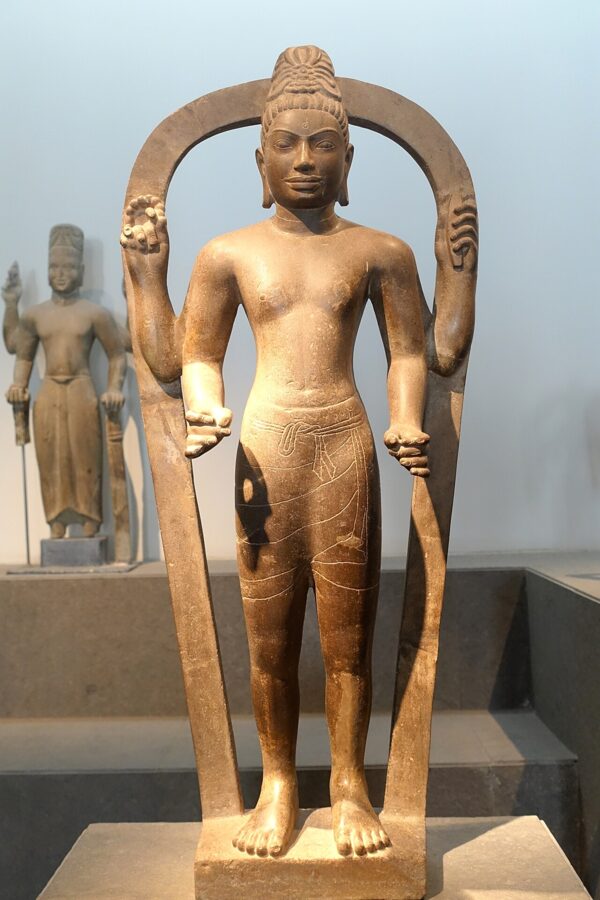
Room 7 holds more national treasures than any other part of the museum. Surya, the sun god, comes from Ba Thê in An Giang, a round-faced figure with an octagonal hat and a lotus bud in each hand, carved in the Dvaravati style also found in Thailand. The goddess Durga from Liên Hữu in Trà Vinh stands on the severed head of the buffalo demon she killed.
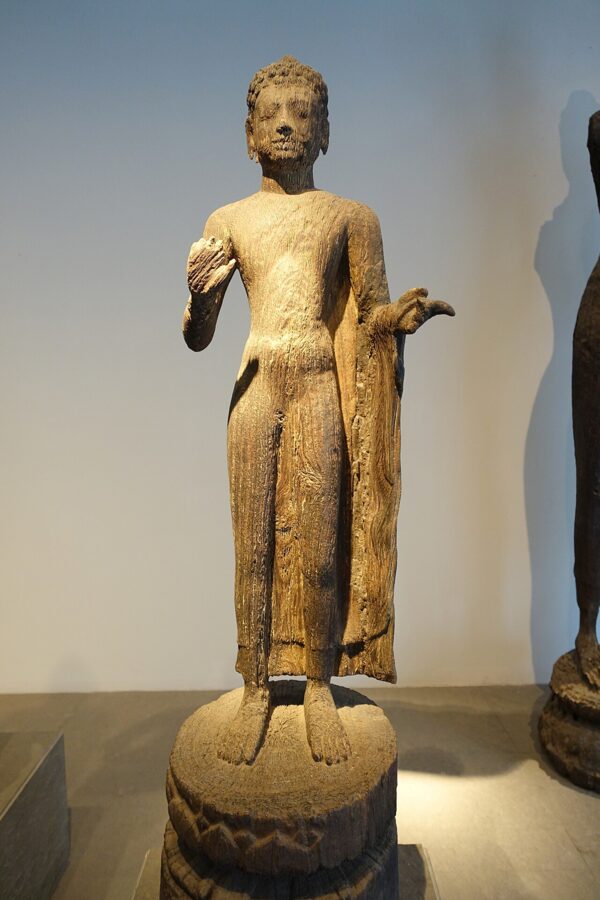
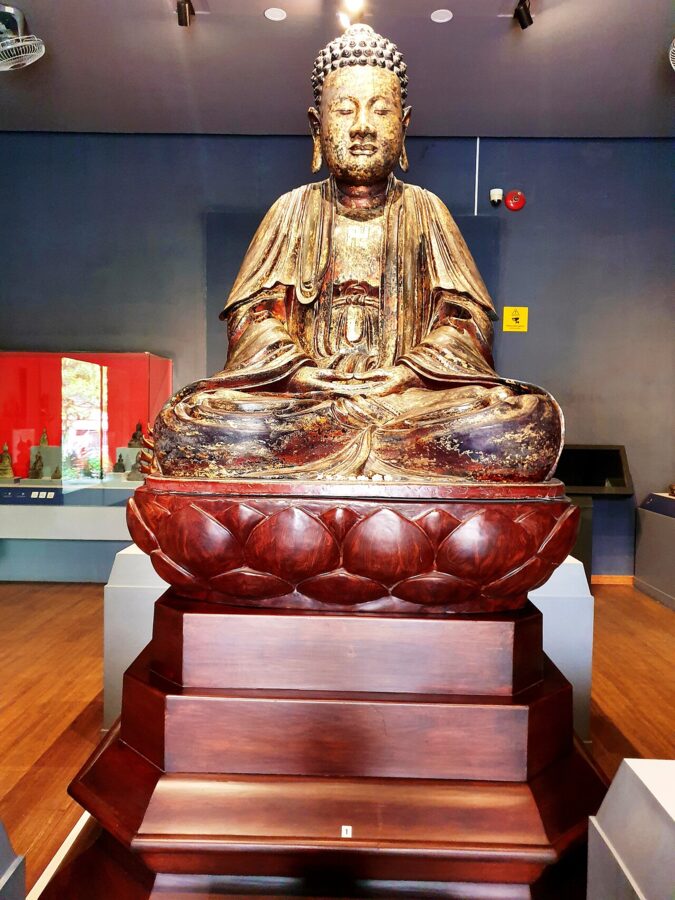
The wooden Buddhas are the rarest things in the room. Statues from Lợi Mỹ and Sa Đéc in Đồng Tháp, and the one from Bình Hòa in Long An near the entrance, were carved from local hardwoods (mù u, sao, bằng lăng) and survived because they lay in waterlogged ground with no air to rot them. Tropical wood almost never lasts this long, and these are among the oldest surviving wooden sculptures in Southeast Asia.
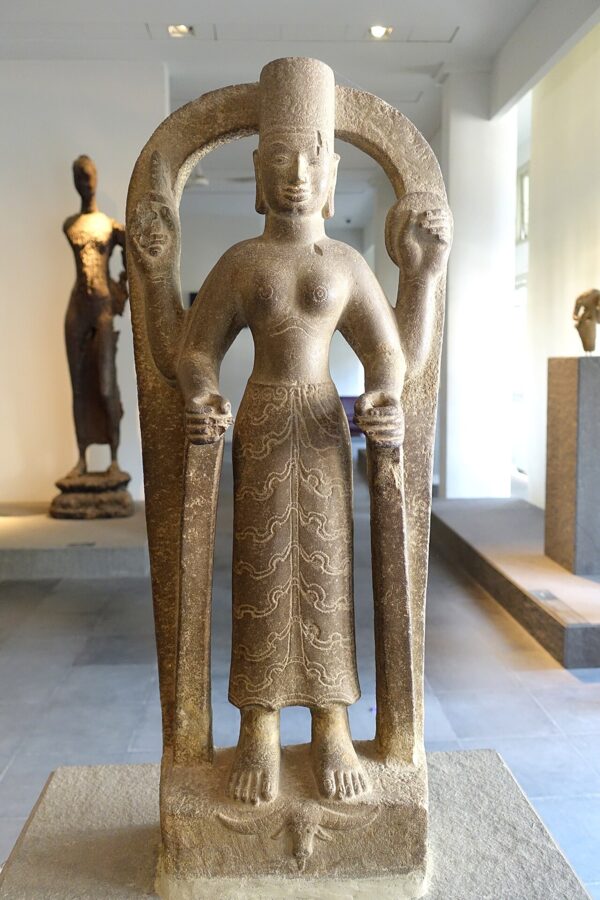
Look also for the sandstone Avalokiteśvara from Ngãi Hòa Thượng in Trà Vinh, a four-armed figure framed by an arch. It was dug up in 1937 and moved to the Saigon museum in 1942, during the Malleret years, and its date is given anywhere from the seventh to the ninth century.
Room 8 and the Khmer of the delta
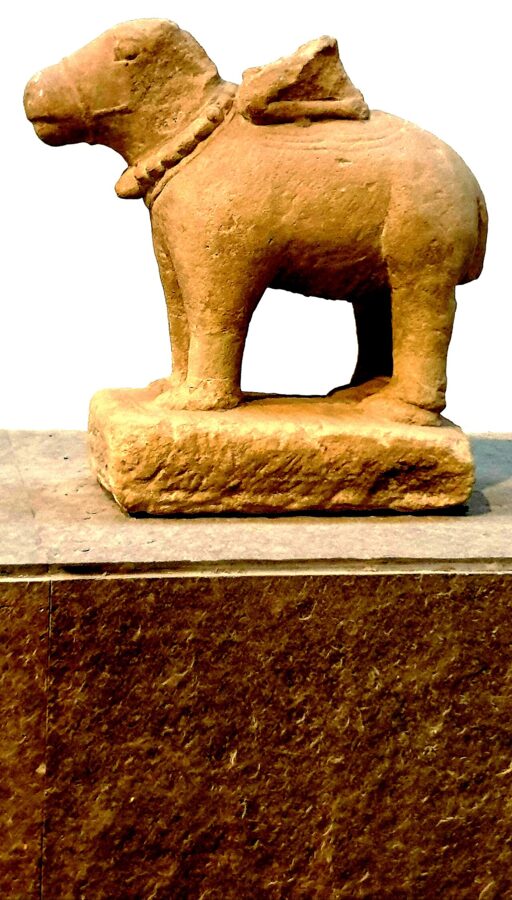
Room 8 holds stone sculpture from Cambodia from the ninth to the thirteenth century, the Angkor period: gods, Bodhisattvas, lintels and pedestals, most of them acquired in the French period. It is small after Champa and Óc Eo, but it completes the picture: the delta the Vietnamese settled in the seventeenth and eighteenth centuries had been Khmer land for a thousand years.
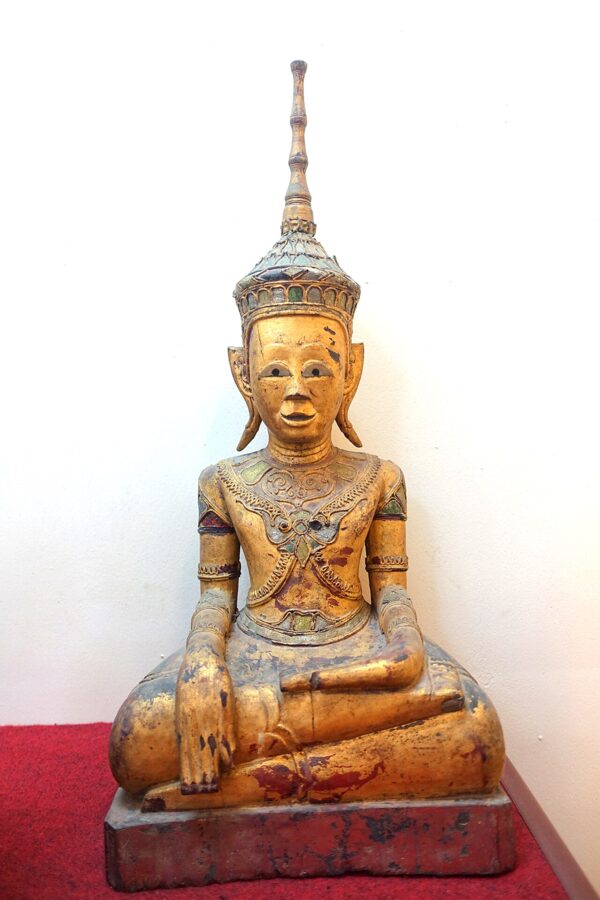
That later Khmer presence turns up in room 17, the gallery of southern ethnic groups, rather than here. Gilded wooden Buddhas made by the delta Khmer sit in its cases with tall spire crowns, in the Theravada style.
Rooms 9 to 12: the Lê, the Tây Sơn and the Nguyễn
The chronological story picks up again in room 9 with the Lê dynasty, whose founder Lê Lợi drove out the Ming in 1427, and runs on through the Mạc and the long rivalry of the Trịnh and Nguyễn lords. The room’s best objects are a bronze nghê (the Vietnamese guardian lion), incense burners, glazed lamp stands and blue-and-white jars.
The Tây Sơn room
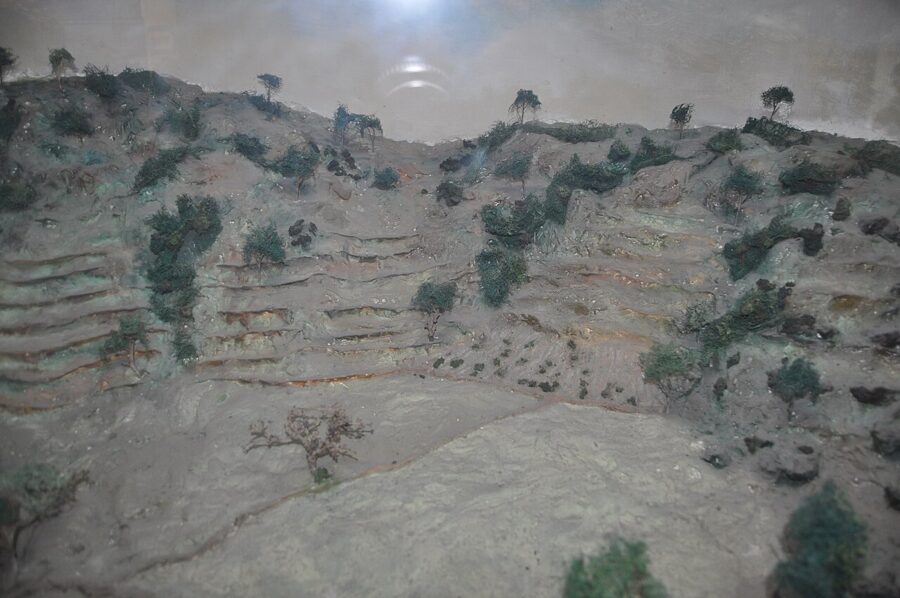
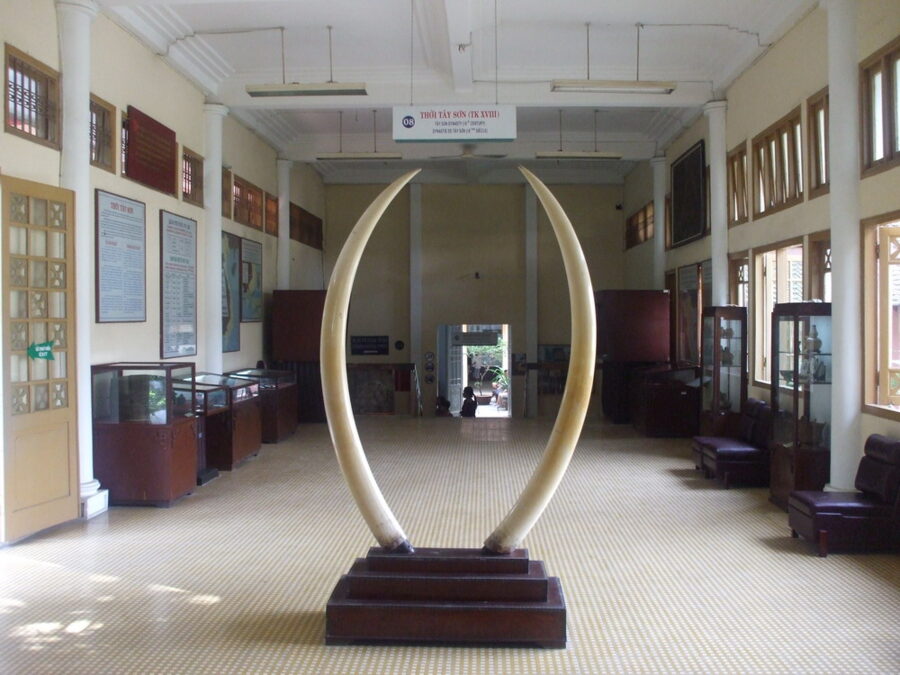
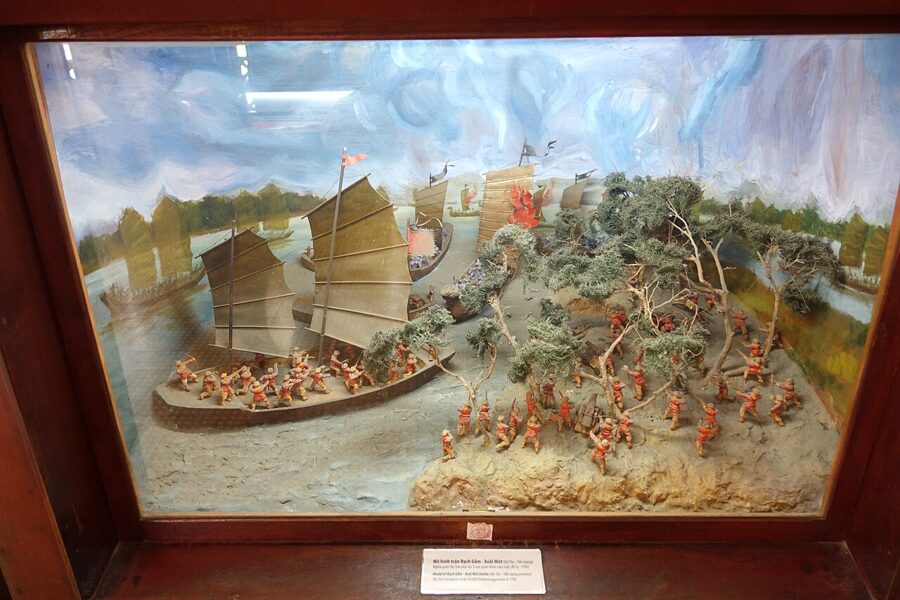
Room 10 tells the story of the Tây Sơn, three brothers from Bình Định who rose in revolt in 1771, overthrew both the Nguyễn and the Trịnh lords, and beat off invasions from Siam and Qing China within four years. The room has weapons, coins and a pair of enormous elephant tusks that dominate the space. For anyone in Saigon, the diorama of Rạch Gầm and Xoài Mút matters most: in January 1785 Nguyễn Huệ ambushed a Siamese fleet on a stretch of the Mekong near Mỹ Tho and destroyed it.

The cannon yard
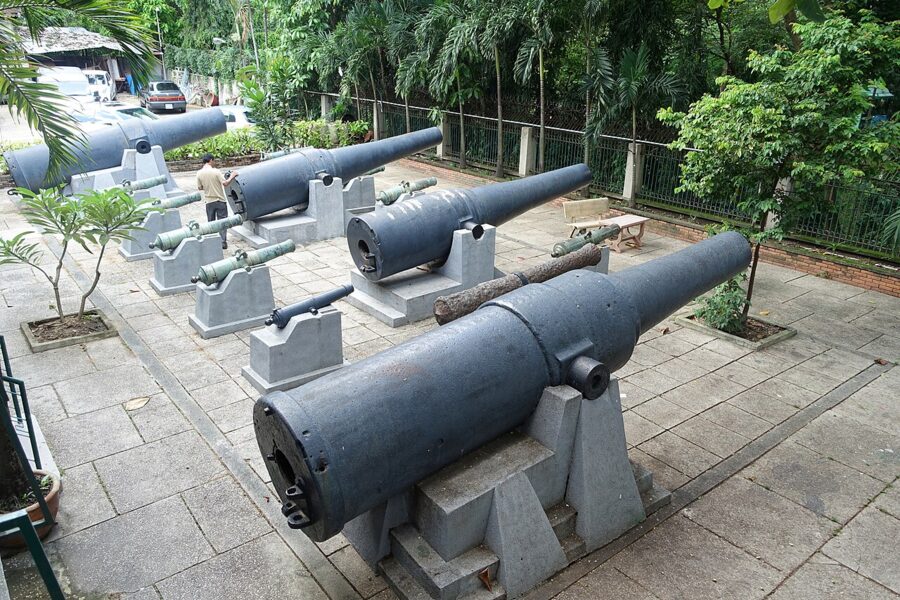
Room 11 is outdoors: a paved yard of eighteenth and nineteenth century cannons on stone plinths, Vietnamese guns beside French ones. It is a pleasant place to stand in the shade for a minute between rooms, and the water puppet stage is close by.
The Nguyễn room
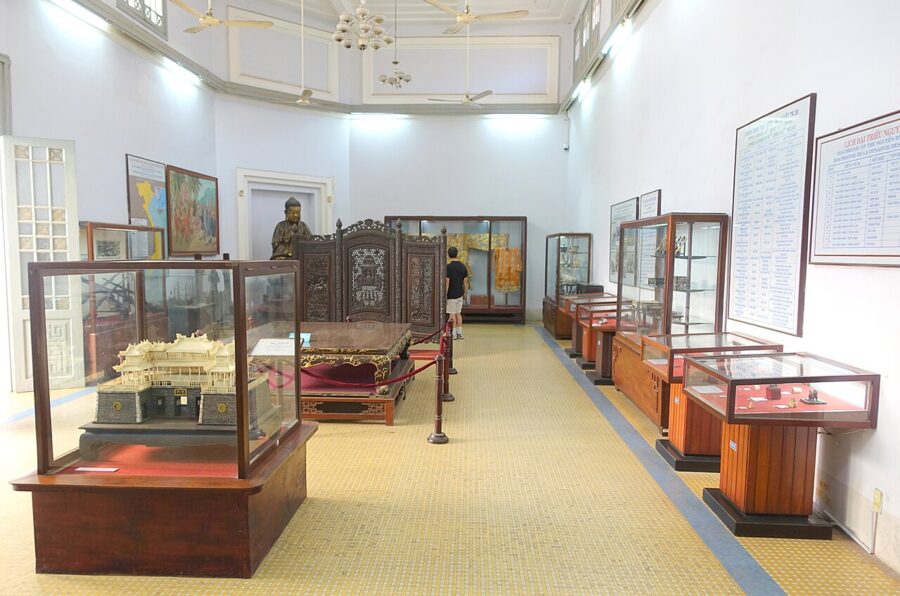
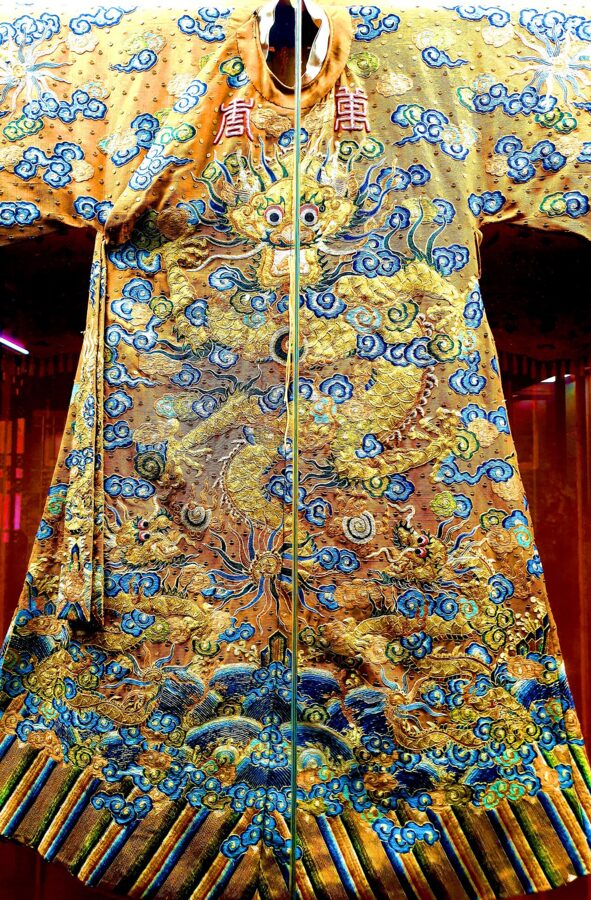
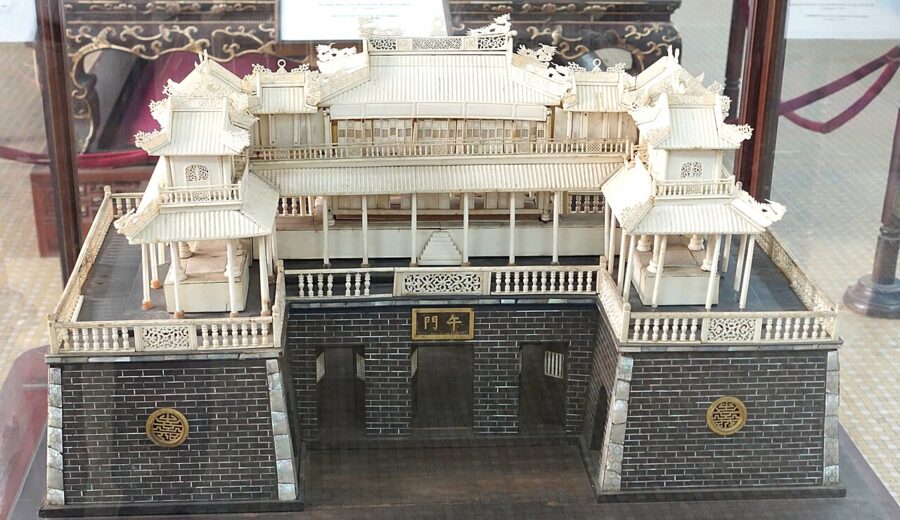
Room 12 covers the last dynasty, from Gia Long’s unification in 1802 to Bảo Đại’s abdication in 1945. The imperial robes are the showpieces: yellow silk embroidered with five-clawed dragons for the emperor, with the robes of a queen and a crown prince beside them. Around them are lacquered and mother-of-pearl furniture, bronze chimes, a book cast in bronze, boxes for royal decrees and a carved ivory model of the Ngọ Môn, the main gate of the citadel in Huế.

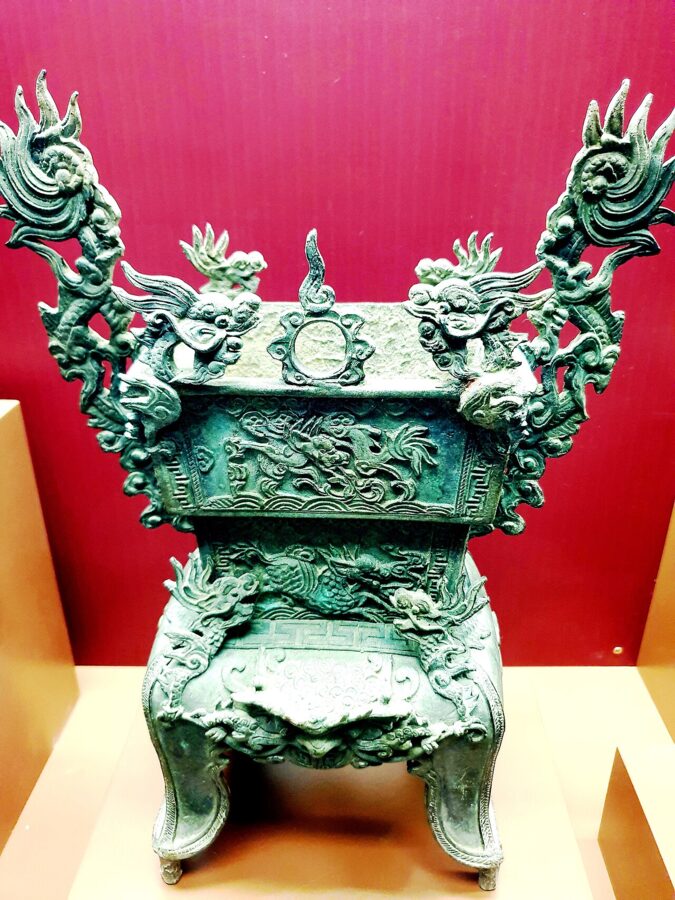
The most interesting set in the room is the least showy. In 1838 Minh Mạng renamed the country Đại Nam and, at the end of that year, ordered a series of ritual bronzes modeled on Shang and Zhou vessels from ancient China, thirty-three types in all, each engraved with his own verses on governing well and honoring heaven. They stood on the altars of the Nguyễn ancestral temples in Huế. The museum holds twelve, and their inscriptions are a short course in the Confucian ideas the dynasty ruled by.

Room 15: the Xóm Cải mummy
In early 1994 the city cleared a cemetery in Xóm Cải, a neighborhood in what was then District 5, near the old Chinese quarter. Of the sixteen tombs, one stood out: a walled compound of about 60 square meters with a gate, an offering yard, an altar and a double grave in lime mortar, the husband on the left and the wife on the right. The headstone was worn smooth except for three Chinese characters, Kỷ Tỵ niên, “the year of the snake,” which in that century means 1869.
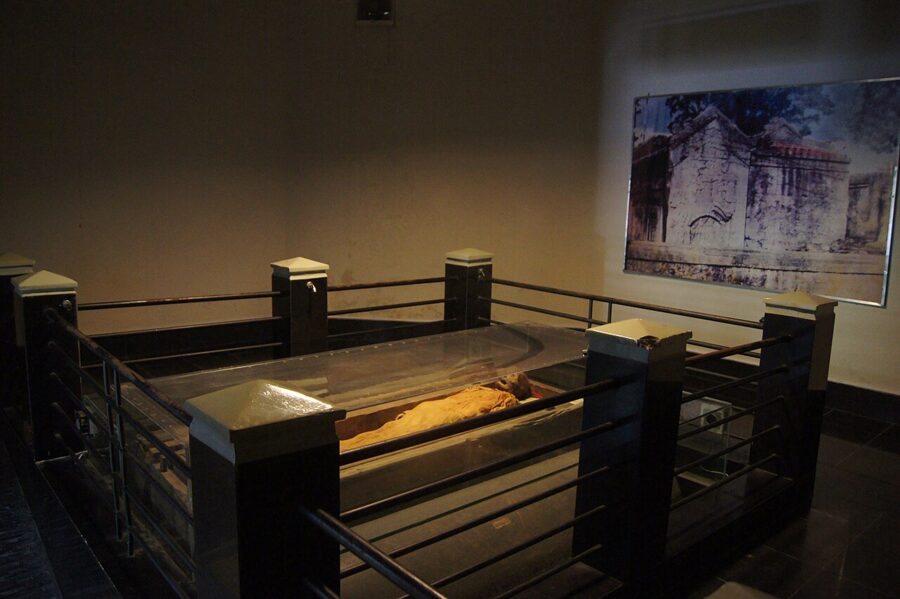

The tomb was built like a bunker. Workers needed weeks with iron chisels to break through the mortar, which had been mixed with burnt seashell lime, honey and charcoal. The husband’s coffin had leaked and held only bones and grave goods: gold rings, a fan, a comb, a brass betel set. The wife’s was sealed under black lacquer, and when it was opened she lay in a red, pine-scented fluid under rush mats, layers of paper and a silk banner with the words “imperial family encoffinment,” dressed in nine layers of cloth.
She was about 60 years old and 1.52 meters tall. A Buddhist ordination slip in her pocket gave her dharma name and the twenty-third generation of the Lâm Tế (Linji) school, and her shoes were pierced with seven holes in the pattern of the Big Dipper, a Taoist protection for the dead. Her name is the one detail the sources cannot agree on. The museum’s own panel calls her Trần Thị Hiệu, died in 1869, with a question mark; other accounts, including the archaeologist who opened the coffin, call her Nguyễn Thị Hiệu and link her to the family of Emperor Gia Long.
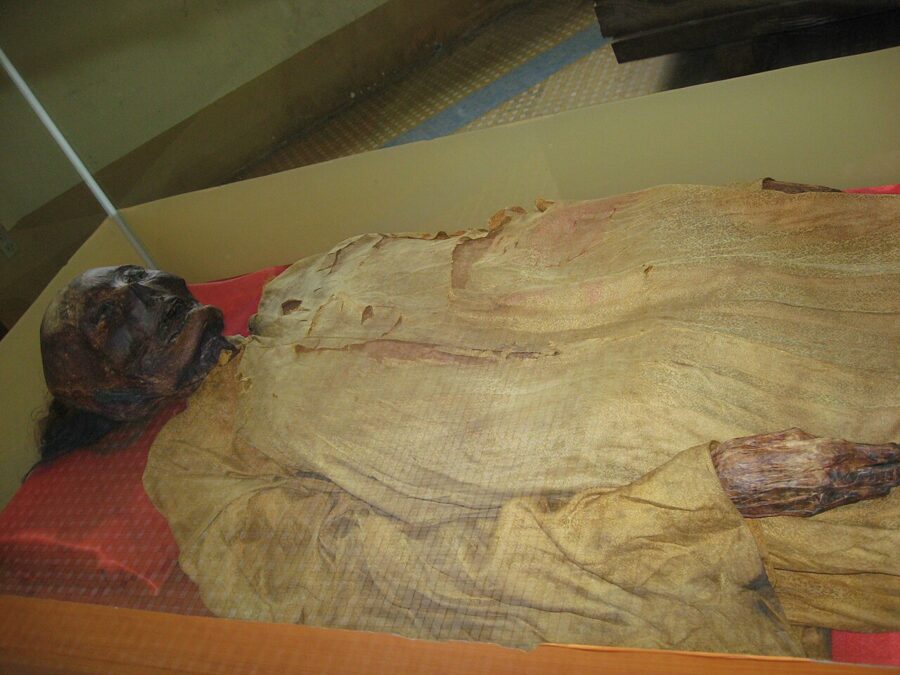
The display is respectful and short on spectacle. It is not frightening, but it is unmistakably a person, and some children will want to skip it.
The collectors’ rooms and Asia at the back
The rear wing changes tone: rooms 13 to 18 show what collectors gathered from across Asia, and they are best treated as a browse.
Vương Hồng Sển and Dương Hà
Vương Hồng Sển (1902 to 1996) was a writer, a connoisseur of Vietnamese ceramics and, from 1956 to 1964, director of this museum. His room is furnished like a scholar’s study of the old south: a lacquered divan, a carved cabinet for tea things, blue-and-white porcelain made in China to Vietnamese order, and his books. His 1960 book on the old city, Sài Gòn năm xưa, is the best companion to this building for Vietnamese readers.
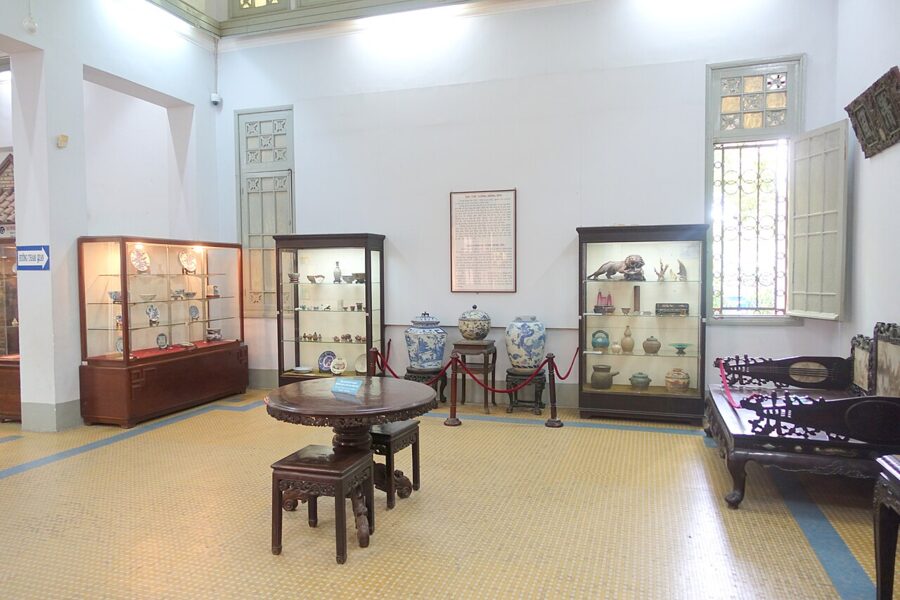
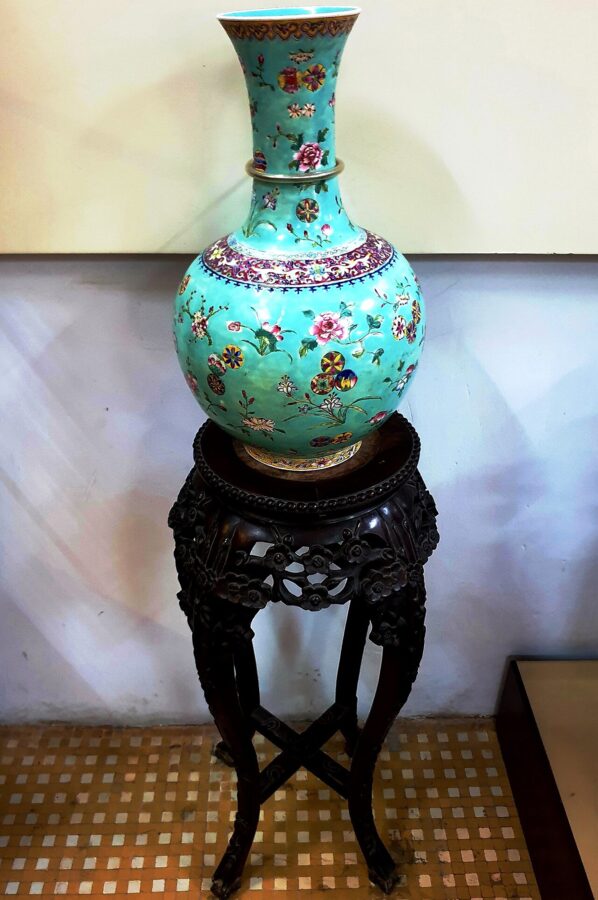
The Dương Hà collection in room 13 was begun in the 1930s and 1940s by a Saigon couple, Dương Minh Thới and Hà Thị Ngọc, to keep Vietnamese antiquities from being sold abroad. Their daughter Dương Quỳnh Hoa and her husband Huỳnh Văn Nghị built it up to 3,360 pieces, and after her death in 2006 he gave it to the city. It mixes Vietnamese, Chinese and Japanese ceramics with bronzes and furniture, from prehistory to the twentieth century. Room 14 widens the view to ceramics from China, Japan, Thailand and Cambodia.

The southern peoples
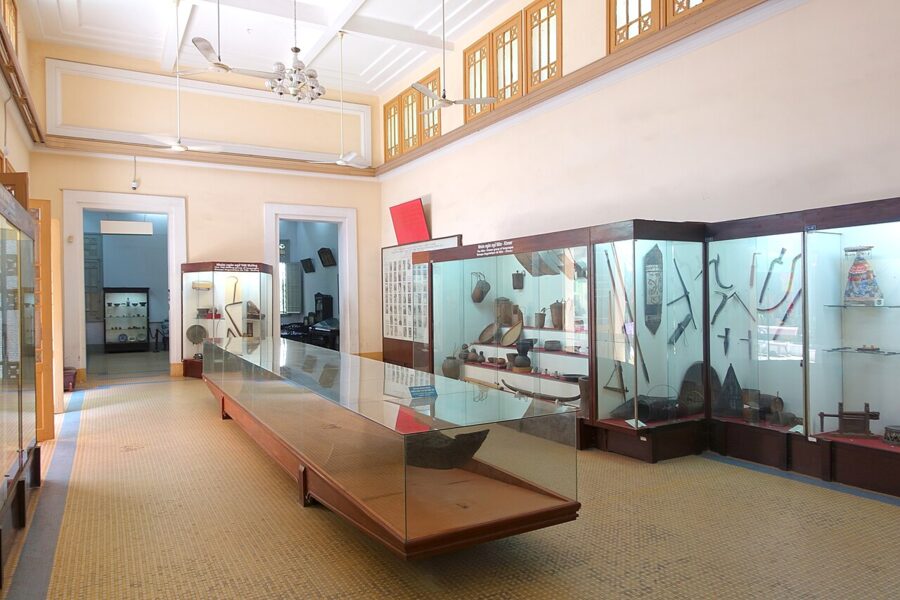
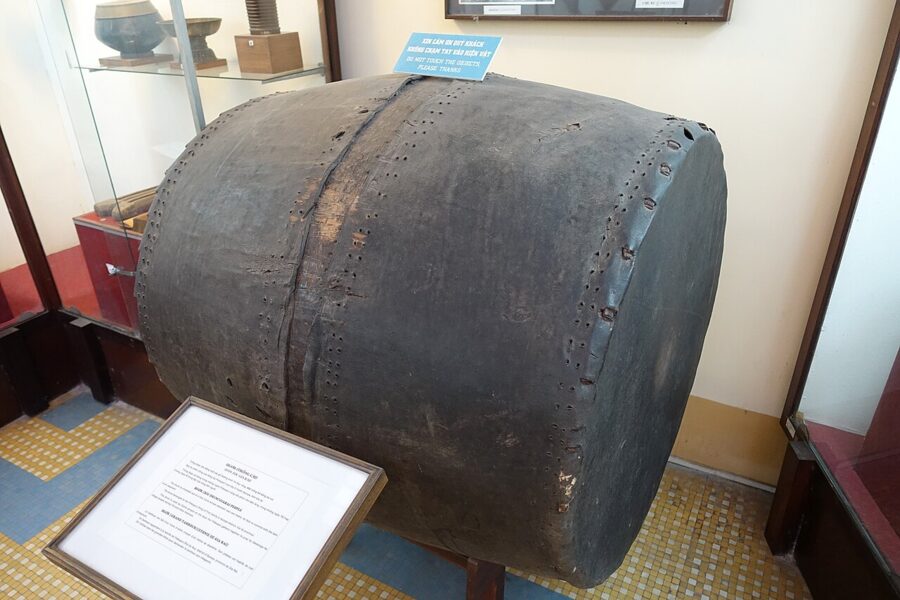
Room 17 covers the ethnic groups of the south and the Central Highlands: Khmer, Cham, Chinese, Mường and the Mon-Khmer and Austronesian peoples of the hills. It is a long room of costumes, baskets, farming and fishing tools, carved grave figures and musical instruments. The big Gia Rai drum, a hollowed tree trunk headed with elephant skin, is hard to miss.
Buddhas of Asia
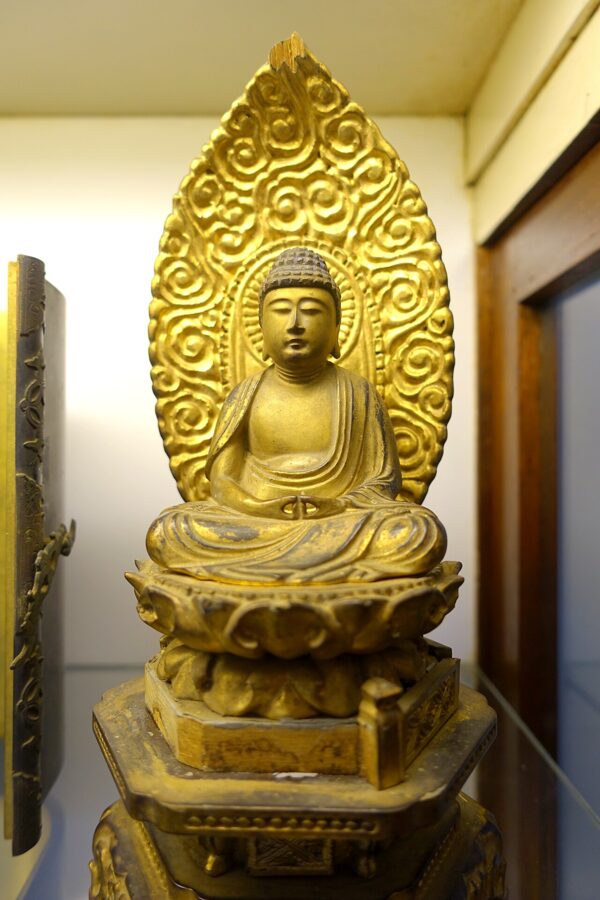
Room 18 ends the circuit with Buddhist statues from Japan, Thailand, Cambodia, Laos and elsewhere, in wood, bronze and lacquer. The centerpiece is the gilded wooden Buddha from Khải Tường pagoda, the Saigon temple where the future emperor Minh Mạng was born in 1791 while his father, Nguyễn Ánh, was fighting the Tây Sơn. The pagoda did not survive French rule, and this statue is one of the few things left of it.

Water puppets, the Hùng temple and what else runs here
Behind the cannon yard is a small water puppet theater with a tiled pavilion, a green pool and rows of red seats. The resident company, Múa Rối Nước Rồng Phương Nam, belongs to the city’s arts center (Trung tâm Nghệ thuật Thành phố) and plays the traditional repertoire of the northern villages where the art began, worked from behind a bamboo screen by puppeteers standing waist deep in water. Its posts in 2026 list seats at 150,000₫ (about US$5.80), the same price for adults and children.
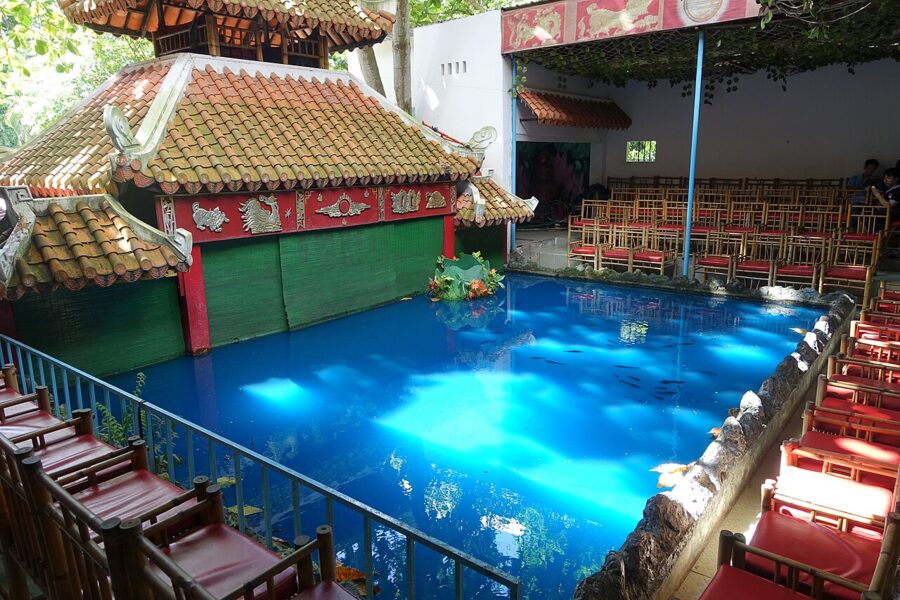
The show relies on music and movement more than dialogue, so it works without Vietnamese. Performances run on a schedule rather than continuously, and the stage was closed for renovation from late 2024, so ask at the museum ticket desk for the day’s times when you arrive.
The Hùng Kings Temple
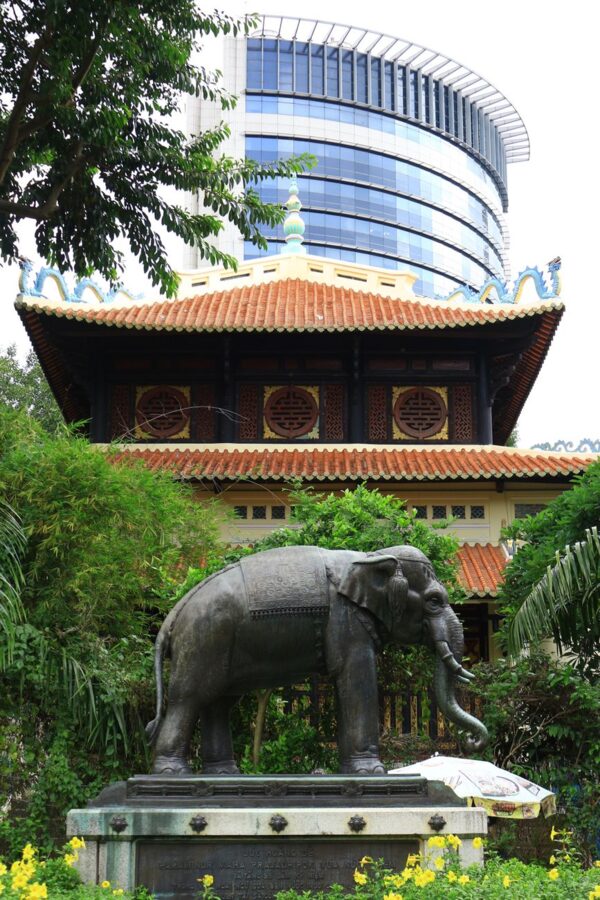
Opposite the museum’s main door, across the lawn, stands the Hùng Kings Temple (Đền thờ Vua Hùng), managed by the museum. It began as the Temple du Souvenir Annamite, a memorial to Vietnamese soldiers who died fighting for France in the First World War, and was built at the same time as the museum; the museum dates it to 1926, and it was inaugurated with the museum on 1 January 1929. In the mid-1950s the Saigon government rededicated it to the Hùng kings, Confucius, Trần Hưng Đạo and Lê Văn Duyệt, and since 1975 it has honored the Hùng kings alone.
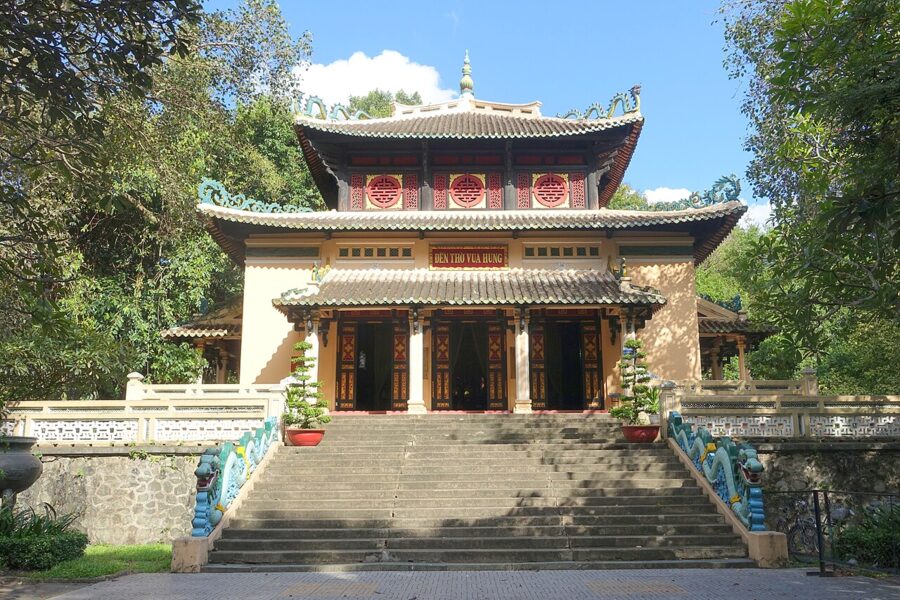
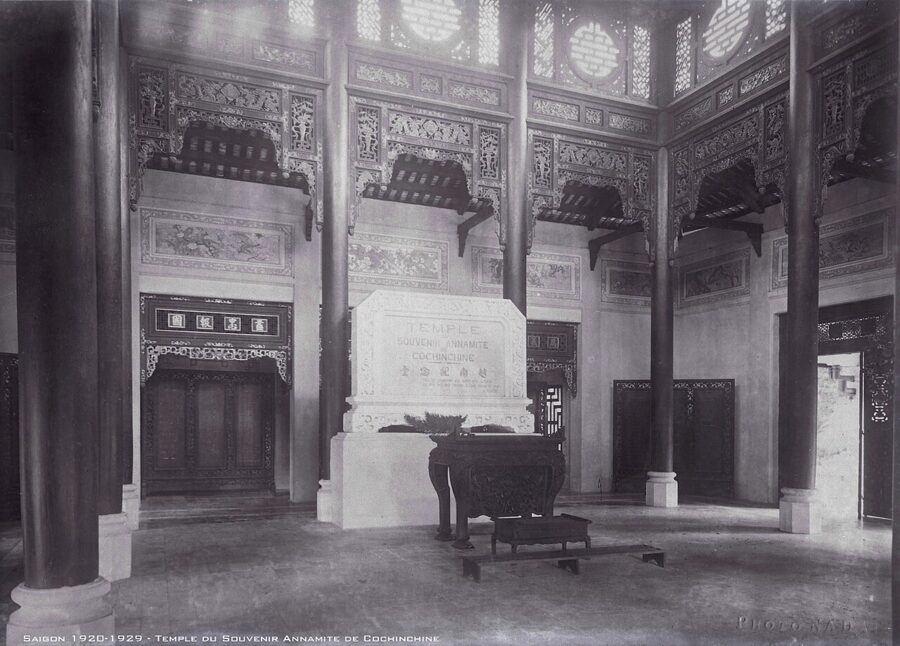
On the tenth day of the third lunar month the city holds its ceremony for the Hùng Kings’ anniversary here, with processions and offerings. According to a museum notice of 16 November 2026, the temple is open Tuesday to Friday and on public holidays and Tết, 8am to 11am and 1:30pm to 4:30pm, so on a weekend you will see it only from the outside.
The museum also runs temporary exhibitions in a round hall at the center of the building, has a souvenir shop with books and a small drinks stand, and puts on occasional performances of hát bội, the classical southern opera.
How to visit
| Museum of Vietnamese History (Bảo tàng Lịch sử Thành phố Hồ Chí Minh) | |
|---|---|
| Address | 2 Nguyễn Bỉnh Khiêm, Sài Gòn ward (formerly District 1) |
| Hours | Tuesday to Sunday, 8am to 11:30am and 1pm to 5pm; closed Mondays |
| Museum ticket | 60,000₫ (about US$2.30) from 1 October 2026; free for children and for students with a card; half price for Vietnamese citizens aged 60 and over |
| Hùng Kings Temple | Tuesday to Friday, holidays and Tết, 8am to 11am and 1:30pm to 4:30pm |
| Water puppets | 150,000₫ (about US$5.80) a seat; times vary, ask at the desk |
| Saigon Zoo and Botanical Garden | Opens 7am daily; 60,000₫ for visitors 1.3 m and taller, 40,000₫ from 1 m to 1.3 m, free under 1 m |
The price doubled on 1 October 2026, when a city council resolution set a new fee for all museums run by the city’s Department of Culture and Sports. Many guides and booking sites still quote the old 30,000₫, so do not be surprised at the window. Bring a passport or student card if you are claiming a free or reduced ticket.
Getting there
Grab and Be cars and motorbike taxis know the museum as Bảo tàng Lịch sử; type the Vietnamese name rather than the English one. From the Bến Thành area the ride takes ten to fifteen minutes. Drivers drop off along Nguyễn Bỉnh Khiêm, outside the gate.
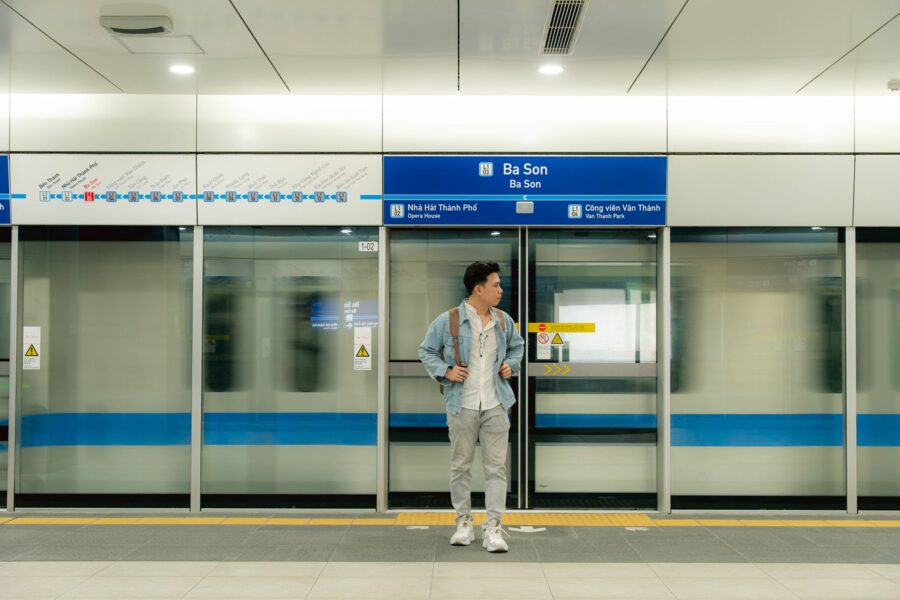
On Metro Line 1, the closest station is Ba Son, the second stop out from Bến Thành after Opera House station by the Municipal Theatre (Nhà hát Thành phố). From its exits it is roughly 600 meters to the museum along Nguyễn Hữu Cảnh and Nguyễn Bỉnh Khiêm, about a ten-minute walk with one busy road crossing.
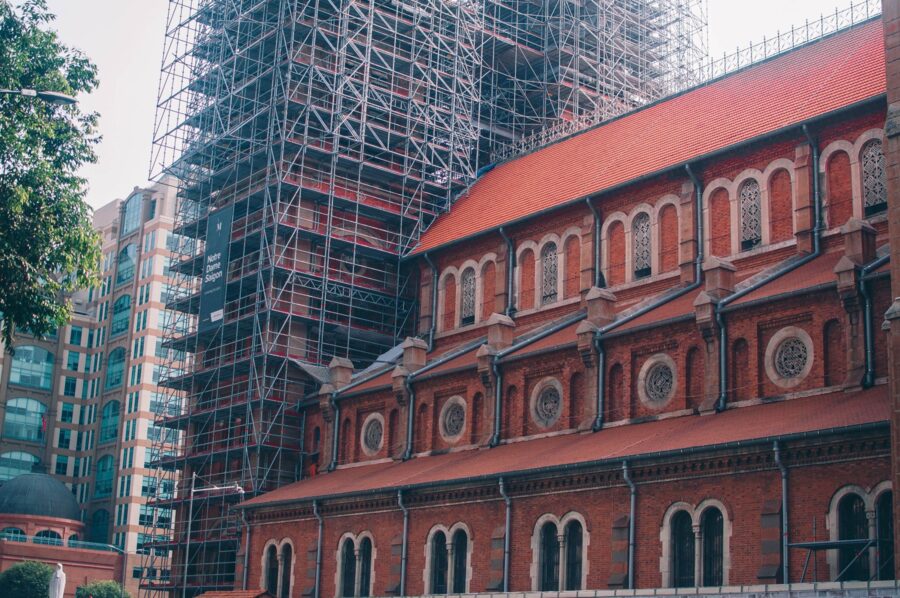
On foot from the cathedral, the route is simple and shaded for much of the way. Walk north from Notre-Dame Cathedral (Nhà thờ Đức Bà) to Lê Duẩn Boulevard and follow it to its end at the zoo gates, about 1.5 kilometers or 20 minutes. The French laid this boulevard out as the axis from the governor’s palace to the botanical garden.
Rules and what to wear
The museum asks for tidy clothes, quiet voices, no touching and no food or drink in the galleries, and large bags are best left at the hotel. Photography for personal use is widely practiced in the rooms; keep the flash off and watch for signs at individual cases. Shorts and sleeveless tops are fine for the museum, but cover your shoulders and knees if you go into the Hùng Kings Temple, which is an active place of worship.
How long to stay, and when
Allow two hours for the whole museum and an hour if you stick to the Champa and Óc Eo rooms and the mummy. The lunch closure is the thing to plan around: if you arrive at 10:30am, you will be shown out at 11:30 with half the building unseen. Arrive at 8am, when the rooms are quiet, or at 1pm sharp.
The zoo and the botanical garden
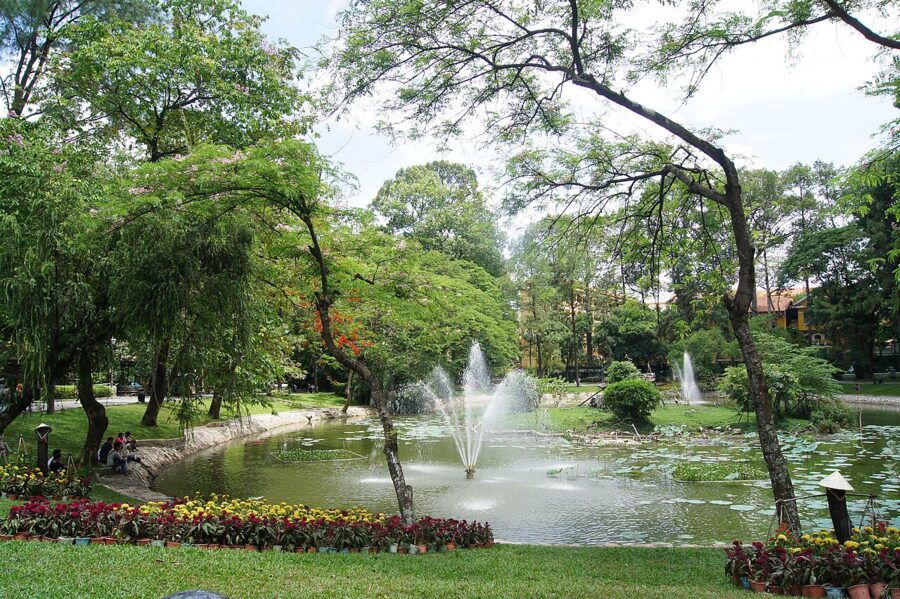
The Saigon Zoo and Botanical Garden (Thảo Cầm Viên Sài Gòn) was founded on 23 March 1864, and it calls itself the eighth oldest zoo in the world. For adults the old garden is the real attraction: a lake with a fountain, bonsai beds and big shade trees, some of them planted in the nineteenth century. The animal enclosures are mixed, some modern and some cramped, and conditions have drawn criticism over the years.
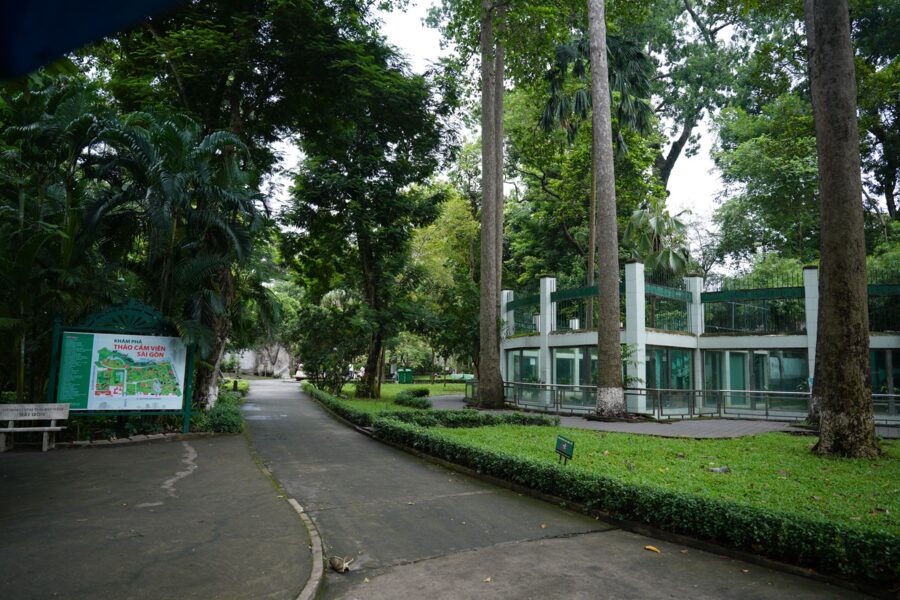
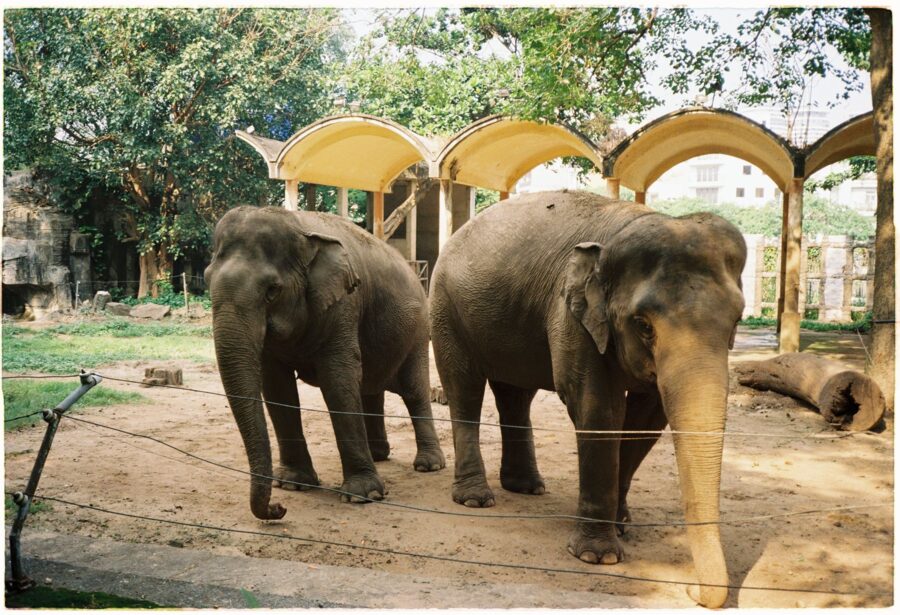
The zoo opens at 7am, an hour before the museum, which makes for an easy morning: walk the garden while it is still cool, then cross to the museum at 8am. If you plan to do both, buy the zoo ticket at the main gate first; the museum’s own ticket is sold at its door. Bring water, because the grounds are large and shade is patchy between the big trees.

What else is nearby
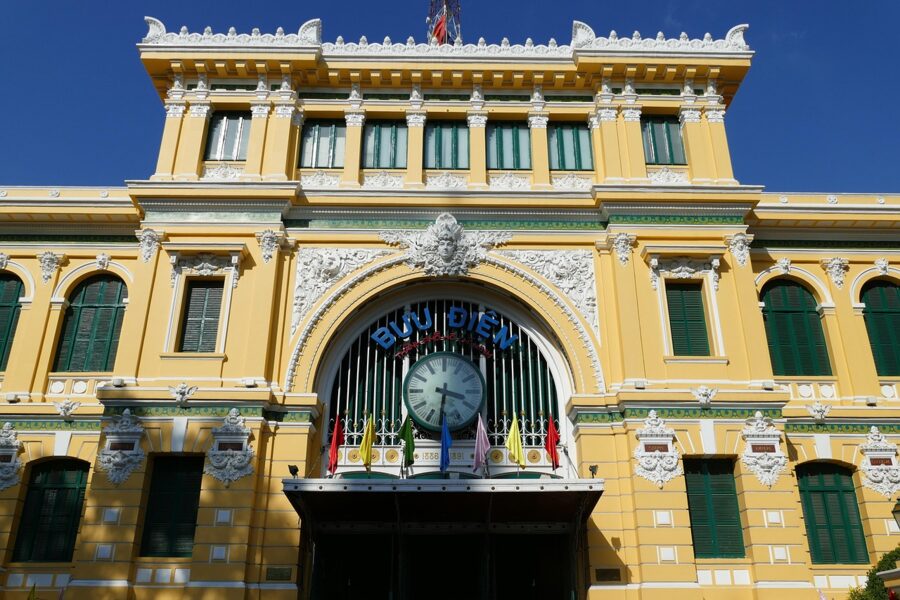
The museum sits at the top of a short walk through French Saigon. Down Lê Duẩn are Notre-Dame and the Saigon Central Post Office, about 20 minutes away, and the Reunification Hall stands at the far end of the same boulevard, about 2 kilometers from the museum. The War Remnants Museum is a short ride beyond that, which makes it a natural afternoon after a morning here.
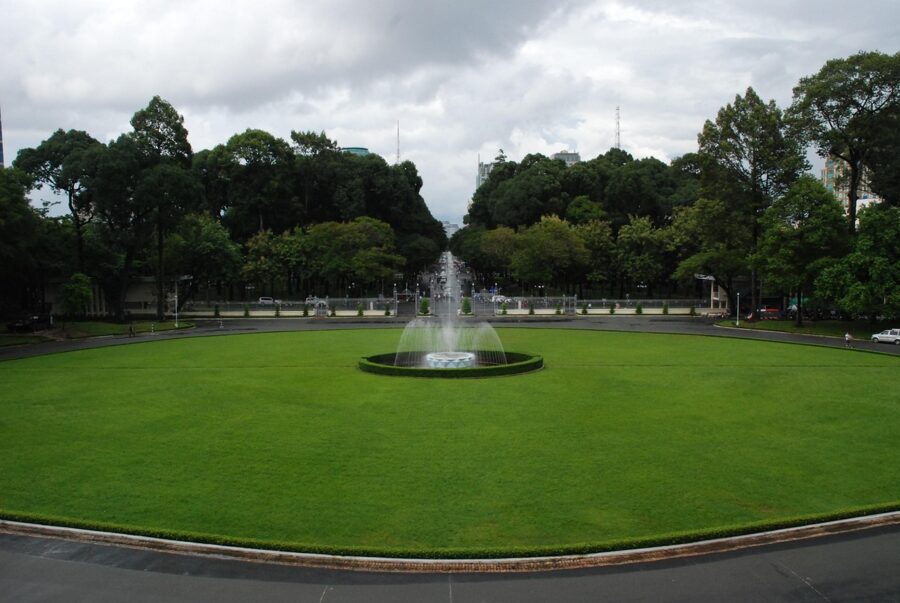
For lunch, the old Đa Kao quarter west of the zoo is full of small restaurants, and Bến Thành Market is a short ride away. If the lunch closure catches you halfway round, though, stay in the garden: take a bench by the lake until the museum reopens at 1pm, then go back in for the rooms you missed.