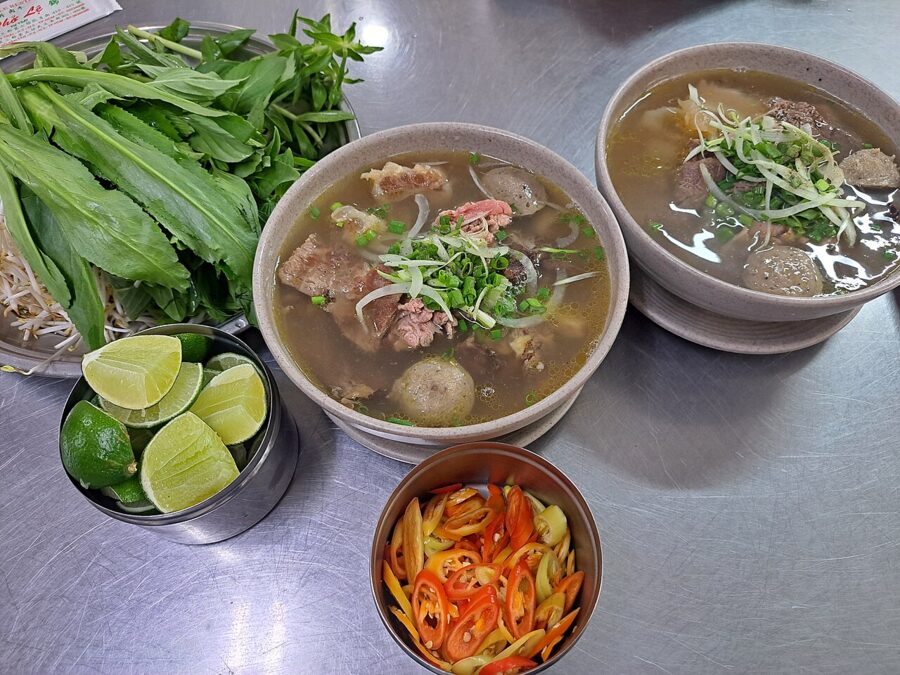
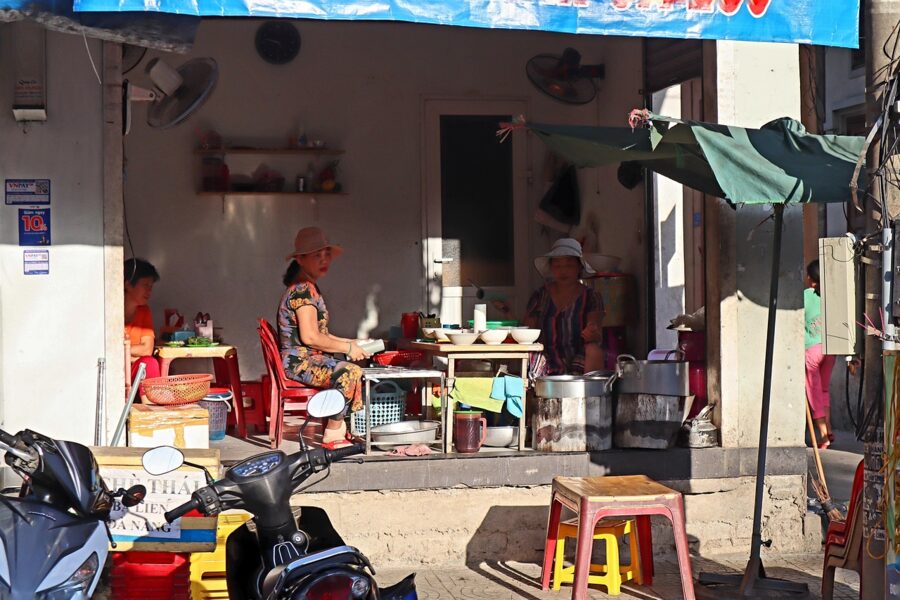
At half past six in the morning the alley at 63/6 Pasteur Street is barely wide enough for two motorbikes, and the first of them are already parked nose to wall outside Phở Minh. The family has been ladling beef broth here since 1945. By ten the pot is low, and at half past ten the shutters come down whether you have eaten or not.
Two kilometers south, across the Bến Nghé canal, Ốc Oanh on Vĩnh Khánh Street will not even have lit its grills. It opens in the early afternoon and keeps cooking snails, clams and crab claws until two or three in the morning. Between those two kitchens sits the whole eating day of Saigon, and most of it happens on a plastic stool.
The city eats in shifts. Broth and broken rice before work, rice plates and noodle soups at lunch, sweet soups and iced coffee in the heat of the afternoon, then grills, snails and beer after dark. Each shift has its specialists, and the best of them cook one dish and nothing else.
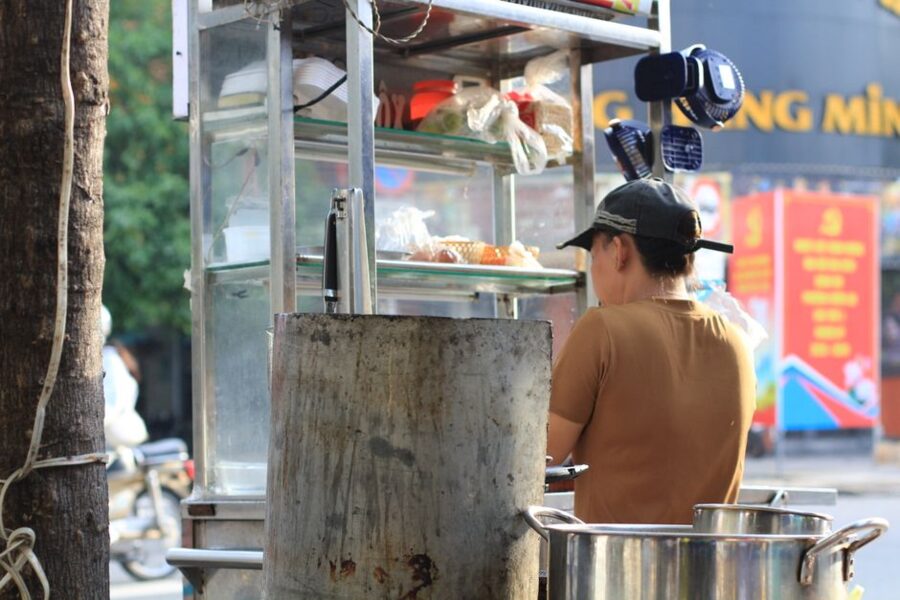
Once you know what to ask for, the city opens up. Hours and prices below are the ones published in 2026, and family stalls change both without notice.
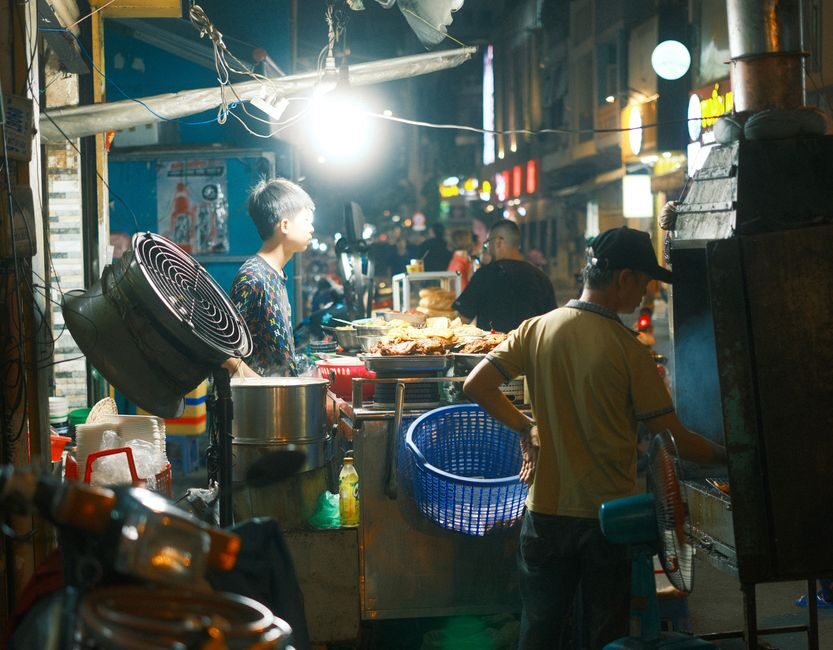
On this page
- The dishes to know, and how to order them
- Street food: choosing a stall and the plastic-stool rules
- Where to eat: streets, neighborhoods and markets
- Restaurants: from family rice shops to tasting menus
- Coffee: the drink, the cafés and the café streets
- Practical: hours, money, booking, menus and allergies
The dishes to know, and how to order them
Saigon’s food is southern food, sweeter than Hanoi’s and heavier on herbs, coconut and sugar, with two centuries of Chinese cooking folded into it and the produce of the Mekong Delta arriving every night. The city also absorbed the north. When Vietnam was divided in 1954, about a million people moved south, and they brought their recipes with them.
Almost every dish is sold by specialists, so the name on the sign tells you what is cooking. Learn nine names and you can eat well for a week without opening a menu.
Phở: northern soup, southern bowl
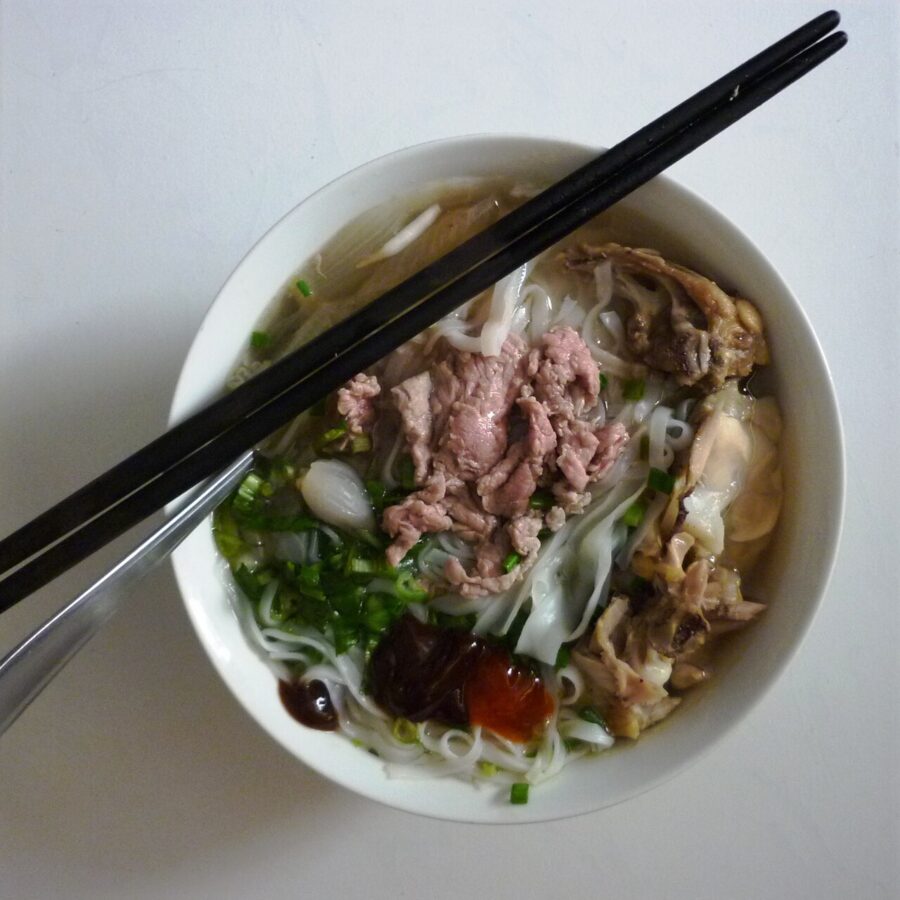

Phở came south with the northerners of 1954 and changed on the way. The Saigon bowl has narrower noodles, a sweeter and often cloudier broth, and a plate of bean sprouts, Thai basil, culantro and lime that the north does without. Hoisin and chili sauce sit on every table. Purists from Hanoi grumble about all of it, and Saigon has never cared.
Southern shops sell beef in five cuts, and you order by combining their names: tái (rare slices), chín (well-done), nạm (flank), gầu (fatty brisket) and gân (tendon). “Tái nạm” is a safe first order. “Đặc biệt” means the house special with a bit of everything, and in many shops you can ask for a small bowl of nước béo, the skimmed bone fat, on the side.
Phở Minh, in the alley at 63/6 Pasteur in Sài Gòn ward (formerly District 1), opens 6:30am to 10:30am daily, takes cash only, and also bakes pâté chaud, puff pastry filled with hot meat. Phở Hương Bình at 148 Võ Thị Sáu in Xuân Hòa ward (formerly District 3) has served chicken and beef phở since 1958, 6:30am to 9pm. Phở Lệ at 413-415 Nguyễn Trãi in An Đông ward (formerly District 5), more than seventy years old, runs from 6am to 10pm.
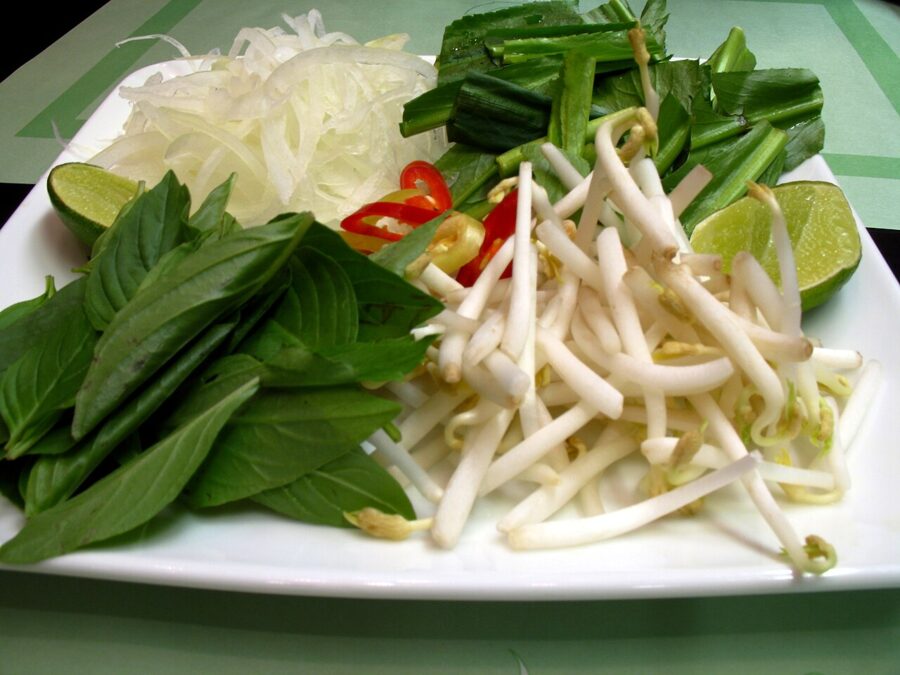

All three hold a Bib Gourmand in the 2026 Michelin Guide, as do Phở Phượng at 25 Hoàng Sa, whose oxtail is braised for forty hours, and Phở Hoàng at 460 Nguyễn Tri Phương. For phở after midnight, Phở Hùng at 241-243 Nguyễn Trãi in Cầu Ông Lãnh ward runs until 1am.
Cơm tấm: broken rice, whole meal
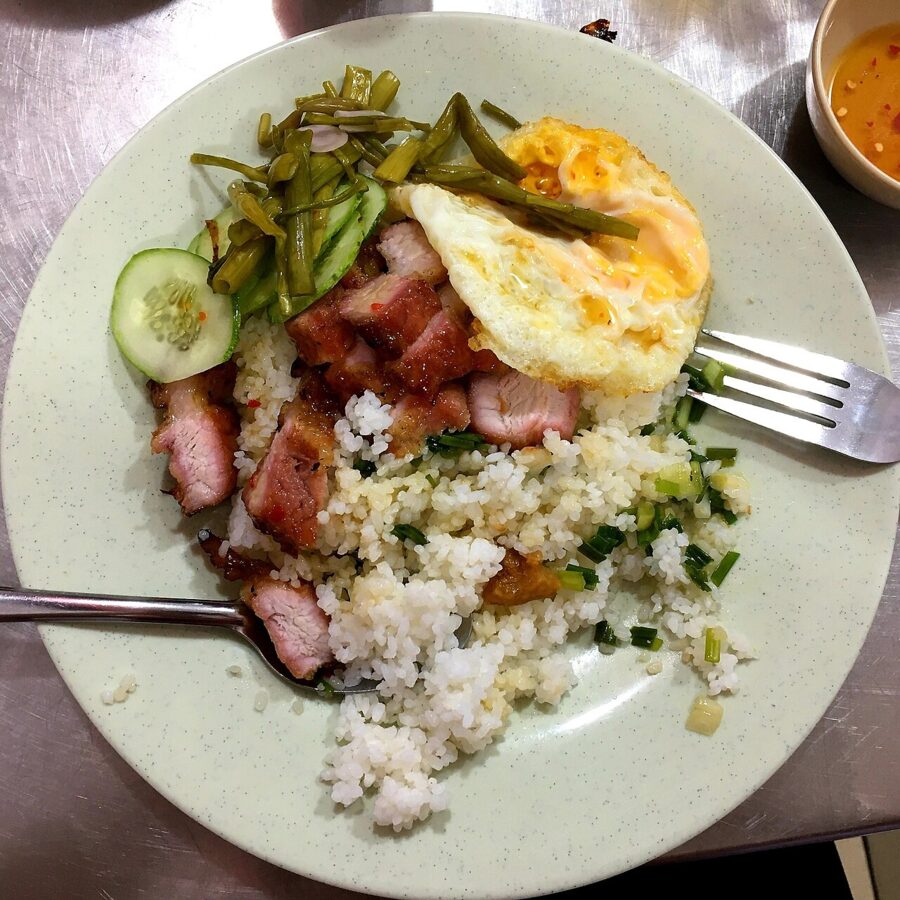

If phở is Hanoi’s breakfast, cơm tấm is Saigon’s. The rice is made from grains that cracked in the mill, once the cheapest grade sold and now a dish of its own. Vietnamese sources disagree on where it began: some trace it to Mekong Delta farmers eating the rice they could not sell in a poor season, others to the rice porters at the Bình Đông warehouses on the Tàu Hủ canal near Chợ Lớn, who swept up the broken grains after work and cooked them.
The full plate is called cơm tấm sườn bì chả: a grilled pork chop (sườn), shredded pork skin tossed in roasted rice powder (bì), and a slice of steamed egg-and-pork meatloaf (chả). A fried egg is extra, and so is the little bowl of scallion oil that gets spooned over the rice. It is eaten with a fork and spoon, and the fish sauce is poured over, not dipped into.
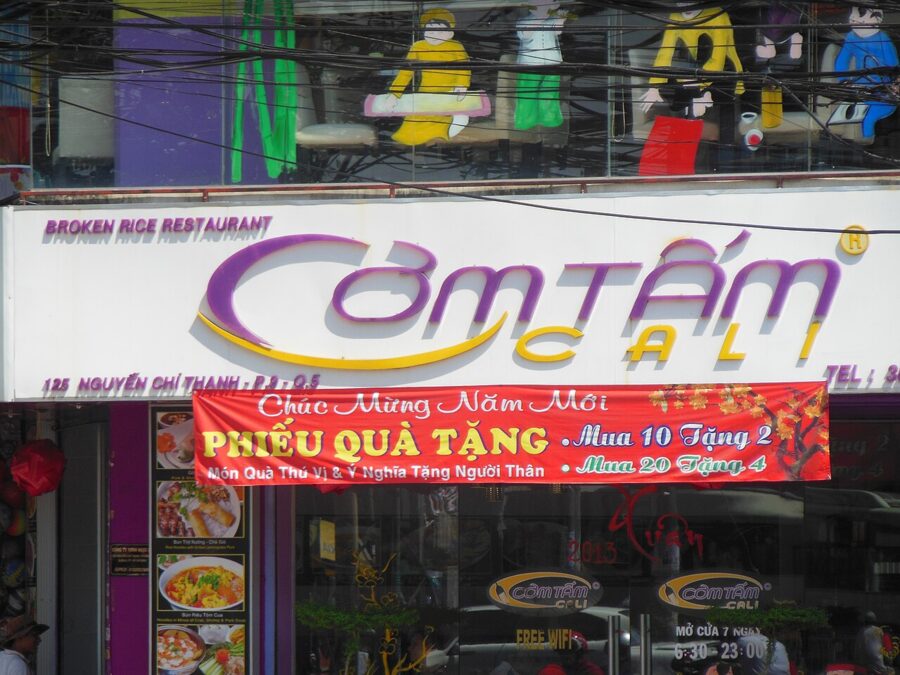

The name everyone mentions is Cơm Tấm Ba Ghiền at 84 Đặng Văn Ngữ in Phú Nhuận ward, open 9am to 9:30pm daily and cash only. It has grilled pork chops over charcoal since the 1990s and holds a Michelin Bib Gourmand. The chop is enormous and so is the price by street standards; when the award was first given in 2023, Tuổi Trẻ readers argued about whether it was value for money. Go hungry.
Bánh mì: the sandwich Saigon made
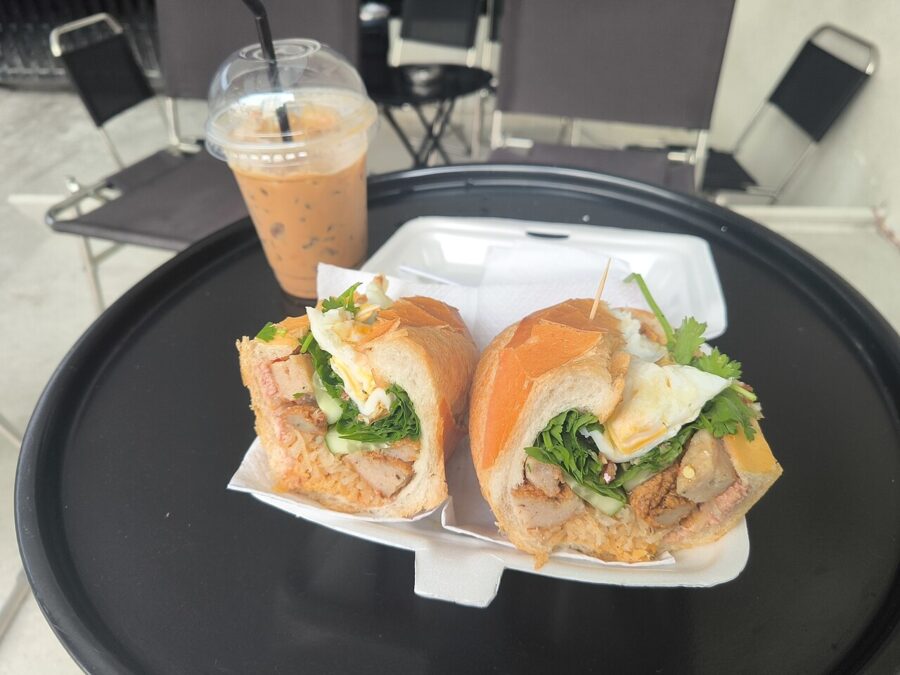

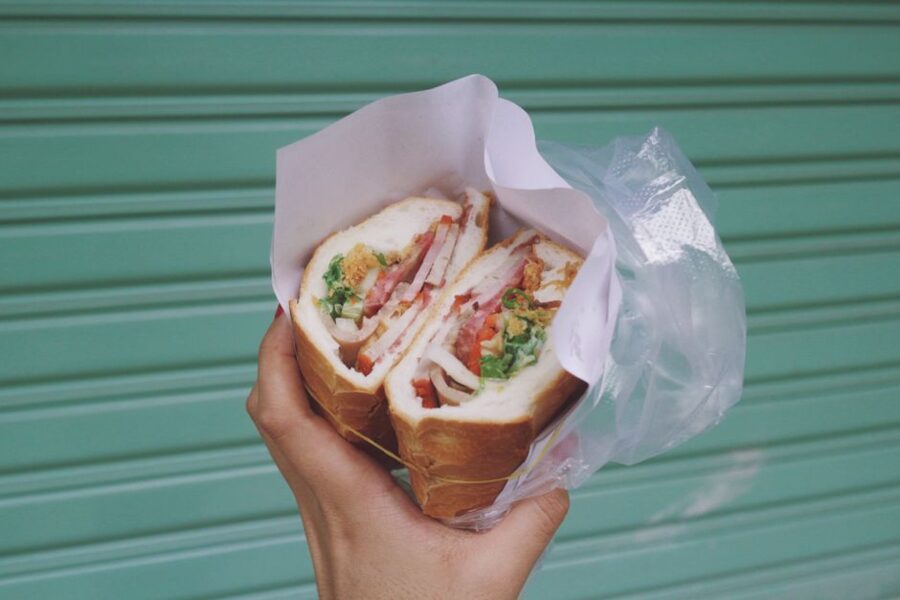
The French brought the baguette; Saigon made it shorter and lighter, with a crackling crust and an airy center that leaves room for filling. Until the 1950s most sandwiches here were French in spirit, ham and butter or pâté on bread. Then the northern migrants of 1954 arrived, and in 1958 a couple who had come south opened a small shop called Hòa Mã and began selling bread stuffed with Vietnamese cold cuts, the bánh mì thịt that the world now knows.
A classic bánh mì thịt holds pâté, butter or mayonnaise, a few kinds of cold pork such as chả lụa (steamed pork roll), pickled carrot and daikon, cucumber, cilantro and fresh chili, with a splash of soy or Maggi. Point at what you want in the glass case. “Không ớt” means no chili, and “thêm pa-tê” gets you more pâté.
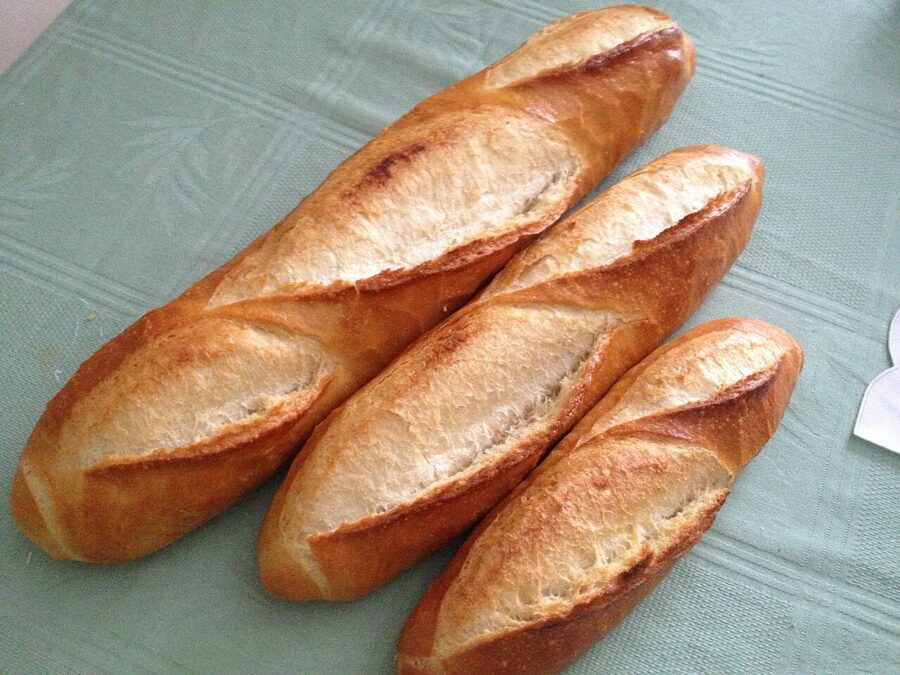

Bánh Mì Huỳnh Hoa on Lê Thị Riêng in Bến Thành ward (formerly District 1) is the most famous and one of the priciest, a heavy, meat-packed loaf with a queue that can take fifteen to thirty minutes. In Chợ Lớn, Bánh Mì Tăng at 822 Nguyễn Trãi began as a Chinese family’s bread cart in 1950. Both had stalls at the city’s fourth Bánh Mì Festival in April 2026.
Hủ tiếu: the Teochew noodle
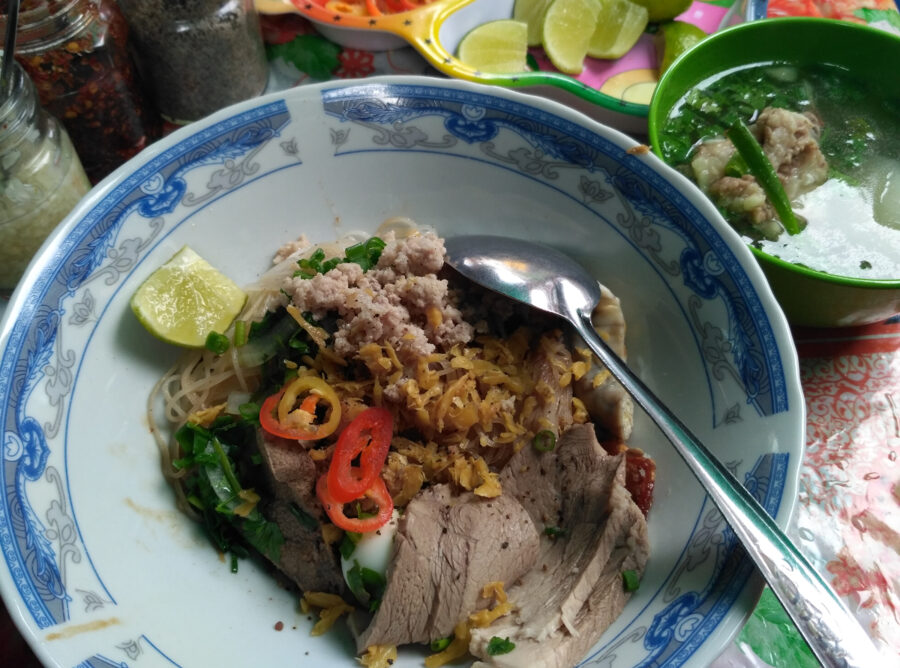

The name comes from the Teochew Chinese kway teow, and the dish came with the Teochew who settled in the south. Hủ tiếu is a clear pork-bone broth, often sweetened with dried squid and dried shrimp, over rice or tapioca noodles, with minced pork, sliced liver, shrimp and quail eggs. The best-known version is hủ tiếu Nam Vang, “Nam Vang” being the old Vietnamese name for Phnom Penh, where the Chinese community created the recipe.
Order “nước” for soup or “khô” for dry noodles with the broth on the side; the dry version is the better one to try first. At night listen for hủ tiếu gõ, the pushcart noodle sellers who announce themselves by knocking two pieces of wood or metal together. The same soup is still sold from boats at the Cái Răng floating market in Cần Thơ.
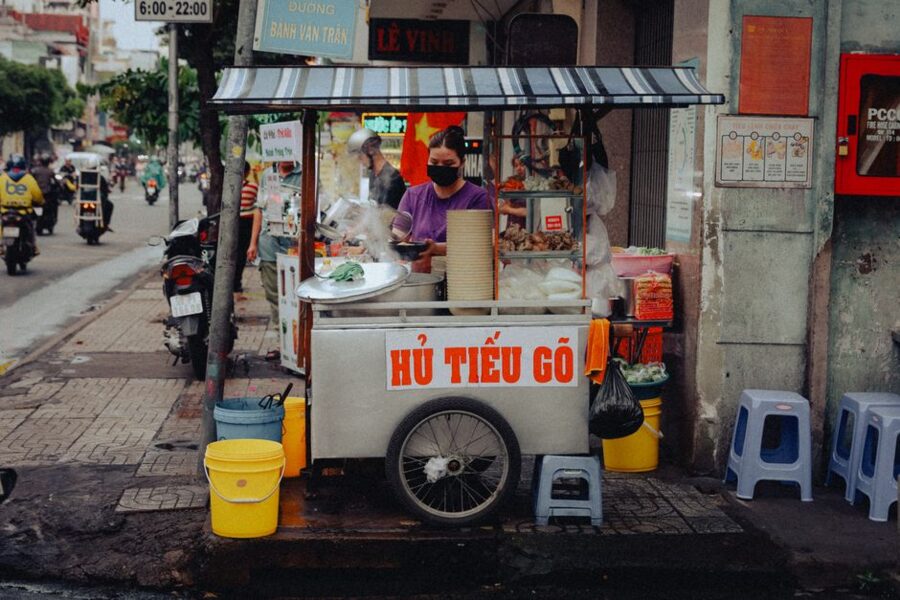
Hồng Phát at 389-391 Võ Văn Tần in Bàn Cờ ward (formerly District 3) is the place to start. The family began selling hủ tiếu Nam Vang in 1975 and now serves from a double shopfront, 6:30am to 10:30pm; it holds a Bib Gourmand and, unusually for a noodle house, takes cards. Add the shrimp and crab spring rolls.
Bánh xèo: the sizzling pancake

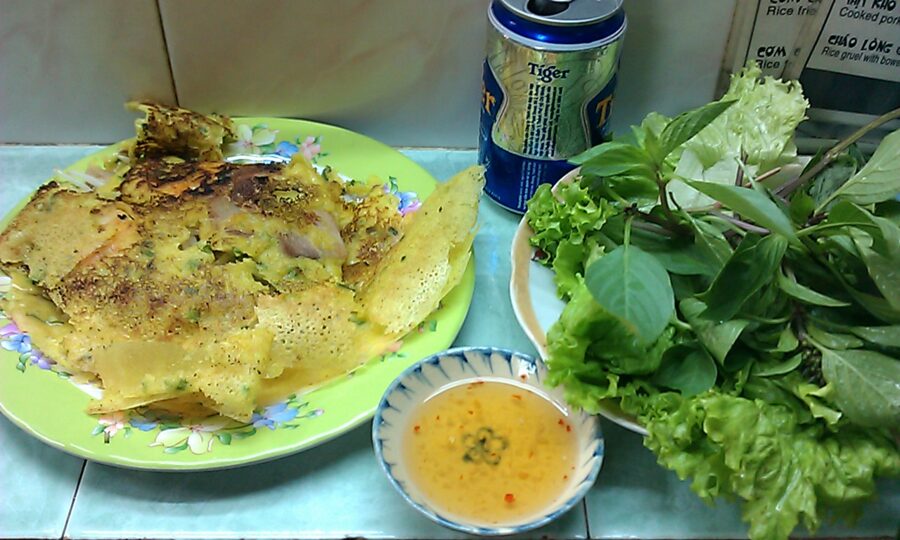
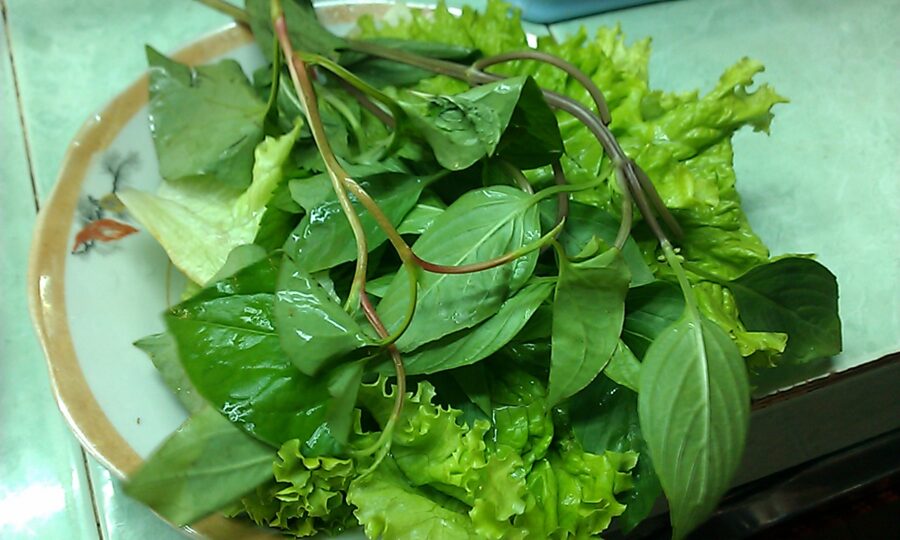
Bánh xèo is named for the hiss the batter makes when it hits a hot pan. The southern version is large, crisp at the edges and yellow from turmeric and coconut milk, folded over pork, shrimp, bean sprouts and mung beans. You do not eat it with chopsticks alone: tear off a piece, wrap it in a mustard leaf or lettuce with a few herbs, and dip it in sweet-sour fish sauce.
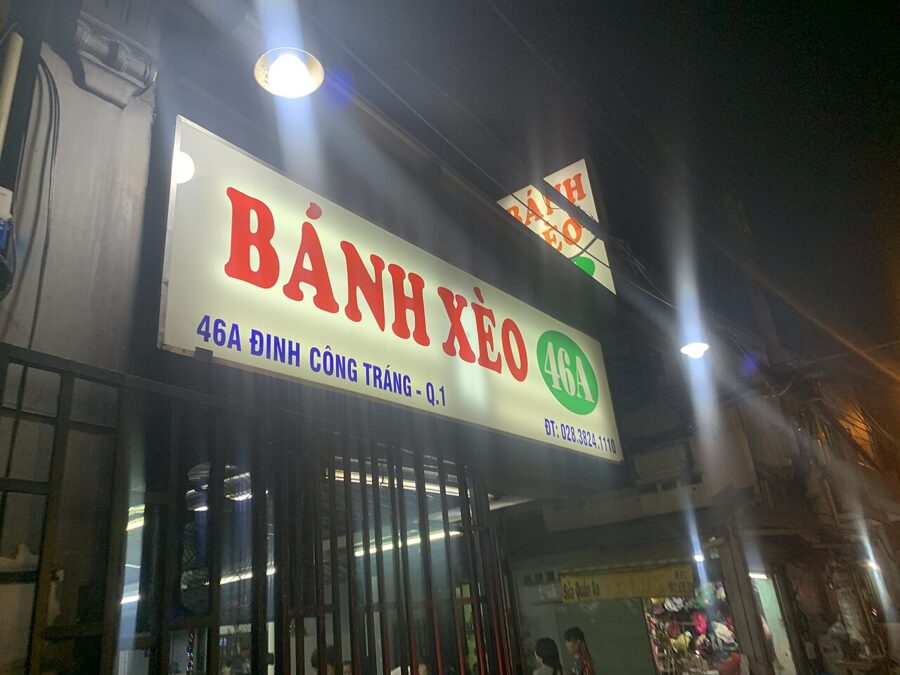
Bánh Xèo 46A at 46 Đinh Công Tráng in Tân Định ward (formerly District 1) has been frying for more than seven decades. It opens 10am to 1:50pm and 4pm to 8:50pm, takes cash only, and holds a Bib Gourmand. Arrive well before closing, and if there are two of you, add the grilled squid.
Bún bò and the other noodle bowls
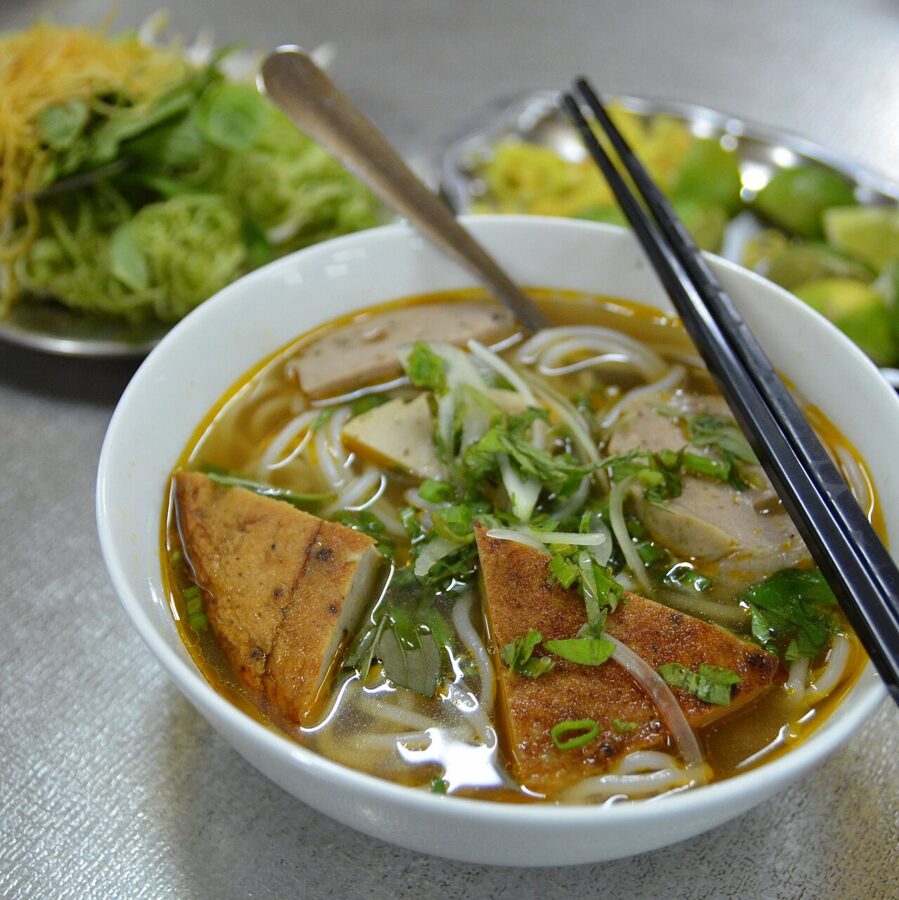

Bún bò comes from Huế, the old imperial capital, and Saigon is full of cooks from the center who brought it with them. The broth is beef and pork bone with lemongrass, shrimp paste and chili oil, the noodles round and slippery, the toppings beef shank, pork knuckle and chả. Saigon versions tend to be sweeter and meatier than Huế’s.
Bún Bò Huế Cô Như is a family shop down the alley at 274/29 Võ Văn Tần in Bàn Cờ ward, open 11am to 8pm; order bún bò thập cẩm, the mixed bowl, to try all four toppings. Bún Bò Huế 14B, at 14B Street 46 in Vĩnh Hội ward (formerly District 4), is takeaway only and holds a Bib Gourmand; it opens 6:30am to 8:30pm.
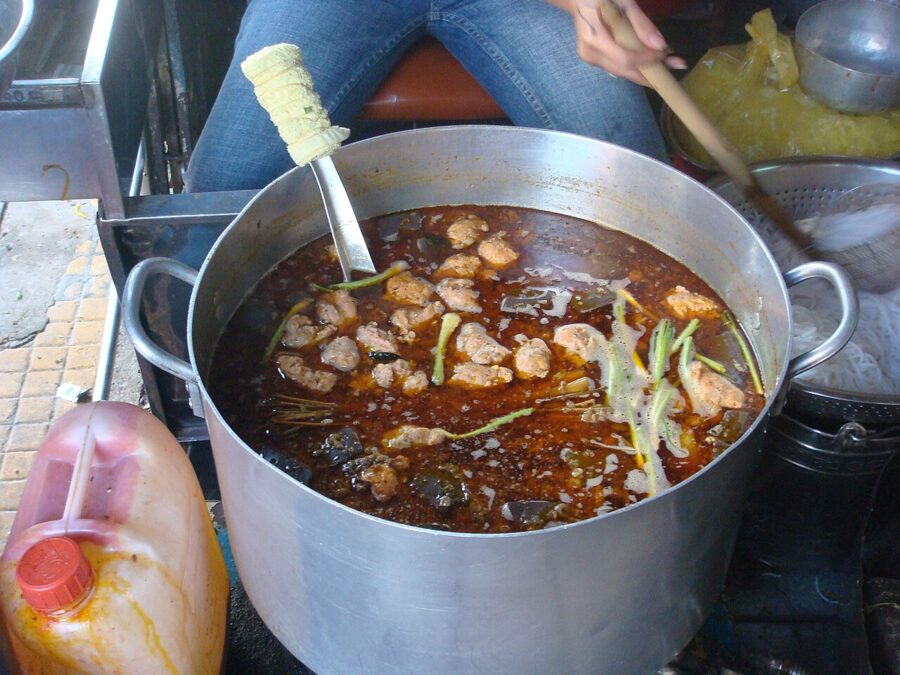

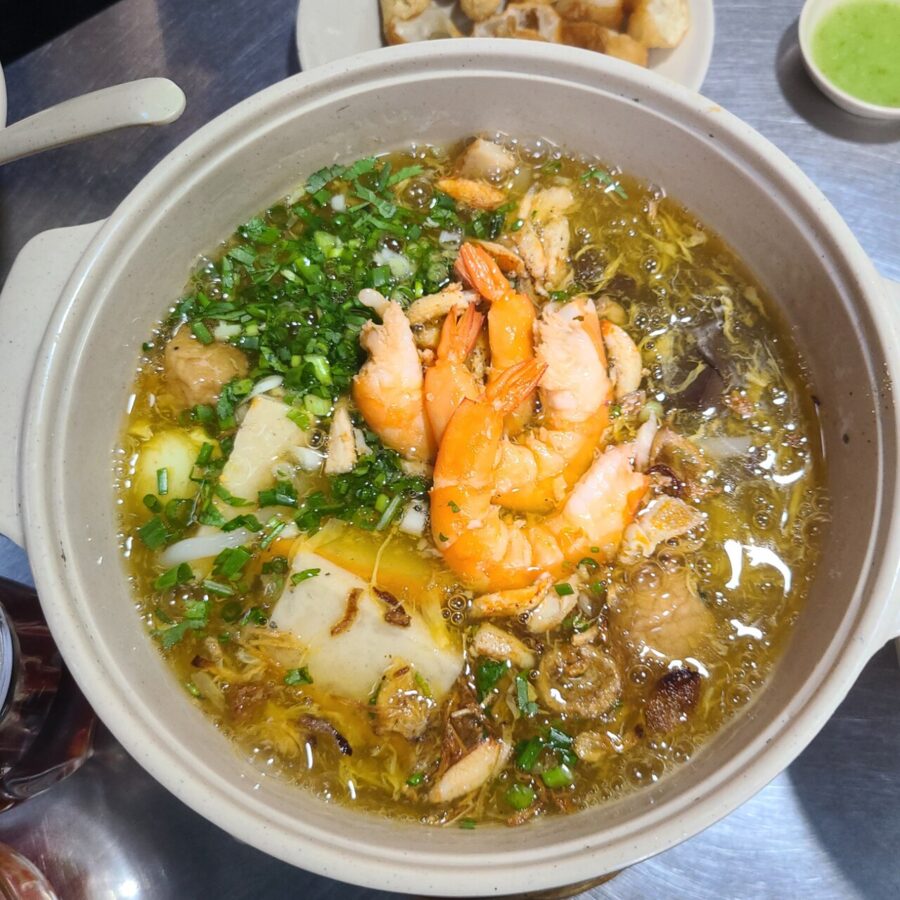
Two more bowls joined the Bib Gourmand list in June 2026. Bún riêu is rice noodles in a tomato broth with a curd of crab or shrimp, and Bún Riêu Yến at 1346 Trường Sa, on the Nhiêu Lộc canal in Tân Sơn Hòa ward, opens 6am to 6pm (11am on Sundays). Bánh canh cua is a thick, orange crab soup with chewy tapioca noodles; Bánh Canh Cua Bà Ba, down an alley at 84/6 Nguyễn Biểu in Chợ Quán ward (formerly District 5), serves nothing else, 8am to 8pm, closed Mondays.
Ốc: snails, clams and a cold beer
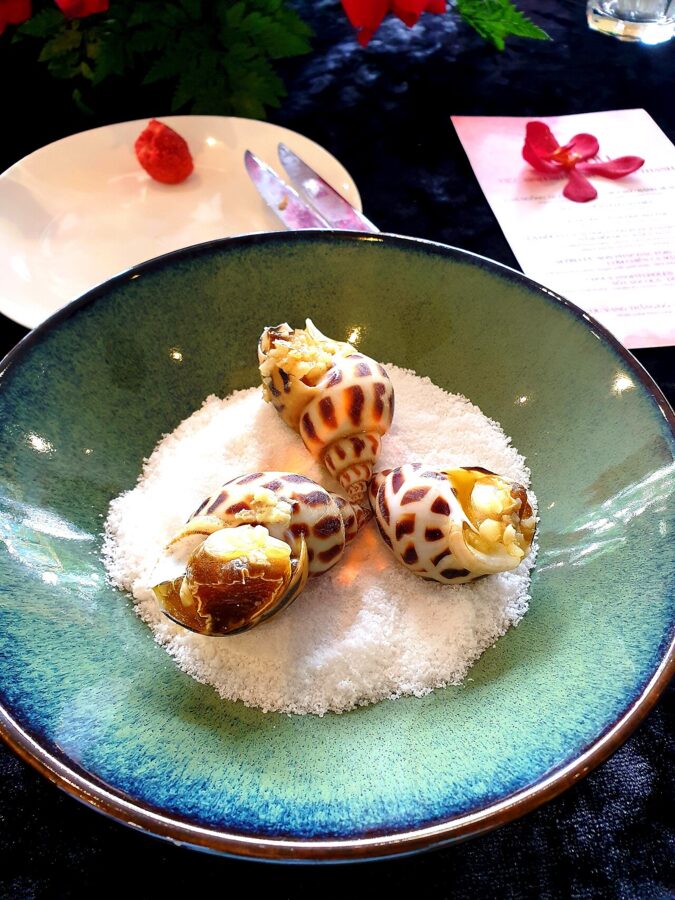

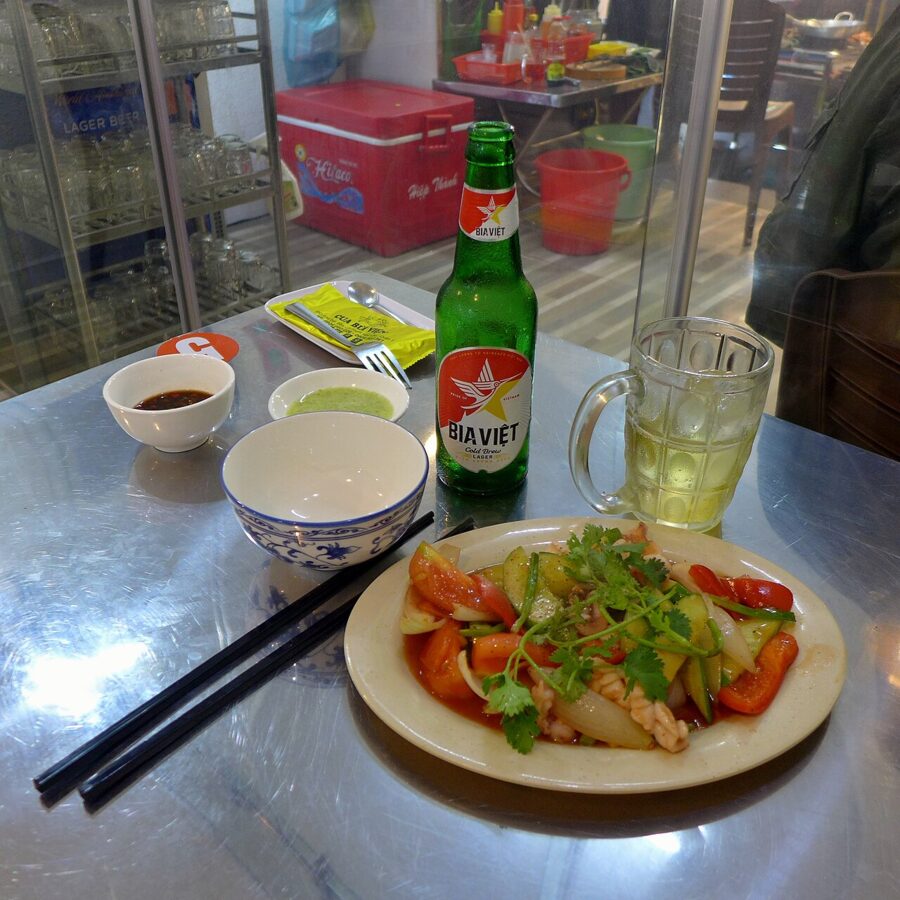
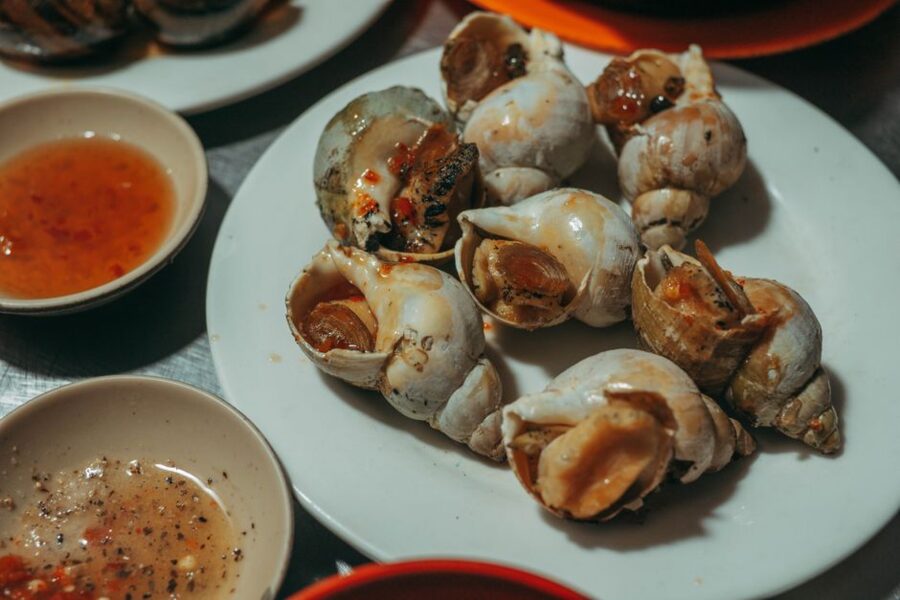
Ốc means snail, but a quán ốc sells everything with a shell: sea snails, clams, cockles, razor clams, scallops and crab. The menu is a grid of shellfish down one side and cooking methods across the top, and you combine them. Hấp sả is steamed with lemongrass, xào bơ tỏi is stir-fried in garlic butter, rang muối is roasted with salt, nướng mỡ hành is grilled with scallion oil, and xào me comes in a sweet-sour tamarind sauce.
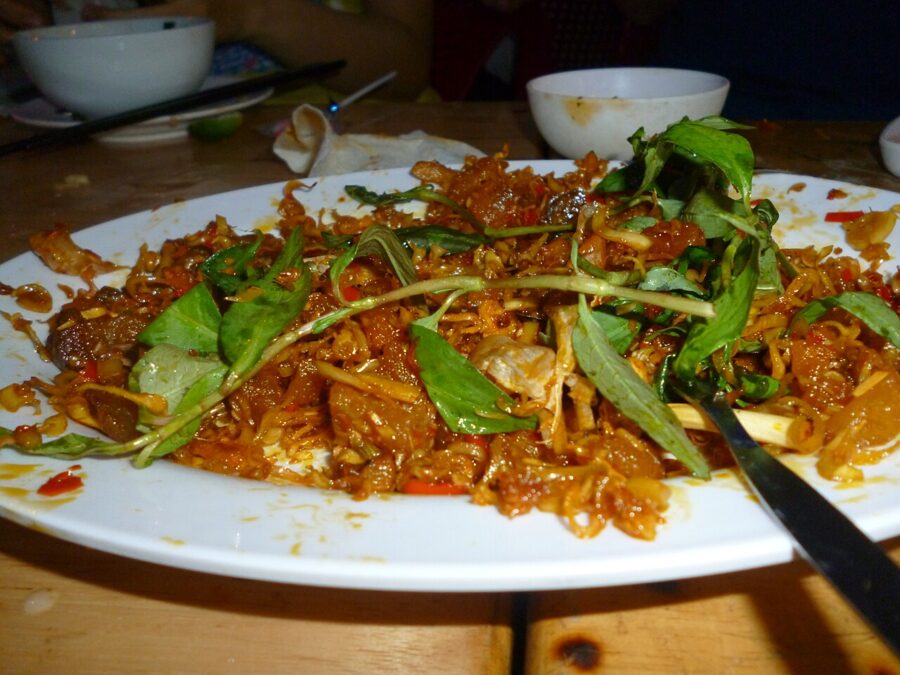
Order a few small plates at a time, not everything at once. Snails are an evening food, eaten with ice-cold beer and conversation, and a table of four can easily work through eight or nine plates over two hours. Prices are per plate, except seafood sold by weight, which should always be priced before it is cooked. The street to do it on is Vĩnh Khánh.
Chè: sweet soups for the afternoon
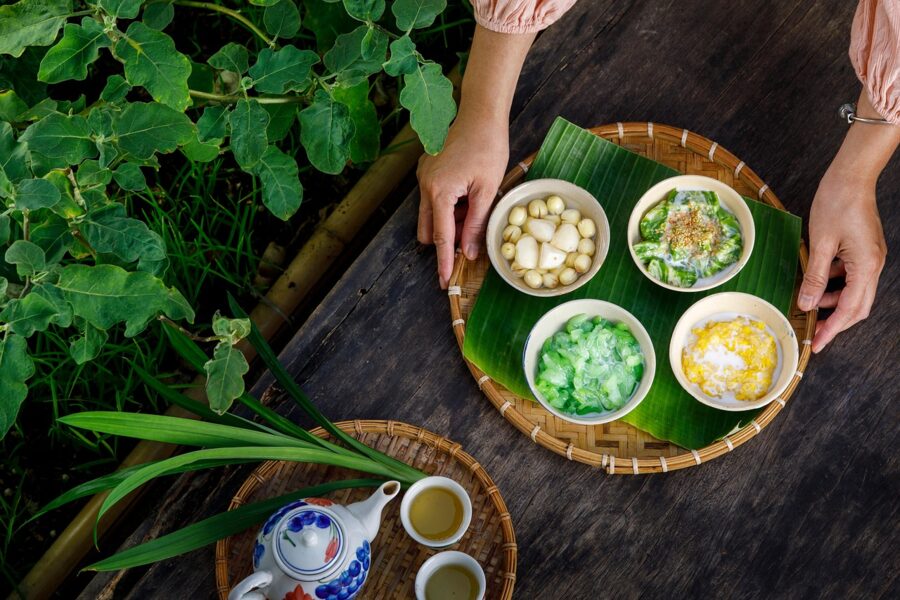
Chè covers anything sweet served in a glass or bowl: beans, jellies, taro, lotus seeds and tapioca pearls in syrup or coconut milk, over crushed ice in summer and warm in the rainy season. Saigon’s versions run from Chinese-style sweet soups in Chợ Lớn to Thai-style chè with durian and jackfruit. The best way in is chè thập cẩm, the mixed glass.
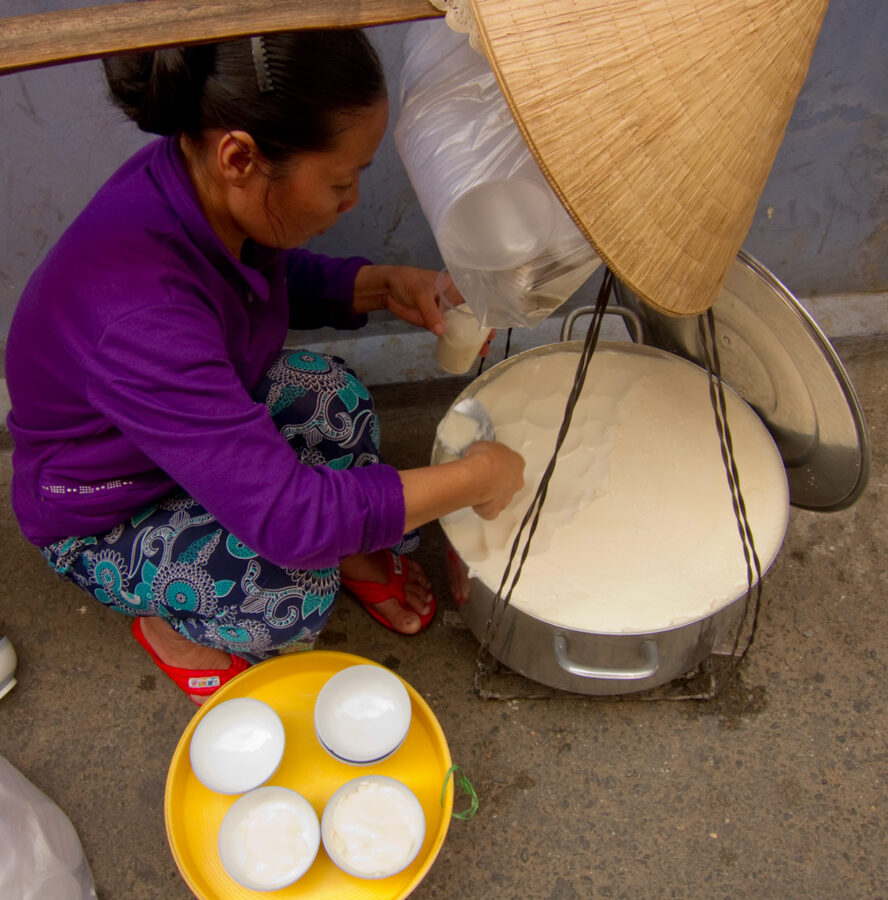
Tàu hũ nước đường, soft tofu in ginger syrup, is the gentle one, sold warm from a cart in the evening. Bánh tráng trộn is the other afternoon snack you will see everywhere: shredded rice paper tossed with green mango, quail eggs, dried beef, herbs and the shrimp salt of Tây Ninh, sold in a plastic bag outside schools and parks.

Cà phê sữa đá
The last word to learn is the one you will use most. Cà phê sữa đá is strong coffee dripped through a small metal filter onto sweetened condensed milk, then poured over ice. Cà phê đen đá is the same without milk, and bạc xỉu is mostly milk with a little coffee.
Street food: choosing a stall and the plastic-stool rules
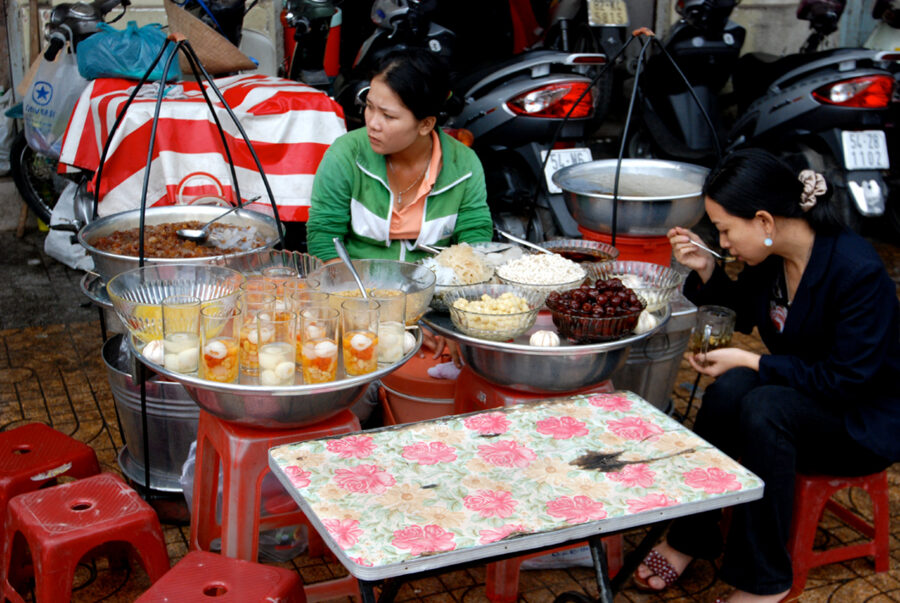

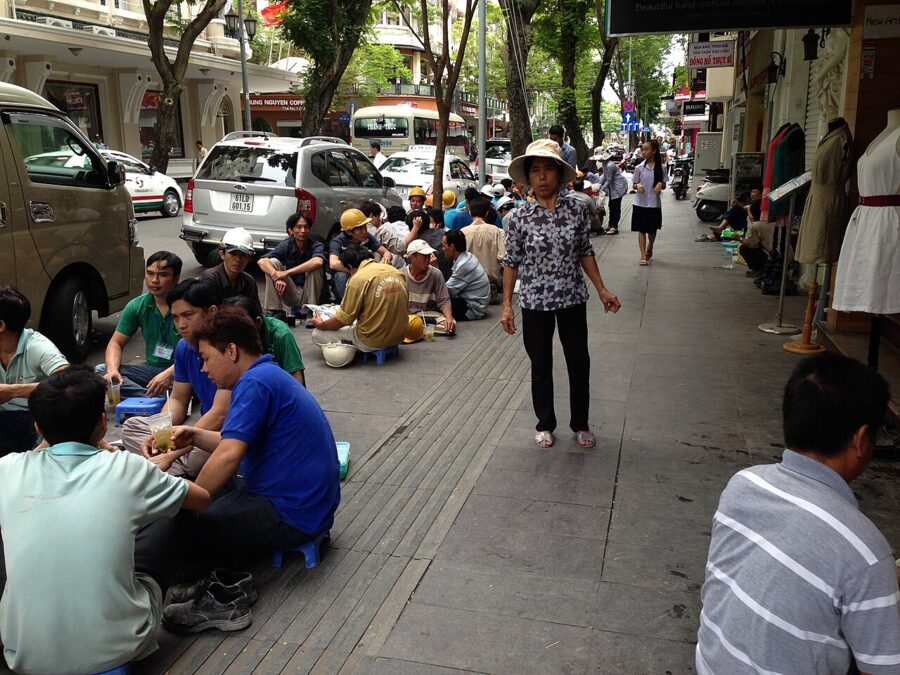
The rule that matters most is turnover. A stall with a queue of office workers and delivery riders is going through its ingredients fast, and that is what keeps them fresh. A stall with a laminated English menu and empty stools at noon is telling you something too.
Look for one-dish stalls, where the cook has done the same thing every morning for years. Look for food that is cooked or reheated in front of you, broth kept at a rolling boil, and raw ingredients kept covered. Herbs are washed, but if your stomach is new to the country, go easy on the raw greens for the first day or two.
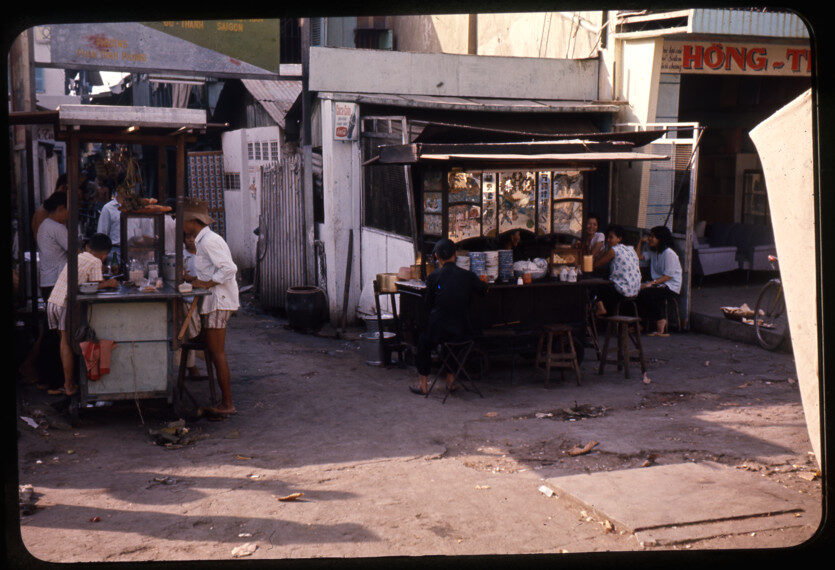

The plastic stool has its own etiquette, and none of it is complicated:
- Sit anywhere there is a free stool, including at a table with strangers. Nobody will be offended.
- The cook or a family member will come to you. Point at the pot, the case or a neighbor’s bowl, and hold up fingers for how many.
- Chopsticks, spoons and napkins are on the table. Regulars often wipe their chopsticks with a napkin before eating.
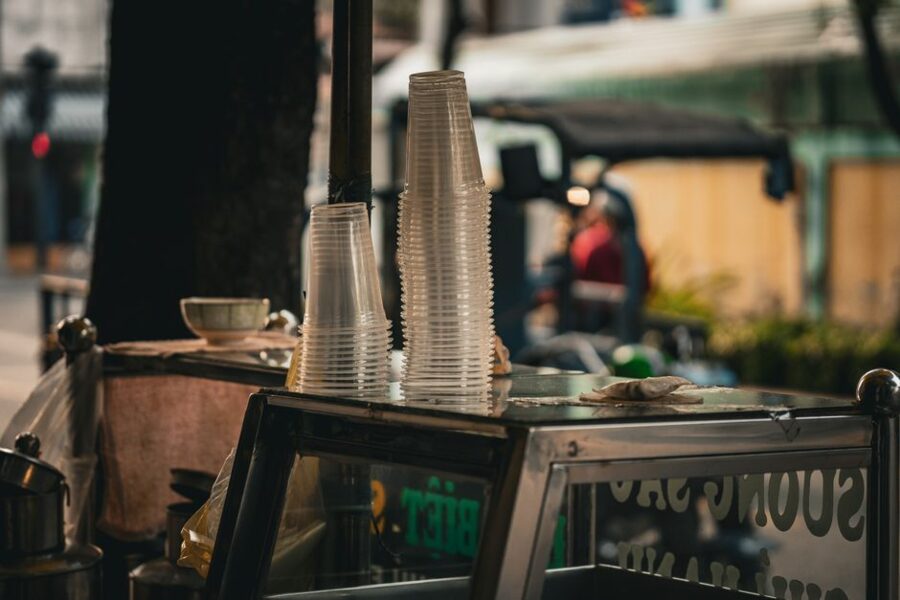
- Iced tea (trà đá) usually comes free or close to it. Packaged wet towels and peanuts may be added to the bill if you open them.
- Pay when you leave, in cash. Say “tính tiền” to ask for the bill, or “bao nhiêu?” for “how much?”.
Prices at noodle and rice stalls are low and are rarely inflated for visitors. The exceptions are anything sold by weight, seafood above all, and stalls in the busiest tourist streets. Ask before you order there, and agree the figure for a kilo of crab or prawns before it goes in the pot.

Hygiene problems do happen, even in the best-known places. In late September 2026 the management of Bến Thành Market suspended a food stall after a visitor posted video of cockroaches on uncovered food. Use your eyes: covered food, clean ladles, a cook who handles money with one hand and food with the other, or uses gloves.
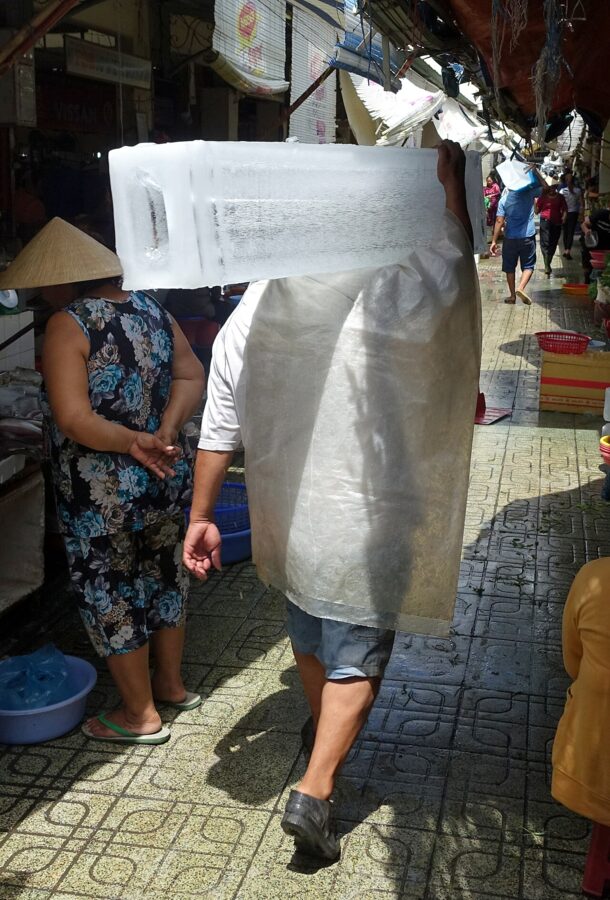
Keep your phone and bag on the wall side of the table; snatch thefts from passing motorbikes are a known risk in the center. Most of Saigon’s table dos and don’ts are about chopsticks: never leave them standing upright in a bowl of rice, which recalls the incense at a funeral.
Where to eat: streets, neighborhoods and markets
The old districts are gone on paper. Since July 2025 Ho Chi Minh City has been run as wards without districts, and names such as Sài Gòn ward and Bến Thành ward have replaced the familiar numbers on official addresses. Grab drivers and restaurant owners still say “District 1” and “District 4”.
The center: Bến Thành, Sài Gòn ward and the old market
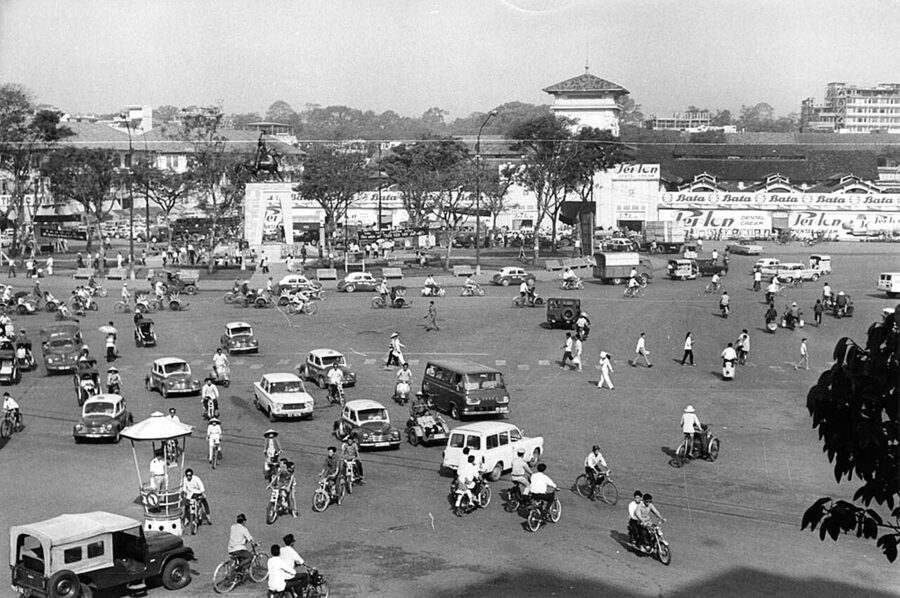
Inside Bến Thành Market the cooked-food stalls occupy their own block near the middle of the hall, family counters shoulder to shoulder, each with its own specialty and a row of stools. It is busy, a little dearer than the street, and an easy place to try several dishes in one sitting. Metro Line 1 stops underneath at Bến Thành station.
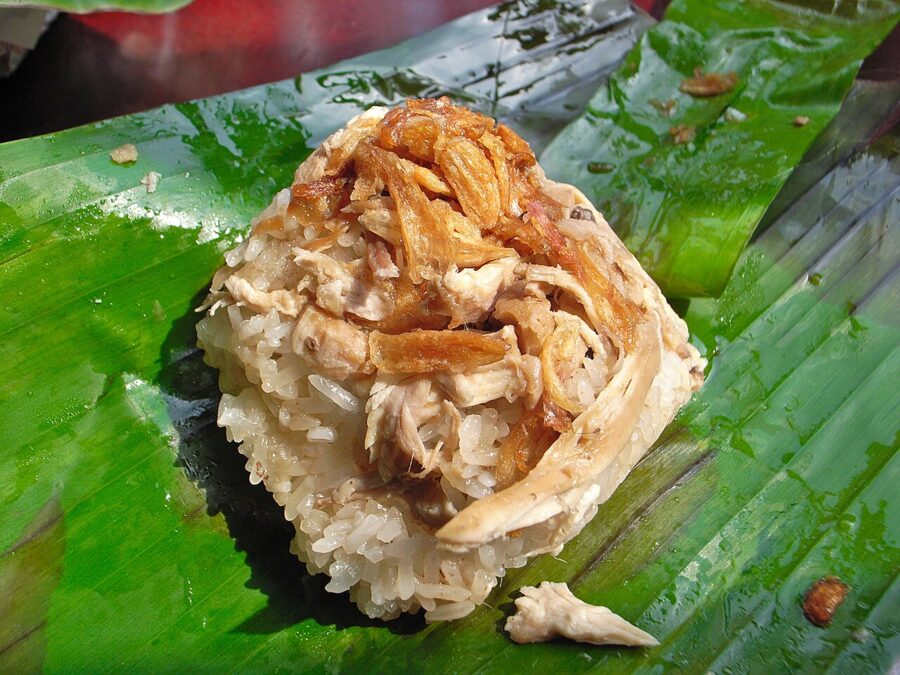
Just outside the market, Xôi Gà Number One at 15 Nguyễn Trung Trực sells exactly two things from 6:30am to 8:30pm: xôi gà, sticky rice with chicken, egg and gravy, and xôi bắp, sweet corn sticky rice with sugar and lard.

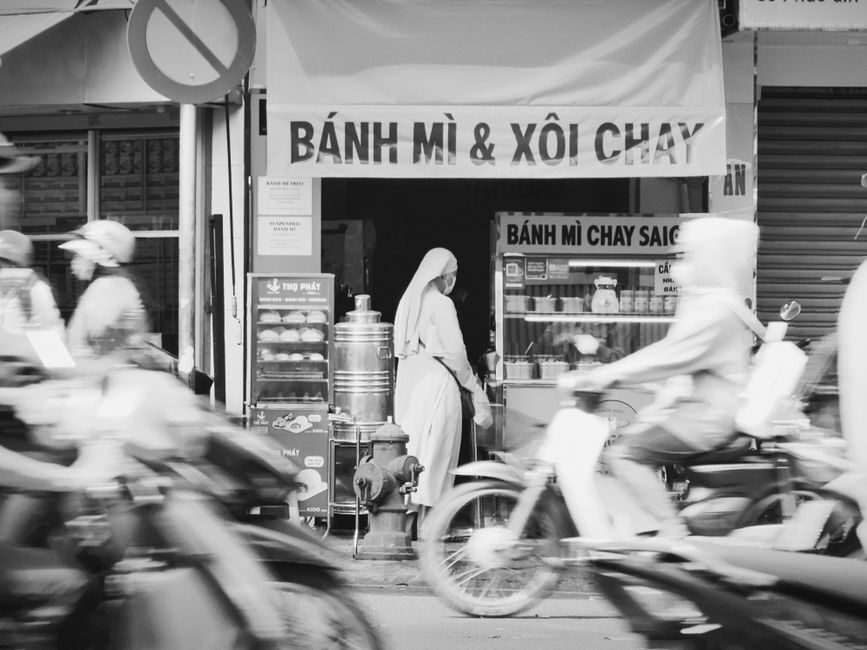
South of Lê Lợi, the street market on Tôn Thất Đạm is what Saigon calls Chợ Cũ, the old market. Tiệm Cơm Thố Chuyên Ký at number 67 has cooked Cantonese steamed rice bowls and double-boiled silkie chicken soup the same way since 1948, now under the third generation; it opens 10am to 2pm and 5pm to 9pm and holds a Bib Gourmand. Further along at number 89 is Ănăn Saigon, the city’s best-known modern Vietnamese restaurant.
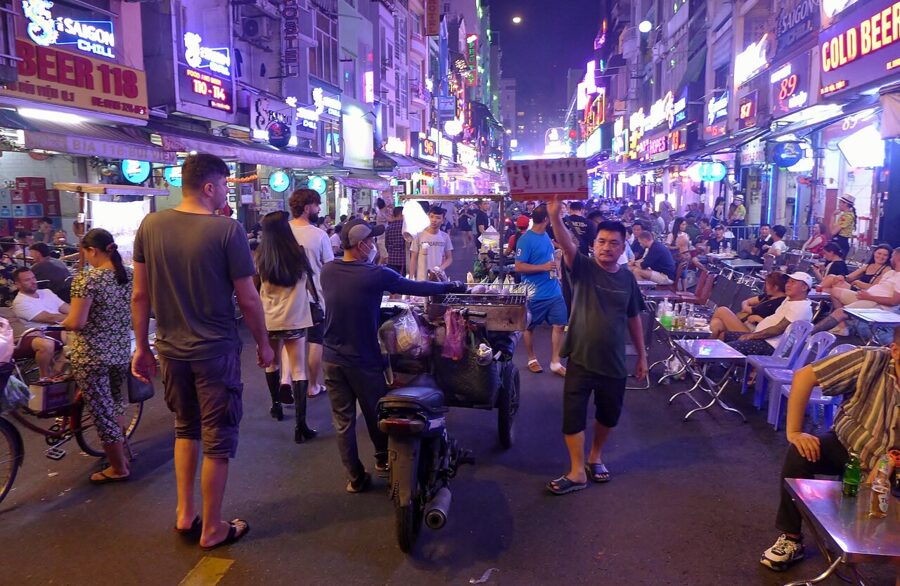
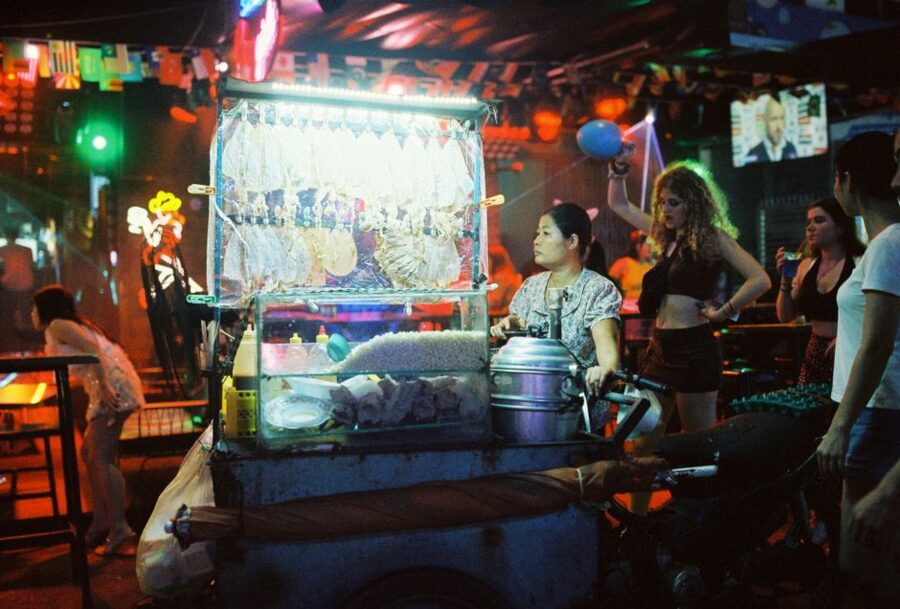
Béo Ơi, down a lane at 15/20 Nguyễn Thị Minh Khai, serves Hanoi home cooking to lunchtime crowds; order the bún riêu cua. In the evening, Bùi Viện and the backpacker blocks around it are loud, lit and full of grills, a place to drink more than a place to eat well, and the street where Saigon’s nightclubs and bars take over after dinner.

Vĩnh Khánh: the snail street
Vĩnh Khánh Street runs for nearly a kilometer through Khánh Hội ward (formerly District 4), a short ride across the canal from the center. The city has planned it as a food street since 2018, and by now it holds hundreds of snail and seafood restaurants that fill their sidewalks from late afternoon until midnight and beyond. Time Out placed it tenth in its 2025 list of the world’s coolest streets.

Ốc Oanh at 534 Vĩnh Khánh is the one Michelin lists, a family business of more than twenty years that is packed after 7pm on weekends. In February 2026 VnExpress put most dishes at around 100,000₫ (about US$3.90) a plate, grilled crab claws at 200,000₫ to 500,000₫ (about US$7.80 to US$19.50), and ốc hương at 250,000₫ to 500,000₫. Nearly half its customers are foreign.
Further along, Chinese-Vietnamese cooks run grills and roast-meat shops, and an evening stall simmers offal in coconut milk and spices, served with bread or noodles; fried duck necks and gizzards cost 25,000₫ to 30,000₫ (about US$1 to US$1.20) a portion. Arrive around six to choose a table before the crowd, and expect traffic noise; the street stays open to motorbikes.
Chợ Lớn: Chinese Saigon
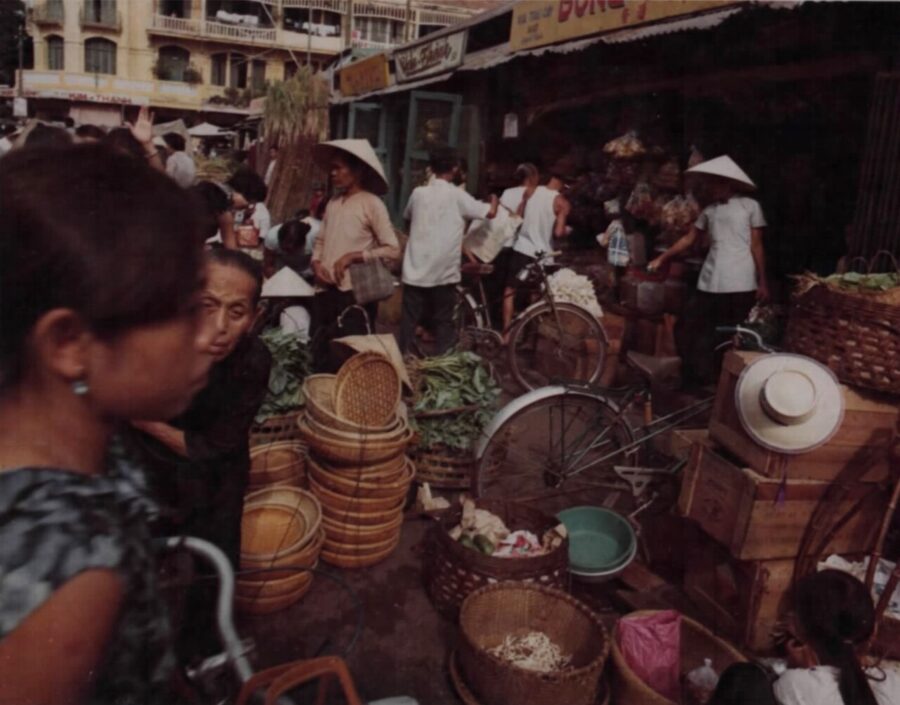
The food of Chợ Lớn is Chinese cooking that has lived in the south for two centuries: Teochew noodles in clear pork broth, Cantonese dim sum and roast meats, Hokkien fried noodles, all eaten with Vietnamese herbs and chili. Come in the morning for dim sum and noodles, or after six, when the sidewalks of Nguyễn Hữu Thận, Tháp Mười, Lê Tấn Kế and Trần Bình around Bình Tây Market turn into a night food street that runs until midnight.
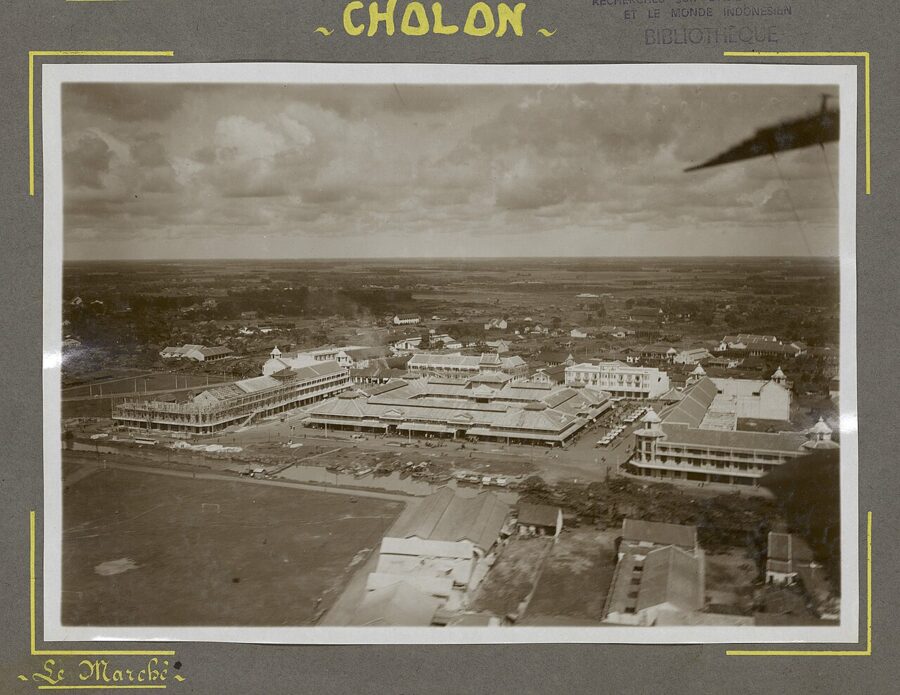
The food court at the back of Bình Tây serves the traders hủ tiếu, fried noodles with beef, xíu mại meatballs, phá lấu (offal stewed with five-spice and coconut) and sweet soups. Phở Lệ and Bánh Mì Tăng are both on Nguyễn Trãi, and each December the quarter holds a food festival, the Chợ Lớn Food Story, first run in 2023.
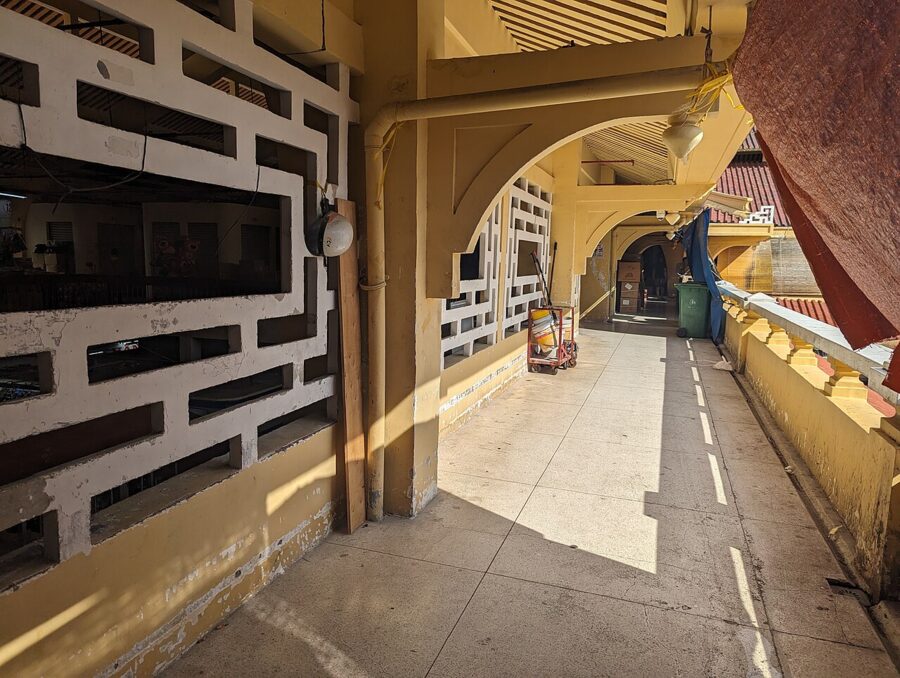
Bàn Cờ, Tân Định and the old District 3
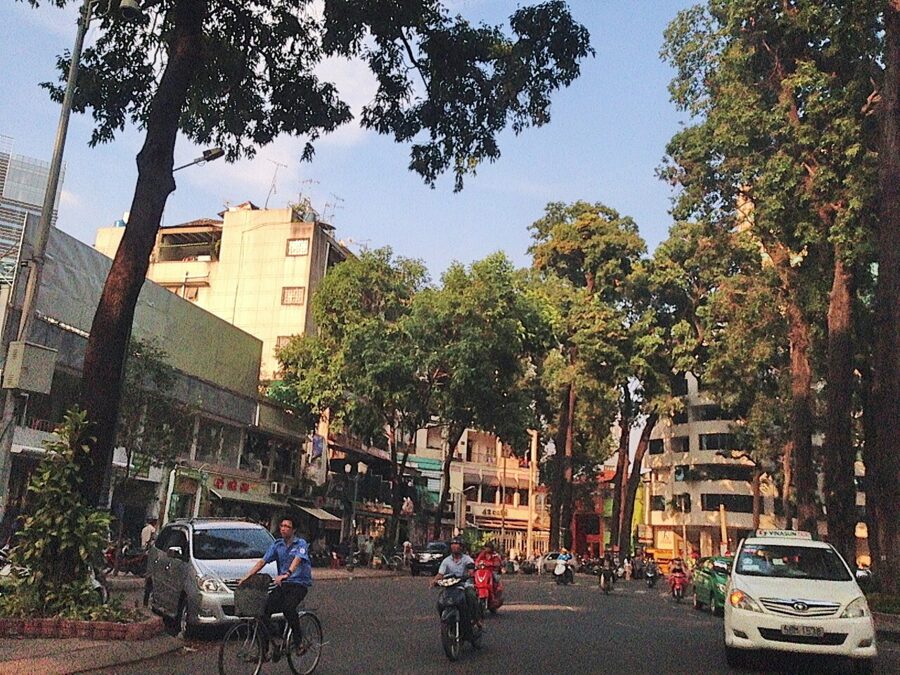
If you have one free lunch and want to eat where Saigon eats, walk the length of Võ Văn Tần. Within a kilometer are Hồng Phát’s hủ tiếu at 389-391, Cô Liêng at 321, Bún Bò Huế Cô Như down the alley at 274/29, Nhà Tú at 129/4 and Chay Garden at 52, all in the Michelin guide and none of them expensive.
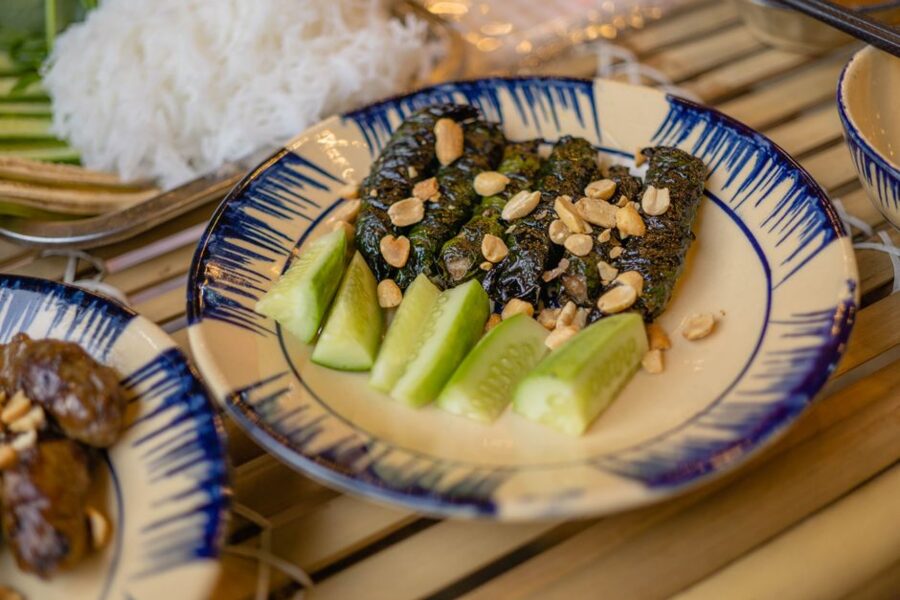
Cô Liêng has grilled bò lá lốt, minced beef wrapped in betel leaves, over charcoal at its front door for nearly thirty years; it opens 9:30am to 9:30pm. Further north, Tân Định has Bánh Xèo 46A and Bánh Cuốn Tây Hồ 127 at 127 Đinh Tiên Hoàng, a two-storey shop rolling steamed rice sheets around pork and jicama in an open kitchen from 5:30am to 9:30pm, with vegetarian versions too.

Further out: Phú Nhuận, the canal and the east
Three rides from the center are worth making. Phú Nhuận has Cơm Tấm Ba Ghiền. The Nhiêu Lộc canal, between Trường Sa and Hoàng Sa streets, has Bún Riêu Yến on one bank and Phở Phượng on the other. In Vườn Lài ward (formerly District 10), Bò Kho Gánh serves beef stew in a stone bowl with bread, noodles or rice from Lot H of the Ngô Gia Tự apartment block, 10am to 10pm.
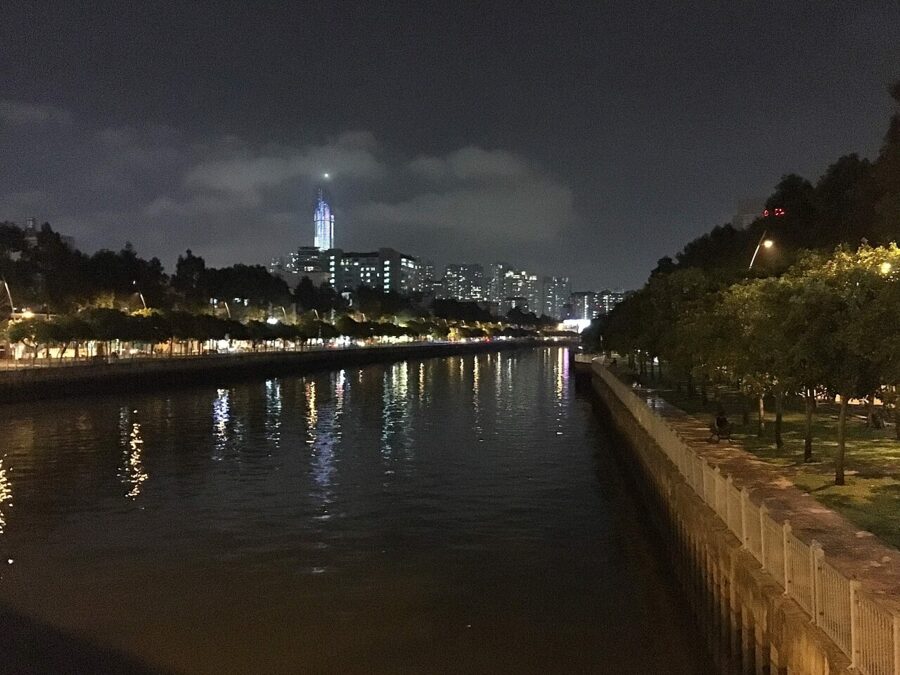

East across the river, the An Khánh ward area that everyone still calls Thảo Điền (formerly District 2) has the expatriate restaurants, the garden cafés and Upstairs, the newest of the city’s starred kitchens. Phở Chào at 52 Nguyễn Công Trứ in Thạnh Mỹ Tây ward (formerly Bình Thạnh) is on the way, 6:30am to 9pm.
Restaurants: from family rice shops to tasting menus
Vietnamese home cooking
The everyday Saigon lunch is cơm bình dân, “ordinary people’s rice”: a counter of trays holding braised pork and egg, fried fish, stir-fried greens, sour soup and tofu, from which you point at two or three dishes to go over a plate of rice. It is the cheapest sit-down meal in the city and the closest thing to eating at home. Arrive by 11:30am, while the trays are full.
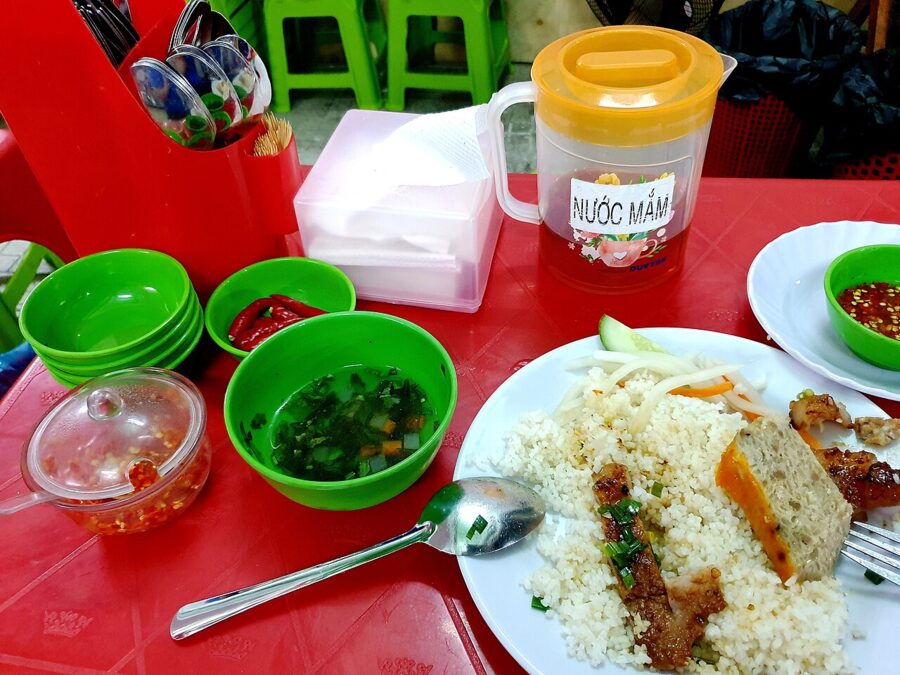
For the same cooking with a menu, walls and air-conditioning, Cục Gạch Quán at 10 Đặng Tất in Tân Định ward is the classic. Its two dining rooms face each other across the street, the produce comes from its own farm, and the dishes to order are the lemongrass-chili tofu and canh chua cá hú, a sweet-sour fish soup. It opens 9am to 11:30pm, takes cards and holds a Bib Gourmand.
Nhà Tú, at 129/4 Võ Văn Tần, is a smaller house with plants on every ledge and a top-floor balcony; the owner cooks the dishes of her childhood, such as snails stuffed with minced pork and lemongrass. It opens 11am to 11pm. Bếp Người Hội An at 22 Trần Quốc Toản brings central Vietnam’s mì Quảng noodles and Hội An chicken rice to Saigon, 9am to 3pm and 4pm to 9pm.
Vegetarian Saigon: chay
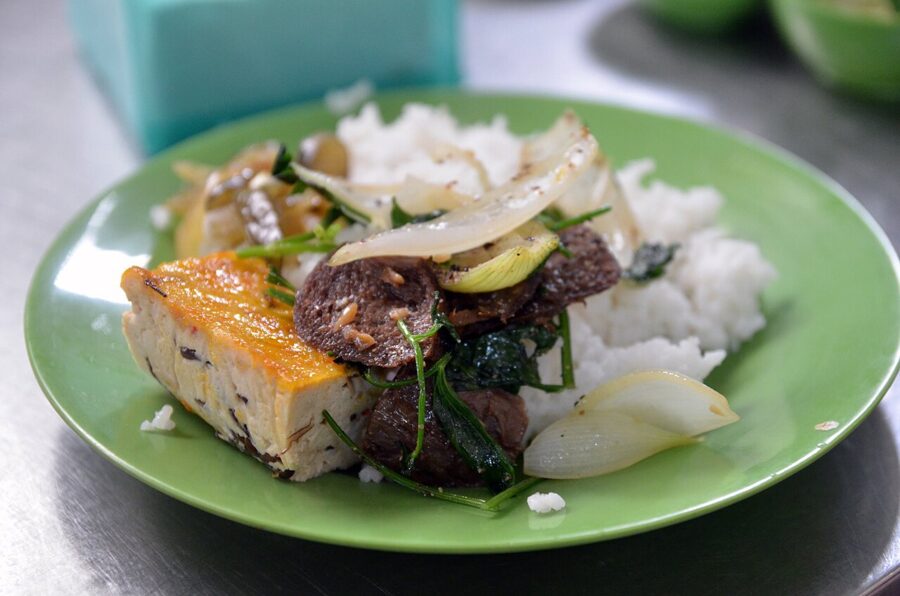

Vegetarian food in Vietnam grew out of Buddhism, and the word to look for is chay. Many Saigonese eat chay on the first and fifteenth days of the lunar month, when pagodas such as Vĩnh Nghiêm and Xá Lợi are at their busiest, and on those days the vegetarian stalls are busier than usual. Traditional chay kitchens are skilled at mock meat; newer places cook vegetables as themselves.
Chay Garden at 52 Võ Văn Tần occupies an old colonial house at the end of a quiet pedestrian lane, with a tree-shaded patio and dishes such as braised eggplant with banana and green beans; it opens 10:30am to 9pm and holds a Bib Gourmand. Hum Garden at 32 Street D10 in An Khánh ward is the Thảo Điền equivalent, a house with a courtyard and deep-fried mushroom rolls, 10am to 10pm. Du Yên at 26B Street 10 nearby opens at 6am.
One caution: ordinary dishes that look vegetarian, such as stir-fried greens or tofu, are often cooked with fish sauce or pork fat. If you need it strict, eat at a chay restaurant or say “ăn chay” clearly when ordering.
The Michelin Guide in Saigon
The Michelin Guide arrived in Vietnam in June 2023 and published its fourth selection on 4 June 2026. Vietnam now has eleven one-star restaurants, its first time in double figures, and six of them are in Ho Chi Minh City; no Vietnamese restaurant holds two or three stars. Saigon also has about two dozen Bib Gourmands, the label Michelin gives for good cooking at moderate prices, and most of them are the street-food and noodle shops named above.
The guide is useful, especially for its opening hours, but it is not the whole story. Its Bib list leans toward places that already had queues, and the June 2026 edition quietly dropped five Saigon restaurants from its Selected list without explanation. Use it as one opinion among several.
Fine dining and tasting menus
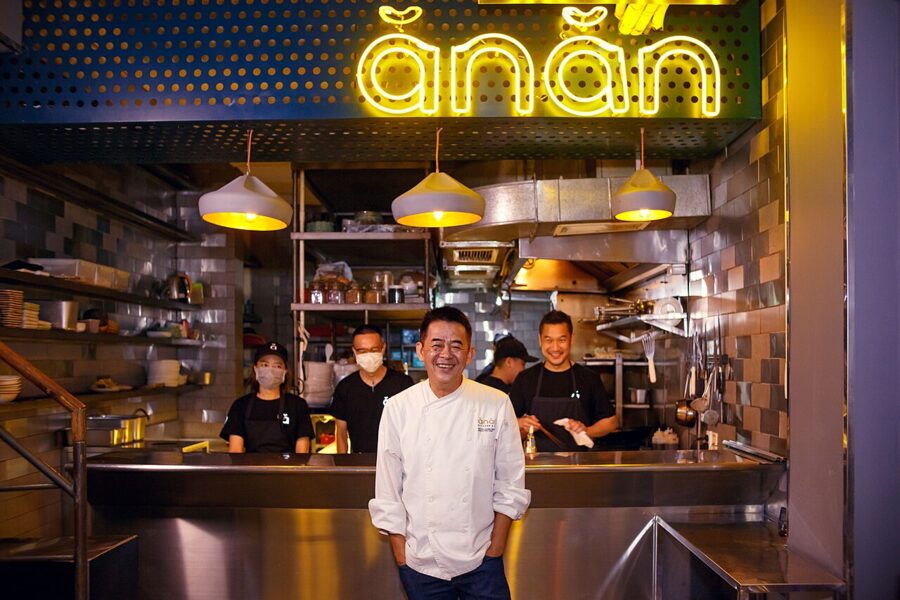

Ănăn Saigon, at 89 Tôn Thất Đạm in Sài Gòn ward, is the one most visitors know. Peter Cuong Franklin worked in Hong Kong, Chicago and Bangkok before opening it, and his cooking takes Vietnamese street food and rebuilds it: a foie gras spring roll, Hanoi turmeric fish, a Wagyu mini bánh mì, phở reworked as a tasting course. It holds one Michelin star and opens 5pm to 11pm, Tuesday to Sunday.

The other five starred kitchens are very different from each other:
- Akuna, on the ninth floor of Le Méridien at 3C Tôn Đức Thắng, serves a European tasting menu with Vietnamese touches by Chef Sam Aisbett, Tuesday to Saturday, with seatings from 6pm.
- Long Triều, on the fourth floor of The Reverie Saigon at 22-36 Nguyễn Huệ, is Cantonese, with jade stonework, gold-leaf painting and dishes such as prawns with XO sauce; it serves lunch and dinner daily.
- CoCo Dining at 143 Nam Kỳ Khởi Nghĩa in Xuân Hòa ward runs a themed seasonal tasting menu, 5:30pm to 8:30pm daily, with a more casual grill room next door.
- Upstairs, at 36 Nguyễn Bá Huân in An Khánh ward, won its star in June 2026: four tables above a wine bar and a tasting menu rooted in central Vietnamese cooking. It is closed Wednesday and Thursday and serves lunch on Sunday and Monday only.
- CieL kept its star in the same edition.
Two newer names are on the same circuit. NÔM at 53 Trần Nhật Duật in Tân Định ward won Michelin’s Opening of the Year award in 2026 for a tasting menu that travels from north to south. Tales by Chapter at 10 Nguyễn Thành Ý, also in Tân Định, is a zero-waste, plant-based tasting kitchen with a 2026 Green Star, 7pm to 11pm, closed Tuesdays.
Book all of these directly and well ahead, especially for Friday and Saturday, and check the current menu price on the restaurant’s own site; tasting menus change with the season.
Coffee: the drink, the cafés and the café streets
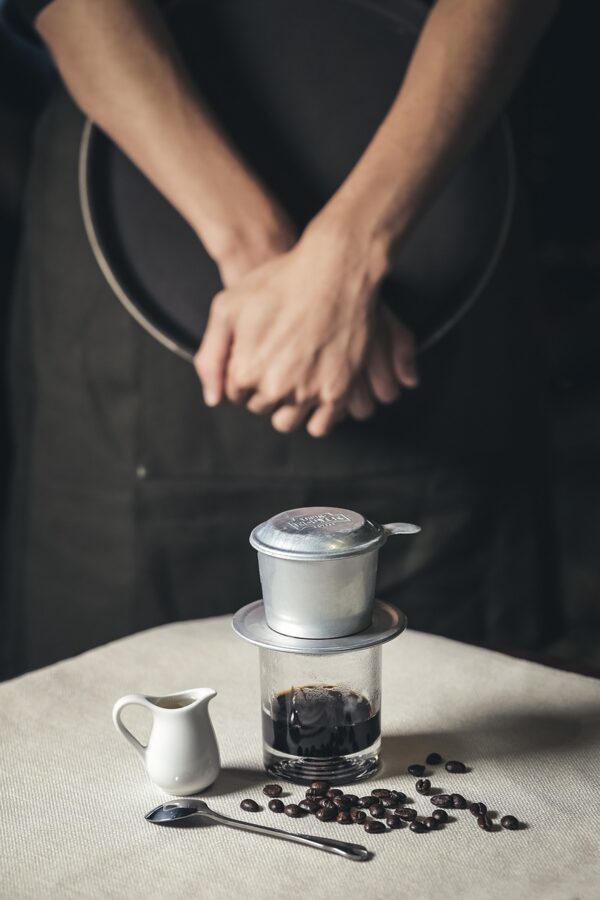
French missionaries brought coffee to Vietnam in the nineteenth century, and the country is now the world’s biggest producer of robusta, the strong, bitter bean grown in the Central Highlands. Fresh milk was scarce and spoiled fast in the heat, so cafés used tinned condensed milk instead, and the sweetness turned out to suit the dark roast. Add ice for the southern climate and you have cà phê sữa đá.
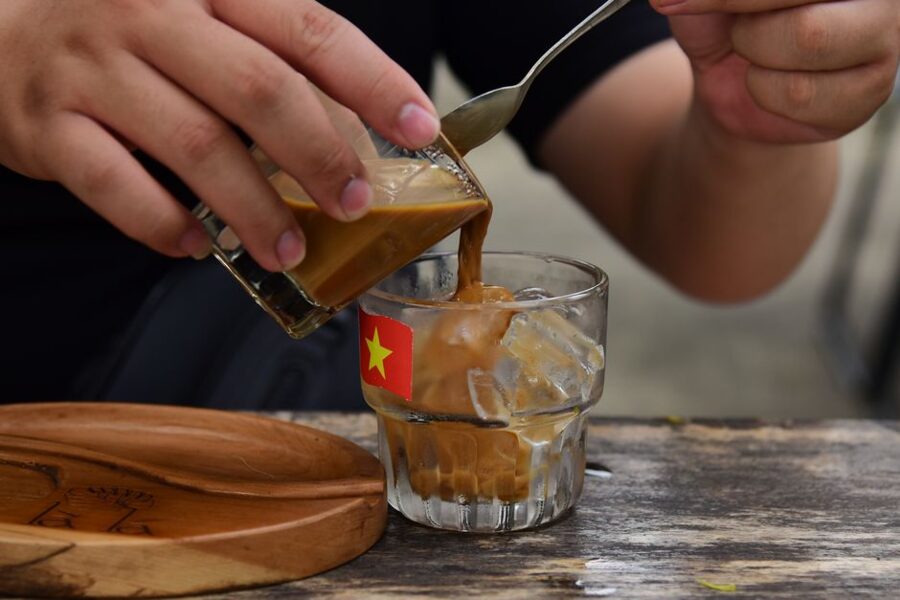
Bạc xỉu was created in the 1950s in the Cantonese cafés of Chợ Lớn; the name is shortened from the Cantonese for “a white cup with a little coffee”. Egg coffee came from Hanoi in 1946 and salt coffee from Huế in 2010, and both are on Saigon menus now.
Cà phê vợt at Cheo Leo
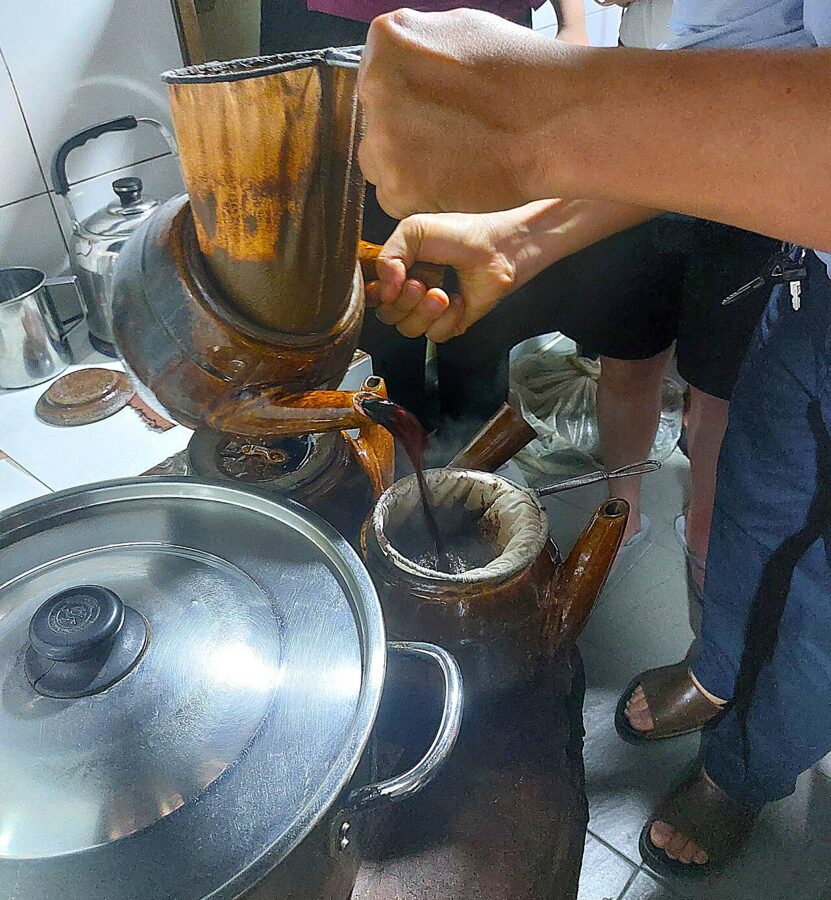

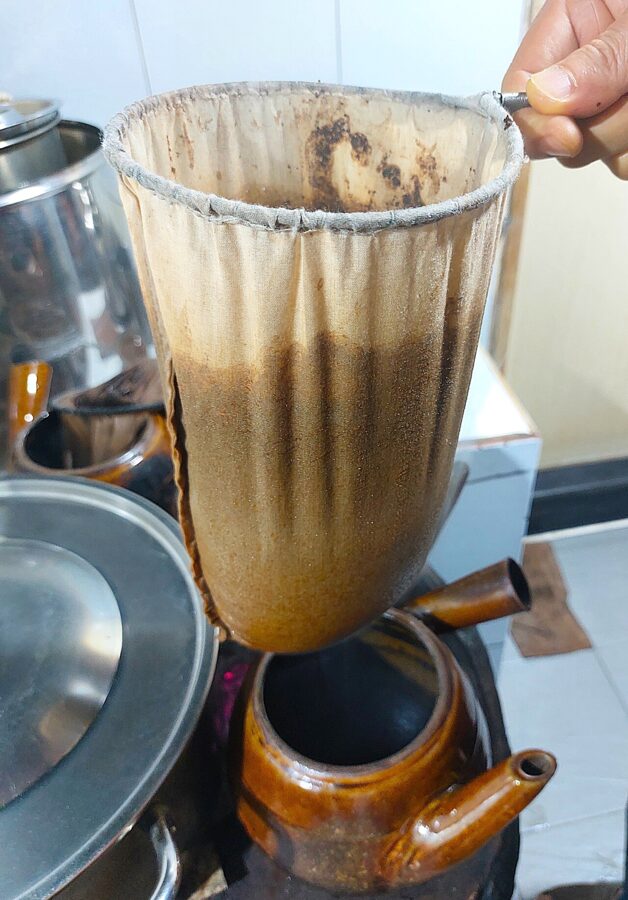
Before the phin, Saigon’s Chinese cafés brewed coffee through a cloth bag, the cà phê vợt or “net coffee”. Cheo Leo, down an alley off Nguyễn Thiện Thuật street (formerly District 3), has done it since 1938 and is usually described as the oldest café in the city. The grounds steep in the cloth, the coffee is kept hot in clay pots, and the cup is rounder and gentler than phin coffee.

Where to drink it
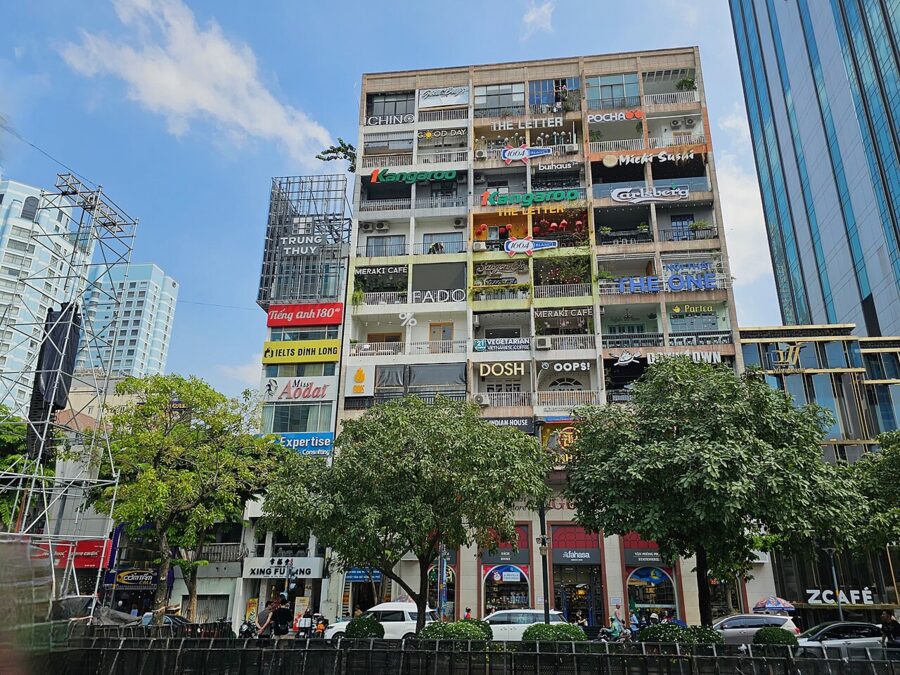
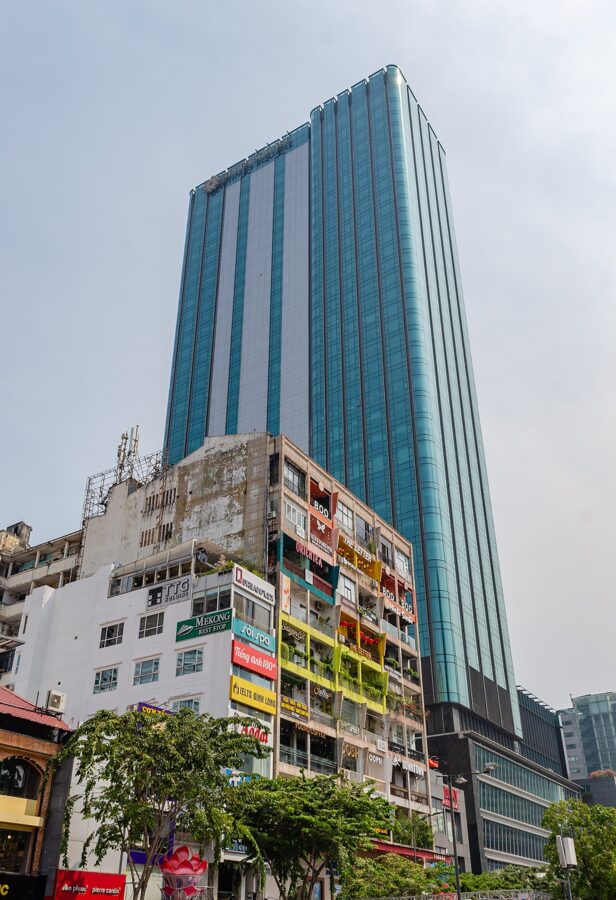
The famous one is 42 Nguyễn Huệ, a nine-storey apartment block from the 1960s on the walking street, whose flats have been turned into cafés and small shops floor by floor. Climb the stairs or take the lift and pick a balcony overlooking the boulevard. Before Tết 2026 the city repainted the multicolored facade white, so the photos you have seen are already out of date.
For the everyday version, sit at a street café on any shaded corner, where the coffee comes with a glass of iced tea. The chains are everywhere too: Highlands, Phúc Long, Katinat and Cộng, with air-conditioning, Wi-Fi and higher prices. Specialty roasters work with arabica from Đà Lạt as well as robusta.
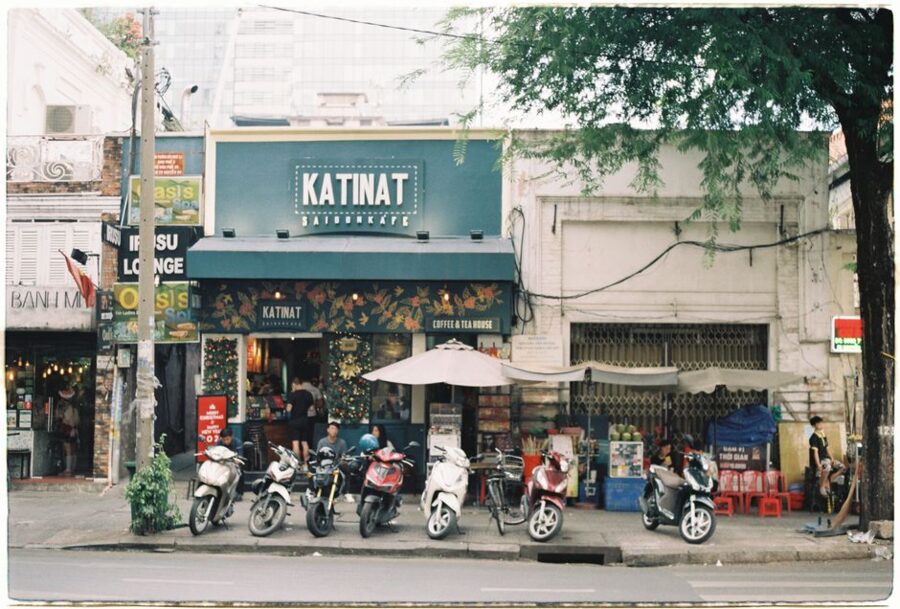
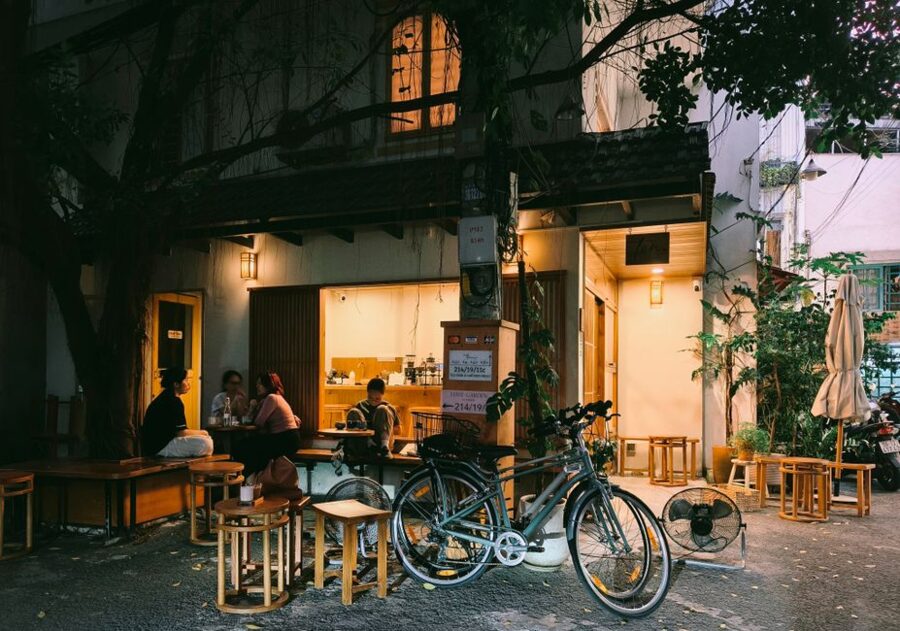
The quieter cafés are in the old District 3, around Hồ Con Rùa and in the lanes behind the main streets, many in old houses with gardens. In Thảo Điền they are bigger, greener and full of laptops.

Practical: hours, money, booking, menus and allergies
Opening hours
Breakfast stalls start between 5:30am and 6:30am and the best of them sell out by mid-morning. Lunch runs from about 11am to 1pm, and many rice and noodle shops close between 2pm and 4pm. Dinner starts around 6pm, and snail and seafood places keep going past midnight. Family businesses close for holidays, weddings and funerals without notice.
Tết, the Lunar New Year, is the big exception. It falls on 6 February 2027, and many family stalls shut for a week or more around it while hotels, chains and larger restaurants stay open. In the rainy season, roughly May to November, Saigon’s weather brings short afternoon downpours that empty the sidewalks for half an hour; stall owners roll out tarpaulins and carry on.
Money and tipping
Street stalls and most noodle shops are cash only, and many of the Bib Gourmand places listed above do not take cards. Carry small notes of the Vietnamese currency; a 500,000₫ note will be hard to change at a stall. Locals pay almost everything by bank QR code, which visitors without a Vietnamese bank account usually cannot use.
Tipping is not expected at stalls, cafés or ordinary restaurants, though leaving the change is appreciated. Hotel restaurants and upmarket places often add a service charge and tax to the bill; a “++” after menu prices means both will be added.
Booking and menus
Street food and noodle shops do not take bookings. Mid-range restaurants such as Cục Gạch Quán and Chay Garden are worth calling for a weekend dinner, and tasting menus need booking days or weeks ahead. Restaurants in the center usually have an English menu; stalls usually do not, and pointing works fine. To reach anything outside the center, use Grab or Be and type the street address rather than the restaurant name, since many small shops are not on the apps.
A few words cover most menus: bò (beef), gà (chicken), heo or thịt (pork), tôm (shrimp), cua (crab), cá (fish), mực (squid), chay (vegetarian), cay (spicy), không cay (not spicy), ít ngọt (less sweet), đá (ice) and không đá (no ice). “Một” is one and “hai” is two.
Allergies
Fish sauce is in almost everything, including many dishes that look vegetarian. Peanuts (đậu phộng) are sprinkled over noodle salads and stirred into sauces, shrimp paste (mắm tôm) is served with bún riêu and bún bò, and shellfish turn up in broths. MSG (bột ngọt) is standard, though Michelin notes that the chicken soup at Tiệm Cơm Thố Chuyên Ký is made without it.
Carry a card in Vietnamese that names your allergy and says it is serious; staff at stalls rarely speak English. “Tôi bị dị ứng đậu phộng” means “I am allergic to peanuts”, and you can swap in tôm, cua or hải sản (seafood). The international hospitals in the center have English-speaking emergency staff if a reaction turns serious.
And if you only have one morning, do it in this order: phở in the alley on Pasteur before seven, an iced coffee on a stool at the corner, a walk through the market while the fish are still being laid out. Back at 63/6 Pasteur, the pot will be empty and the shutters down by half past ten.