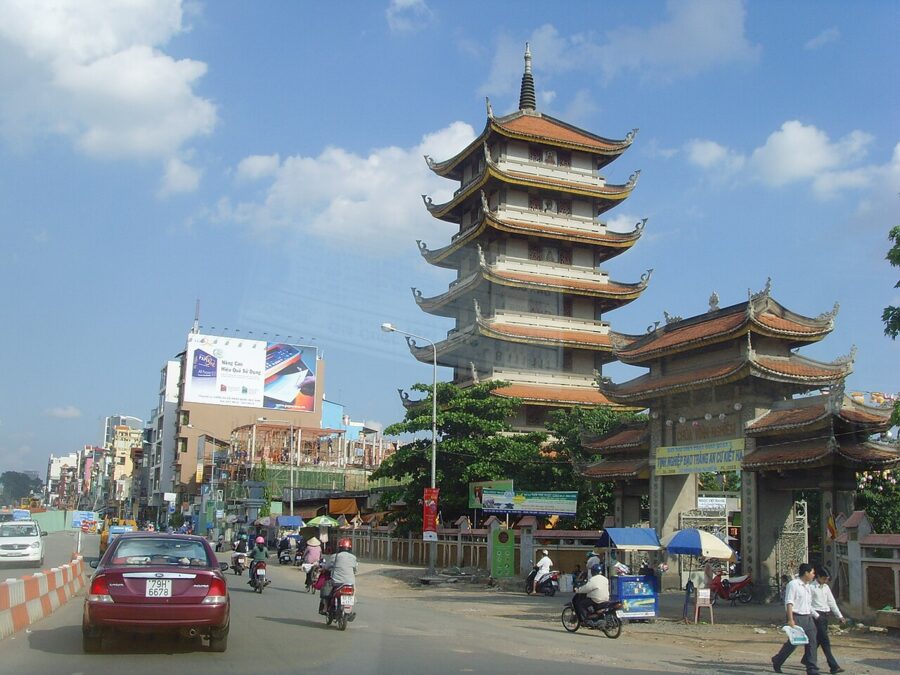
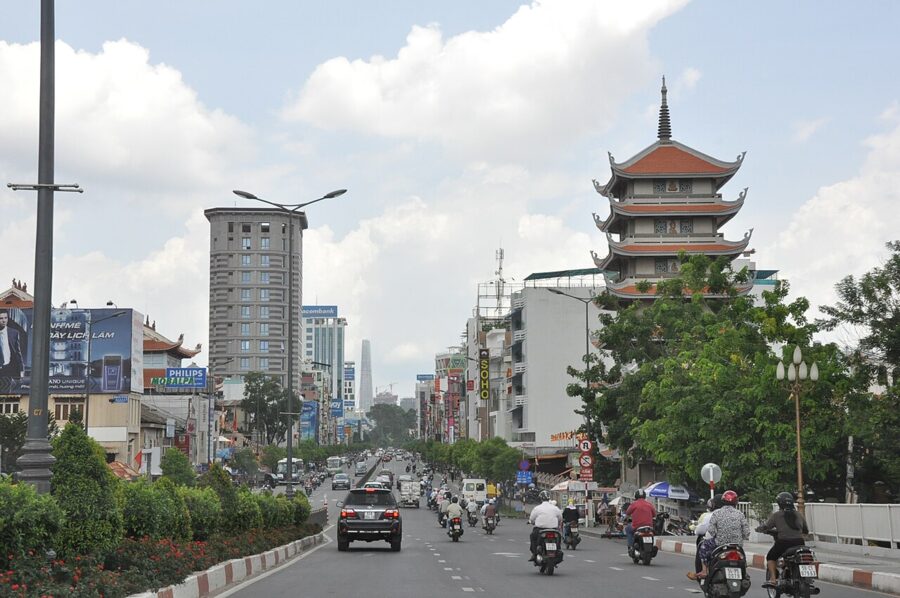
Stand on the crown of the Công Lý bridge at about five in the afternoon, when the light turns gold and the northbound traffic on Nam Kỳ Khởi Nghĩa starts to stack up. Just past the bridge on the city side, above the motorbikes and the shop signs, a tower of seven stories lifts a tiled eave at every level. It looks like it was carried down from a hill in the north. In a sense it was.
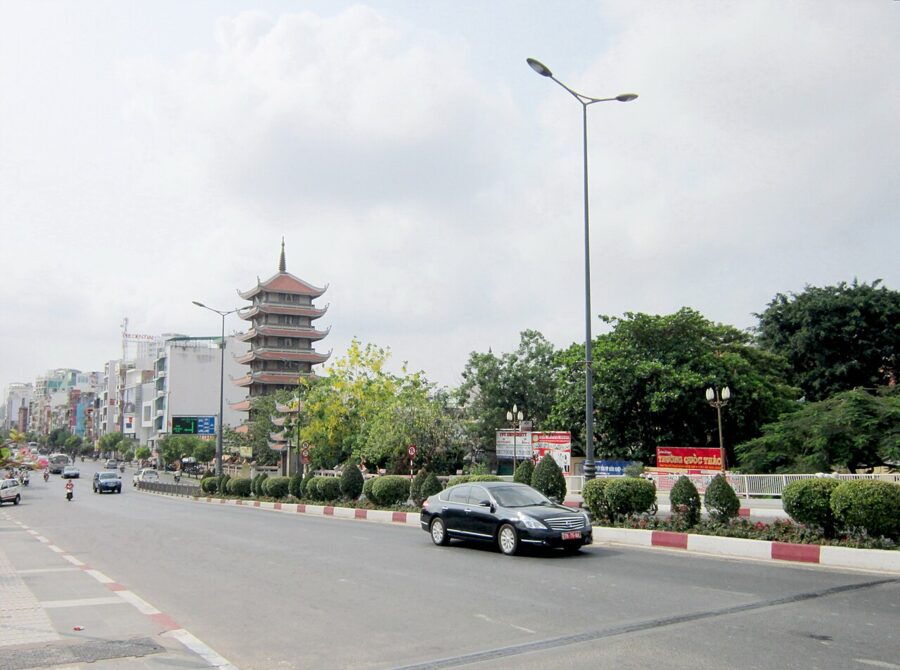

Vĩnh Nghiêm Pagoda (Chùa Vĩnh Nghiêm) is not old. It was cast in reinforced concrete between 1964 and 1971, on low ground beside the Thị Nghè creek, for Buddhists from the north who had come south after the country was divided in 1954. What they built was a memory of home: northern roofs, northern liturgy and the name of the great monastery of the Trúc Lâm school, founded by a Vietnamese king more than 700 years ago.
That makes it one of the most useful temples in Saigon for seeing how different Vietnamese Buddhism can look from one end of the country to the other. Entry is free, the grounds open early, and an unhurried visit takes about an hour, which leaves time to walk on to Tân Định Church or Xá Lợi Pagoda.



On this page
Đức La: the pagoda this one is named for
The first Vĩnh Nghiêm stands in the village of Đức La, in the old Yên Dũng district of Bắc Giang province, about 18 kilometers south of the former provincial town. Since the provincial mergers of 2025 that land has belonged to Tân An ward of Bắc Ninh province. Locals still call it Chùa La, after the village.
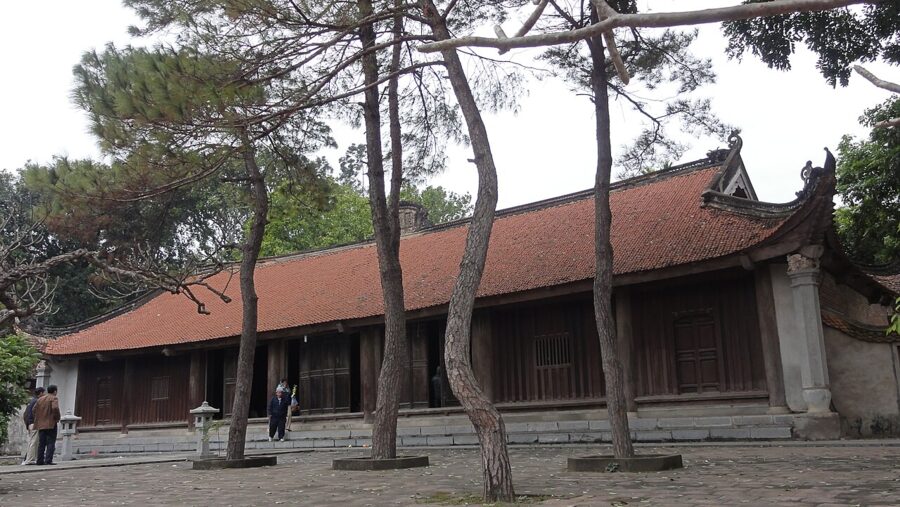

A temple called Chúc Thánh stood here under Lý Thái Tổ (1009 to 1028). The Trần dynasty enlarged it and renamed it Vĩnh Nghiêm, roughly “everlasting solemnity,” and made it the teaching center of the Trúc Lâm (Bamboo Grove) school of Zen. The school’s founder was Trần Nhân Tông, the king who helped turn back the Mongol invasions, gave up the throne in 1293 and later became a monk on Yên Tử mountain.
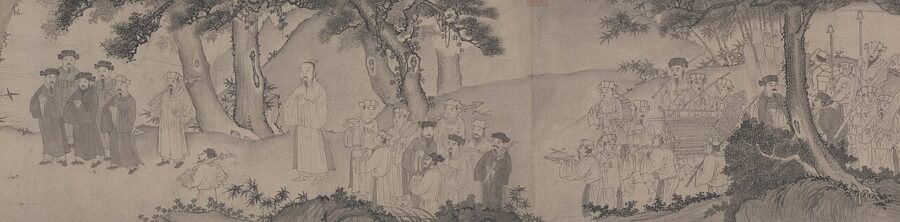
Trúc Lâm is often called the only Zen school founded by a Vietnamese rather than imported from China. Its three patriarchs, Trần Nhân Tông, Pháp Loa and Huyền Quang, all taught at Vĩnh Nghiêm, and in 1313 Pháp Loa drew up the ranks and registers of the order there. For centuries afterwards it was the largest training house for Trúc Lâm monks.
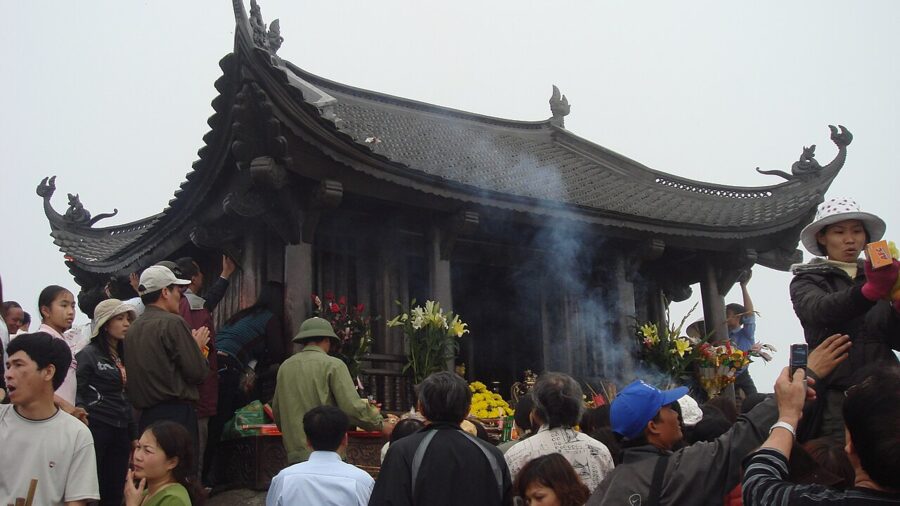

Đức La’s treasure is its library of printing blocks: 3,050 carved woodblocks, engraved on 6,021 faces in Chinese characters and Vietnamese Nôm, used to print scriptures and rules for temples across the north. UNESCO added them to its Memory of the World register for Asia and the Pacific in 2012. On 12 July 2025 the World Heritage Committee went further and inscribed the Yên Tử, Vĩnh Nghiêm, Côn Sơn and Kiếp Bạc complex on the World Heritage List.
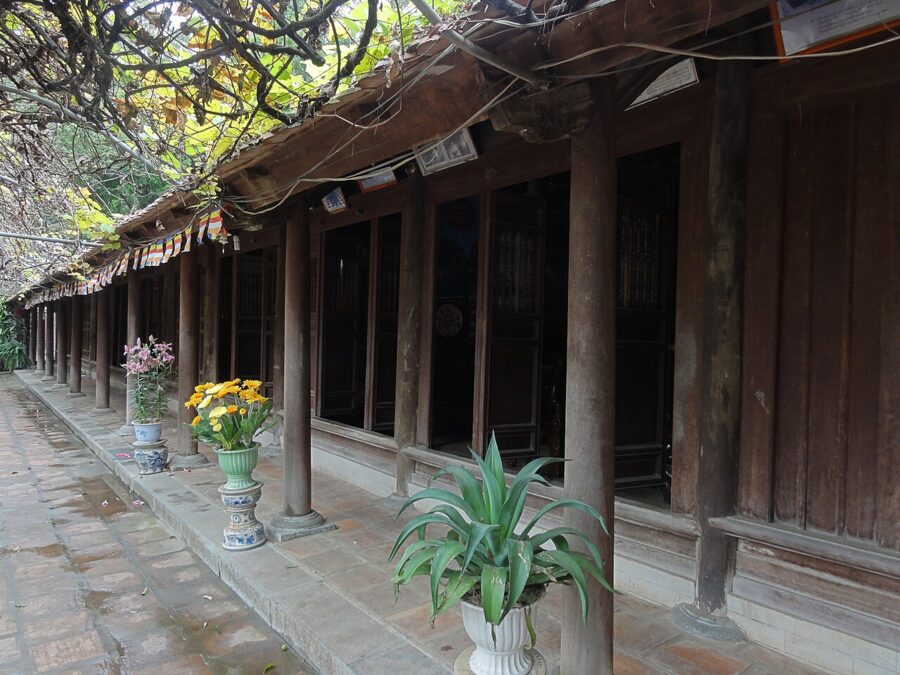

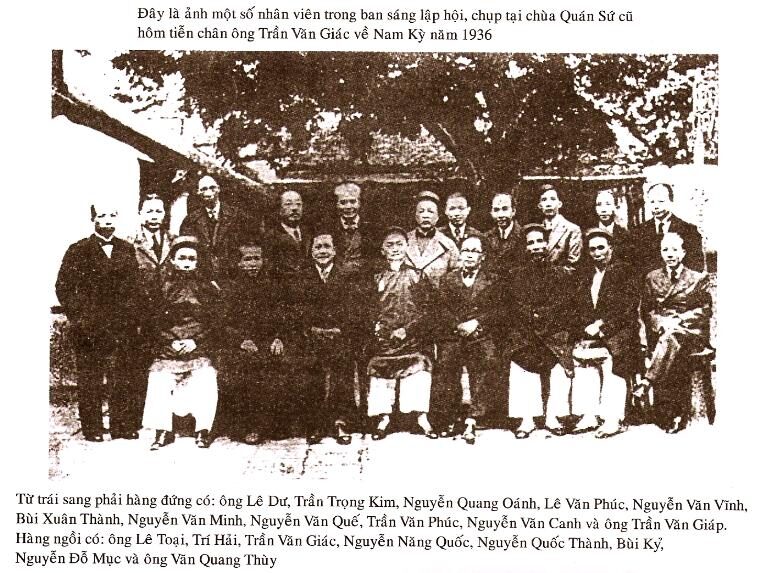
The name mattered in modern times too. In 1934, when northern Buddhists set up a reform association in Hanoi, they chose the abbot of Đức La, Thích Thanh Hanh, as its spiritual head, and he was known simply as the Patriarch of Vĩnh Nghiêm. By the 1950s “Vĩnh Nghiêm” stood for the whole northern tradition, and its people took the name with them when they went south.

Hanoi, Tokyo, and a swamp by the Thị Nghè
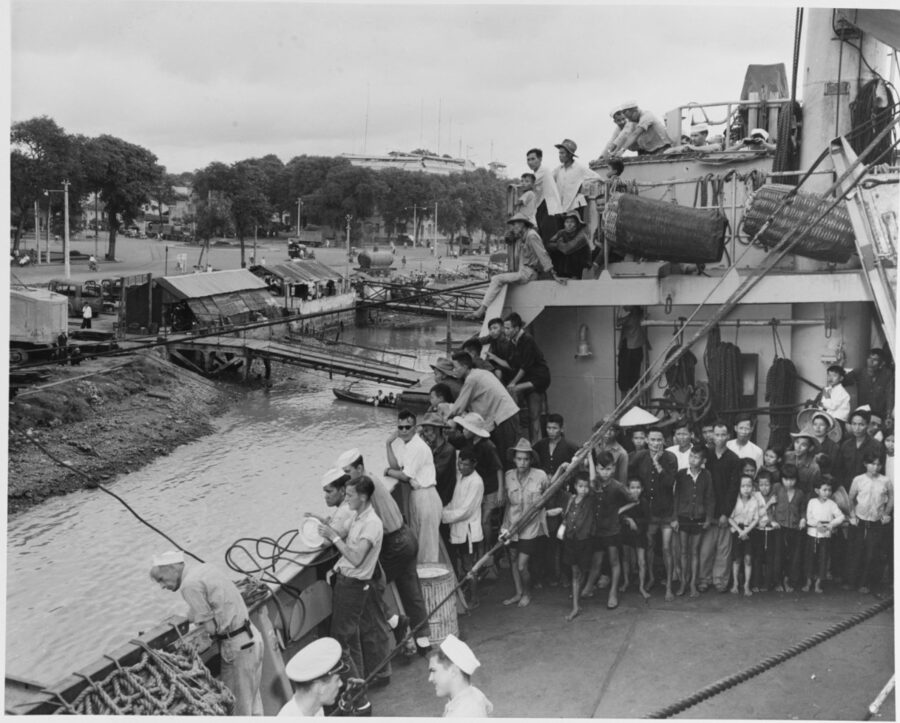
The Geneva Accords of July 1954 split Vietnam at the 17th parallel, and in the months that followed several hundred thousand northerners moved south. Most were Catholics, but monks, nuns and lay Buddhist families came too. In Saigon they found pagodas that chanted to a different rhythm, followed southern lineages and looked nothing like the temples at home.
The two monks who built Vĩnh Nghiêm were not on those ships. Thích Tâm Giác, born Trần Văn Mỹ in Nam Định in 1917, and his classmate Thích Thanh Kiểm had studied together at Quán Sứ Pagoda in Hanoi, taking extra lessons in English and Japanese on the side. In 1953 the northern Buddhist associations sent the pair to Japan to study how Buddhism had been modernized there, and they stayed nine years.

In Tokyo, Tâm Giác graduated from a Buddhist university and, by the account of his biographer Thích Đồng Bổn, earned a third-degree black belt at the Kodokan, the home of judo. The two men came home in 1962, a year before the Buddhist crisis that brought down Ngô Đình Diệm. The protests of 1963 centered on Xá Lợi Pagoda, less than two kilometers away, and Tâm Giác took an active part.
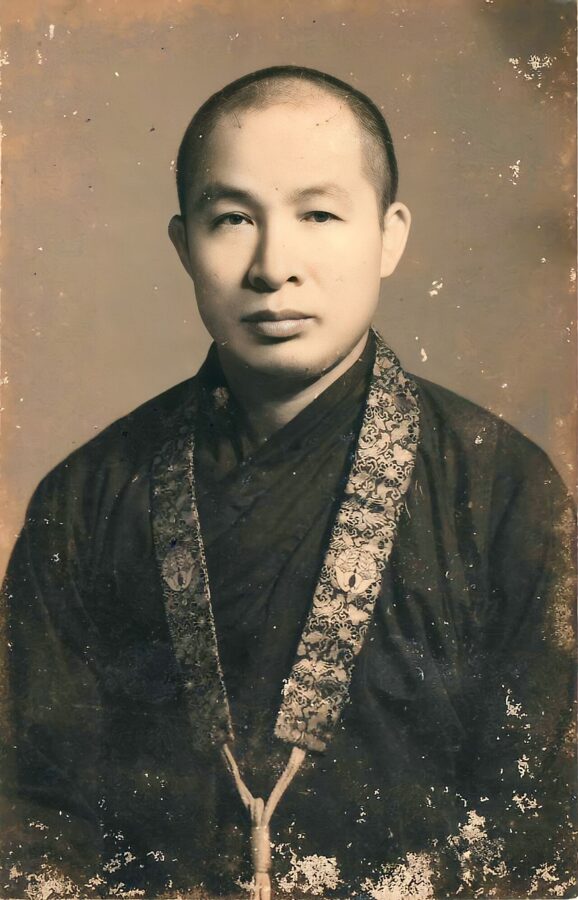
When the Unified Buddhist Church was formed in 1964, its charter gave the Buddhists from the north their own region within it, called the Vĩnh Nghiêm region, with Tâm Giác at its head. That year the monks broke ground on the pagoda. The site was waterlogged land beside the Thị Nghè creek, and some 40,000 cubic meters of earth were trucked in from the Biên Hòa highway to raise it.
The architect was Nguyễn Bá Lăng, working with Lê Tấn Chuyên and Cổ Văn Hậu, and in 1972 he published the standard book on the subject, Kiến trúc Phật giáo Việt Nam (Vietnamese Buddhist Architecture). At Vĩnh Nghiêm he kept the silhouette of a timber pagoda and built every column, rafter and roof tile in reinforced concrete. The pagoda is often called the first in Vietnam to put a traditional form in a modern material.
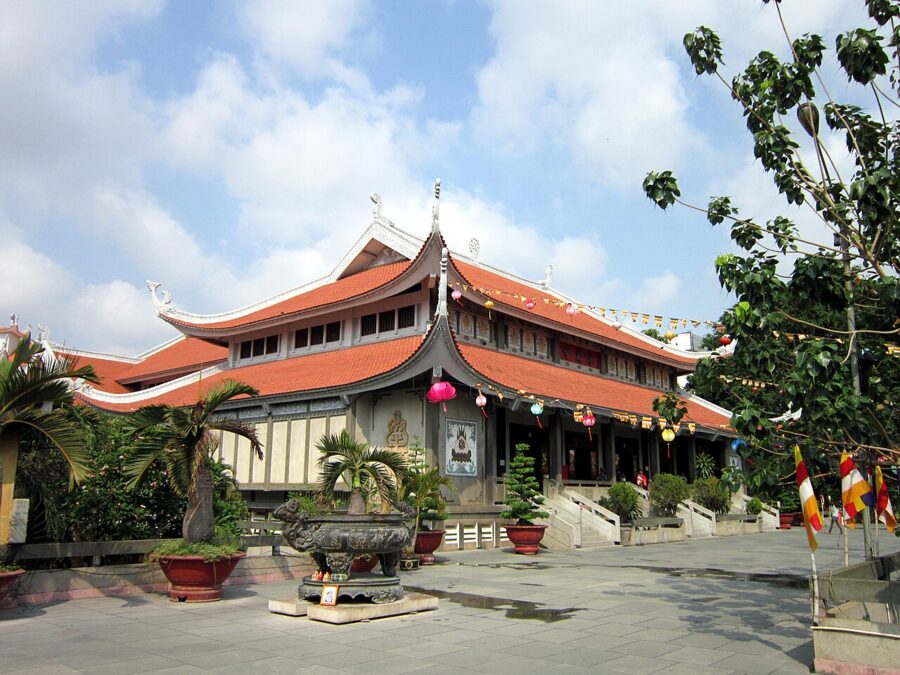

The work cost about 98 million đồng of the time, raised largely from the faithful; Vietnamese accounts say the land was granted by the government of the Republic of Vietnam. By 1971 the central building, the Quán Thế Âm tower and rooms for social work stood complete, and old English-language guidebooks credit the Japan-Vietnam Friendship Association with help on the tower.

Tâm Giác died on 15 November 1973, with his nine-story tower at Việt Nam Quốc Tự still unfinished, and is buried at the Vĩnh Nghiêm cemetery in Hóc Môn. The pagoda kept growing: a community ash tower in 1982 to 1984, a stone tower for Thanh Kiểm in 2003, and an abbot’s residence, guest rooms and refectory around a lotus pond at the back. In March 2026 its abbot, Thích Thanh Phong, was a vice-chairman of the executive council of the Vietnam Buddhist Sangha.

Walking the grounds
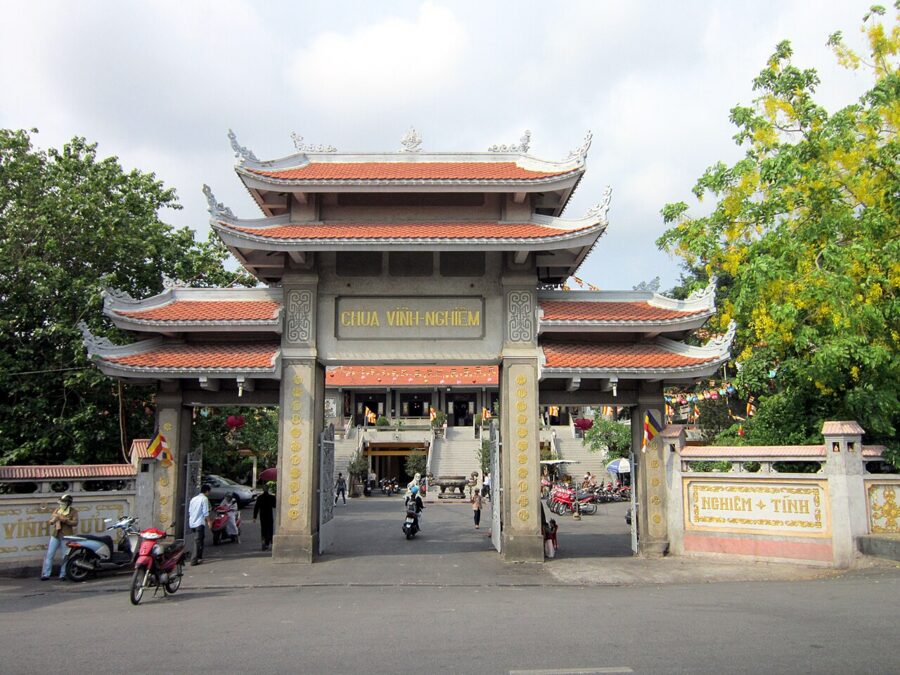
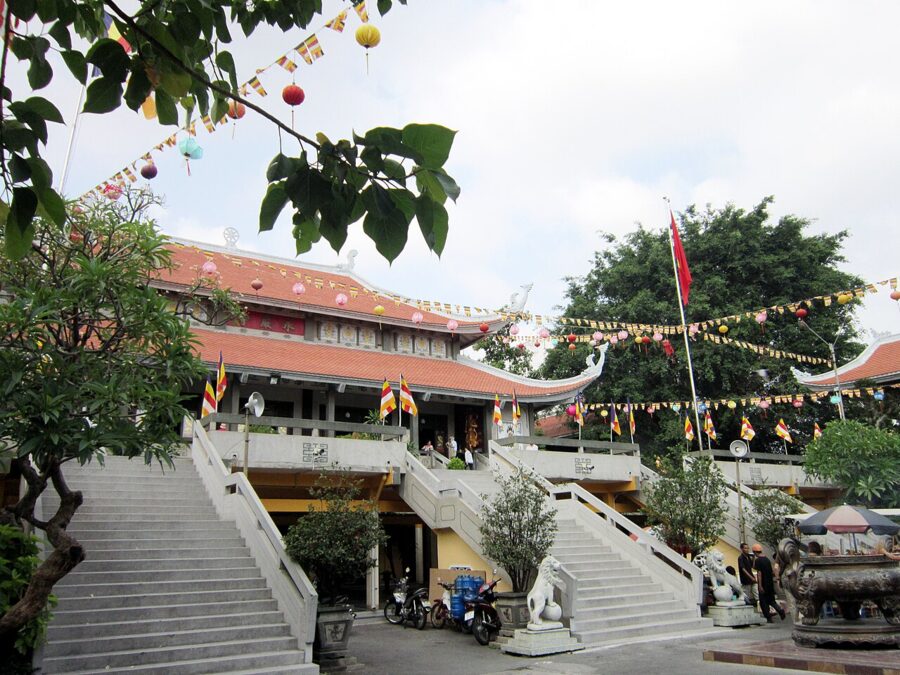
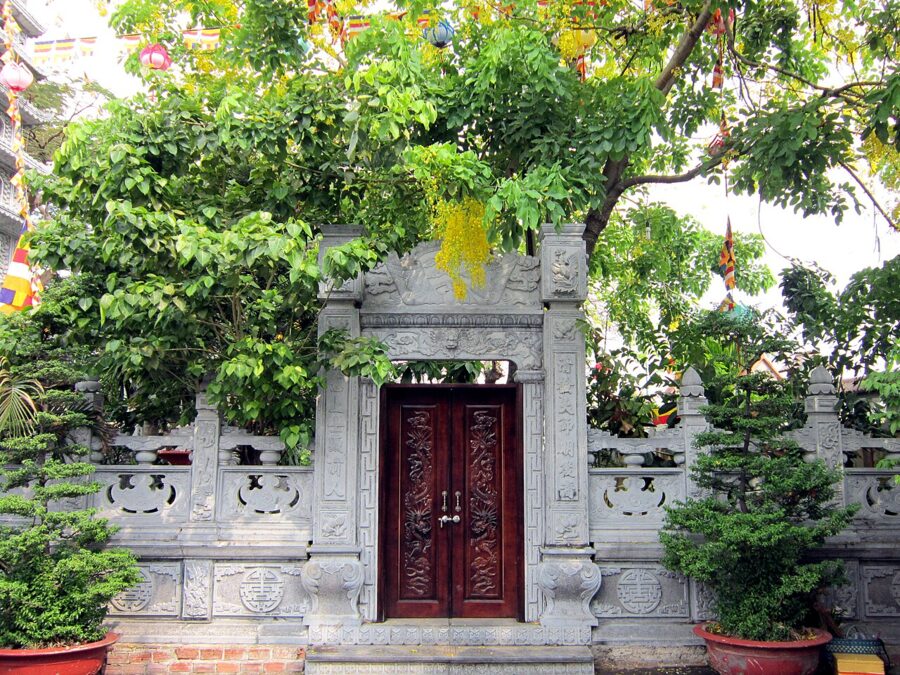
The plan is simple once you know it. The triple gate opens into a paved courtyard, with the central building straight ahead, raised a full story. The Quán Thế Âm tower is on the left as you face it, the stone tower and bell tower on the right, and the ash tower and monks’ quarters behind.
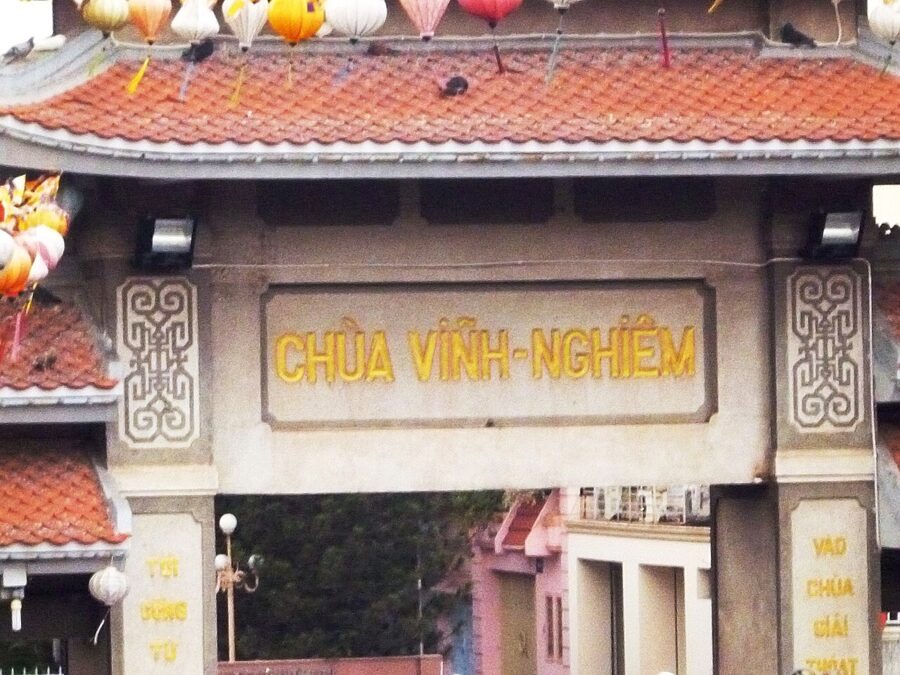
The gate
The three doors of a tam quan stand for the three gates of liberation, and the middle one is kept for ceremonial use. Walk in through the right-hand door and leave by the left, as local visitors do, and look up at the gilt name board and the couplets on either side.

Quan Âm in front of the stairs
Inside the gate, a white statue of Quan Âm, the bodhisattva of compassion, stands in her own small garden directly between the gate and the Buddha hall. It looks decorative. In fact it is the pagoda’s quiet concession to the south.
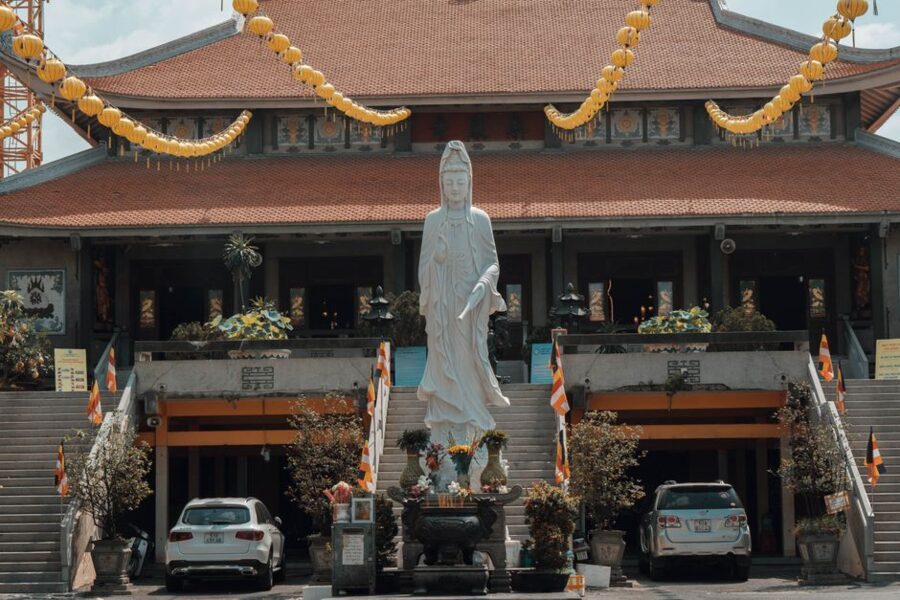
The architect Trần Đăng Lộc Phú, writing in the journal Kiến trúc Việt Nam in 2023, notes that old southern pagodas usually had a two-door gate with a screen in the middle, because local belief held that nothing should run straight at the altar. Vĩnh Nghiêm kept the full northern gate but put Quan Âm on the axis, and many southern pagodas built since have copied the idea.

The Buddha hall
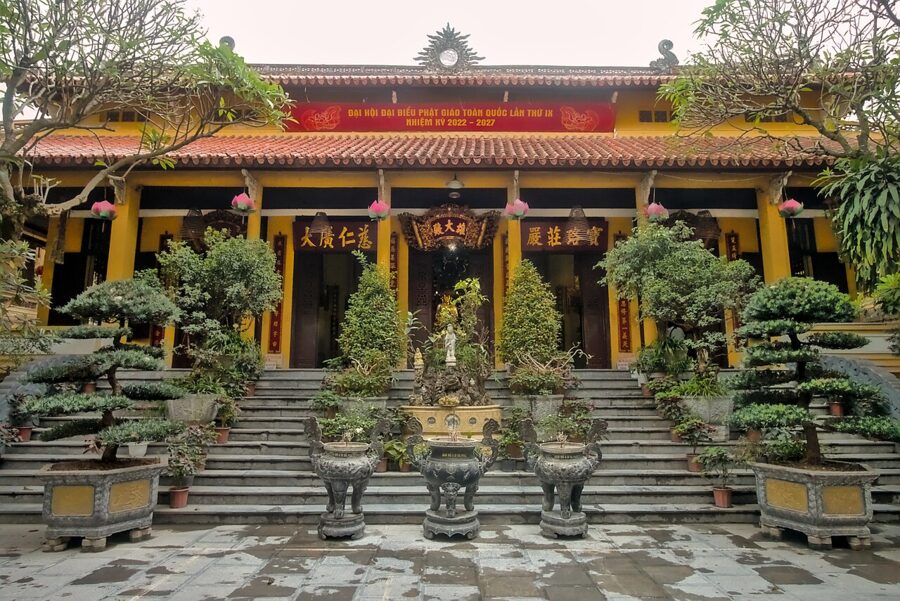
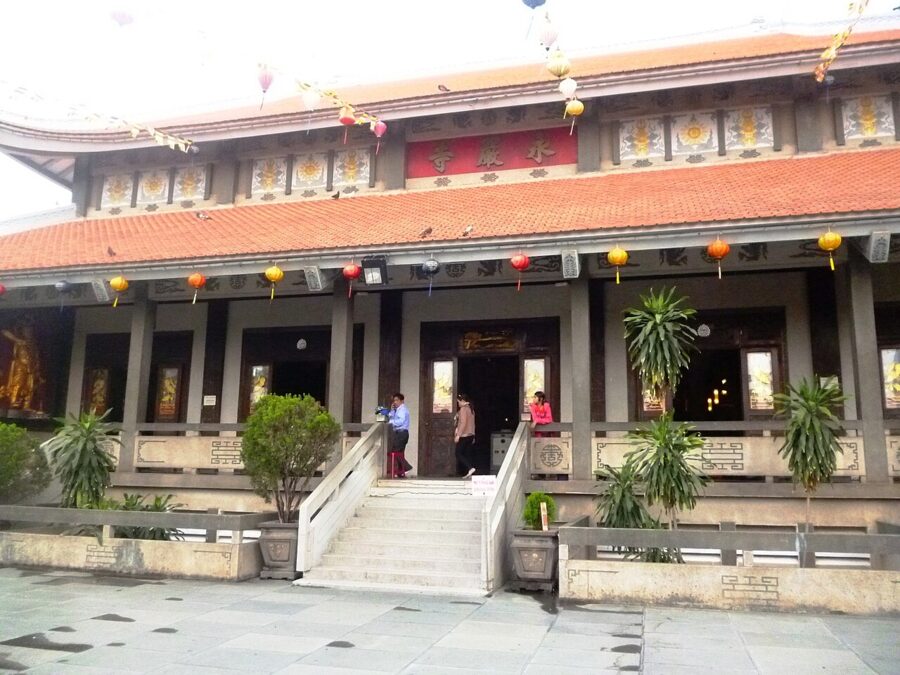
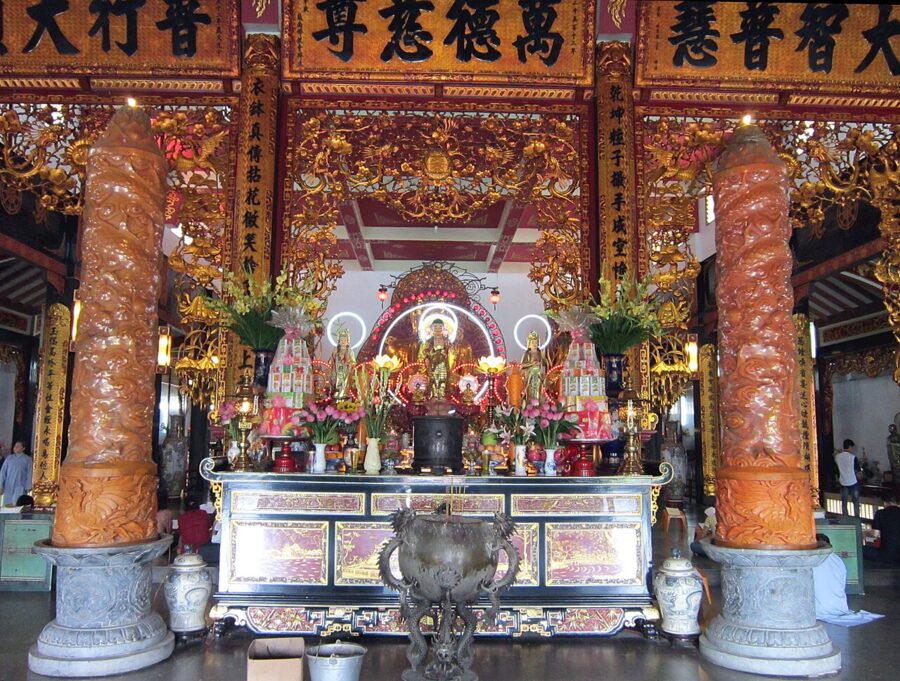
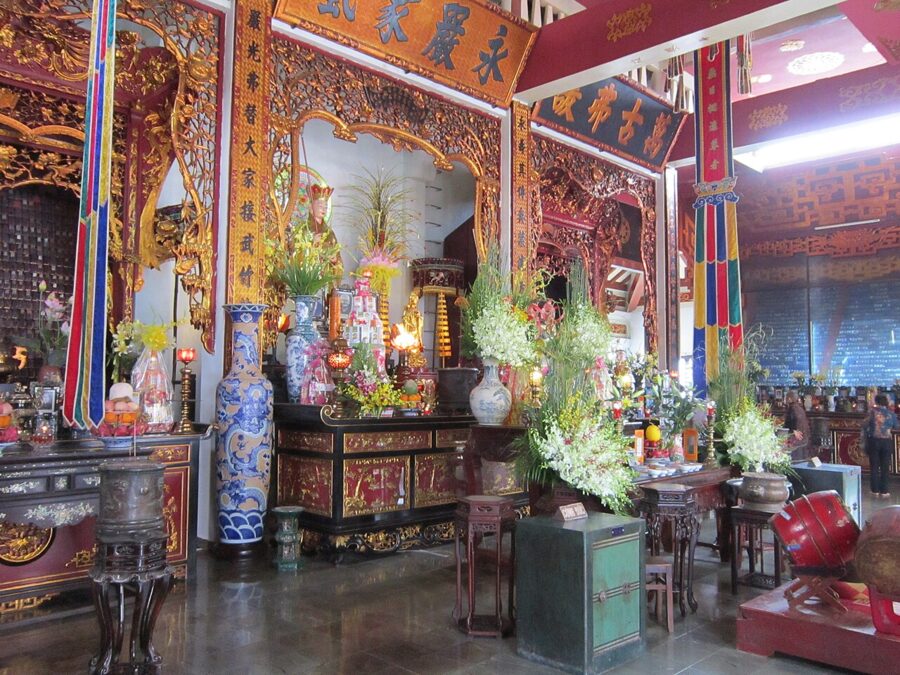
Climb to the terrace and take your shoes off at the door. The hall is laid out in the shape of the Chinese character 工, a front hall and a rear hall joined by a passage. The front hall (Bái Điện) is 35 meters long, 22 meters wide and 15 meters high, and every column and rafter in it is concrete.
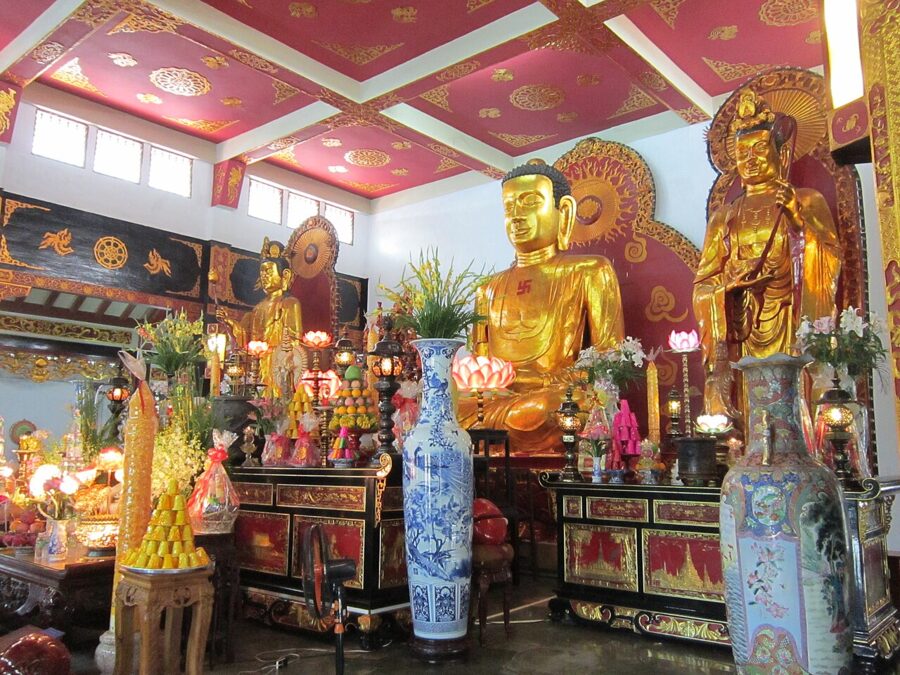

Spend time on the woodwork. The friezes above the altar show the four sacred creatures and nine dragons, and the fronts of the incense tables carry tiny reliefs of famous pagodas in Vietnam and elsewhere in Asia. Two large guardian figures stand on the porch. Most people walk straight past all of it.
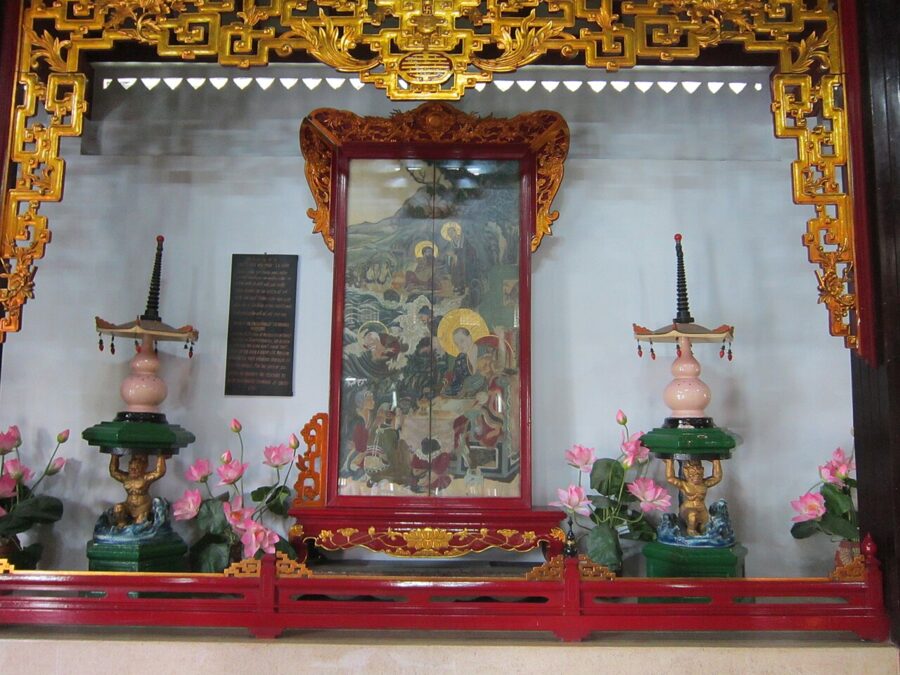

The rear hall (Bản Điện) belongs to Amitabha, the Buddha of the Western Paradise, and a third room beyond, the Địa Tạng Đường, to Ksitigarbha, the bodhisattva who vows to help the dead. These rooms are quieter, and families come here to pray for relatives who have died. The ground floor below holds the patriarch hall, with an altar to Bodhidharma, plus a lecture hall, a library and classrooms.


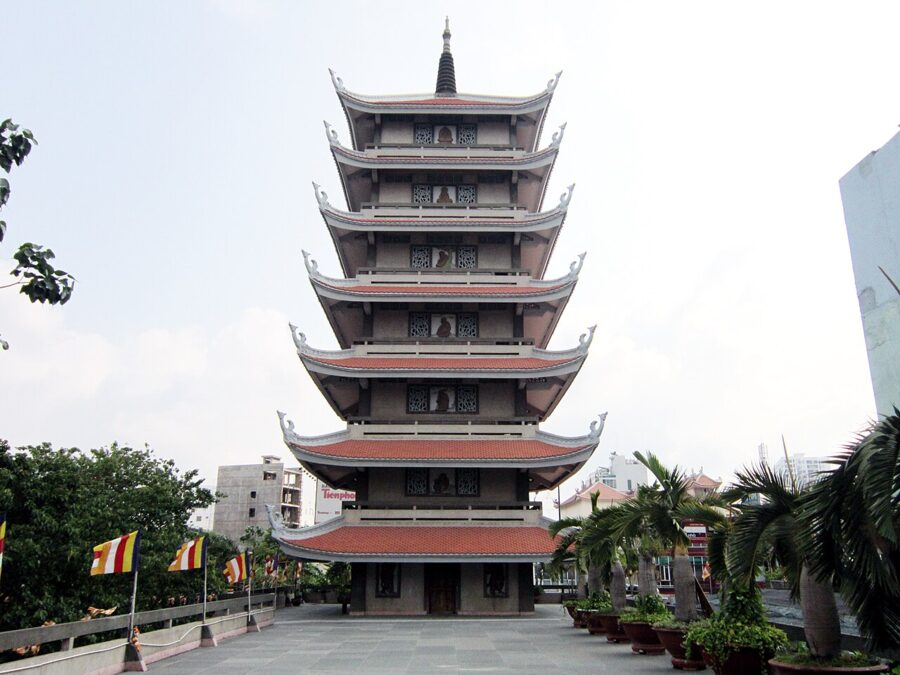
The Quán Thế Âm tower
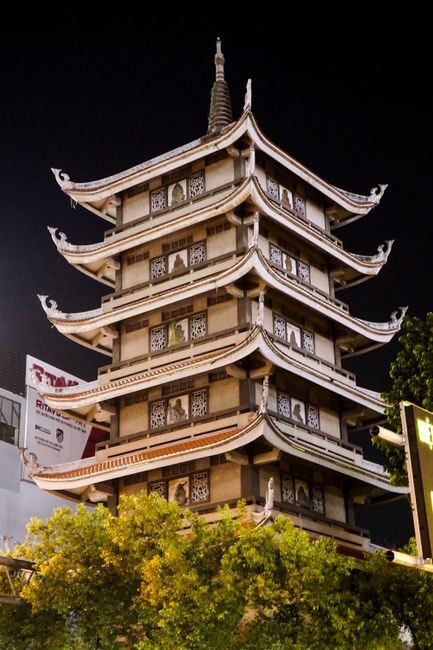
The tower went up with the pagoda in the 1960s: square, six meters a side, seven stories and nearly 40 meters high, with nine stacked rings at the crown. Some travel sites describe climbing it for views over District 3, but no current, reliable source confirms that it is open to visitors. Treat it as something to look at, from the courtyard or from the bridge at dusk.
The Peace Bell
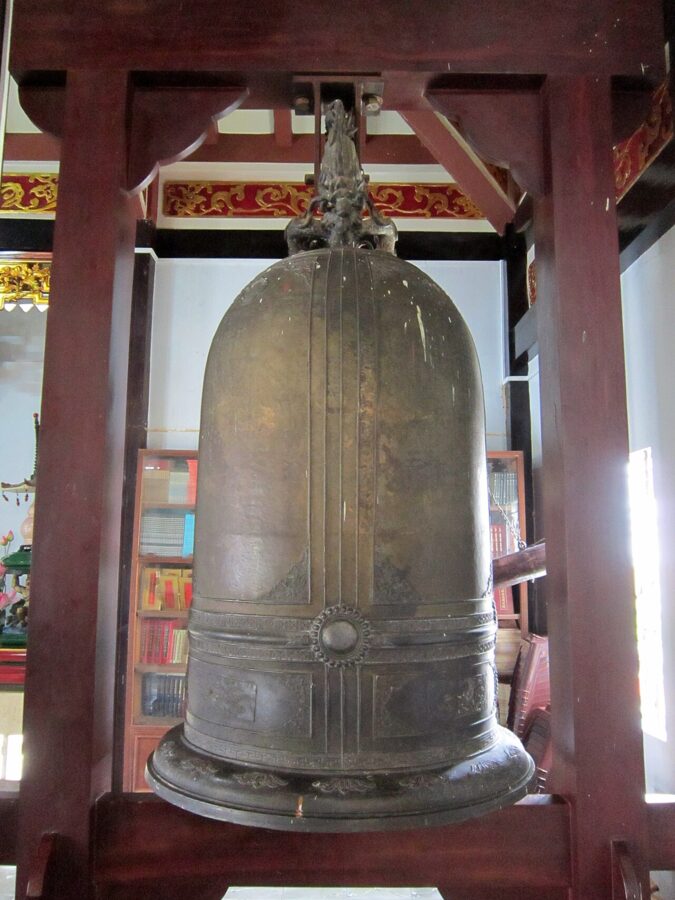
The bell tower at the right-hand end of the terrace holds a bronze bell about 1.8 meters across, the Peace Bell (Chuông Hòa Bình), given by Japanese Buddhists before 1975 as a prayer for peace in Vietnam. Vietnamese accounts agree on that much. They disagree on the giver, naming either Japanese Sōtō Zen Buddhists or the Entsū-in temple in Fukushima, and on the date, usually 1971 but sometimes 1969.

A stone tower for Thanh Kiểm
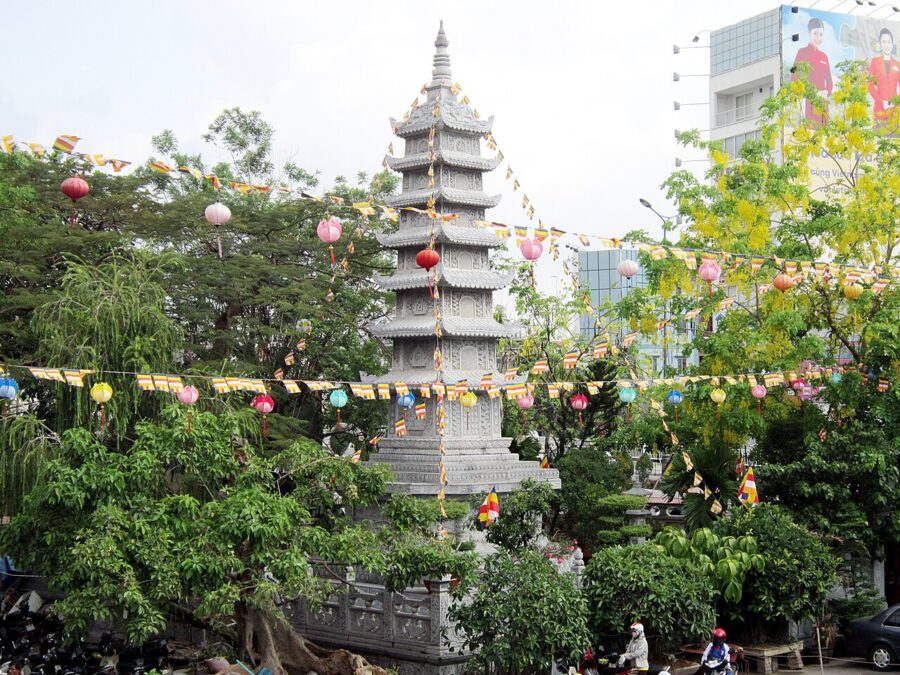
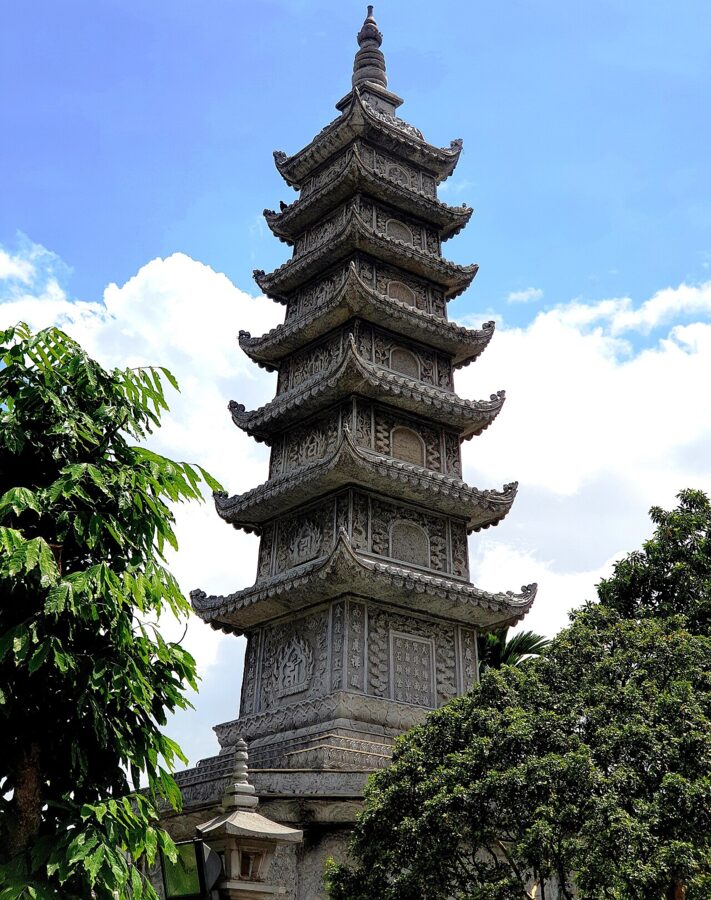
To the right of the gate, a grey tower of carved stone stands in its own balustrade. This is the Vĩnh Nghiêm Tower, inaugurated in December 2003 in memory of Thích Thanh Kiểm, the second founder: 14 meters high, seven stories, on an octagonal base, and usually described as the first stone tower in the south. The lowest story carries the character thọ (longevity) in Lý-dynasty seal script, and everything above follows Trần models, with a pair of large dragons and 27 pairs of smaller ones.



The ash tower
Behind the Buddha hall, on the left, the four-story Xá Lợi Cộng Đồng tower rises about 25 meters. It was built between 1982 and 1984 to hold the ashes of lay Buddhists, and families come on death anniversaries with fruit and incense. This is a place of mourning, not a sight, so keep your voice down and your camera away.

Northern, Chinese, southern: how this pagoda is different
To a newcomer, Saigon’s temples can all look alike. They are not, and Vĩnh Nghiêm is a good place to learn the differences, because it was built to be unmistakably northern in a city whose temples come from two other traditions.
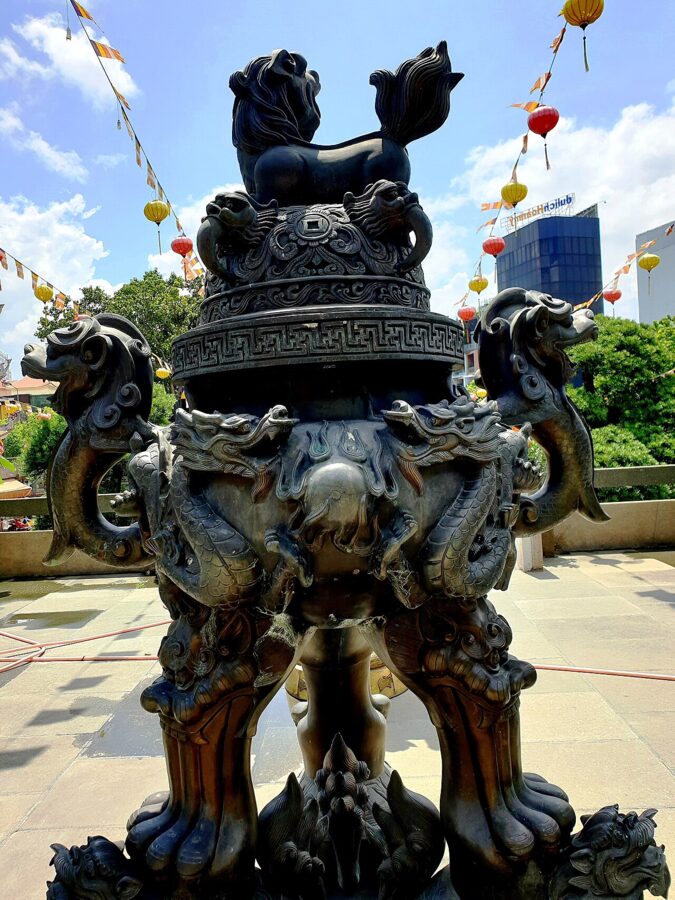
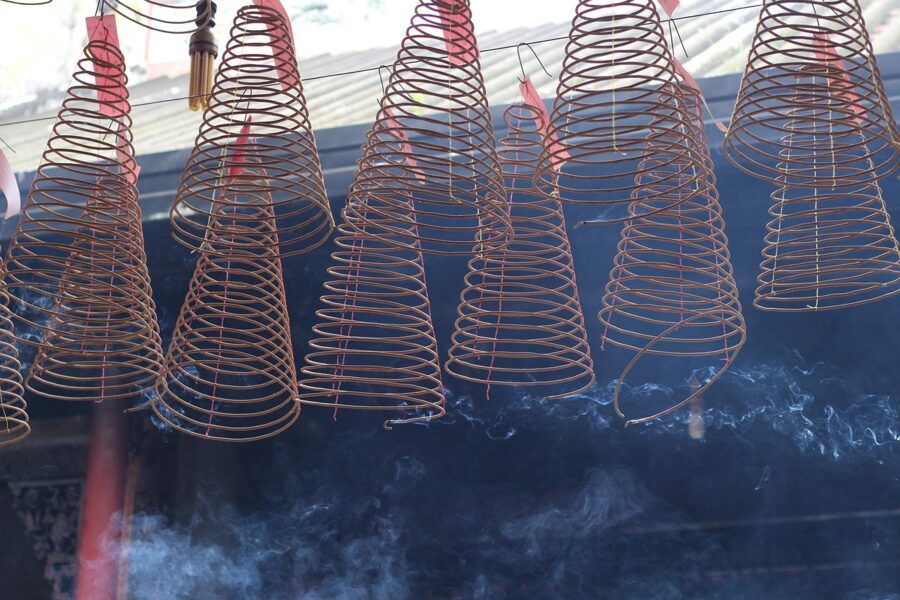
The Chinese temples of Chợ Lớn were built by Cantonese, Hokkien, Teochew and Hakka congregations, most as assembly halls for one dialect group, and they honor gods as much as Buddhas. At Thiên Hậu Temple the sea goddess Mazu is the center of worship, giant coils of incense hang from the roof, and the ridges are crowded with ceramic figures from southern China.
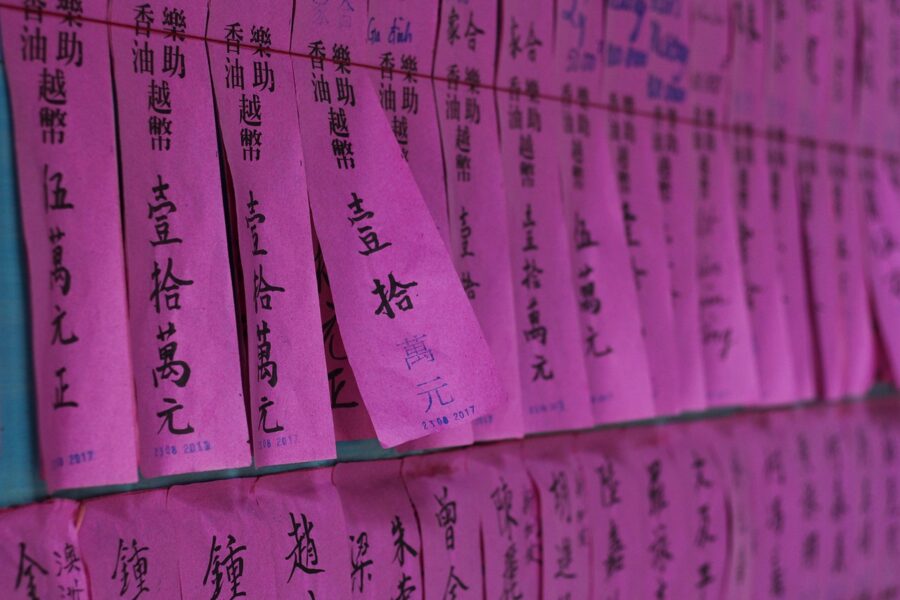
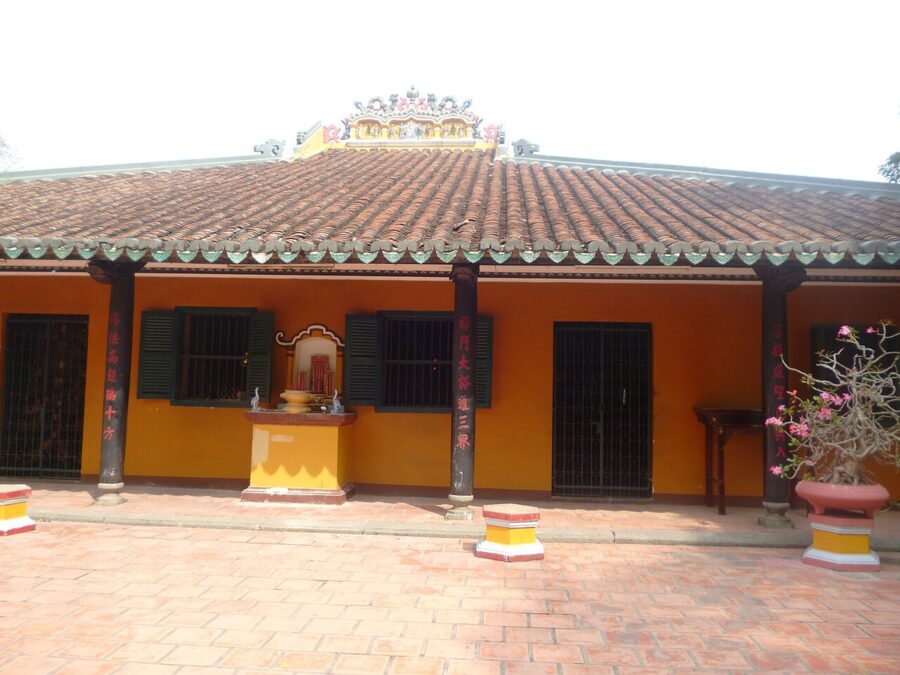
The older Vietnamese pagodas of the south, such as Giác Lâm in Tân Bình, were founded as Vietnamese settlers moved into the Mekong region. They tend to be low, wooden and dim, with stepped altars crowded with statues, and most belong to branches of the Lâm Tế (Linji) school. Their chanting has a southern melody of its own.

Vĩnh Nghiêm answers all of that with the north: the full triple gate, the curved roof corners, a simple altar and the Trúc Lâm name. Above all it kept the liturgy. According to Tâm Giác’s biographer, the pagoda was built so that northern Buddhists could keep their own rites, and it became the ancestral temple of northern monks and nuns in the south. If you hear chanting, listen for the northern accent.
Compare it with Việt Nam Quốc Tự on Ba Tháng Hai street, begun in the same years. Both are concrete, both have five-door fronts, both were built for a national church. Việt Nam Quốc Tự was rebuilt from the ground up starting in 2014; Vĩnh Nghiêm still looks the way it was designed.
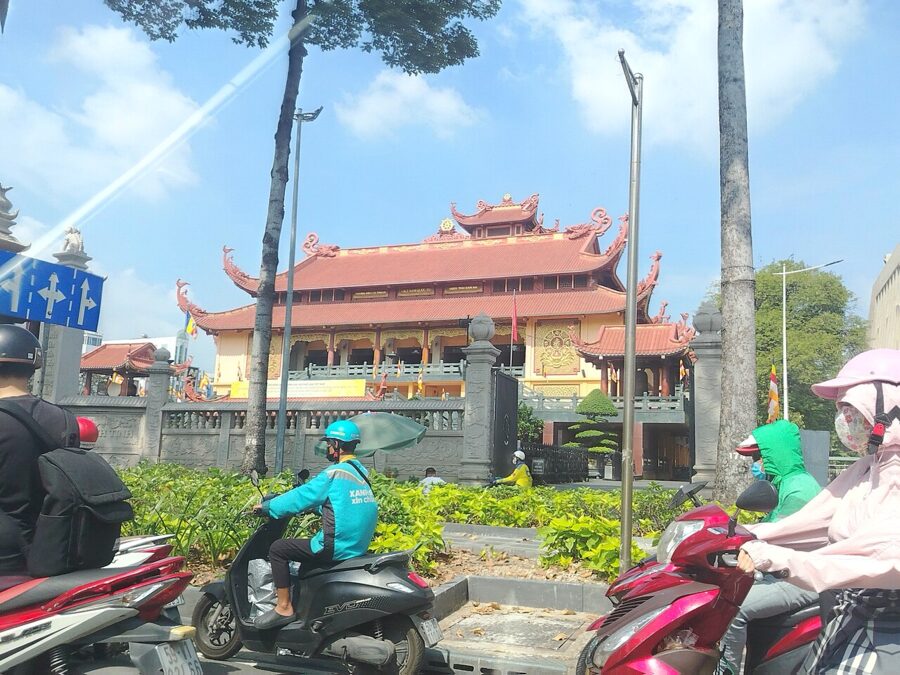
The pagoda’s year
On an ordinary weekday morning Vĩnh Nghiêm is calm: office workers lighting incense on the way to work, an old woman sweeping leaves, chanting from somewhere behind the hall. The first and fifteenth days of each lunar month are busier, as at every Vietnamese pagoda. Offerings here are always vegetarian.
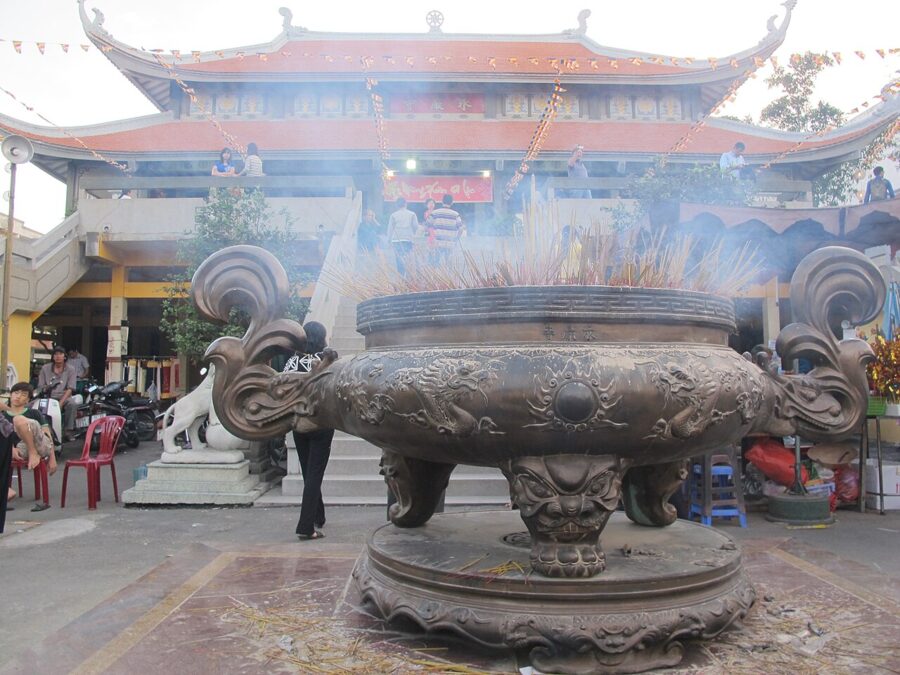

Tết
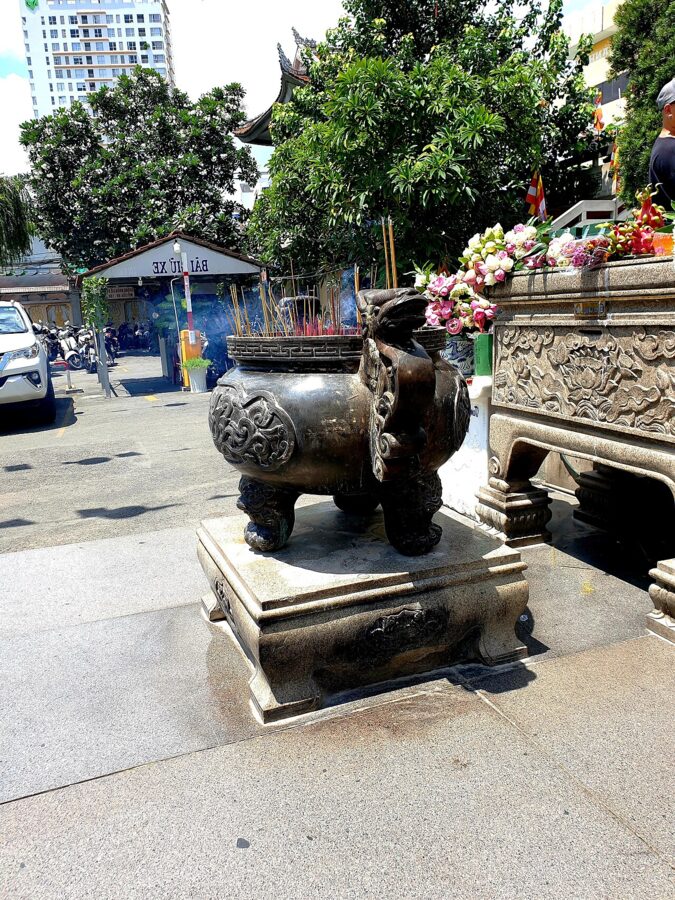
The Lunar New Year is the busiest time of all. Families come in the first days of the year to pray for health and luck, and stalls inside the gate sell incense, flowers and offerings. Expect a crowd shoulder to shoulder around the urns.
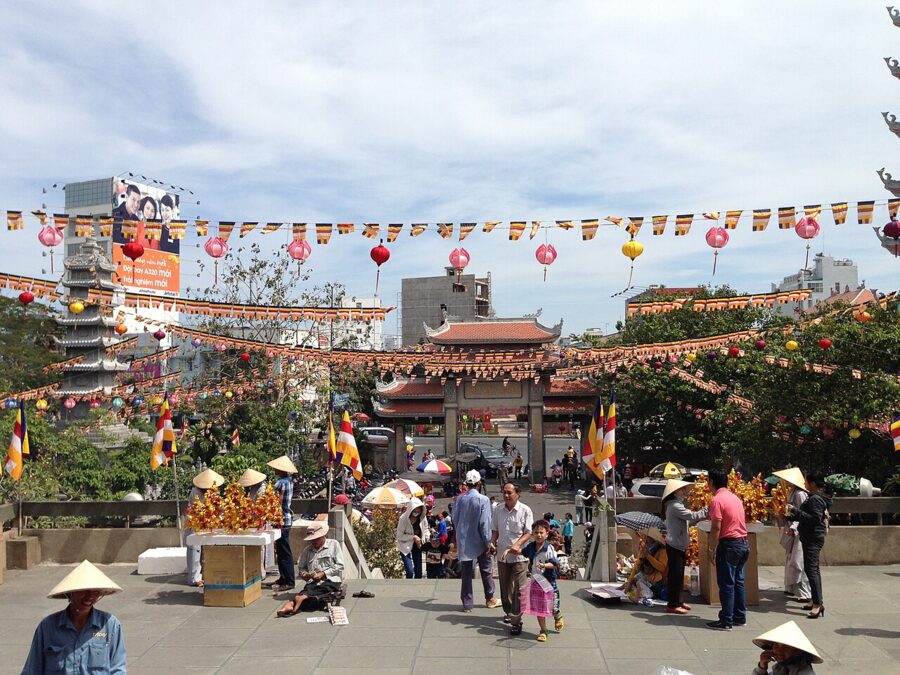

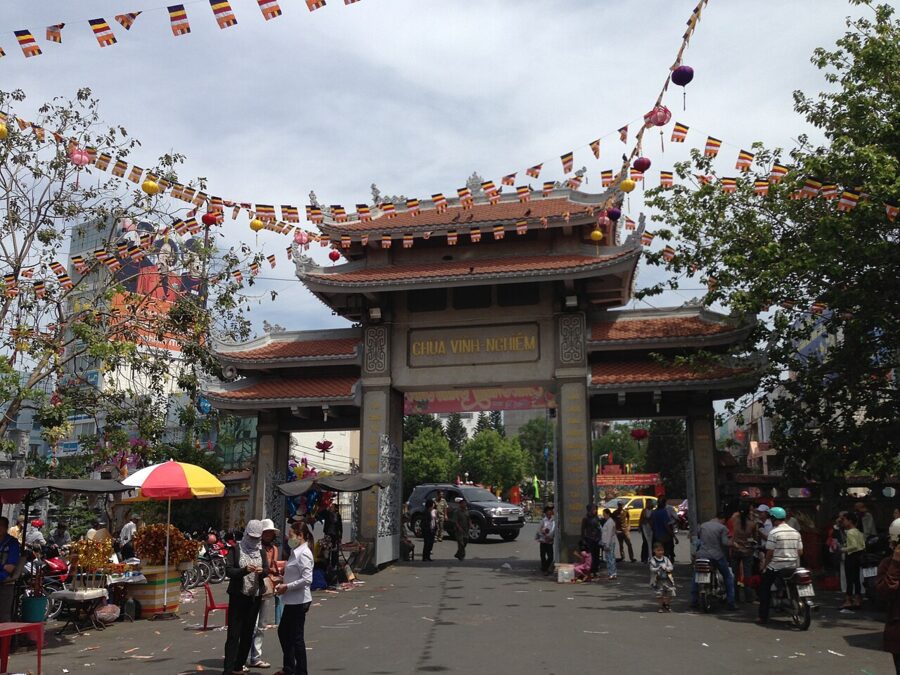

The Buddha’s birthday and the lanterns
Phật Đản, the Buddha’s birthday, falls on the 15th day of the fourth lunar month, usually in May; in 2026 it was 31 May. The city’s main ceremony is held at Việt Nam Quốc Tự, but every pagoda decorates, and Vĩnh Nghiêm strings its courtyard with the five-colored Buddhist flag and rows of lanterns, as it does for Tết.
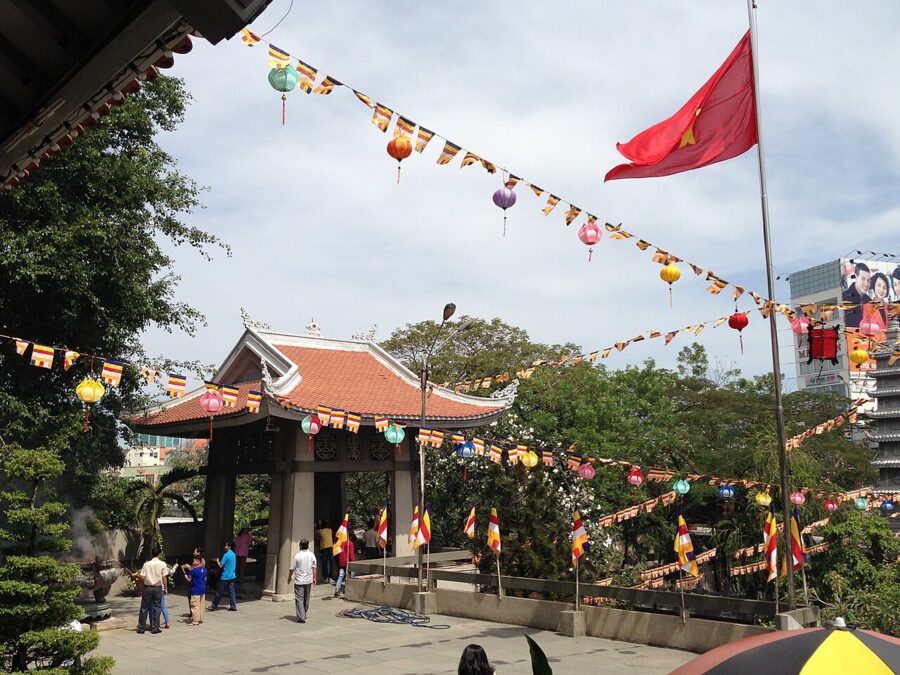

Vu Lan and the rose on the lapel
Vu Lan falls on the 15th day of the seventh lunar month, usually in August or early September; in 2026 the main day was 27 August. It recalls Mục Kiền Liên (Maudgalyayana), the disciple who rescued his mother from suffering, and in Vietnam it has become the festival of filial love.
The custom to watch for is the rose on the lapel: red if your mother is living, white if she has died. It began with an essay, Bông hồng cài áo (A Rose for Your Pocket), written by Thích Nhất Hạnh in 1962, and the first rose ceremony that year is often placed at Xá Lợi Pagoda. Today almost every pagoda in the city holds one.
Vu Lan is one of Vĩnh Nghiêm’s biggest days. The courtyard fills, rice and gifts go out to poor families, and for the past two years the pagoda has hosted a Buddhist book fair for the season; the 2026 fair ran from 22 to 28 August, 8am to 8pm. Other events are harder to predict: in March 2026 monks from Bhutan led the Monlam Chenmo, three days of prayer for world peace, in the Buddha hall.
Visiting Vĩnh Nghiêm
| Address | 339 Nam Kỳ Khởi Nghĩa, Xuân Hòa ward, Ho Chi Minh City (formerly Ward 7, District 3), beside the Công Lý bridge |
|---|---|
| Entry | Free; donations welcome but never asked for |
| Hours | No published visiting hours. The courtyard is open from early morning into the evening; visit the halls in daylight. |
| Time needed | 45 minutes to an hour; longer at a festival |
| Dress | Shoulders and knees covered; shoes and hats off in the Buddha hall |
The pagoda is about three kilometers from Bến Thành Market, on the airport road. A Grab or Be car or motorbike taxi takes 10 to 15 minutes from the center outside rush hour; ask for “Chùa Vĩnh Nghiêm.” If you come by motorbike, there is paid parking at the pagoda.
Metro Line 1 is no help: it runs east from Bến Thành to Suối Tiên, and its nearest stations are more than two and a half kilometers away. Bus routes along Nam Kỳ Khởi Nghĩa change often, so check a current route app rather than an old guidebook.

Manners and photographs
This is a working pagoda, and the usual dos and don’ts for Vietnamese temples apply. Cover your shoulders and knees, take off shoes and hat before entering the Buddha hall, never point your feet at an altar, and keep quiet during chanting. Photographing the buildings and courtyard is fine; inside, turn off the flash and ask before you photograph monks or worshippers.
When to go
Go early. By eight in the morning the light is soft on the tower and the courtyard is cool; by noon the paving is hot through your sandals. Saigon’s weather makes December to April the most comfortable months, while from May to November an afternoon downpour is likely. Weekdays are quieter than weekends, and the first and fifteenth of the lunar month are the busiest days.
A morning walk: Vĩnh Nghiêm, Tân Định and Xá Lợi
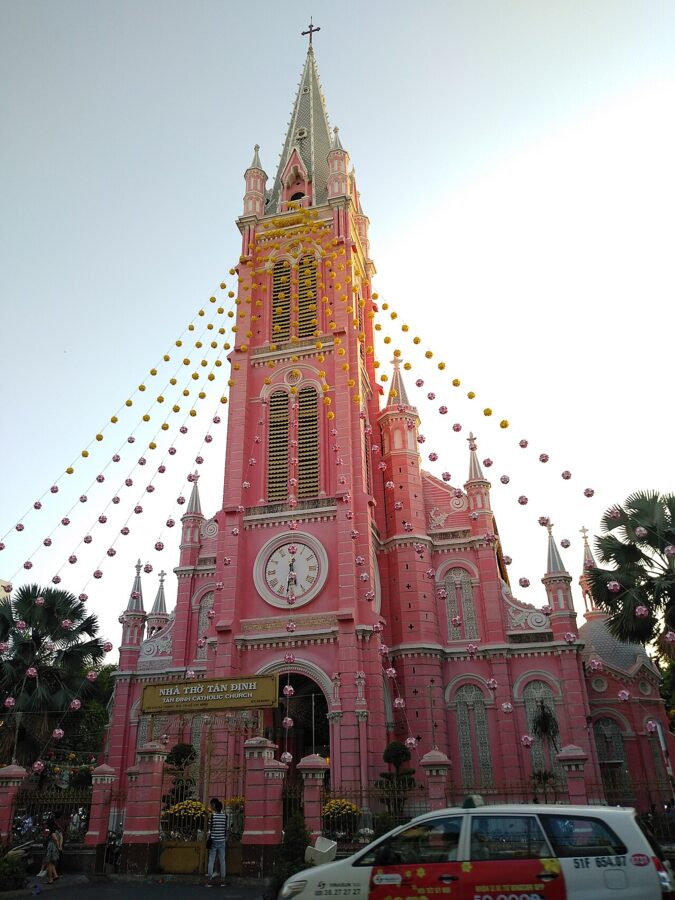
Three of the city’s most distinctive religious buildings sit within a short walk of each other. Start at Vĩnh Nghiêm early, then walk about 15 minutes east to Tân Định Church on Hai Bà Trưng, painted a startling pink, with Tân Định market close by.

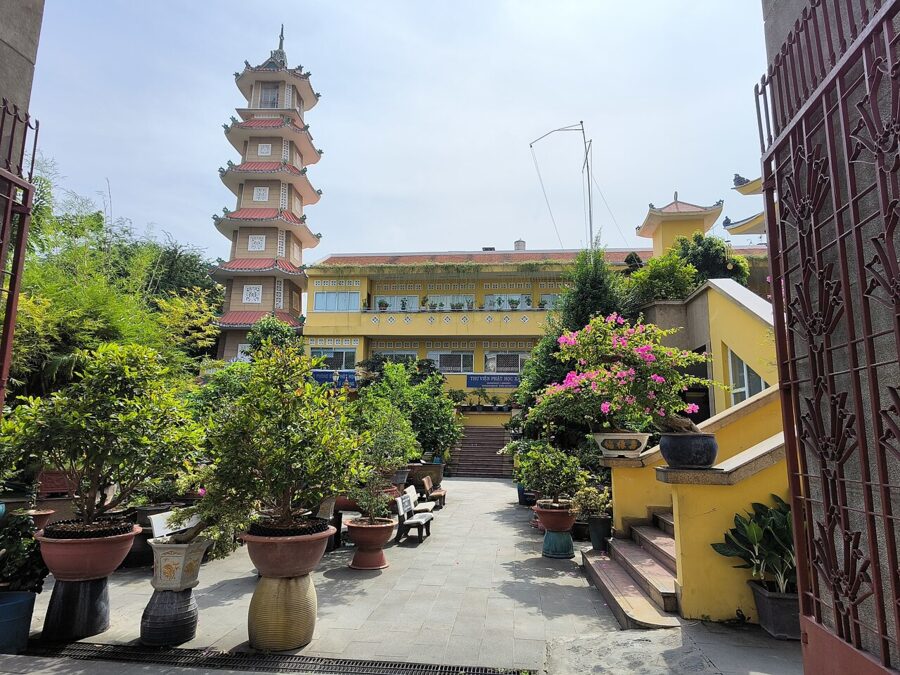
From Tân Định it is another 20 minutes or so south to Xá Lợi Pagoda on Bà Huyện Thanh Quan, center of the 1963 protests and the place where the Vu Lan rose ceremony is said to have begun. If you would rather stay close, Pháp Hoa Pagoda is about ten minutes on foot by the canal, a small pagoda known for its collection of ceramic jars.

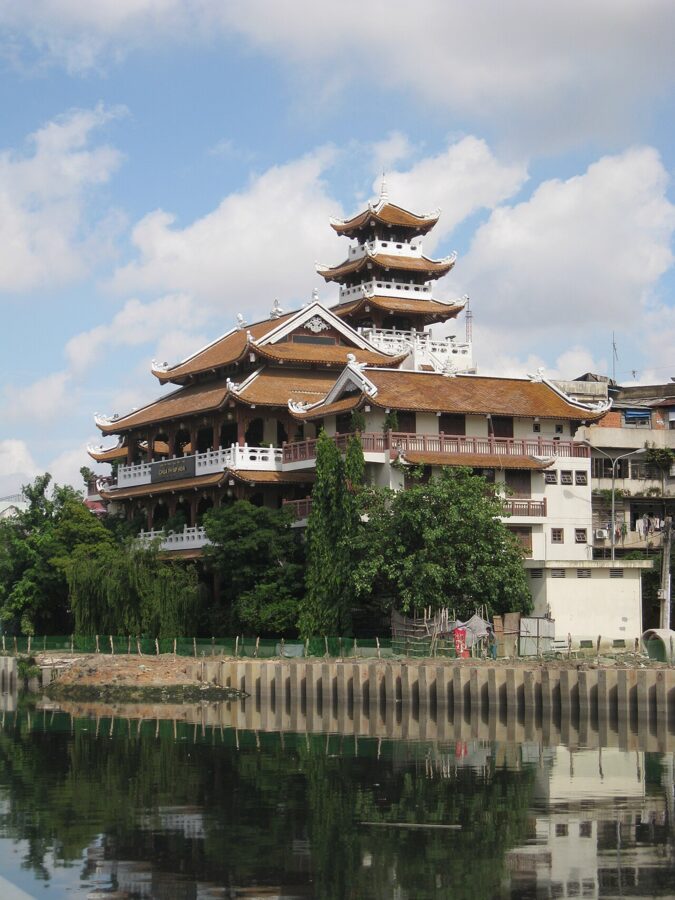

Whichever way you go, leave Vĩnh Nghiêm by the left-hand door of the gate and walk up onto the bridge before you hail a ride. From the top, with the traffic underneath, the tower is exactly where its builders wanted it: a northern hill raised out of a southern swamp, in the middle of the road to everywhere.