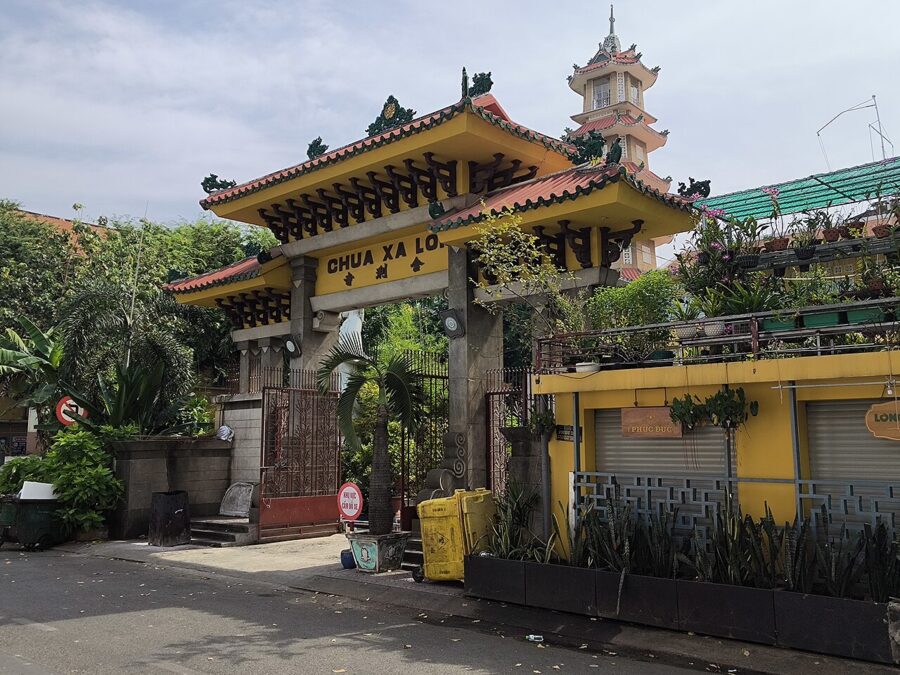
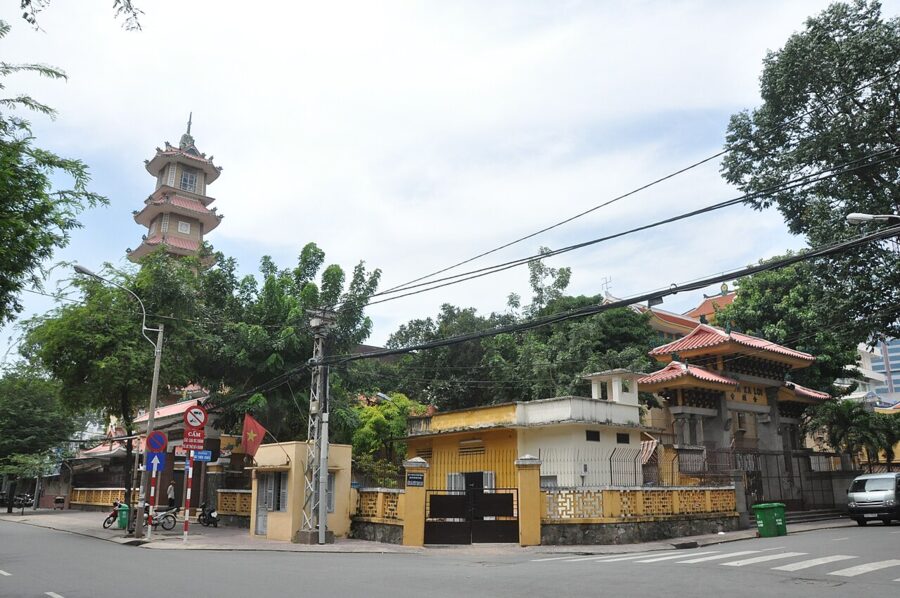
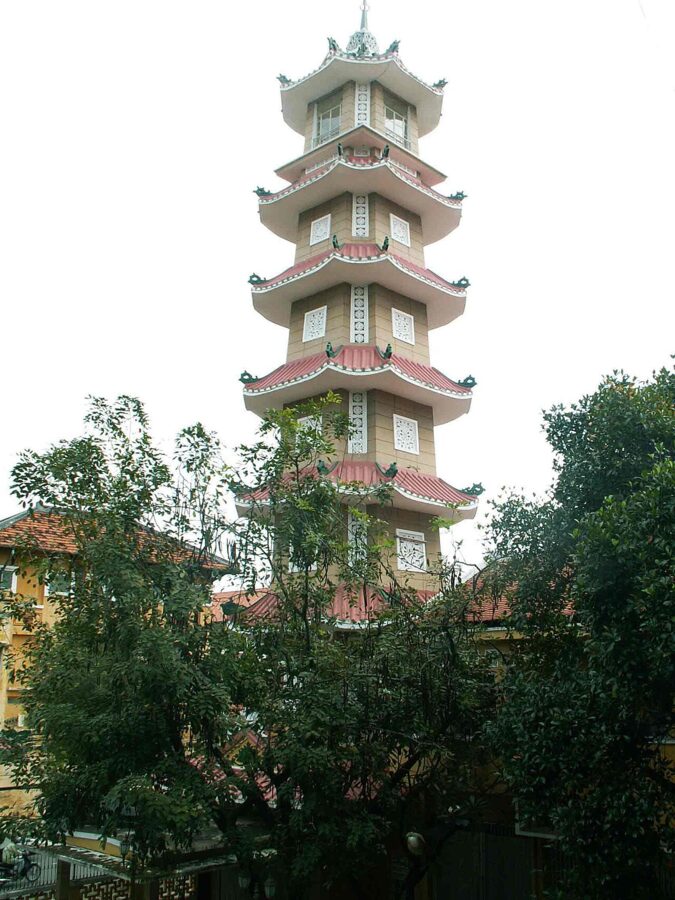
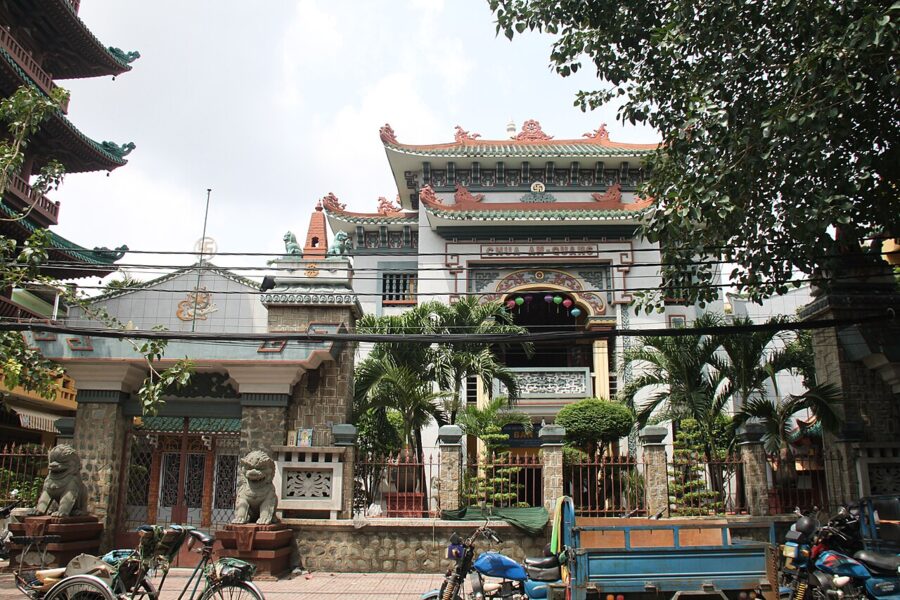
Stand on the corner of Bà Huyện Thanh Quan and Sư Thiện Chiếu streets and look up. Above the trees and the shop signs rises a seven-tiered tower in pink and cream, each tier flaring into a small tiled roof, and in its top chamber hangs a bronze bell that weighs two tonnes. The tower has stood over this quiet corner of District 3 since 1961. Just after midnight on 21 August 1963, though, it was the pagoda’s brass gong that woke the street, beaten by monks as Special Forces and combat police broke through the gates below.
This is Xá Lợi Pagoda (Chùa Xá Lợi), which calls itself Chùa Phật học Xá Lợi, the Xá Lợi Buddhist Studies Pagoda. Xá lợi is the Vietnamese form of the Sanskrit śarīra, a relic, and the pagoda was built between 1956 and 1958 to house a fragment of the Buddha brought from Sri Lanka. In the summer of 1963 it became the headquarters of the protest movement that helped bring down President Ngô Đình Diệm. Its address today is 89 Bà Huyện Thanh Quan, Xuân Hòa ward, though everyone still calls the area District 3.
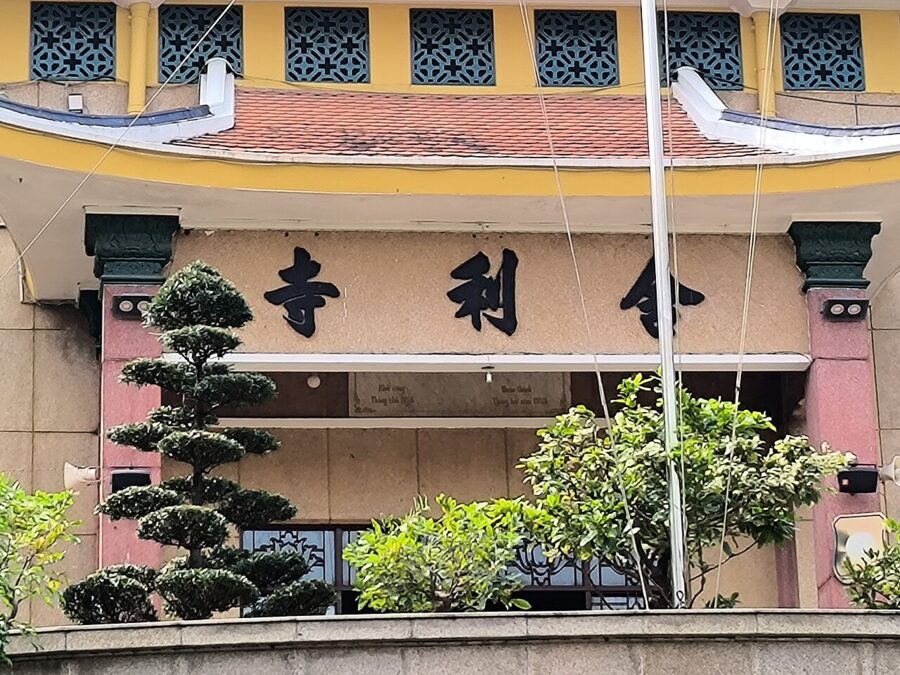

It does not look like the pagodas on the tourist circuit. There are no centuries-old timbers and no clouds of incense. The building is 1950s Saigon modernism, mustard-yellow and concrete, with the worship hall raised a full floor above the street, the first pagoda in the city built that way. Give it an hour, and pair it with the crossroads five minutes away where the monk Thích Quảng Đức sat down in the road on 11 June 1963.


On this page
A relic that came by sea
The story starts in 1952, on a ship. A Sri Lankan delegation sailing to Tokyo for the second conference of the World Fellowship of Buddhists carried a relic of the Buddha as a gift for Japan, and the liner put in at Saigon for 24 hours. The fellowship’s president cabled the Southern Vietnam Buddhist Studies Association (Hội Phật học Nam Việt) and asked it to bring the relic ashore. According to the pagoda’s own history, written by its present abbot in 2001, the press put the crowd that filed past it, from eleven in the morning until three the next morning, at half a million.
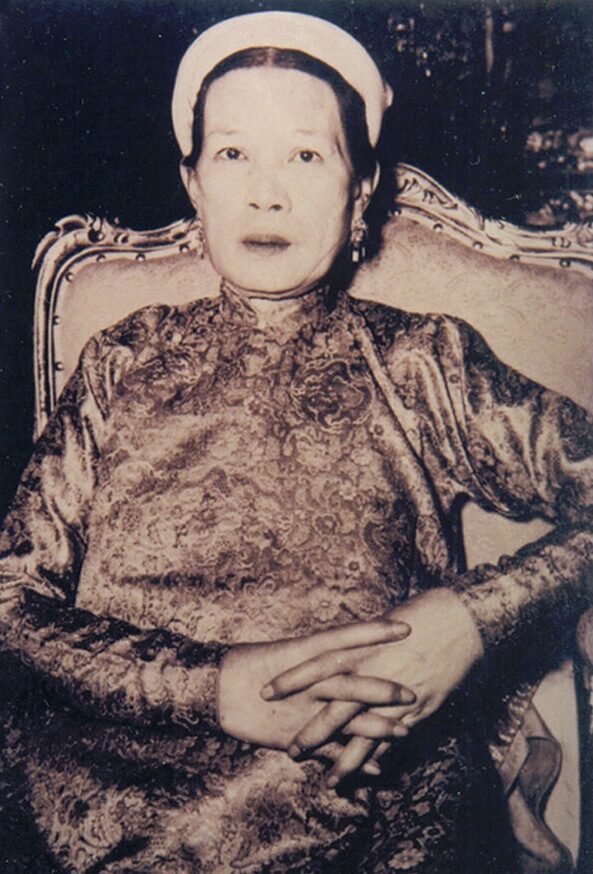
The next year the Sri Lankan monk Narada Mahathera flew in with three relics and three bodhi saplings, for the Theravāda Buddhists, the Mahāyāna Buddhists and the Khmer community. A quarrel broke out that night over who should receive the Mahāyāna share. To stay out of it, Narada gave that relic, in a golden stupa, to the Queen Mother Từ Cung, mother of the former emperor Bảo Đại, at her residence in Ban Mê Thuột.
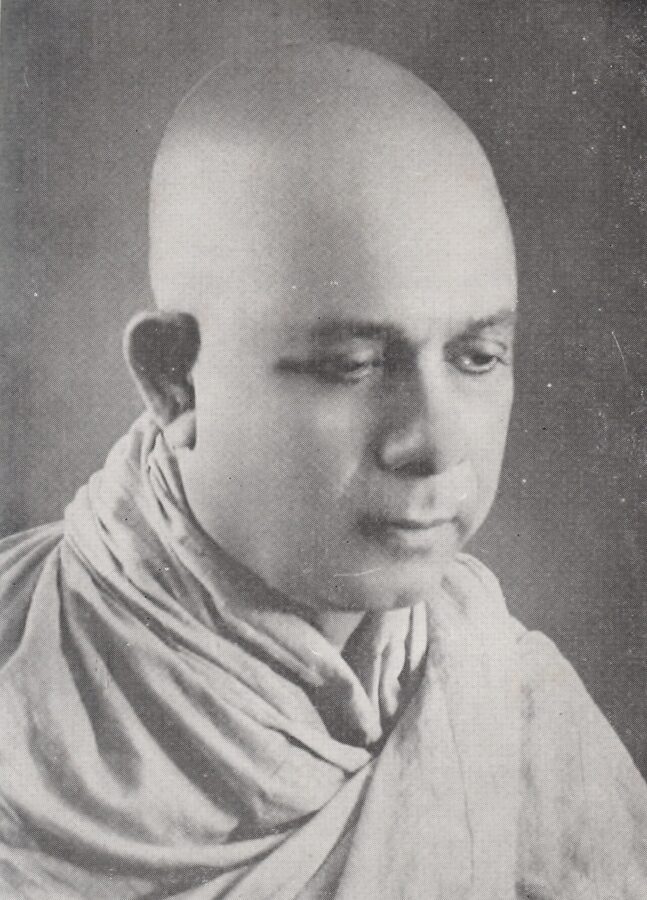
Two years later she passed it to the General Association of Vietnamese Buddhists, which entrusted it to the southern association. That body was then working out of Phước Hòa pagoda in the Bàn Cờ neighborhood, a cramped building whose abbot was a monk named Thích Quảng Đức. In 1955 the association decided the relic needed a proper home.
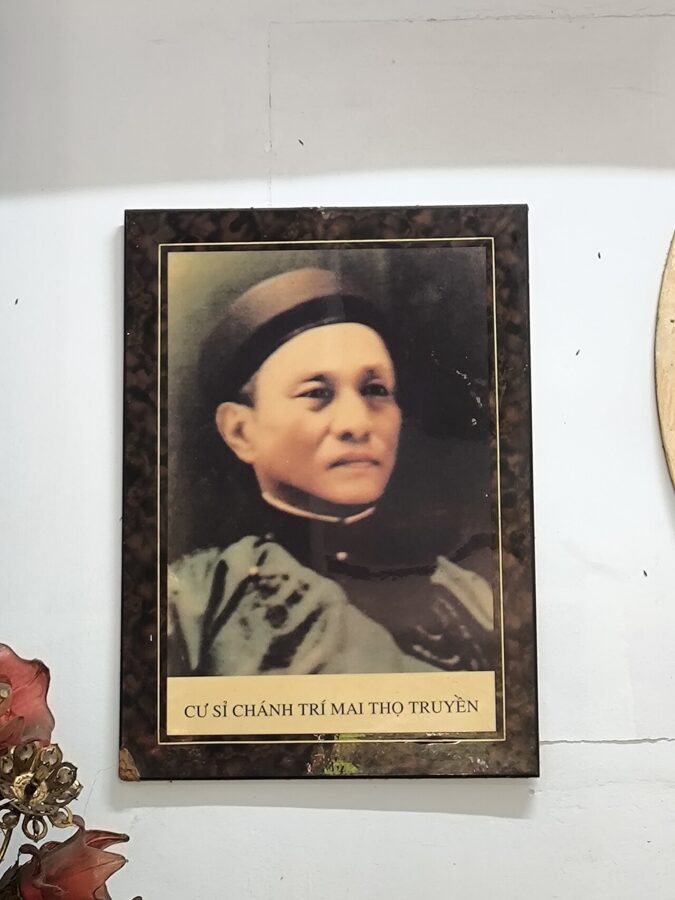
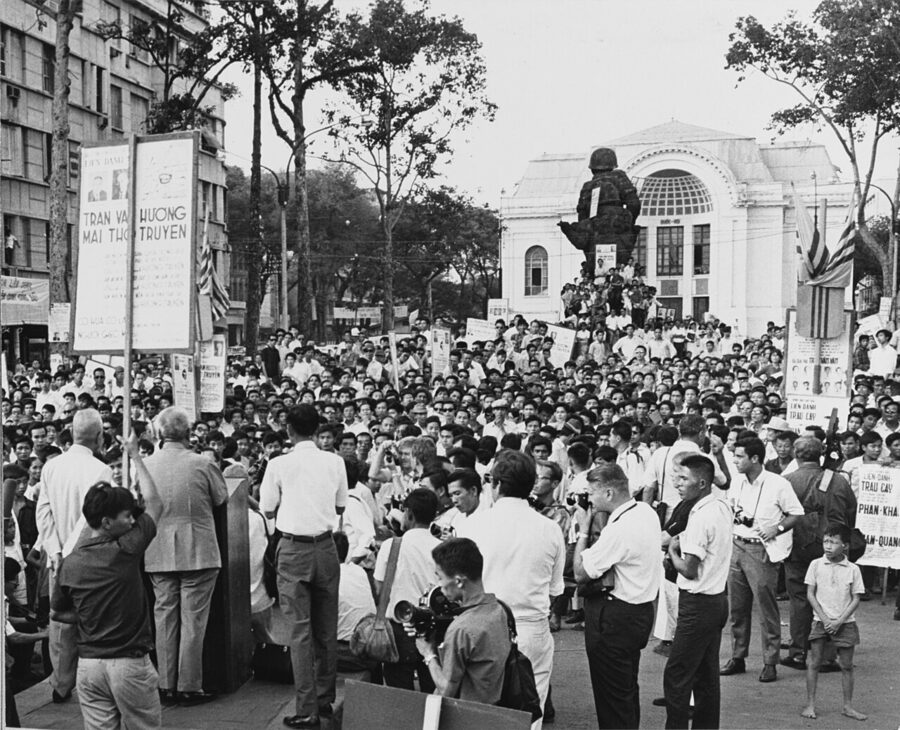
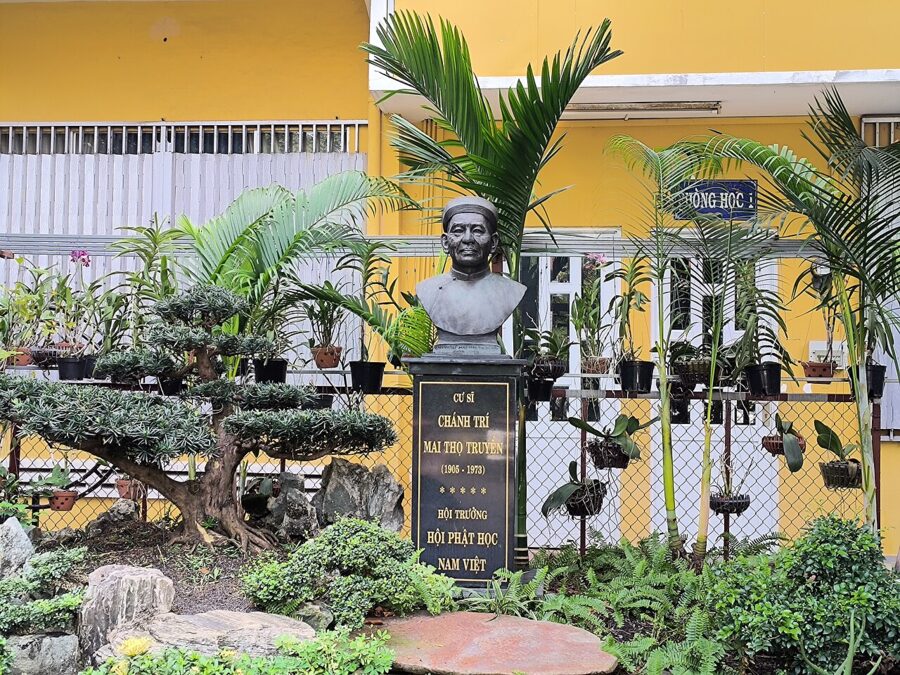
The driving force was a layman, Mai Thọ Truyền, the association’s president from 1955. A public appeal opened on 14 January 1956 with permission to raise up to five million piastres and closed that December with a little over three million, against an estimated cost of seven. The land came from the Indochina Club (Câu lạc bộ Đông Dương) for a symbolic single piastre. The pagoda gives the plot as a little over 2,500 square meters; some English reference works double that.

The architects were Trần Văn Đường and Đỗ Bá Vinh, the engineers Dư Ngọc Ánh and Hồ Tố Thuận. Work began on 5 August 1956 and finished on 2 May 1958. Asked to choose a name, the senior monk Thích Khánh Anh said people were already calling it the relic pagoda, so call it that.

Worship upstairs, lectures below
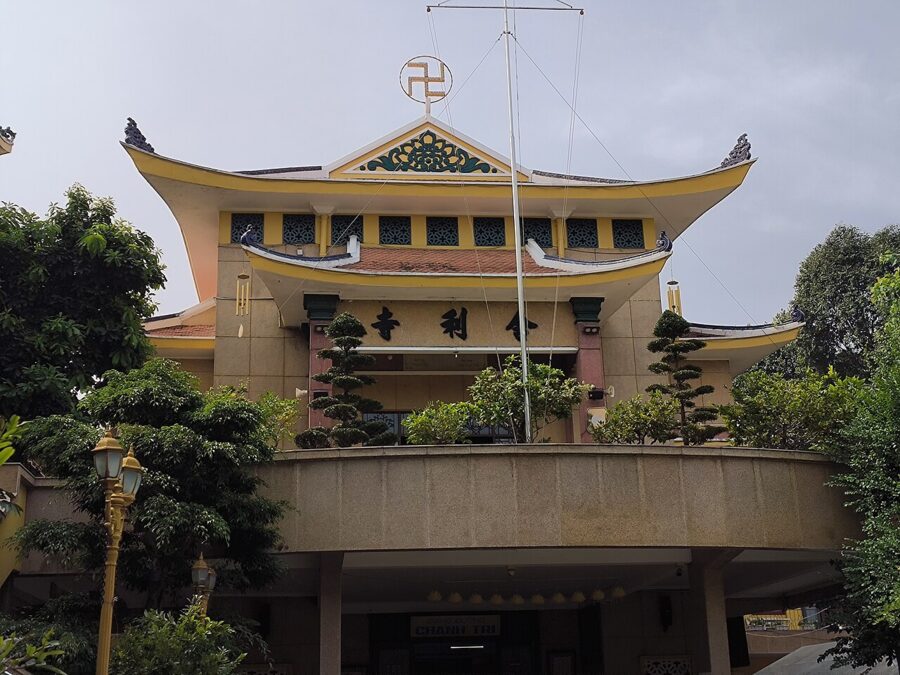
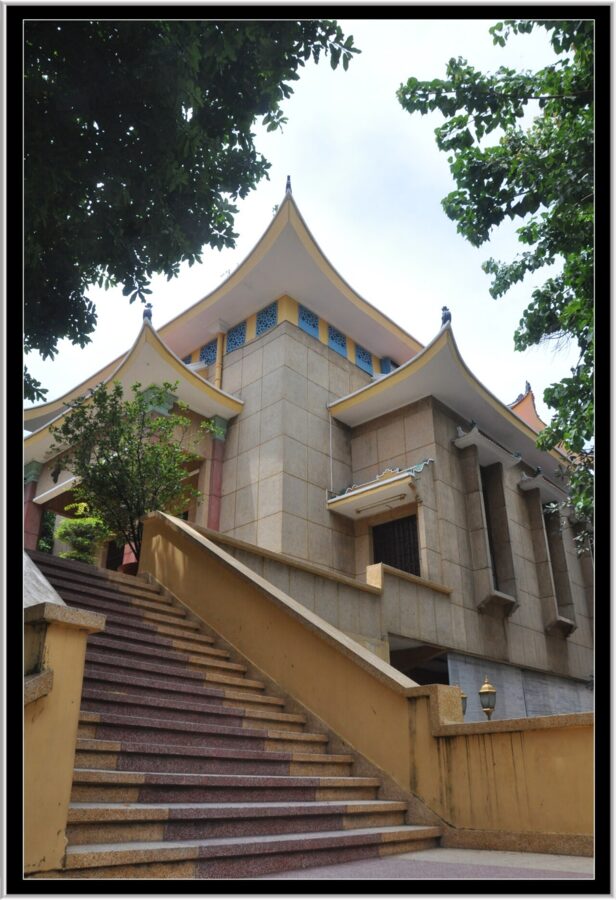
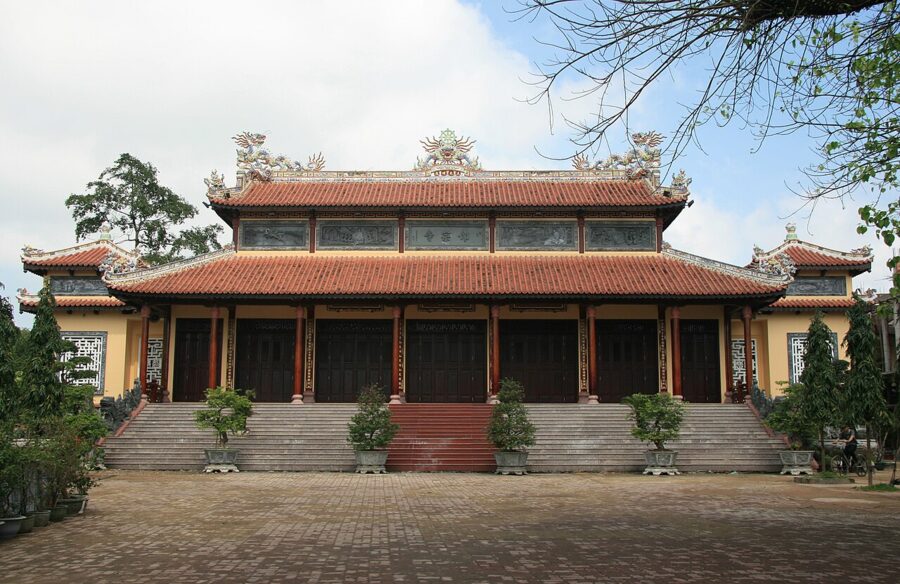
What made Xá Lợi new was the stacking. The pagoda calls itself the city’s first chùa lầu, a pagoda with an upper floor: the hall for worship on top and a 400-seat lecture hall beneath. Around them sit a library, monks’ quarters, a refectory, offices and a hall for the dead. A full restoration between 1999 and 2001 kept to the original plans, so the 1950s detailing, the pierced concrete screens and upturned eaves, is all still there.

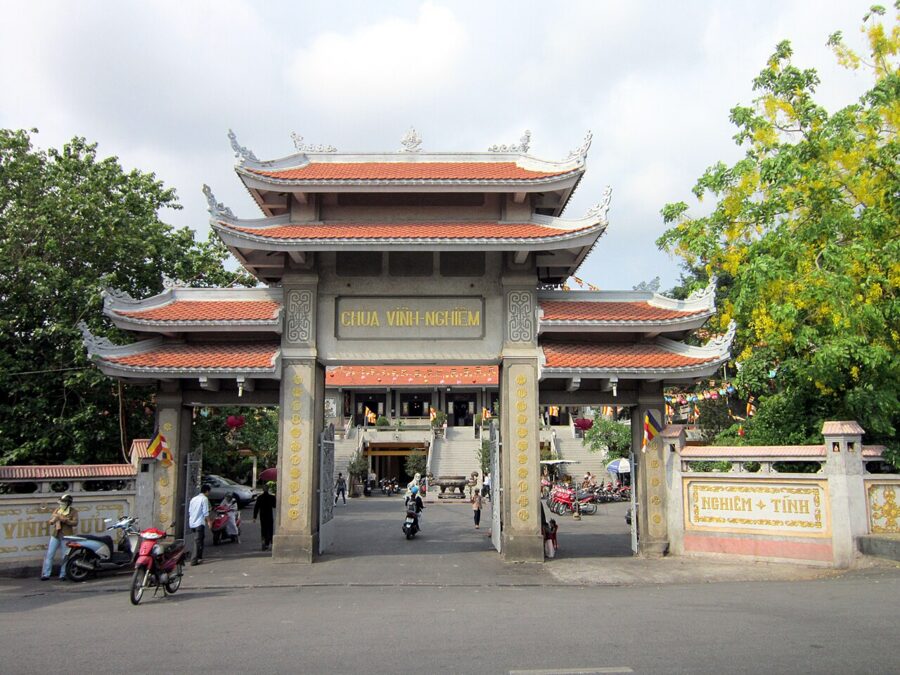
Vĩnh Nghiêm Pagoda, built a few years later, took up the same arrangement at a larger scale. It is bigger and better known to tour groups. Xá Lợi is smaller, calmer and closer to the center.


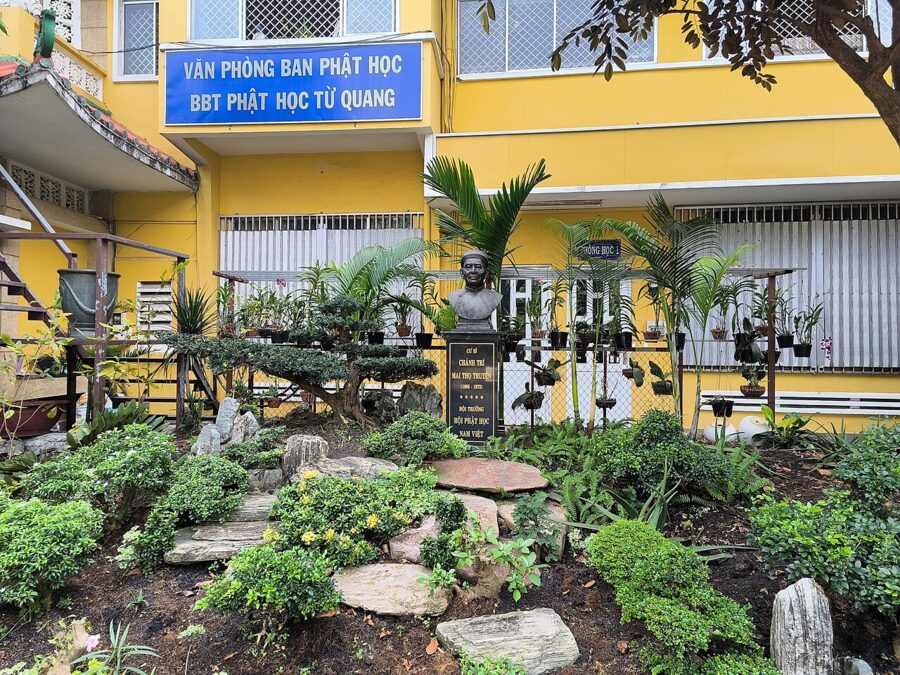
The lecture hall is named for Mai Thọ Truyền. In March 1963 the ambassador in Tokyo, Bùi Văn Thương, sent a horizontal board he had bought in Japan, four characters on brocade, Đông Thùy Pháp Vũ, which the pagoda attributes to the hand of the Empress Dowager Cixi. It hung over the lecture hall door until 1974. The association’s magazine Từ Quang came out from here twice a month from 1952 to 1974, and an editorial office of the same name still works in the compound.

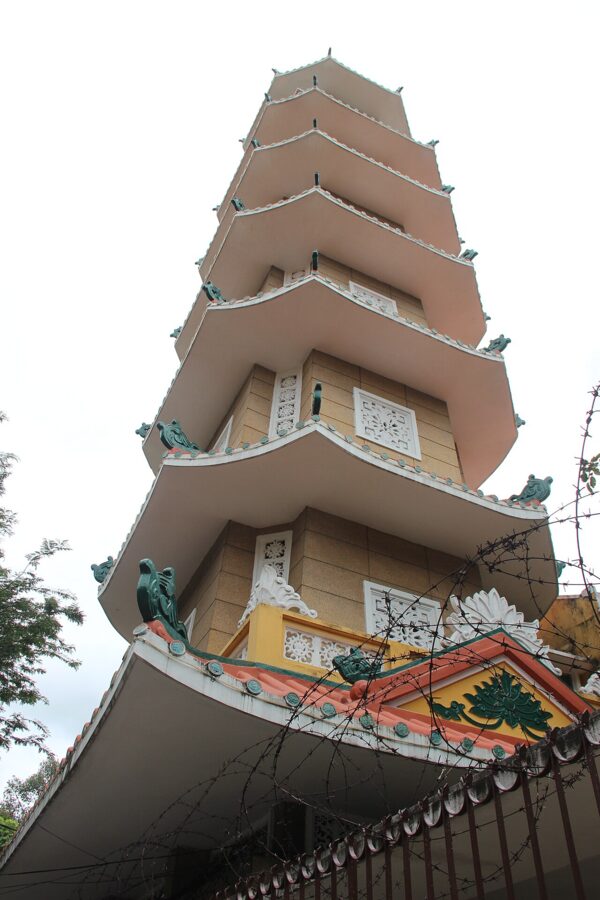
The seven-storey bell tower
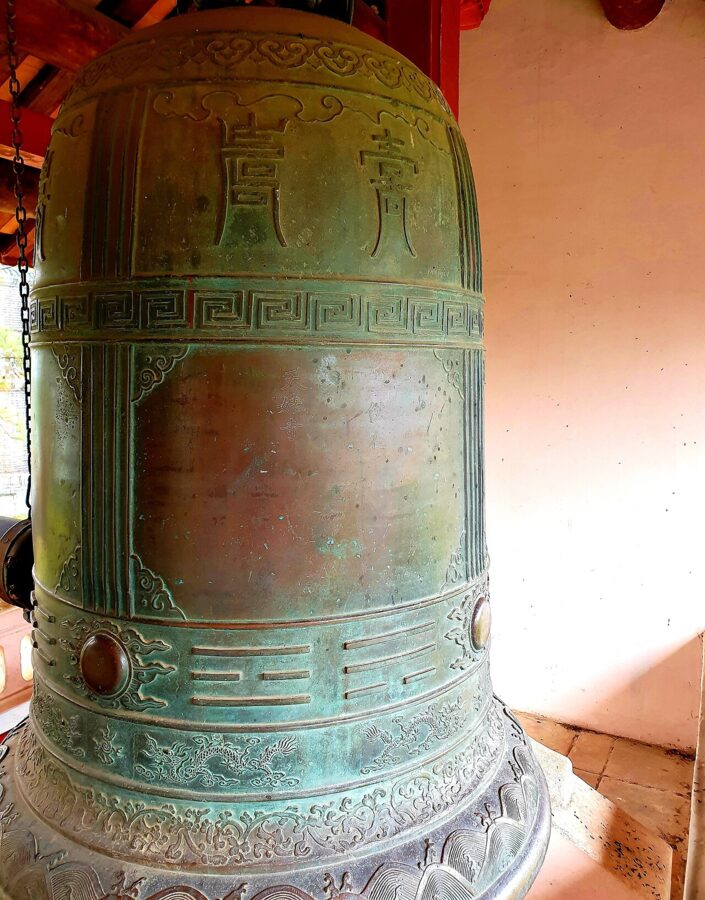
The tower came three years after the pagoda. Its bell, 1.2 meters across and 1.6 meters high, was cast in Huế in the third lunar month of 1961 on the model of the great bell of Thiên Mụ Pagoda. The pagoda dates the tower’s inauguration to the end of 1961, after eleven months of work; some accounts say 1960. A vọng cổ song by Viễn Châu, “Tiếng chuông chùa Xá Lợi” (The Bell of Xá Lợi), made its sound famous across the South.
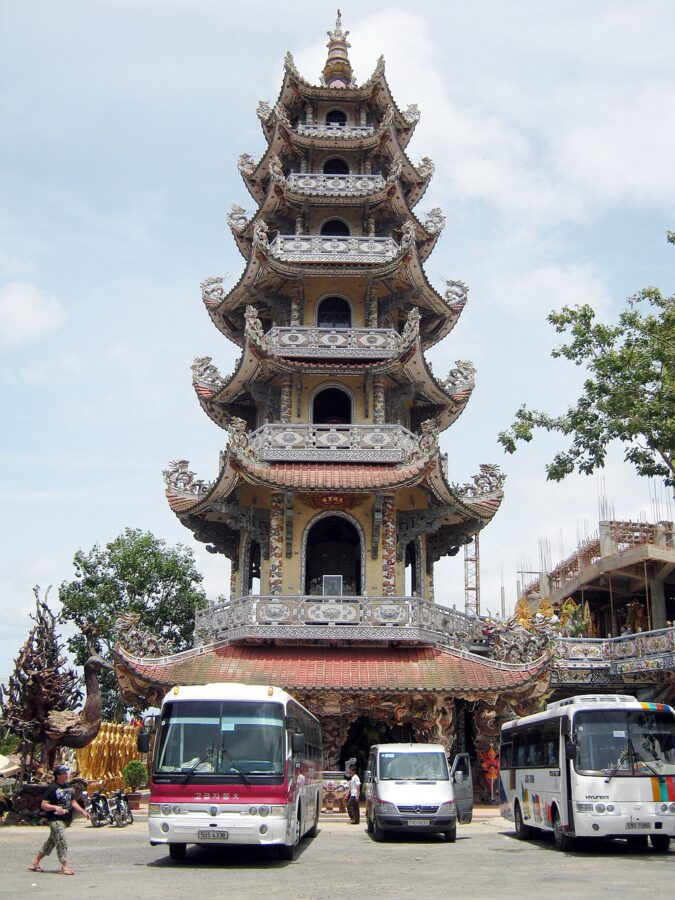
For decades it was called the tallest bell tower in Vietnam. That is no longer true: Linh Phước Pagoda near Đà Lạt now has one close to 38 meters. It is still the tallest in Saigon, and the best views are from the courtyard and from the Sư Thiện Chiếu corner.


Inside the main hall
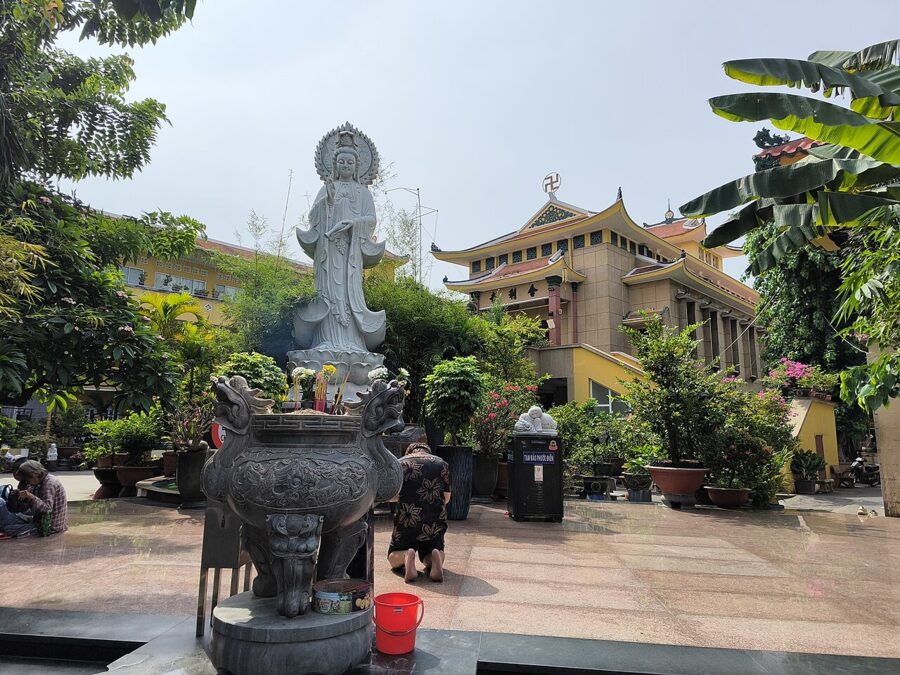
At the top of the stairs the hall opens as one long, bright room, tiled and pillared, with Buddhist flags between the columns and a single large Buddha at the far end. That statue has a story. The first version, modeled by the sculptor Trương Đình Ý in cement and plaster, came out too big to carry up the stairs and was given to another pagoda, where it is known as the “lonely Buddha” of Bình Chánh.
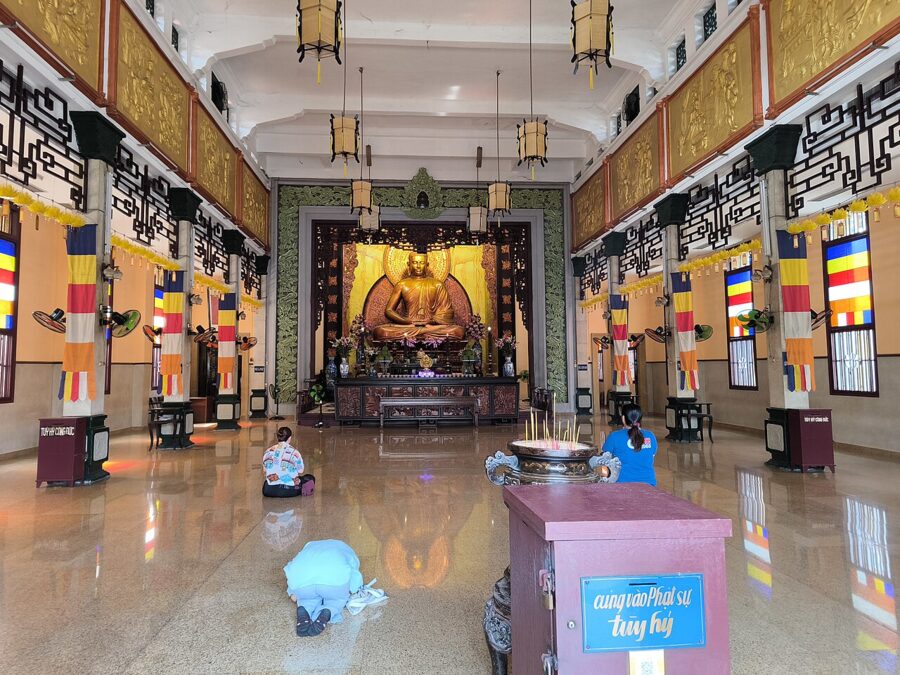

The Biên Hòa school of applied arts then made a seated Buddha in pink stone powder to fit the lotus throne already built. It was installed just before the Lunar New Year of 1958 and gilded all over in 1969: Shakyamuni in meditation, in a monk’s robe, with a halo behind his head. The pagoda calls it a Buddha in a wholly Vietnamese style, a model for many made afterward.
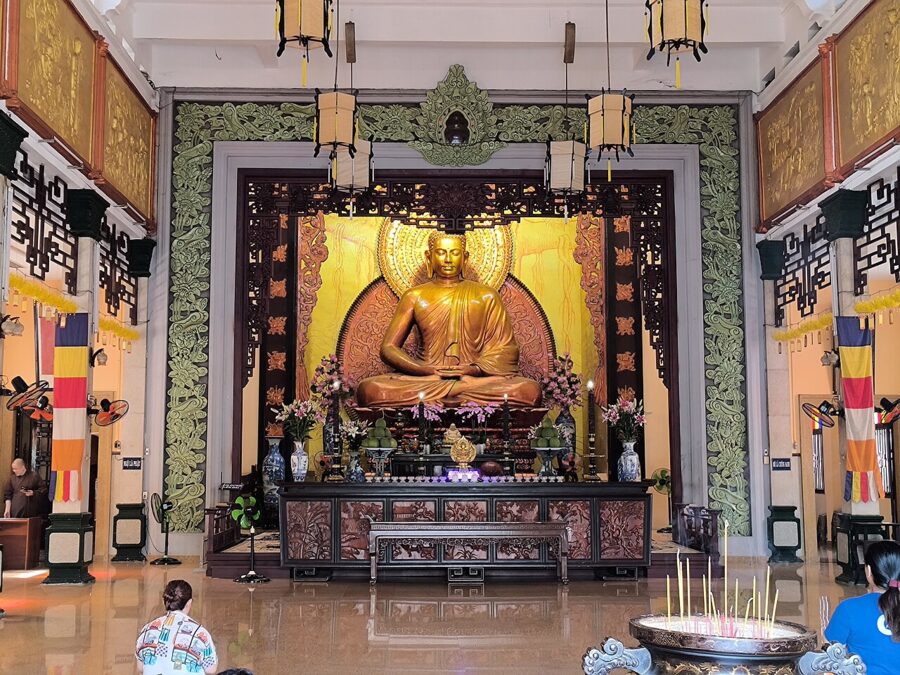

The relic is in a small golden stupa on the altar in front of the statue. The pagoda counts two more treasures alongside it: a palm-leaf manuscript in Pali of the Buddha’s first sermon, given by the Sri Lankan monastic order to the monk Thích Quảng Liên and installed here on 16 June 1957, and a silver stupa holding a relic of the nineteenth Changkya Hutuktu, a lama from Qinghai who died in Taipei in 1958.
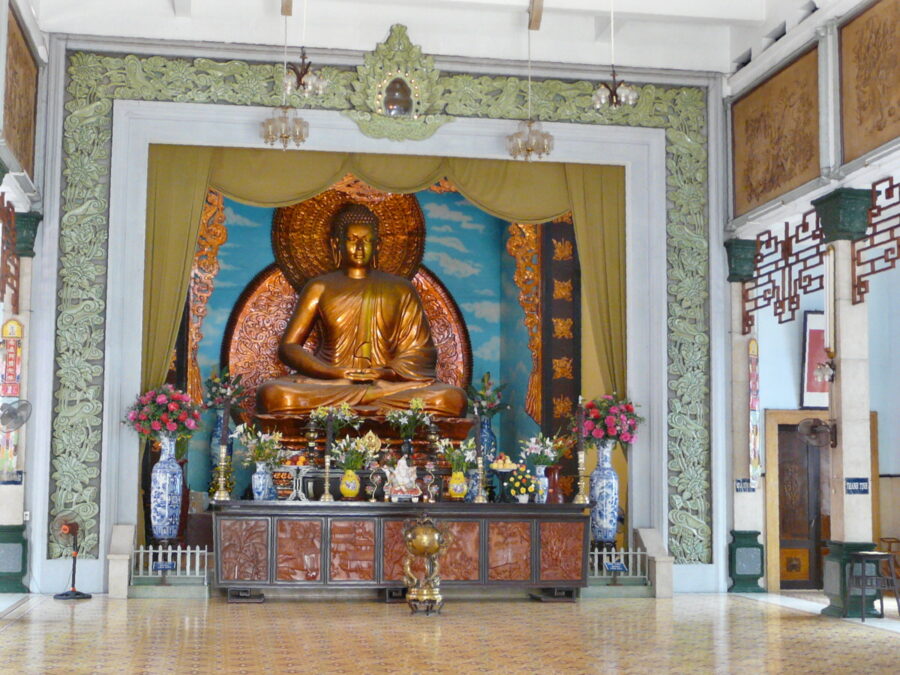
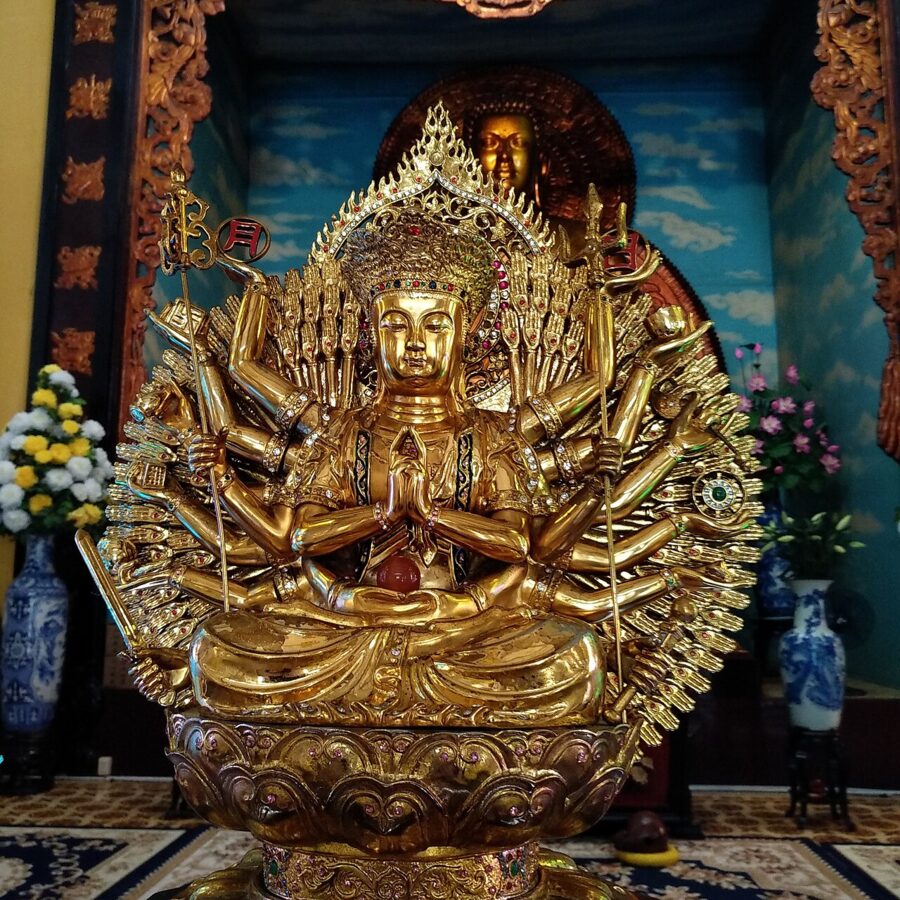
Beside the hall grows a bodhi tree, a cutting from Sri Lanka that Narada brought with the relics, planted at the end of 1958. Inside, look for the golden, many-armed Cundi (Chuẩn Đề), whose hands hold a sword, a wheel and a trident among other emblems.

Fifteen scenes from the Buddha’s life
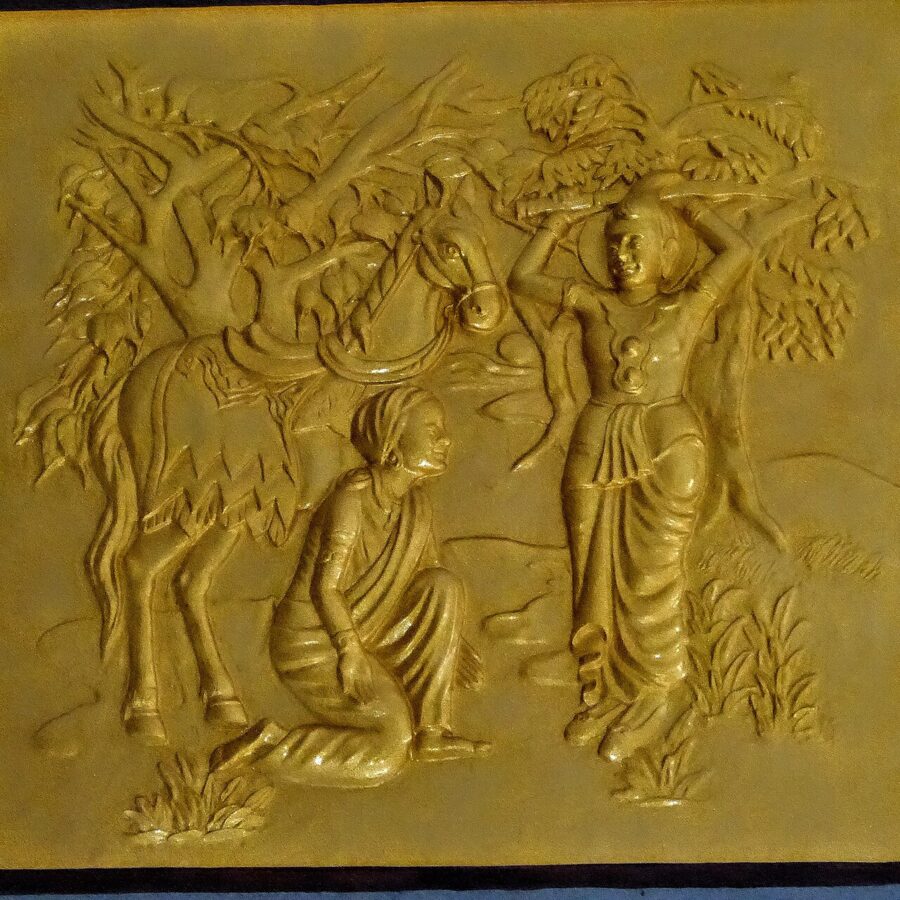
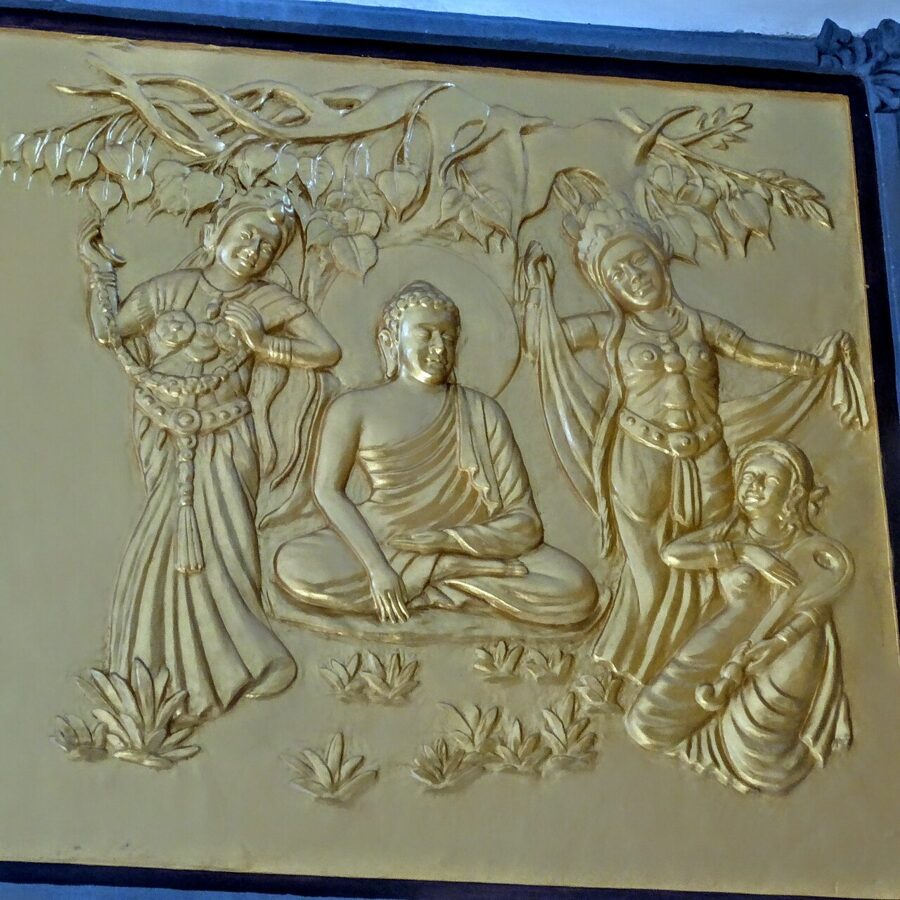
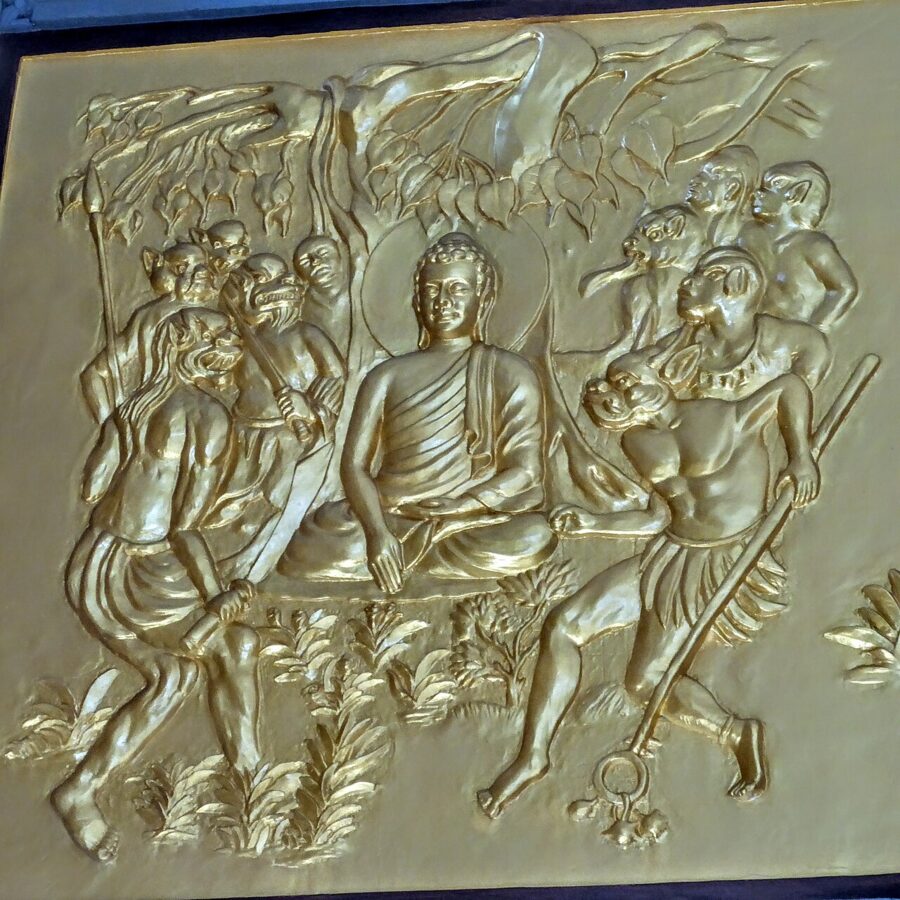
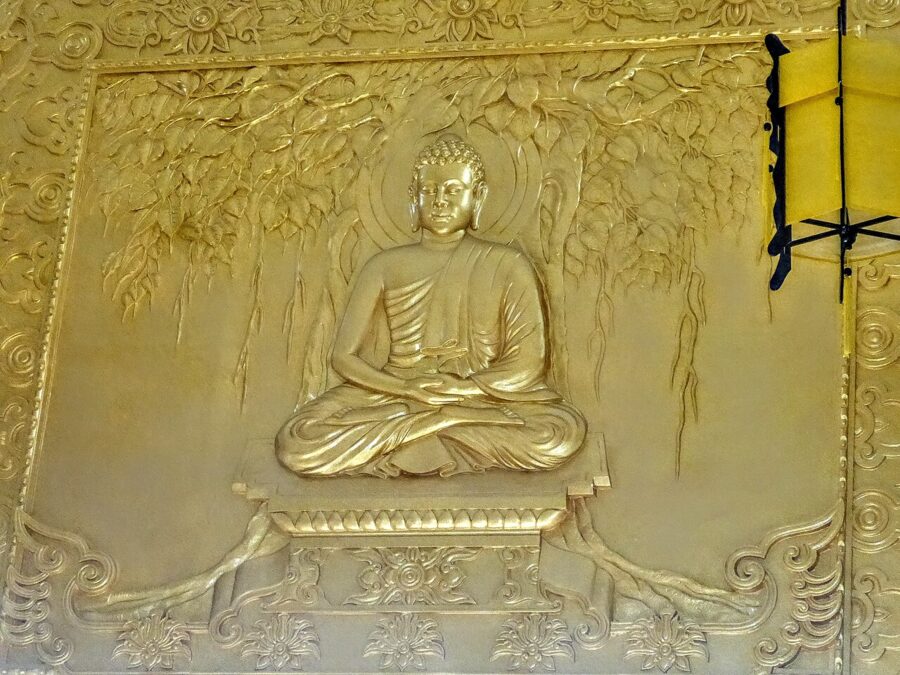
Run your eye along the top of both side walls. Large panels tell the Buddha’s life from birth to final release, made in 1958 by Nguyễn Văn Long of the Gia Định School of Fine Arts. The pagoda counts fifteen; English descriptions list fourteen scenes, from Queen Māyā’s dream of a white elephant to the reclining Buddha entering nirvana. They were made in powder paint set into the wall and worked to stand out like carving, and today they read as gilded reliefs.
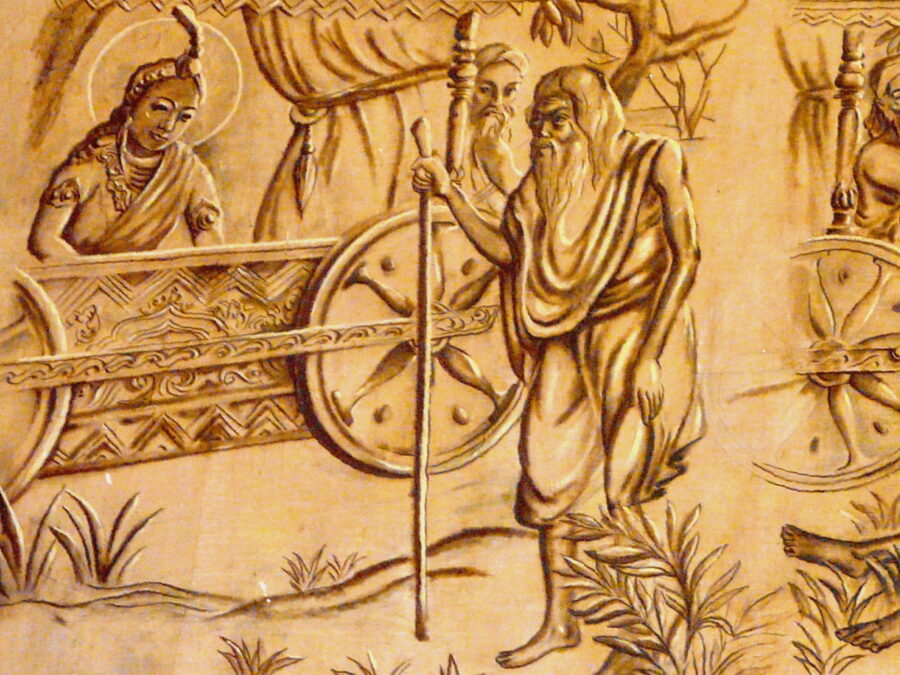
Each one rewards a minute. The prince sees an old man, a sick man, a corpse and a monk; he leaves his sleeping family; Māra’s daughters and demons fail to shake his meditation; he preaches in the deer park. One panel shows a woman falsely accusing him of fathering her child, a story few visitors know, and another the conversion of the murderer Aṅgulimāla.




1963: the headquarters of a protest
The crisis began in Huế. On 8 May 1963, Vesak, the Buddha’s birthday, the authorities enforced a rarely used decree against flying religious flags, a week after Catholic flags had flown for Archbishop Ngô Đình Thục, the president’s elder brother. Crowds gathered at the Huế radio station, the security forces fired, and people died. Seth Jacobs’s Cold War Mandarin and most Western histories count nine dead; the Vietnamese Buddhist historian Nguyễn Hiền Đức counts eight.

The Buddhists answered with five demands: the right to fly their flag, legal equality with Catholics, an end to arbitrary arrests, compensation for the victims and punishment of those responsible. By mid-May the movement’s center was Xá Lợi, the largest pagoda in the capital, with room for hundreds of monks and the foreign correspondents a short ride away. On 16 May the Buddhist delegation held a press conference here, and on 21 May 350 monks and nuns marched in silence from Xá Lợi toward the National Assembly.
On 25 May an Intersect Committee for the Defense of Buddhism was founded at Xá Lợi and ran the campaign from here. On 30 May police ringed the streets while nearly 400 monks and nuns fasted inside. The government held, as revisionist historians such as Mark Moyar later argued, that the movement was being exploited politically and persecution exaggerated; a United Nations fact-finding mission that autumn reached no firm finding. The Buddhists, and most of the foreign press, saw a Catholic family treating the majority religion as second class.
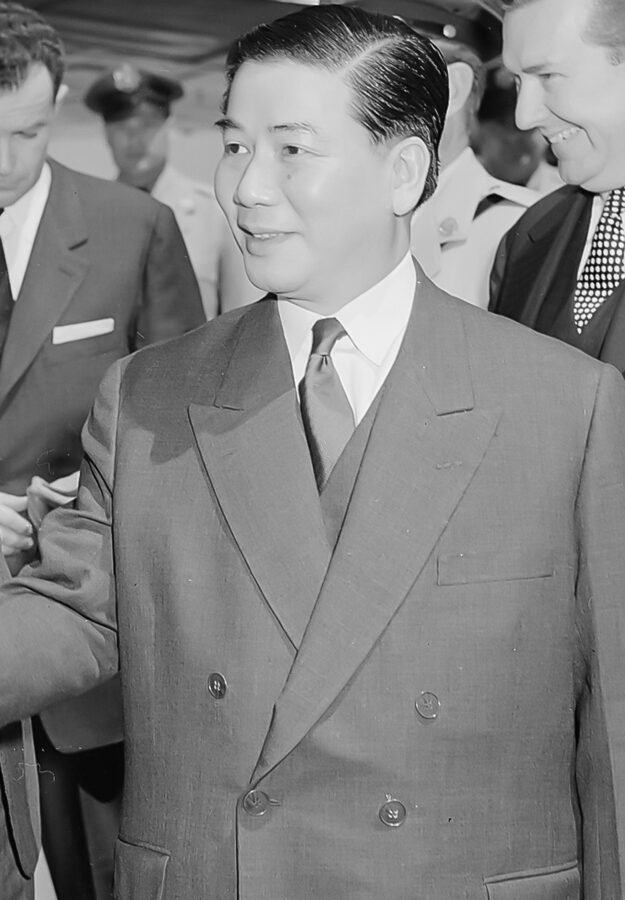
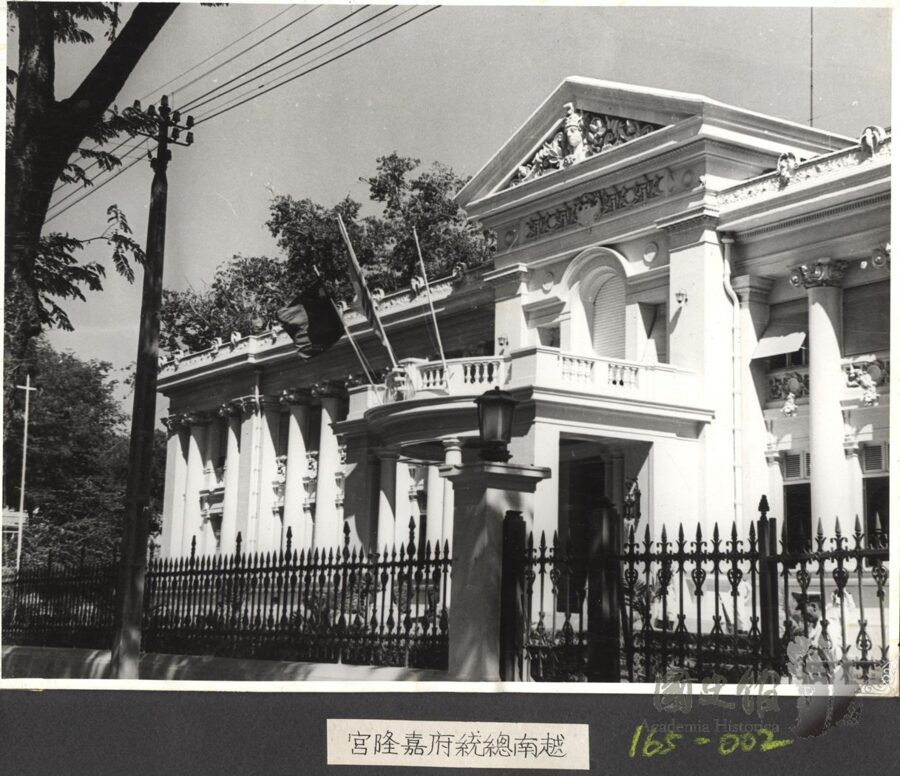
The other side of the story is a short ride away. Diệm worked from Gia Long Palace while the new Independence Palace was being built, and in 1959, the year he dedicated the country to the Virgin Mary, a statue of Our Lady of Peace rose in front of Notre-Dame Cathedral.
11 June, at the crossroads
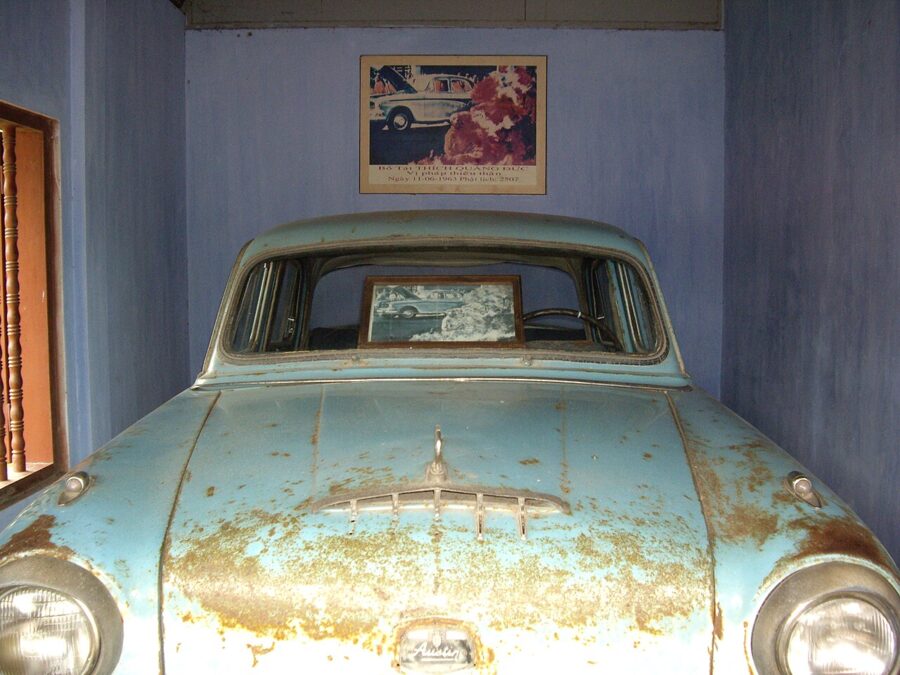
On the morning of 11 June about 350 monks and nuns marched behind a pale blue Austin to the intersection of Phan Đình Phùng and Lê Văn Duyệt, today Nguyễn Đình Chiểu and Cách Mạng Tháng Tám. The pagoda’s history says the procession set out from Phật Bửu pagoda; the sign beside the car in Huế says Ấn Quang. Thích Quảng Đức, 66, got out and sat down in the road in the lotus position. A fellow monk poured petrol over him, and moments later he was in flames.
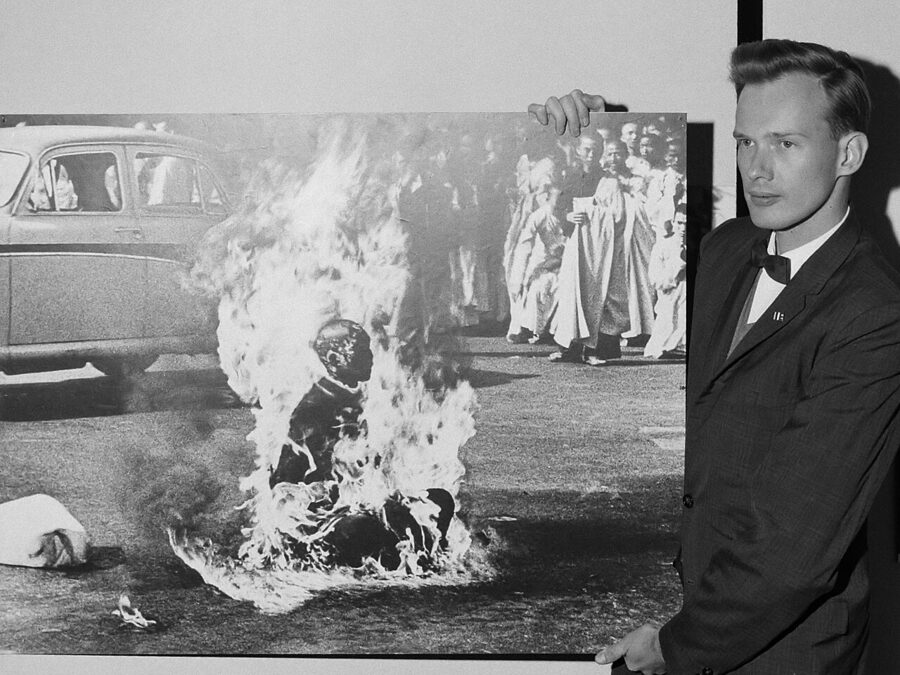
Few foreign reporters had believed the tip. Two who did were David Halberstam of The New York Times, who described the scene in The Making of a Quagmire, and Malcolm Browne of the Associated Press, whose photograph went around the world within hours. President Kennedy is reported to have said that no news picture had ever generated so much emotion.
The body came back to Xá Lợi in a coffin too small for it. By half past one some 1,000 monks had gathered here behind a human barrier of students, and that evening police arrested thirty nuns and six monks praying in the street outside. On 19 June the remains were cremated again at a cemetery south of the city. The heart did not burn, and it was kept at Xá Lợi in a glass chalice as a relic.
Five days after the burning, both sides signed a Joint Communiqué. It held for a day. On 17 June police tried to keep a crowd of about 2,000 away from Xá Lợi, and in the riot that followed one protester was killed.
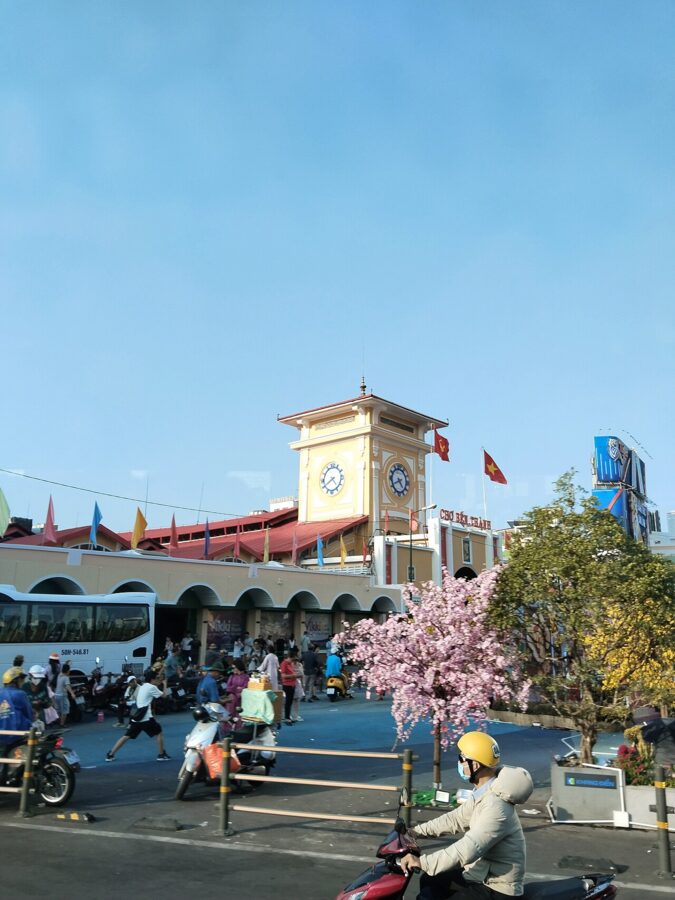
Madame Nhu, the president’s sister-in-law, told reporters she would “clap hands at seeing another monk barbecue show”. More monks and nuns burned themselves that year, one of them in front of Bến Thành Market in October.
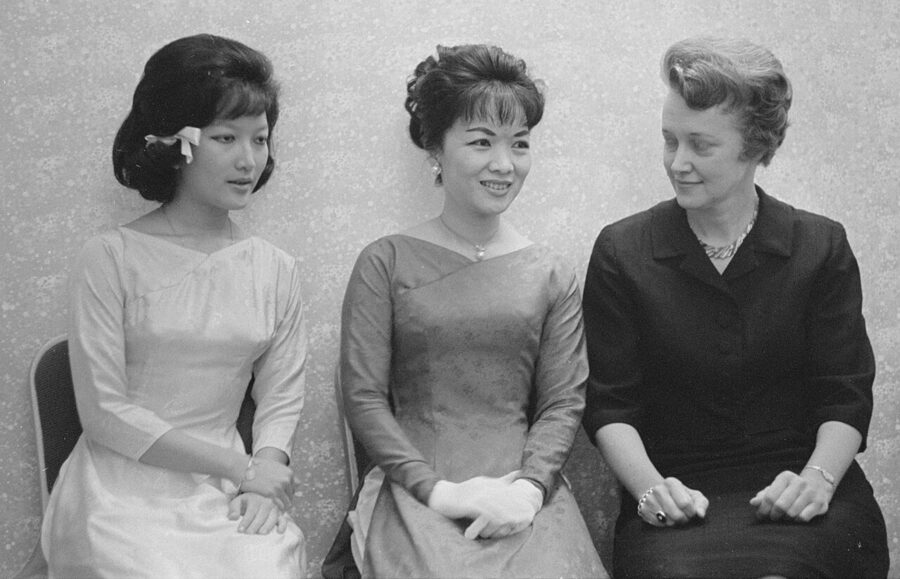
The night of 20 August
Through July and August Xá Lợi was fortress and stage at once. Monks fasted, wounded veterans came to pledge support, and on 18 August, the pagoda says, more than 30,000 people came to a memorial for those who had burned themselves. Two days later the generals asked Diệm for martial law. Nhu used it as cover.
At about 20 minutes past midnight, Special Forces under Colonel Lê Quang Tung, wearing ordinary army uniforms, and truckloads of combat police smashed through the gates while the monks beat the gong. The pagoda’s history describes about 200 attackers, tear gas thrown into the hall, the altar to Thích Quảng Đức overturned and the Buddha statue itself damaged, and some 250 monks and nuns arrested. Across the country more than 1,400 were taken that night.
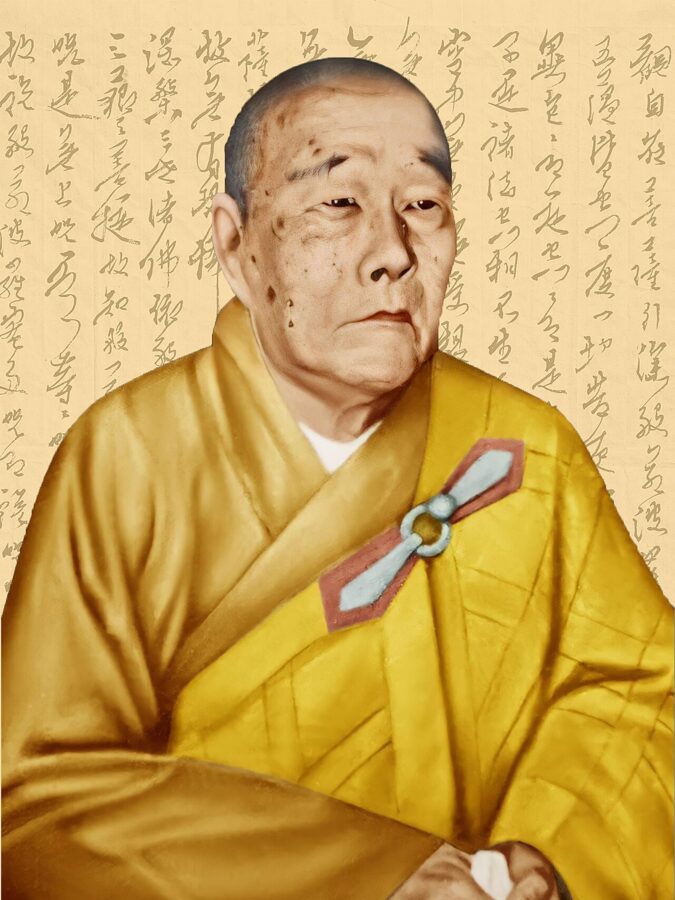
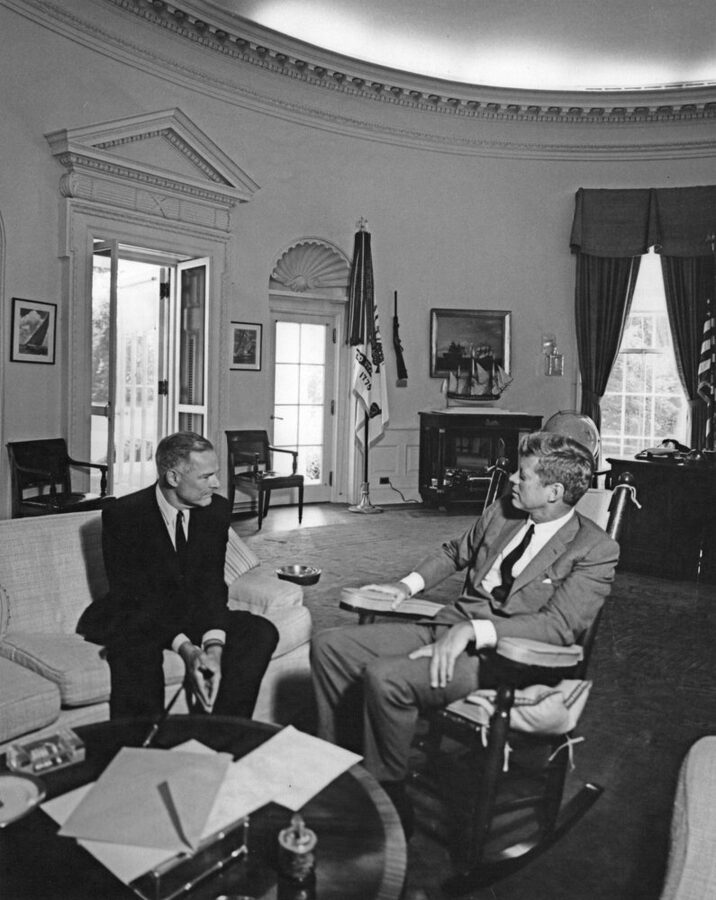
The soldiers took the heart; some Buddhists say what they seized was a decoy. A few monks escaped with the urn of ashes, and two others went over the back wall into the United States aid mission next door, whose staff refused to hand them over. The new ambassador, Henry Cabot Lodge, landed the next evening, visited the two monks and ordered vegetarian food for them. The elderly patriarch Thích Tịnh Khiết was taken to a military hospital.

After the raid
The raids cost Diệm what American support he had left. On 24 August Washington cabled Lodge that the Nhus had to go; on 1 November the army overthrew the government, and Diệm and Nhu were killed the next morning. From 31 December 1963 to 4 January 1964 Buddhist leaders met at Xá Lợi to write the charter of the Unified Buddhist Church of Vietnam.
Later years were quieter. Classes of the Buddhist college that became Vạn Hạnh University met here from 1964 to 1966. From 1981 to 1993 Xá Lợi housed the southern office of the Vietnam Buddhist Sangha, which the building association had helped found.
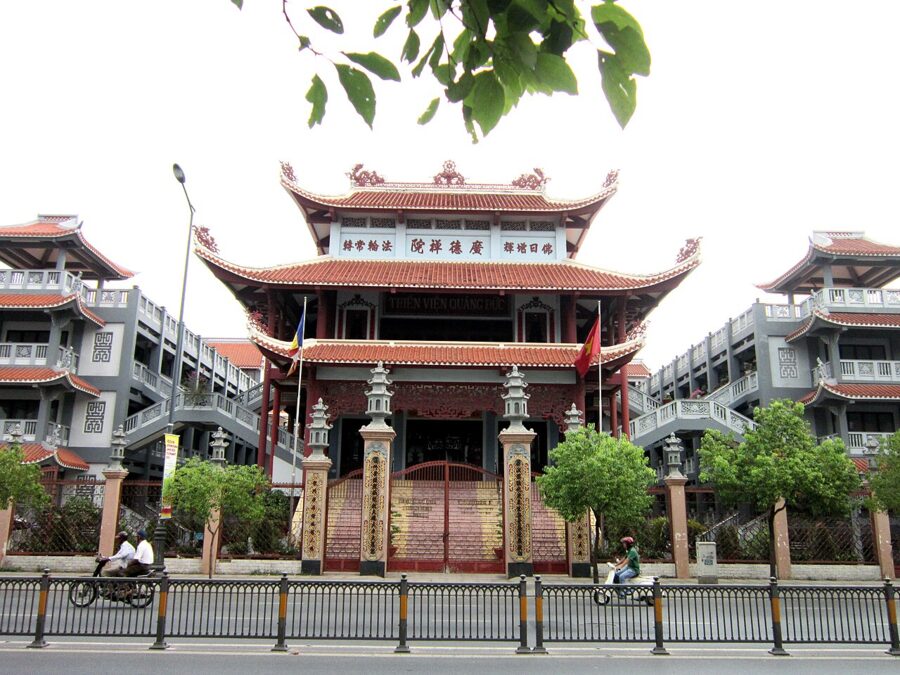

The pagoda today
Xá Lợi is a working pagoda, not a museum. The abbot is the Most Venerable Thích Đồng Bổn. It marks Phật Đản, the Buddha’s birthday, by bathing a statue of the infant Buddha in the main hall, and Vu Lan, the festival of filial gratitude at the full moon of the seventh lunar month, when the rains retreat ends and lay people make offerings to the monks. In 2026 the retreat brought 37 monks here.
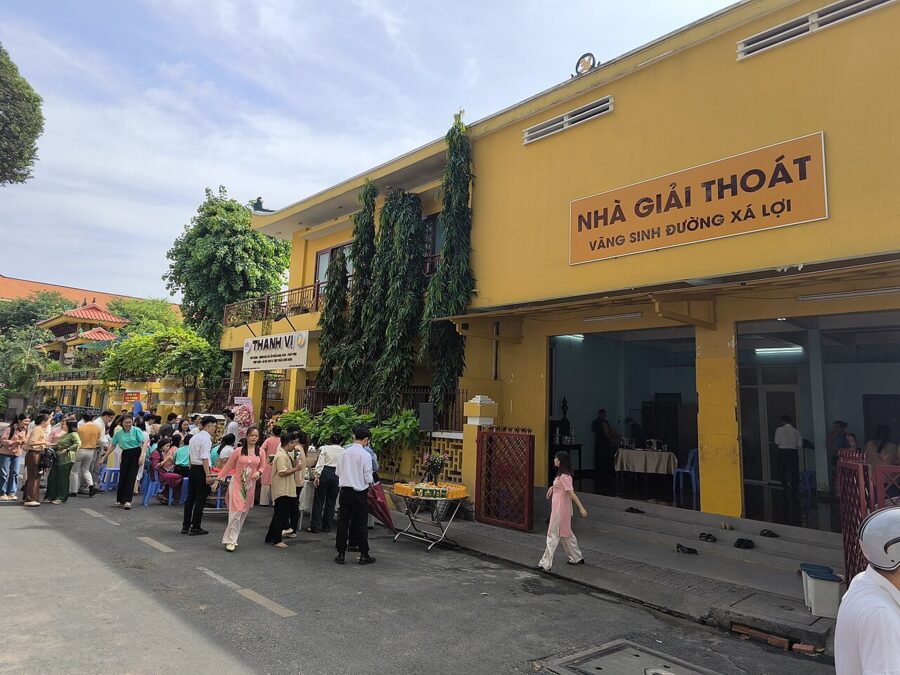

Smaller rites fill the year: a three-day Medicine Buddha service, memorial days for former abbots, refuge ceremonies for new lay Buddhists. Sunday mornings have long been the busiest, with a dharma talk in the lecture hall, and the afternoons belong to classes and the Buddhist Youth Family (Gia Đình Phật Tử).

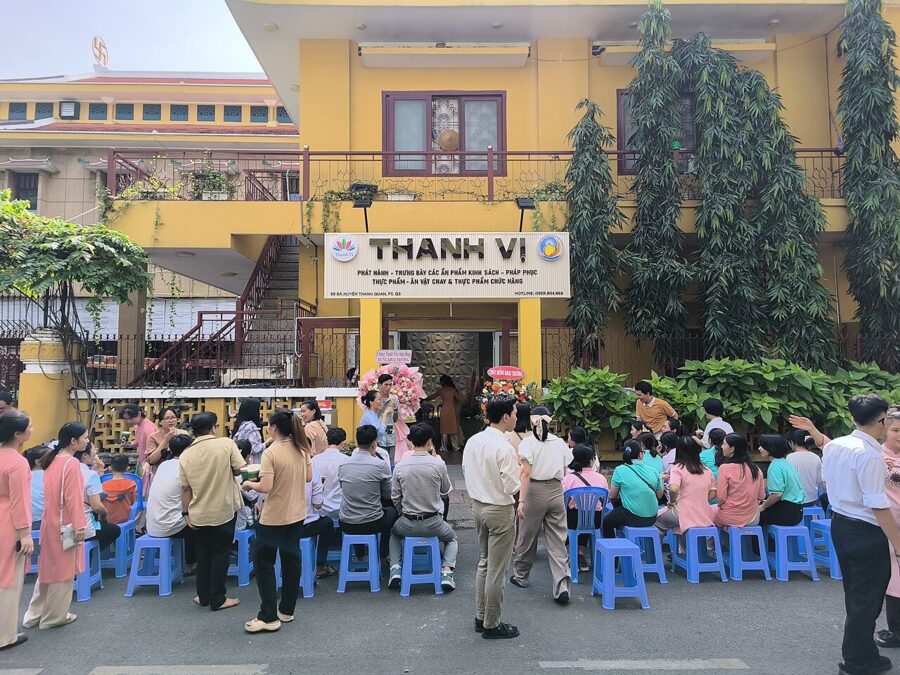
On a festival day expect crowds, loudspeakers and a line for the stairs: the best time to see the pagoda in use, and the worst for the panels. Phật Đản usually falls in May and Vu Lan in August or early September; lunar dates shift every year.

Walk on to the Thích Quảng Đức memorial
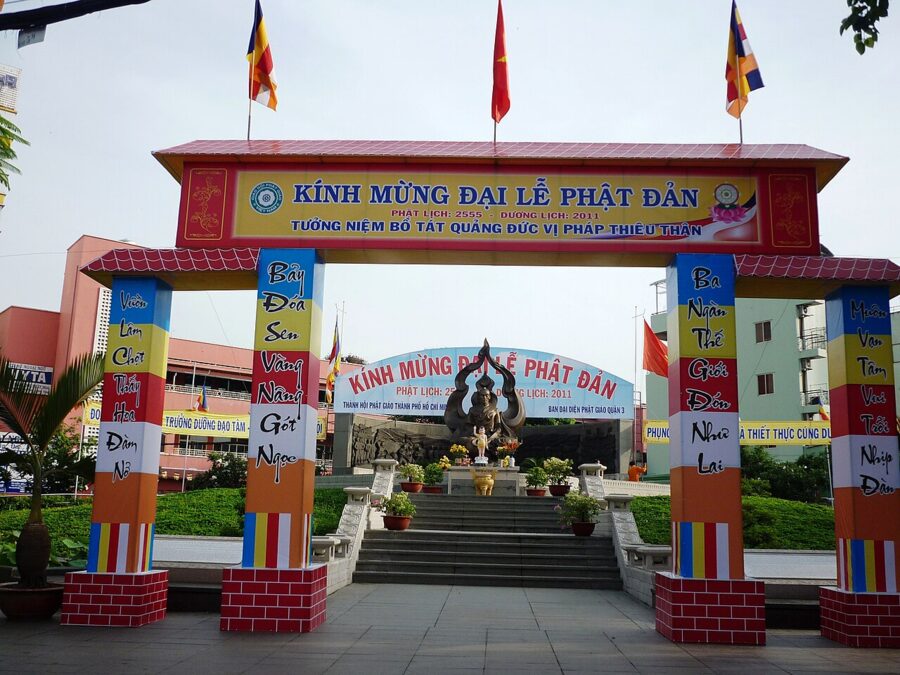
The crossroads is about 300 meters from the pagoda gate, five minutes on foot. Since 18 September 2010 its corner has been a park of nearly 2,000 square meters, with a 6.3-meter bronze of the monk seated inside a heart-shaped flame, chosen in a design competition.
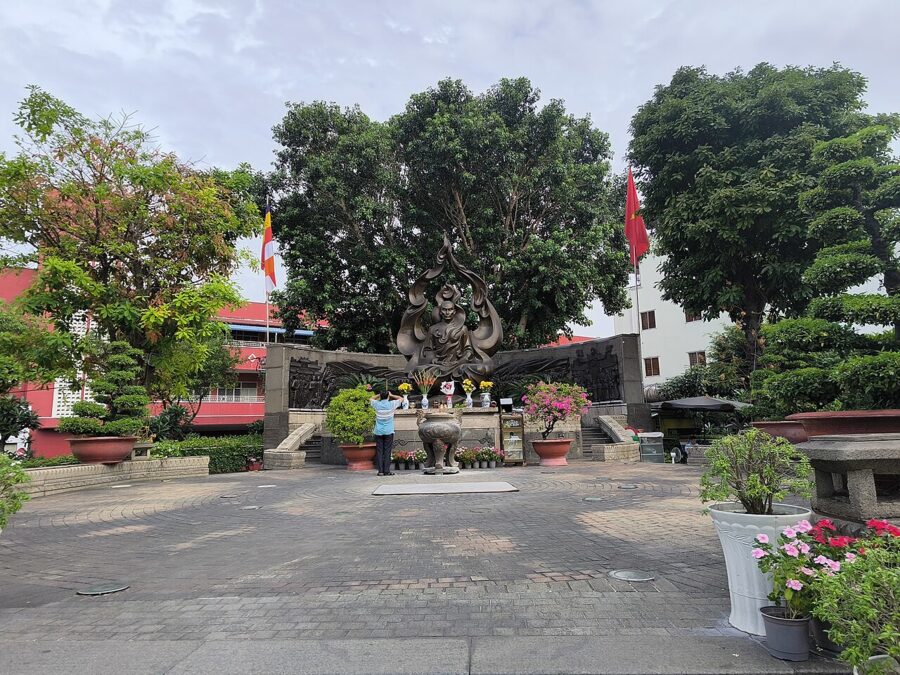

Behind the statue, curved bronze walls show the march: monks with banners, police, the crowd, the flames. The traffic on Cách Mạng Tháng Tám does not slow for any of it. The city’s second metro line, under construction since January 2026, follows this road north-west and is due to open by 2030.
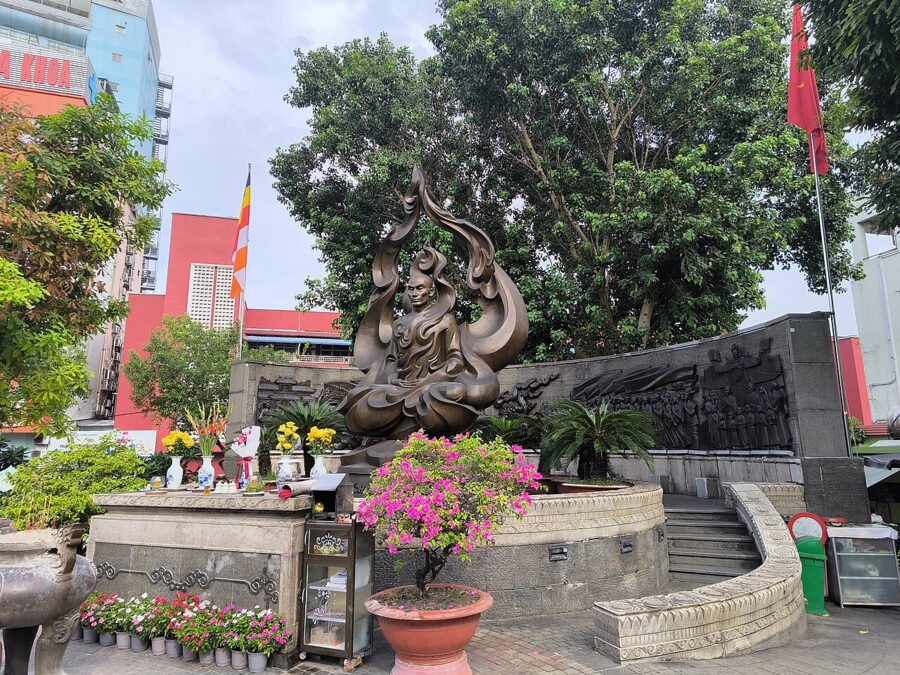

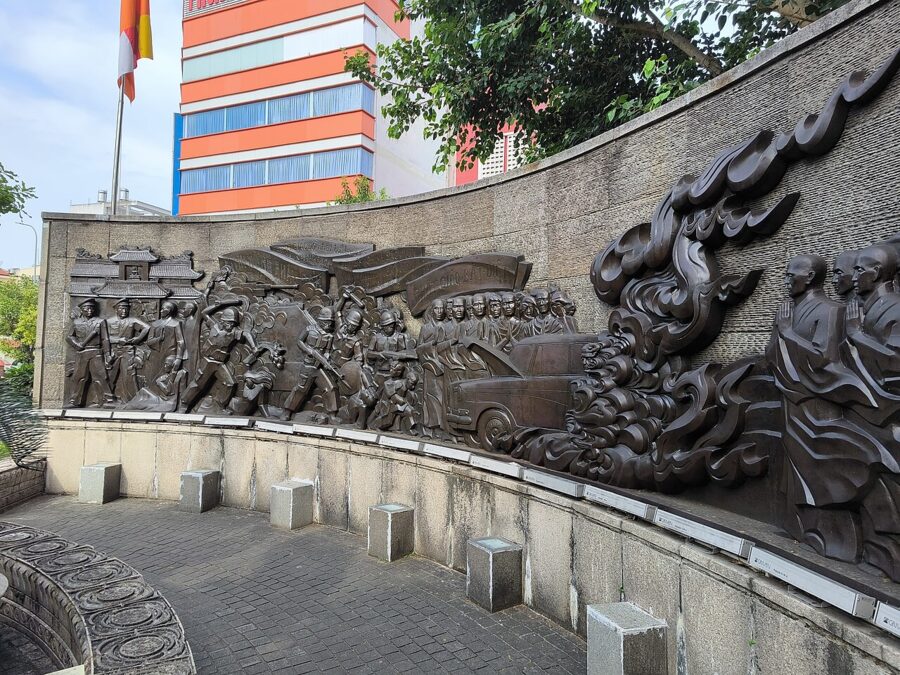

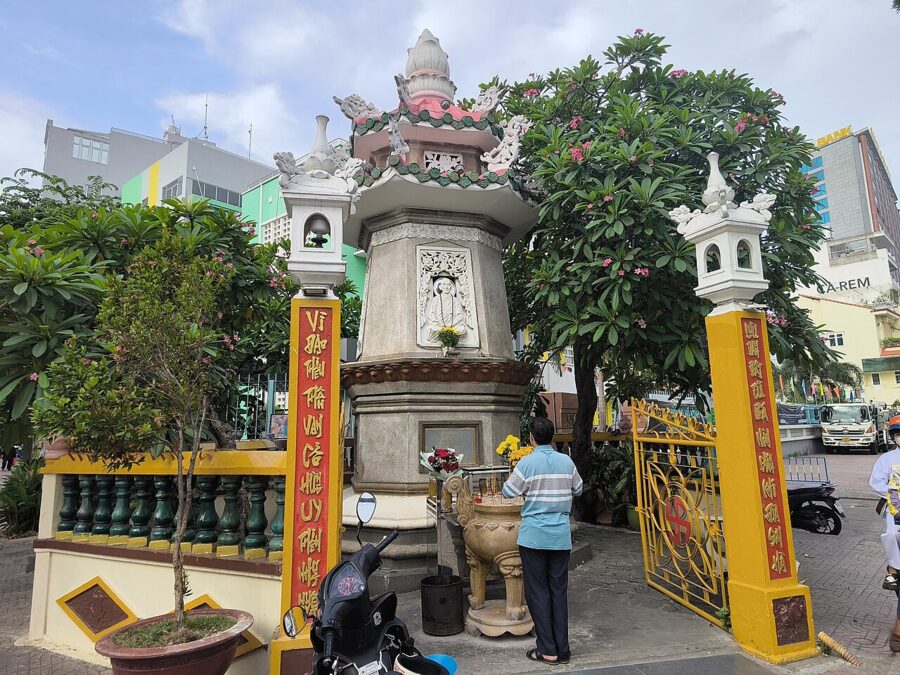
At the south end of the park a small stupa carries the monk’s name. It is easy to miss behind the trees, and it is the quietest spot on the corner.


How to visit
| Address | 89 Bà Huyện Thanh Quan, Xuân Hòa ward (formerly District 3), at the corner of Sư Thiện Chiếu |
|---|---|
| Entry | No ticket; a donation box stands in the main hall |
| Hours | No visiting hours are published; come in the morning |
| Time needed | 45 minutes to an hour, plus 20 minutes for the memorial |
| Dress | Shoulders and knees covered; shoes off at the hall door |
Mornings are best, for the light in the hall and because that is when people come to pray. Midday heat here is punishing, and from roughly May to November afternoon storms are common. Sunday morning is the liveliest time. With no hours posted, don’t leave the pagoda for the end of a long afternoon.
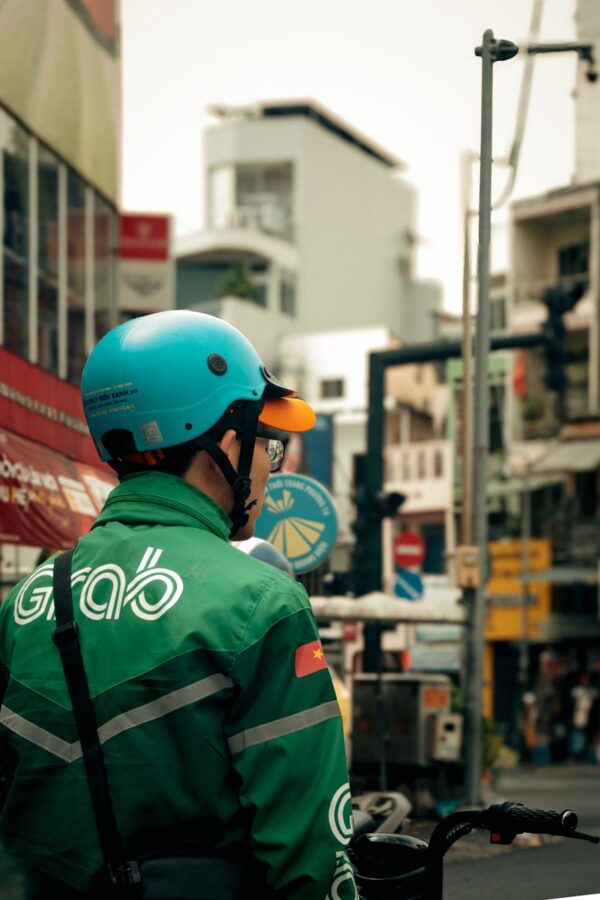
Grab and Be will drop you at the gate on Bà Huyện Thanh Quan; from the backpacker streets around Phạm Ngũ Lão it is about ten minutes outside rush hour. Metro Line 1 doesn’t come close: Bến Thành, its nearest station, is about two kilometers away. On foot the pagoda is about 15 minutes west of the Reunification Hall and under ten from the War Remnants Museum, a natural pairing if you want 1963 alongside what followed.
Inside, speak quietly, don’t point your feet at the altar if you sit, and don’t step over anyone praying. Photographs of the hall and panels are common, but ask before photographing anyone at prayer, and put the camera away during a ceremony.
On to Tân Định church
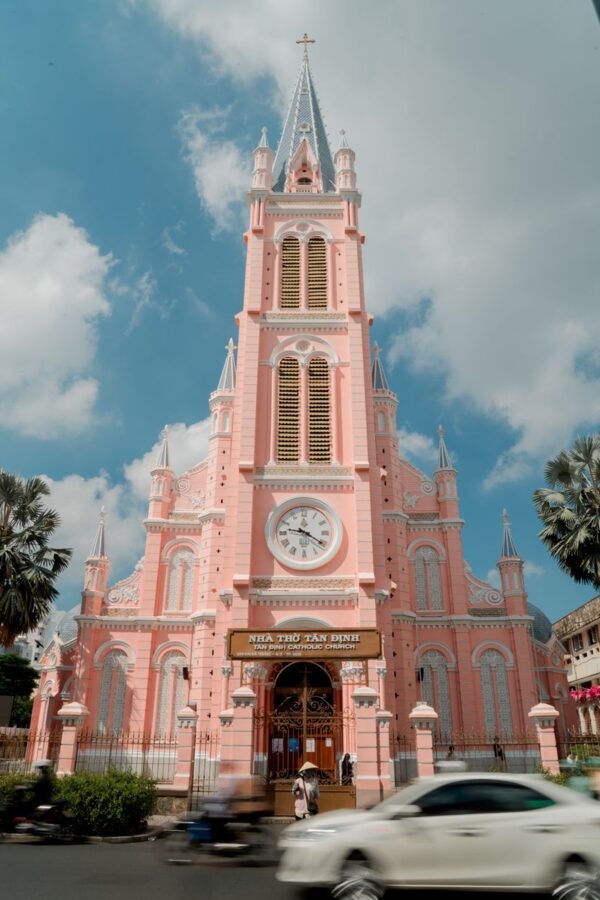
From the memorial you can make a loop of the area’s two faiths. Tân Định Church on Hai Bà Trưng Street is about a kilometer and a half north of the pagoda, a 20- to 25-minute walk or a short Grab ride. It is the pink church on every Saigon postcard, Gothic in outline and Romanesque in detail, and a busy parish, so stay at the back if a Mass is on.
On the way back, steer by the bell tower. Pass the Sư Thiện Chiếu corner toward dusk, when Vietnamese pagodas hold their evening service, and listen for the bell the songwriters made famous.