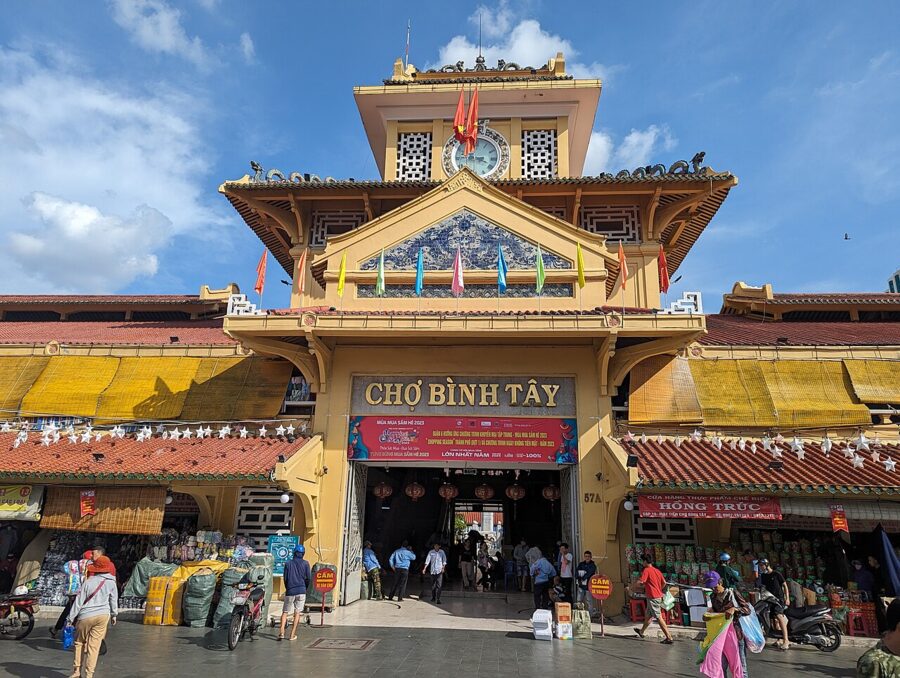
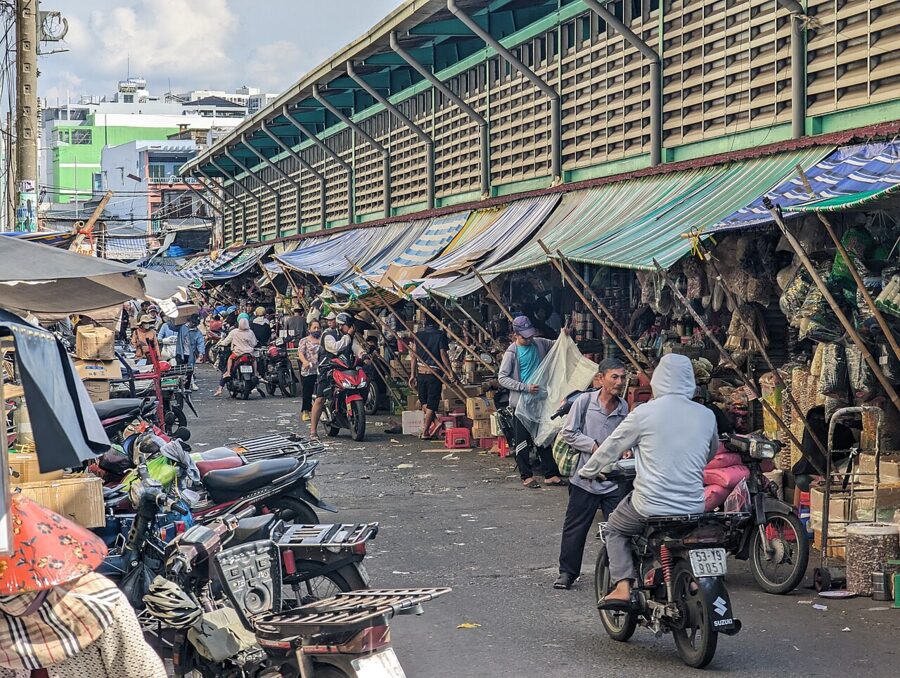
At half past six in the morning the shutters on Tháp Mười Street go up one by one, and the porters are already moving. Sacks of dried shrimp, cartons of plastic basins and bales of cloth roll past on hand trucks toward the yellow gate of Bình Tây Market, under a clock tower with four faces and a pair of dragons curled around a pearl. Inside, in the central courtyard, someone has lit incense at a small altar in front of an old stone plinth.
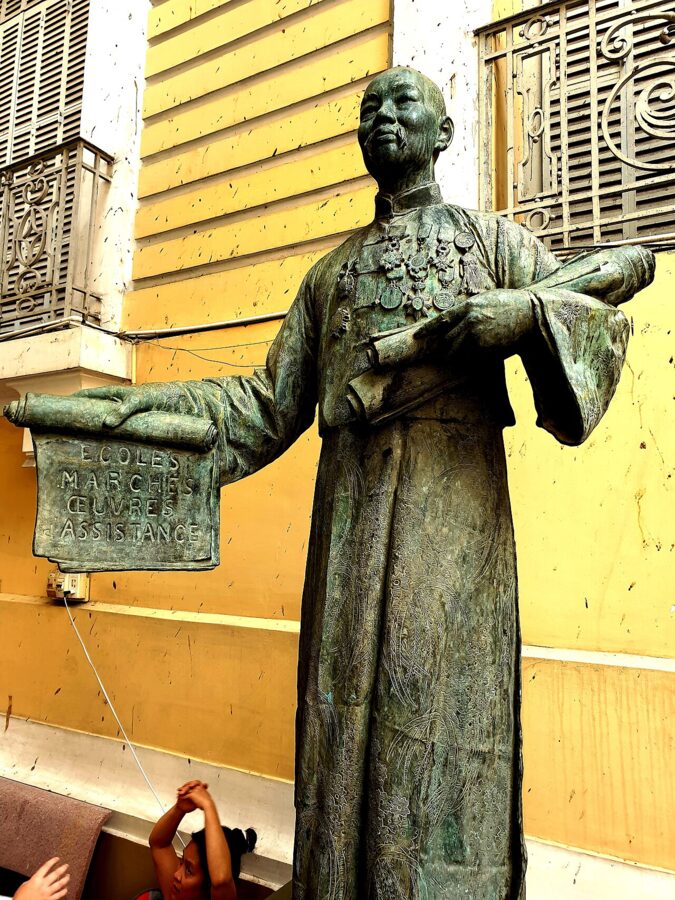
That plinth once carried a life-size bronze of Quách Đàm, the rice merchant who gave the land and much of the money for this building. Since 1992 he has stood in the sculpture garden of the city’s Fine Arts Museum, about six kilometers east, holding the deed to a market most people walking past him have never visited. The market and the quarter around it, Chợ Lớn, the “big market” that French and English writers spelled Cholon, are where Saigon’s Chinese history is still in daily use.

On this page
Two cities on one canal
For most of its life Chợ Lớn was not a neighborhood of Saigon but a separate town, and for a long stretch it was the richer of the two. Its Chinese name, 堤岸, read Đề Ngạn in Sino-Vietnamese and Tai Ngon in Cantonese, is usually translated as “embankment.” The etymologist An Chi rejected that: Saigon had no embankments, he argued, and the characters simply spell the sound “Sài Gòn,” a name that in his view first belonged to this area and only later to the French town downriver.
Chinese settlers were here before 1698, in a Minh Hương village of refugees who had refused to serve the Qing. The quarter grew sharply after the Tây Sơn wars reached Cù Lao Phố, the Chinese trading island on the Đồng Nai River near today’s Biên Hòa. Cù Lao Phố was sacked in 1776, and in 1782 Tây Sơn troops killed more than ten thousand Chinese in the Saigon area for backing the Nguyễn lords; the survivors rebuilt on the canal banks where Chợ Lớn stands now.
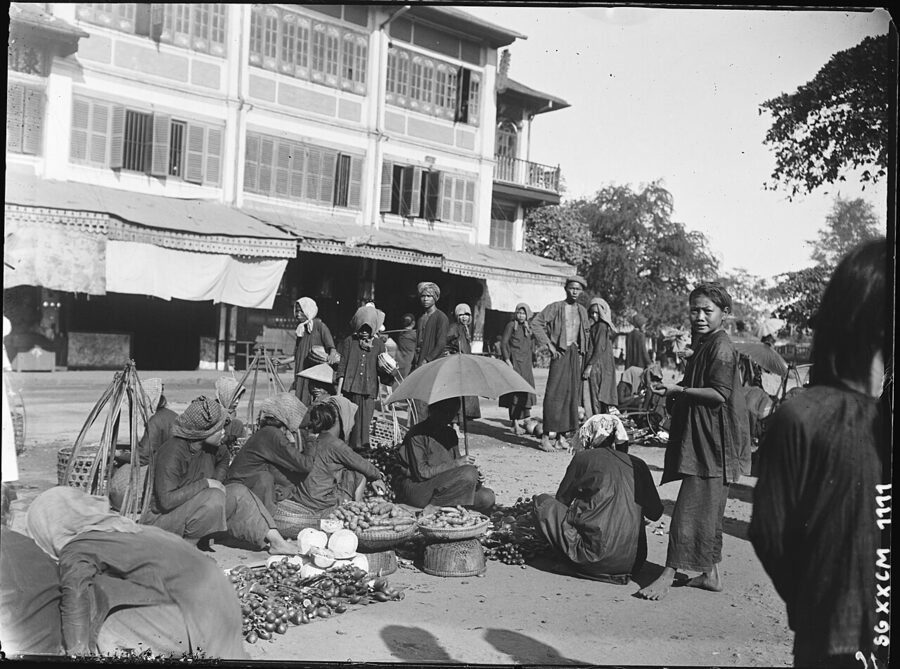
Around 1820 the Nguyễn official Trịnh Hoài Đức described this market town in his gazetteer of Gia Định. He counted three long streets running to the river, Viet and Chinese living roof to roof, shops selling silk, porcelain, paper, books, medicine, tea and noodles, and trading by lamplight after dark. He also placed the temples: a Quan Đế shrine, the halls of the Fuzhou, Cantonese and Teochew communities, a Thiên Hậu temple, and the Ôn Lăng and Zhangzhou halls. Most of those congregations still keep a hall within a few blocks of the spot.
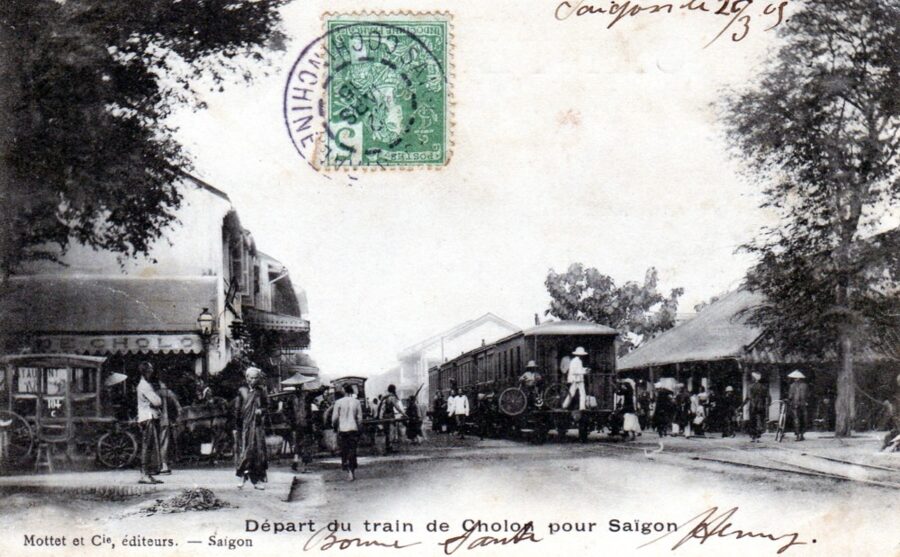
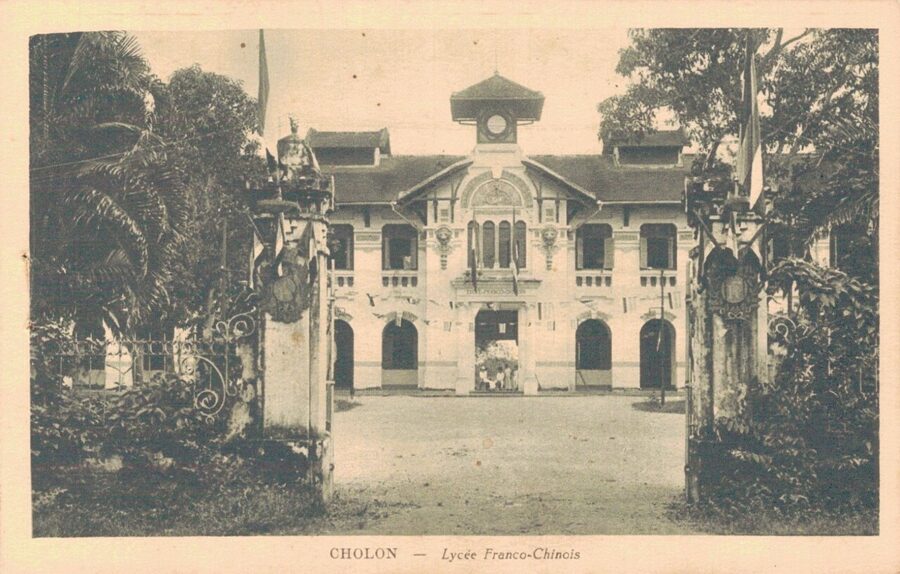
The French made it a municipality, the Ville de Cholon, by a decree of Governor La Grandière on 6 June 1865, and gave it its own mayor in 1879. A steam tramway linked it to Saigon from the early 1880s; sources give the opening as December 1881 or July 1882. By 1930 the two cities had met along today’s Nguyễn Văn Cừ Street, and in April 1931 they were merged into one Saigon–Cholon region. Chợ Lớn was dropped from the official city name in 1956.
The five congregations
The Chinese of Chợ Lớn were never one community. The Nguyễn court organised them into bang, congregations by place of origin and dialect, seven in all, and in January 1885 the French folded the Fuzhou bang into the Hokkien and the Qiongzhou bang into the Hainanese. That left the five that still shape the quarter: Cantonese (Quảng Đông), Teochew (Triều Châu, or Tiều), Hokkien (Phúc Kiến), Hainanese (Hải Nam) and Hakka (Khách Gia, or Hẹ).
The Hakka bang became a catch-all for anyone whose ancestral home lay outside the other four, so Shanghainese and Hunanese families ended up in it too. Each bang head answered to the colonial government for taxes and order, and each congregation ran its own hall, school and cemetery, in several cases a hospital too. Guilds cut across them: Chợ Lớn’s goldsmiths kept their own temple, the Lệ Châu hall on Trần Hưng Đạo.
Rice made the money
Chợ Lớn’s fortune came down the canals from the Mekong Delta. Paddy arrived by junk and barge at the wharves along the Arroyo Chinois, the French name for the Tàu Hủ and Bến Nghé canals, and went into Chinese-owned steam mills. Marcel Bernanoise’s survey La Cochinchine, published in the 1920s, stated flatly that the Chinese of the province “monopolize nearly the whole paddy trade.”
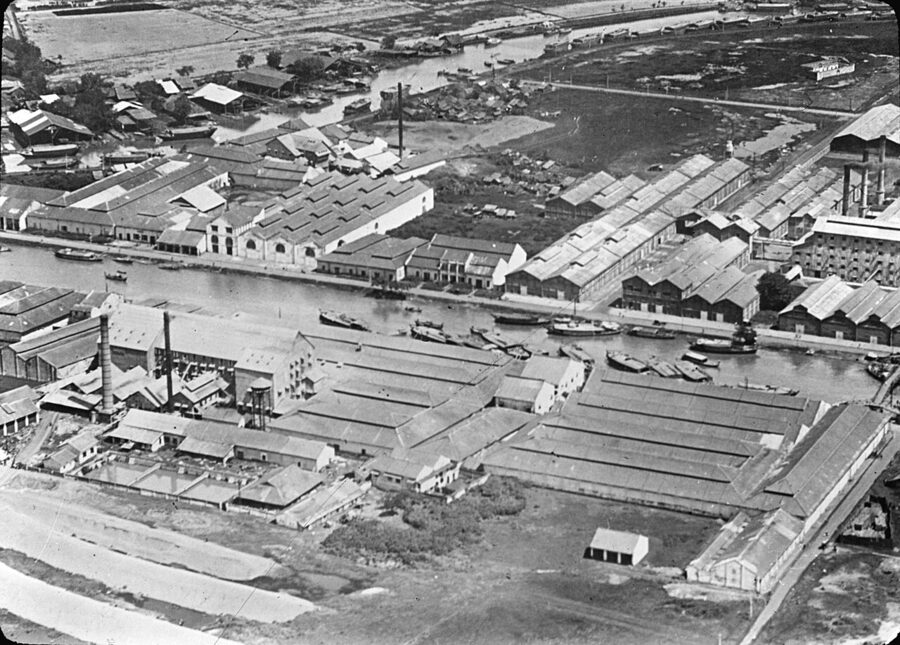
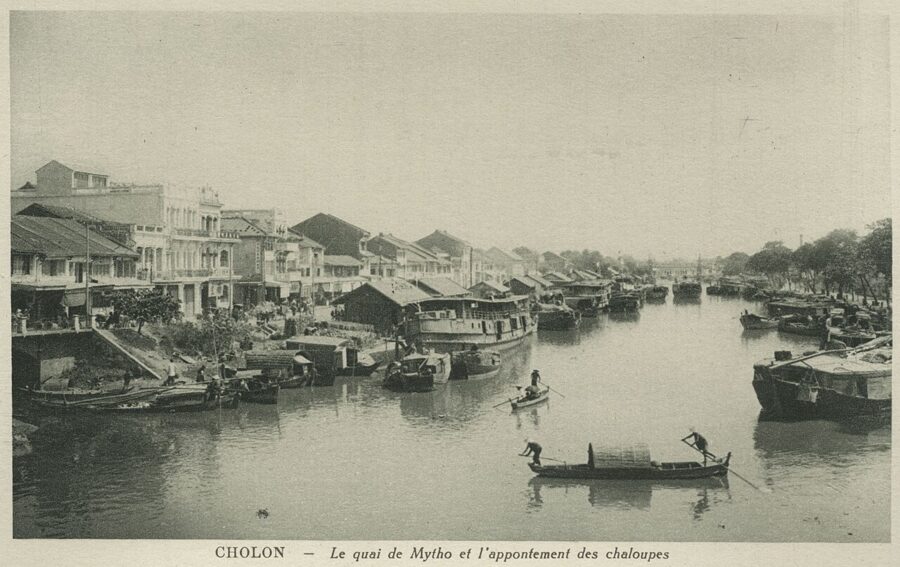
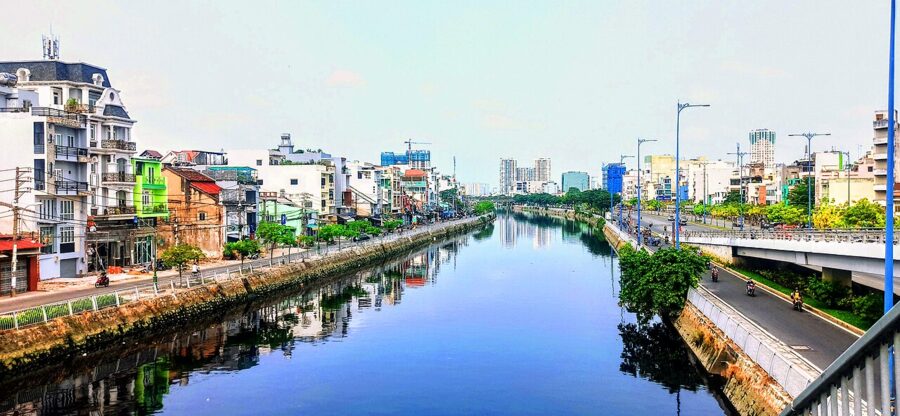
The canal is still there. Võ Văn Kiệt Avenue runs along its north bank now and the junks have gone, but the line of the city’s commerce has not moved: the wholesale streets sit a few blocks inland from where the barges tied up.

After 1975
The years after reunification hit Chợ Lớn harder than any other part of the city. In 1978 the campaign against private commerce shut and confiscated many Chinese-owned businesses, and as relations with China broke down in 1978 and 1979, a large share of the Hoa population left the country, many of them by sea. Accounts written from the two sides of that departure still read very differently.
Trade returned with the reforms of the late 1980s, and Chợ Lớn’s wholesale networks rebuilt themselves faster than almost anything else in the south. In the July 2025 reorganisation, District 5 was abolished and four of its wards became a new Chợ Lớn ward of 1.67 square kilometers. It holds most of the halls, but only part of the historic quarter: Bình Tây Market sits in neighboring Bình Tây ward, formerly Ward 2 of District 6.
Bình Tây Market, the new big market
Saigoners called it Chợ Lớn Mới, the new big market, for decades, to tell it apart from the old one by the canal. Older residents still call it Chợ Quách Đàm, after the man who paid for it.
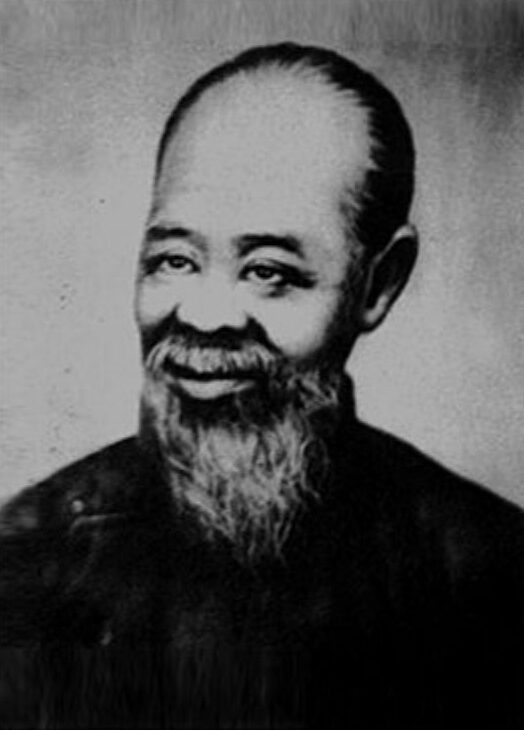
Quách Đàm, the rag-and-bone man who became a rice king
Quách Đàm, Guo Yan (郭琰) in Chinese, was born in 1863 in Longkeng village in the Teochew country around Chaozhou, in Guangdong. Vietnamese accounts say he reached Saigon penniless after losing an earlier fortune in Hong Kong. He started by collecting scrap bottles and rags with two baskets on a shoulder pole, sleeping under shop verandas, then moved into buffalo hides, shark fin and fish maw.
By the 1920s he owned paddy land, rice mills, rubber plantations and steamships trading to Singapore and Hong Kong. His firm, Thông Hiệp, took its name from a pair of auspicious couplets written for his shop sign, and had its headquarters at 45 Boulevard Gaudot, the canal-side street that is now Hải Thượng Lãn Ông. He took French citizenship and the Legion of Honour, and the colonial press called him the “king of commerce.”
He was not a gentle figure. The writer Vương Hồng Sển, whose memoir Sài Gòn năm xưa is the classic account of the old city, tells how Quách Đàm, warned that rice prices in Singapore were falling, kept buying paddy openly while spreading word of a price rise, then quietly sold his whole stock to rivals who had rushed to match him. In 1927 L’Écho Annamite attacked his rice mill in Mỹ Tho for covering the town in dust from a 32-meter chimney.
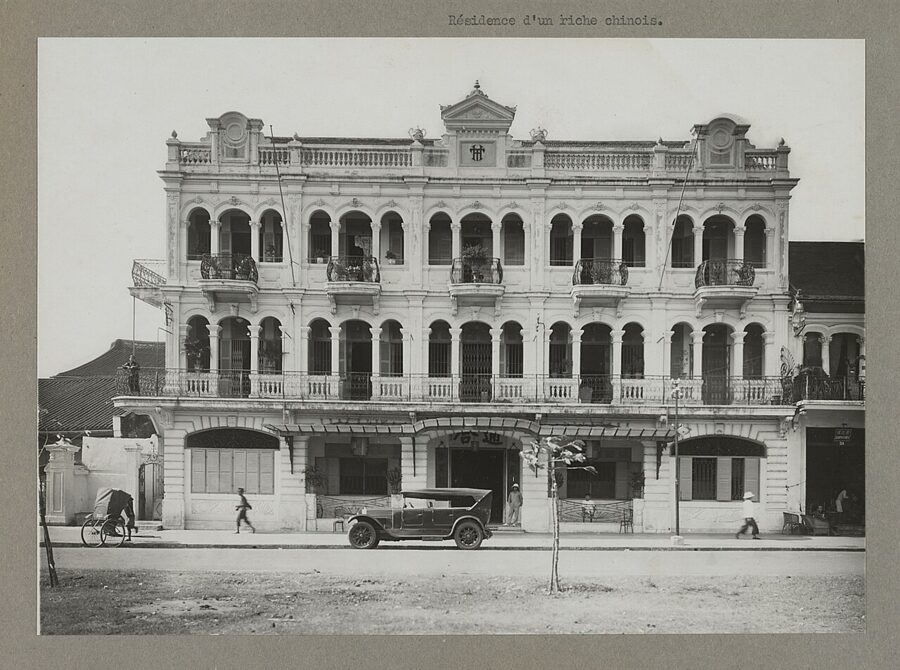
He died on 14 May 1927, aged 65, before the new market opened. At his funeral on 29 May special trams and trains brought guests to Chợ Lớn, fifty motorcars followed the hearse, and the procession lasted two hours on its way to the family plot at Phú Thọ cemetery. Vương Hồng Sển remembered that anyone who walked a few steps behind the cortege was handed coconut water or beer and a paper fan with a five-piastre note attached.
The business did not outlive him long. His eldest son Quách Khôi died suddenly in May 1929, and his younger brother Quách Tiên, by Vương Hồng Sển’s account, sank Thông Hiệp by guaranteeing the bank debts of merchants who failed in the Depression. The name disappears from commercial records after 1933.
The old market and the new
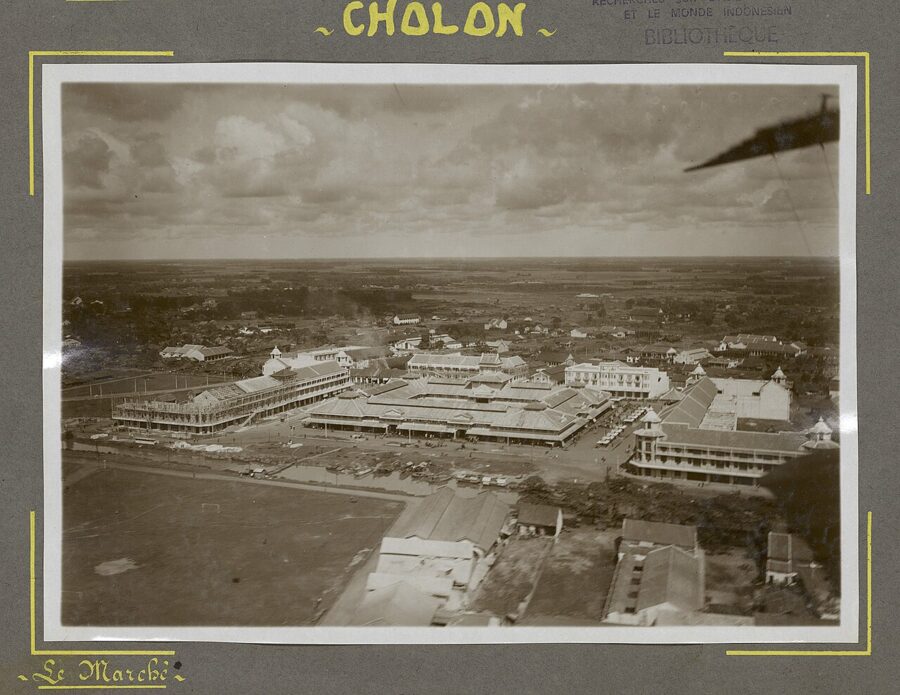
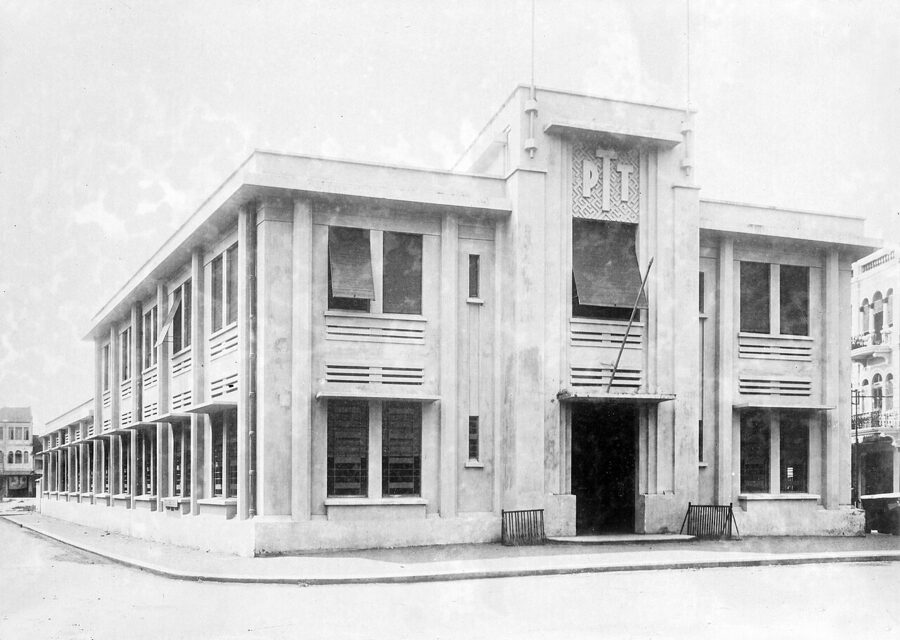
Chợ Lớn’s first central market stood on the bank of the Chợ Lớn creek, where the Chợ Lớn post office stands today on Châu Văn Liêm. When the creek was filled in 1923, the market lost its boat access. A replacement was planned from 1924 on the site of an old boat-repair basin beside the Hàng Bàng canal, and Quách Đàm, who owned much of the surrounding land, gave the plot and a large share of the cost in exchange for the right to build shophouses around the market and to place his statue inside it.
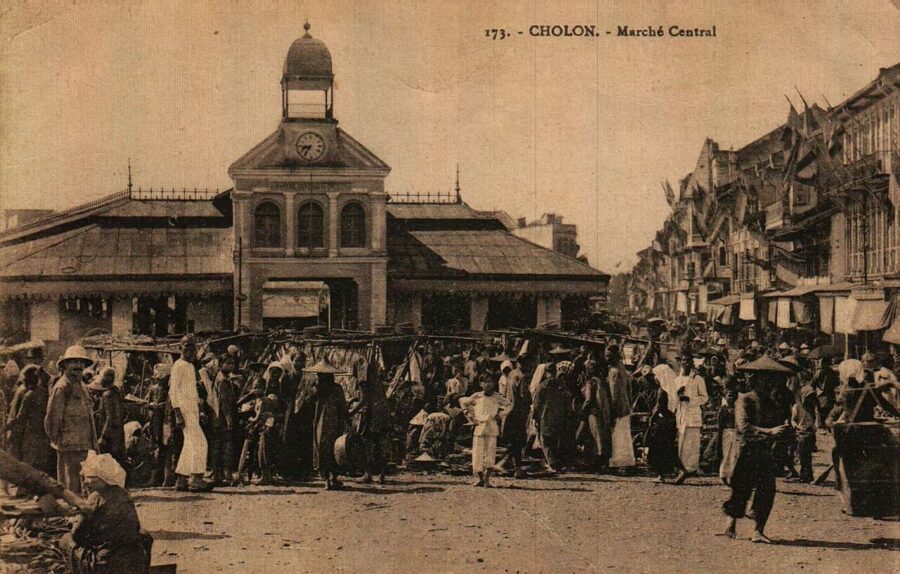
The contractor was the Indochina dredging company that Saigoners called Công ty Tàu Cuốc. Accounts drawn from the colonial press date the works from February 1926 to September 1928, with the market opened on 28 September 1928 in a three-day celebration attended by the Governor of Cochinchina; many Vietnamese sources instead give the building dates as 1928 to 1930. The 1930 date belongs to the courtyard fountain and statue, unveiled that March.
The new market started slowly. The area was still thinly settled, and traders comfortable in the old streets saw little reason to pay for the move. It took years, and the city’s spread westward, to make Bình Tây the wholesale hub it became.
Reading the building
Bình Tây is reinforced concrete built by Western methods and dressed in Chinese forms. The complex covers about 25,000 square meters between Tháp Mười, Lê Tấn Kế, Trần Bình and Phan Văn Khỏe streets, with twelve gates. On the restoration drawings the hall measures 89.2 by 108.6 meters and stands 13.1 meters high.
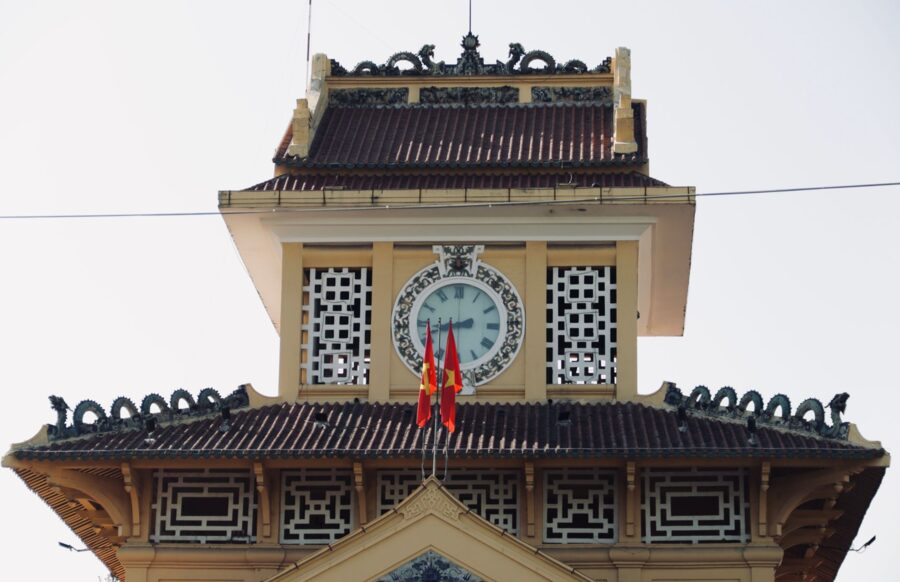
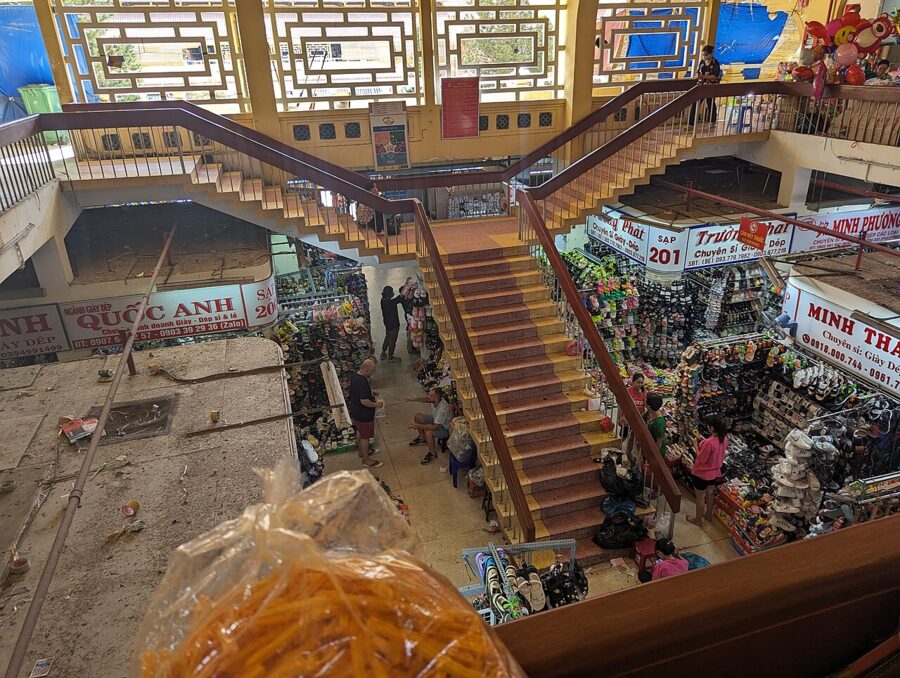
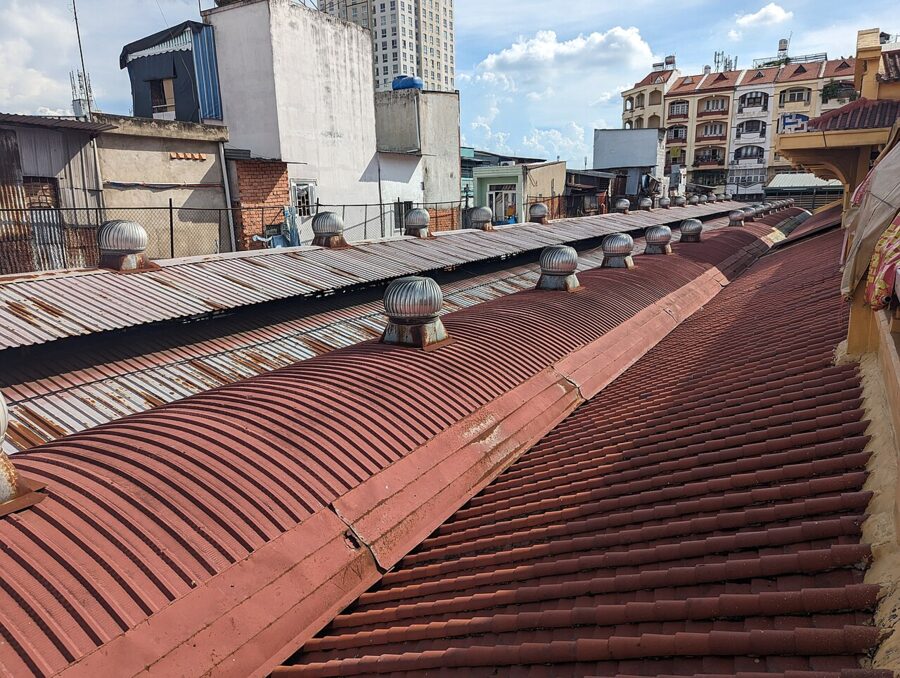
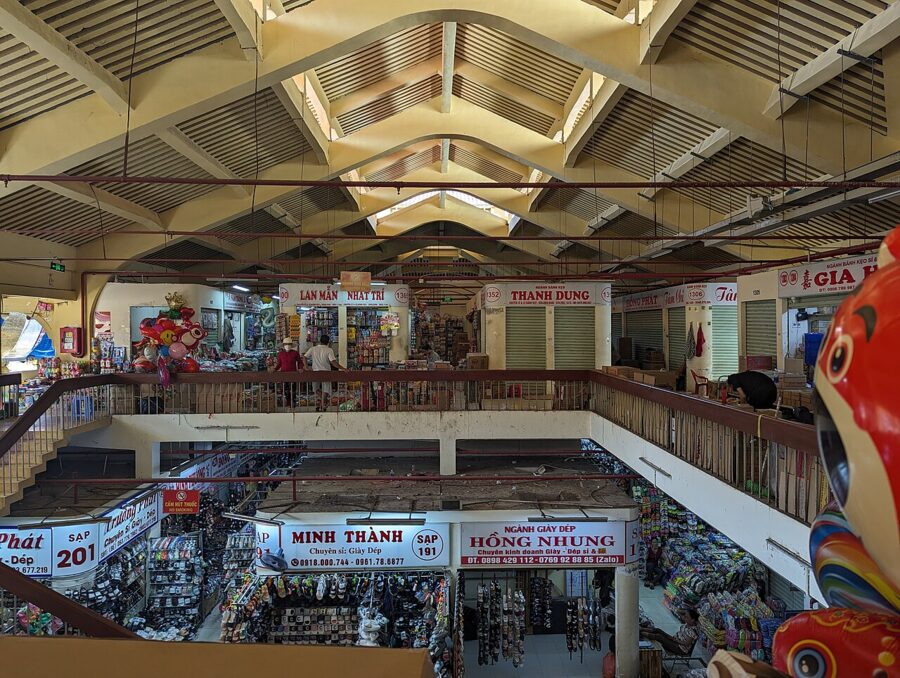
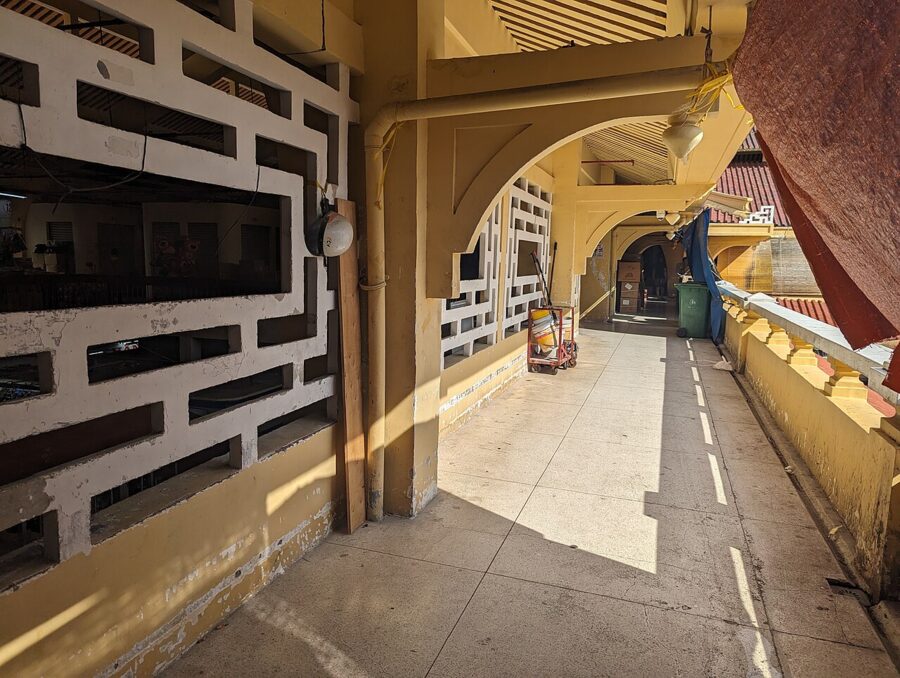
Four small pavilions mark the corners. The roofs are laid in interlocking concave and convex tiles, the yin-yang tiling of southern Chinese temples, stepped so that hot air escapes through the gaps, and the corner roofs curl up at the tips like a pagoda’s. Inside, the stalls run in a hollow square around a courtyard open to the sky, which lets light into the deep halls and keeps air moving on humid afternoons.
The courtyard statue
In late 1929, with the city’s permission, the Quách family built a marble fountain in the central courtyard, with bronze lions and water-spouting dragons around the base and a bronze statue of Quách Đàm on top by the French sculptor Paul Ducuing. The figure wears Qing-era dress with a queue and holds the act donating the land in one hand and a scroll listing his gifts to schools, markets and charity in the other. It was unveiled on 14 March 1930.
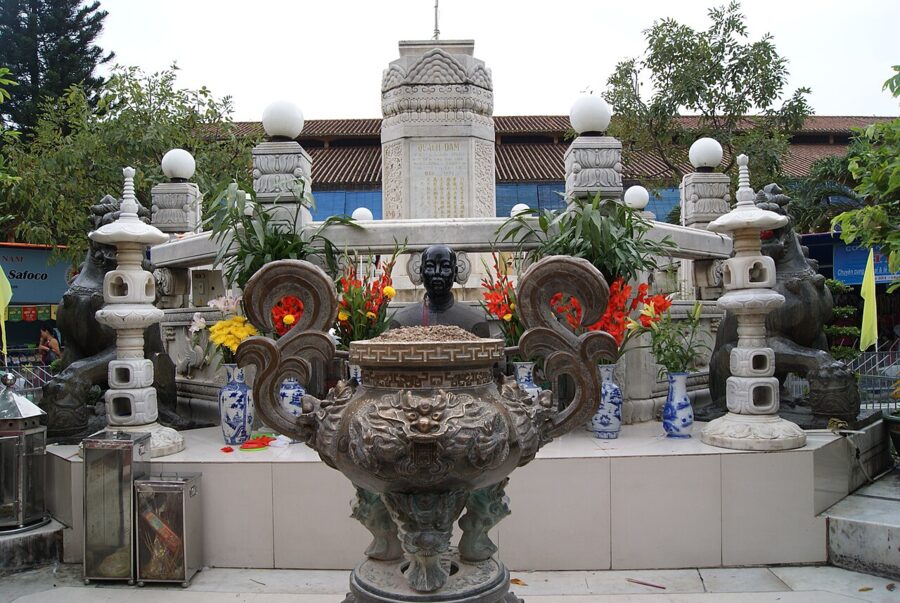

After 1975 the statue was taken down and stored, first at the District 6 cultural house, and since 1992 it has stood in the rear garden of the Fine Arts Museum. A smaller bust took its place in front of the old plinth, and vendors keep an altar there.
To see the original, go to the Ho Chi Minh City Museum of Fine Arts at 97A Phó Đức Chính in Bến Thành ward (the old District 1), a short walk from Bến Thành Market. Recent listings disagree on the museum’s hours and ticket prices, so check them on the day.
The 2016 to 2018 restoration
Bình Tây had been patched before: an overhaul in 1992, and in 2006 two rows of steel-framed stalls added on the Trần Bình and Lê Tấn Kế sides. The full restoration began at the end of November 2016. More than a thousand traders moved into a tin-roofed temporary market on Tháp Mười, in front of the main gate, and worked there through two hot seasons.
The bill came to 104 billion dong, about US$4.5 million at the time, plus more than 10 billion for the temporary market, all of it paid by the traders from ten years of stall fees set aside for the purpose. The building reopened on 15 November 2018 with 1,446 stalls, 698 on the ground floor and 748 upstairs, most back in their old positions so that customers could find their regular suppliers.
What changed is mostly invisible. Rafters and roof tiles were replaced in full to the 1928 design, and the roof dragons were measured and repaired to their original form. Floors were raised and retiled, staircases and railings rebuilt, and a new 172-square-meter basement added; the city’s heritage conservation center signed off on details down to the color of the white terrazzo.
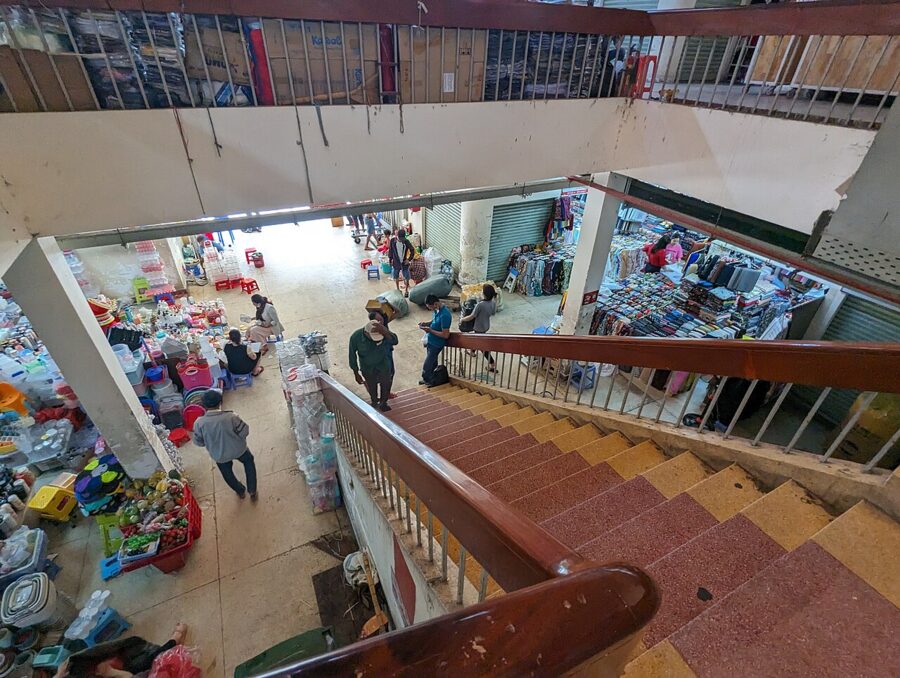
The market was recognised as a city-level architectural and artistic relic in the mid-2010s; sources give the year as 2015 or 2017. That status is why the restorers had to work to the old pattern rather than rebuild.
What is sold where
Bình Tây is a wholesale market first. Prices are set for buyers taking a dozen or a hundred, some stalls are not keen to sell a single item, and nobody is putting on a show. That is the reason to come.
Broadly, the ground floor and the Tháp Mười frontage carry ceramics, incense and candles, conical hats, hardware, bags, shoes and dried spices. Upstairs is clothing, textiles, sweets and packaged snacks. The Trần Bình side sells spices, tea, coffee, dried seafood, fruit and flowers; the Lê Tấn Kế side cooking oil, dried vegetables, betel and seasonings. The wet market spills along Phan Văn Khỏe at the back from before dawn.
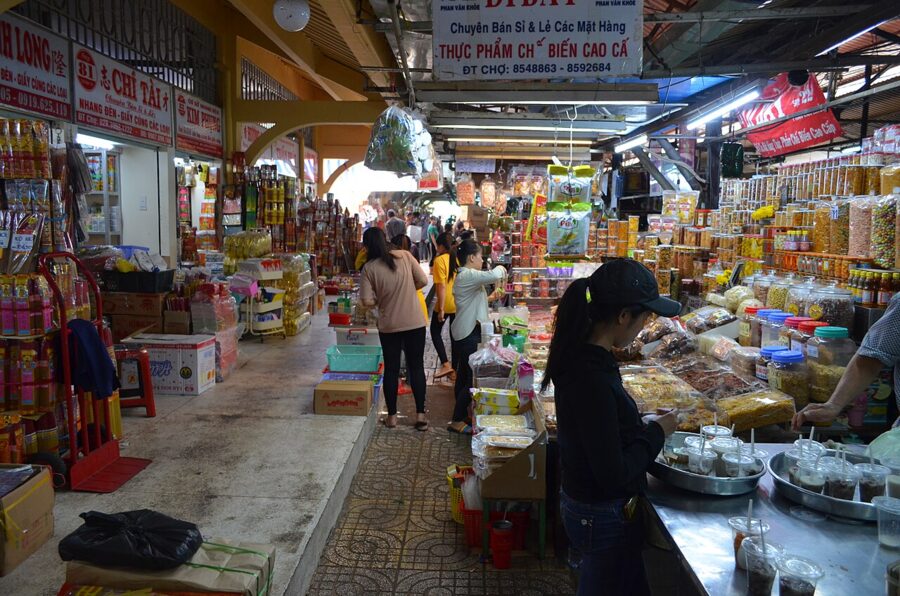

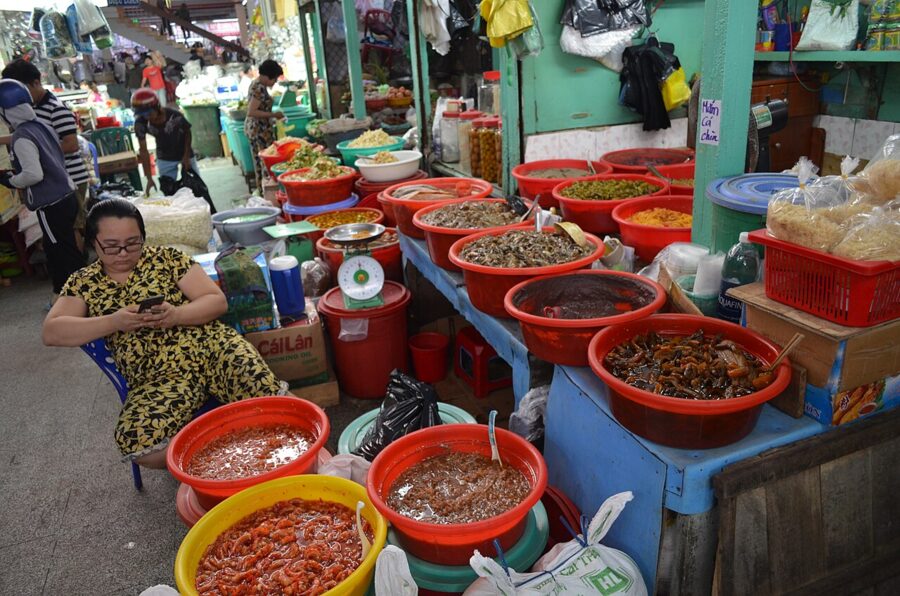

The market also carries the old banquet trade in abalone and dried fish maw. The better finds for a visitor are cheaper: tins of tea, bundles of incense, porcelain rice bowls, wooden chopsticks by the hundred.
Night street and weekend visits
The market closes in the late afternoon, but since December 2025 the streets around it have a second shift. The Chợ Lớn night street (phố đêm Chợ Lớn), run by Bình Tây ward, opened on trial on 1 December 2025 and officially on 1 January 2026. It runs from 6pm to midnight daily on the sidewalks of Nguyễn Hữu Thận, Tháp Mười, Lê Tấn Kế and Trần Bình, with food trucks and handcarts across about 1,510 square meters.
By April 2026 the ward counted 38 food vendors and about 800 visitors a day. It is a local evening out rather than a tourist market: families, students, plastic stools and the floodlit market as backdrop.
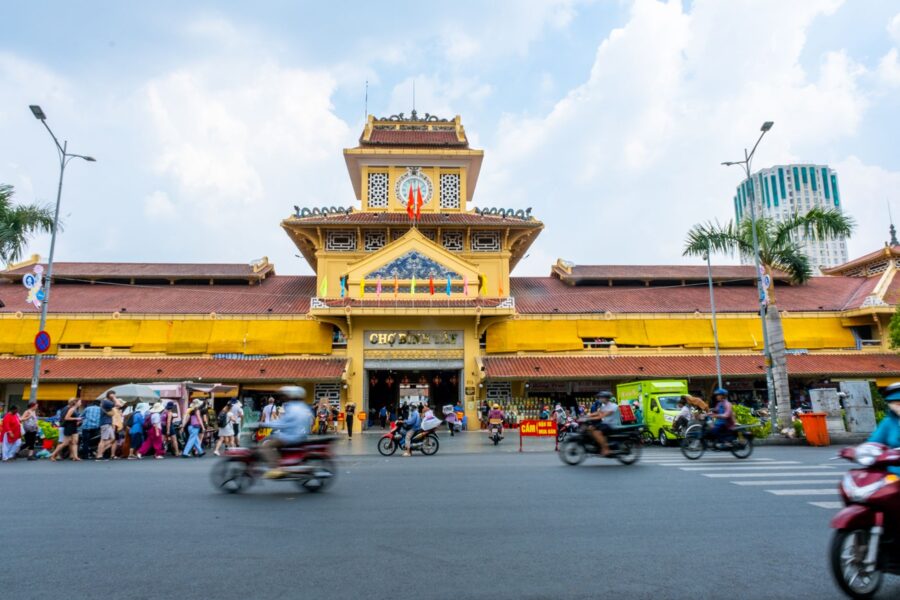
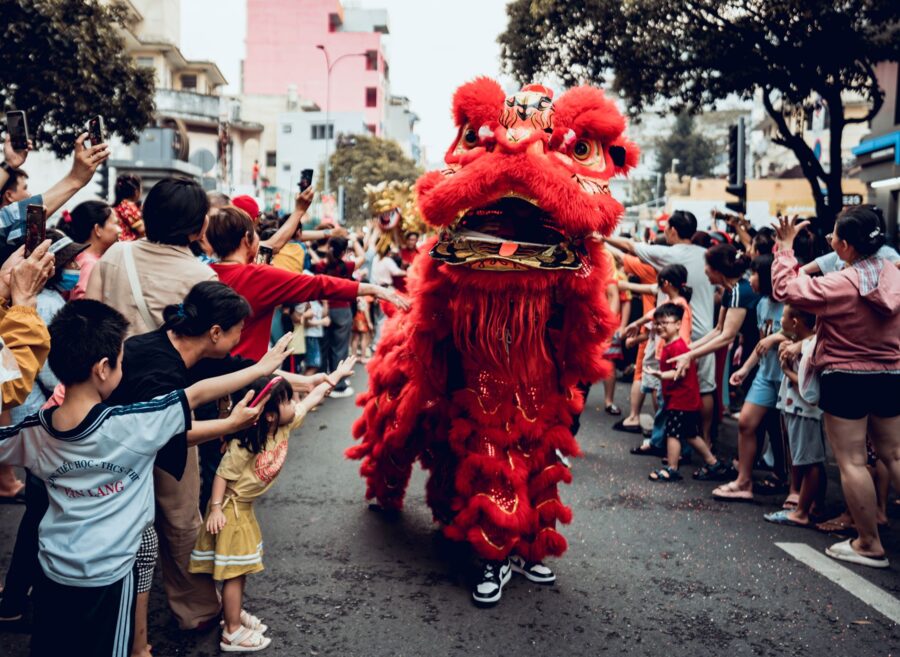
The market’s management board also launched a heritage program, Chạm vào dấu xưa (“Touching the old traces”), on 29 November 2025, planned for Saturday mornings and Sundays. It starts at the main gate with the market’s history, stops at the statue area, and adds lion dancing, festival drums and small workshops such as painting miniature lion heads and folding red envelopes. No price has been published, so ask the management board on arrival.
Streets that sell one thing
Chợ Lớn still works the way Trịnh Hoài Đức saw it: by street and by trade. That makes the quarter easy to walk with a purpose, and the wards have leaned into it by branding several streets as specialist shopping streets.
Hải Thượng Lãn Ông: the medicine street
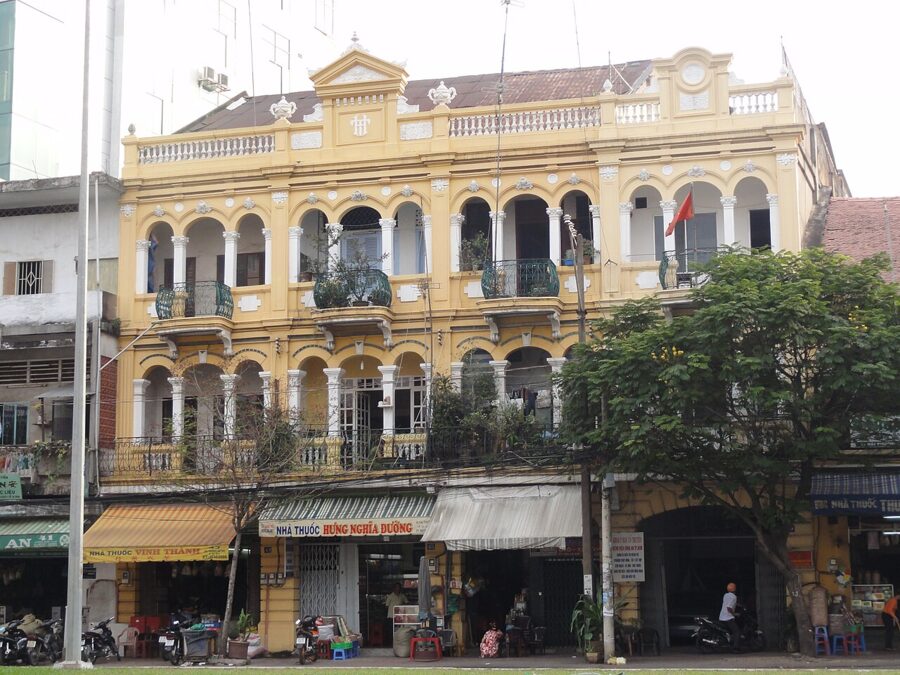
Hải Thượng Lãn Ông Street follows the line of the old Chợ Lớn creek. Under the French it was the Quai de Gaudot, then the Boulevard Gaudot; after the French period it became Khổng Tử (Confucius) Street, and since reunification it has carried the pen name of the 18th-century physician Lê Hữu Trác. The name suits it: this is Saigon’s street of Chinese and Vietnamese herbal medicine, the wholesale source for traditional pharmacies across the south.

The densest run of medicine shops lies between Võ Văn Kiệt and Châu Văn Liêm. The smell of dried roots and bark reaches you before the shops do; inside, wooden drawers run floor to ceiling and sacks of roots, seeds and dried fruit sit on the floor. Wholesalers sell raw ingredients, while other shops sell remedies as pills, pastes and powders.
Buy only what you know. Many products carry no label you can read, and some animal parts are restricted by other countries’ customs. Tea blends, dried chrysanthemum and goji berries are the safe purchases.

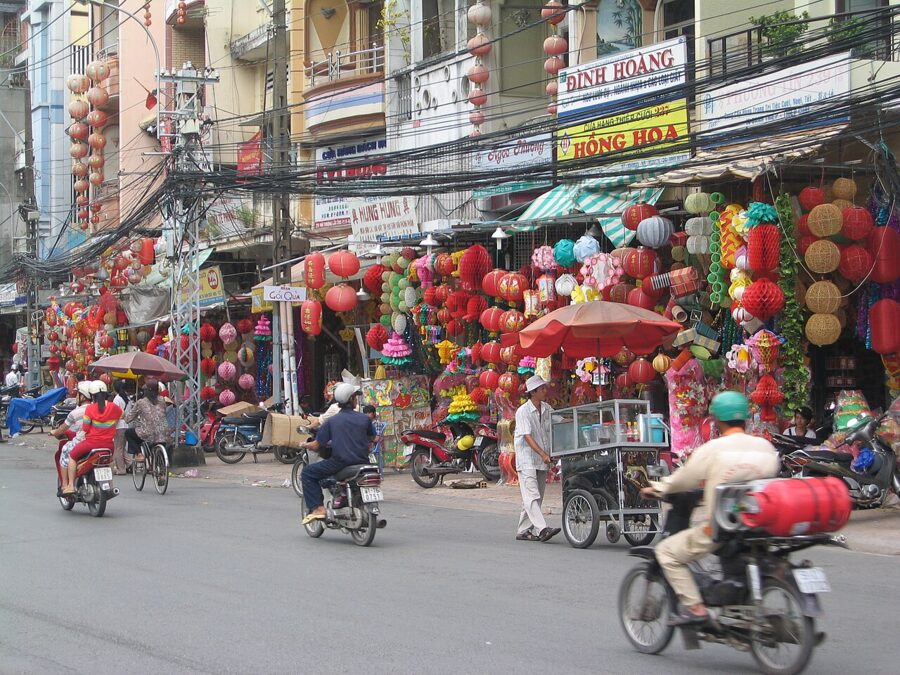
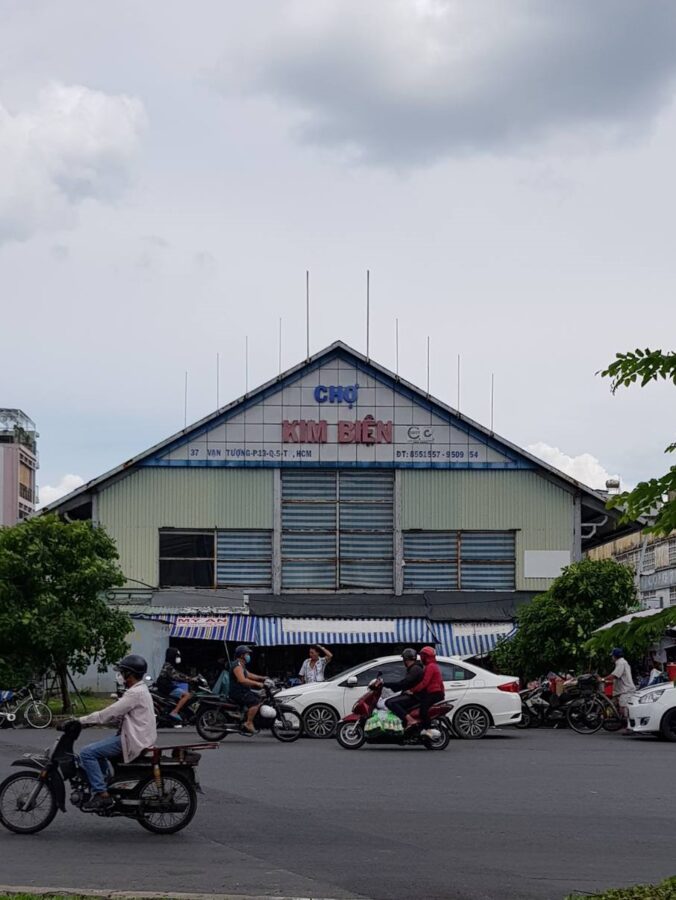
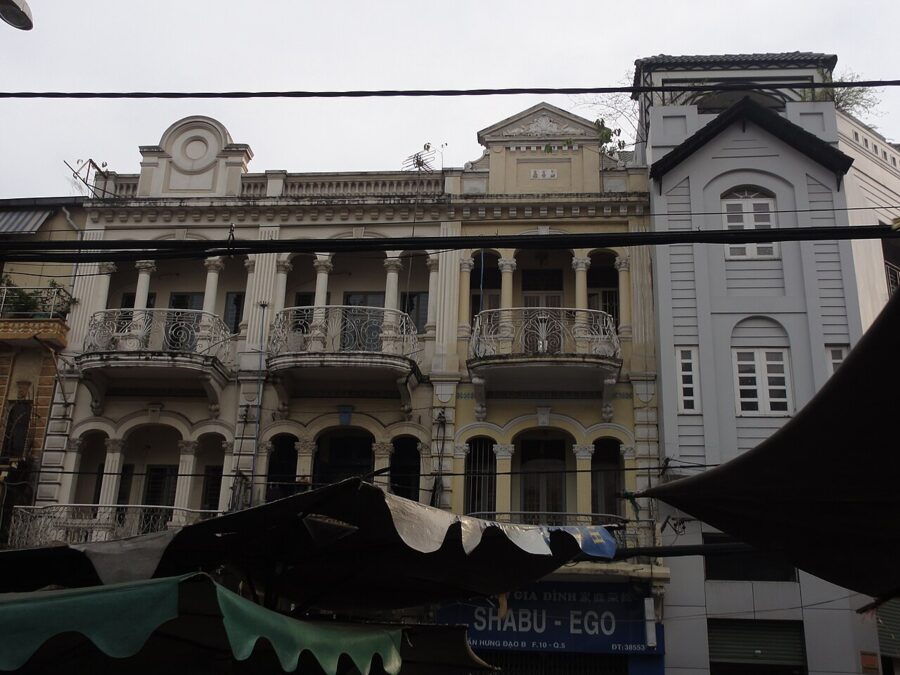
West of the post office the street changes character. In the weeks before Tết, the stretch toward Kim Biên market, along with Trang Tử and Tháp Mười, becomes a wholesale fair of red couplets, paper lanterns, plastic apricot blossom, imitation firecrackers and greeting cards, much of it bound for other markets.
Lantern street: Lương Nhữ Học
The short block of Lương Nhữ Học between Nguyễn Trãi and Trần Hưng Đạo has sold lanterns for more than half a century. Its season is the Mid-Autumn Festival, the fifteenth day of the eighth lunar month, which falls in mid-September in 2027. In 2025 Chợ Lớn ward ran it as a festival street from 24 September to 6 October, and the evenings were packed with families and photographers.
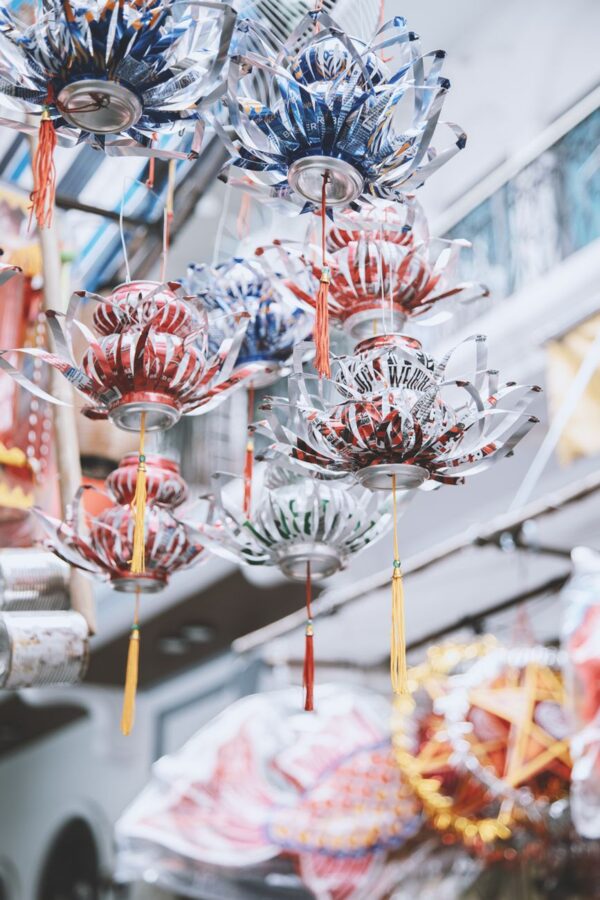
Out of season the block is much quieter. Go in the evening during the festival weeks, when the lanterns are lit and the pavements are full.
Wholesale streets: fabric, chemicals, stationery
In January 2025 the old Ward 14 branded the cloth trade on Trần Hưng Đạo, Đỗ Ngọc Thạnh and Dương Tử Giang as the Soái Kình Lâm fabric street; 96 shops and firms took part, some selling cloth there for more than twenty years. Phùng Hưng had been branded a stationery street in 2023.
Kim Biên market, just east of Bình Tây around Kim Biên, Vạn Tượng and Phan Văn Khỏe streets, has been one of the south’s largest markets for industrial and food chemicals since the 1960s: flavorings, preservatives, acids, cleaning products. It is no sight, but it shows how Chợ Lớn works as a supply depot for the whole region. An Đông market, northeast toward the center, is the quarter’s other big wholesale market.

Temples and assembly halls
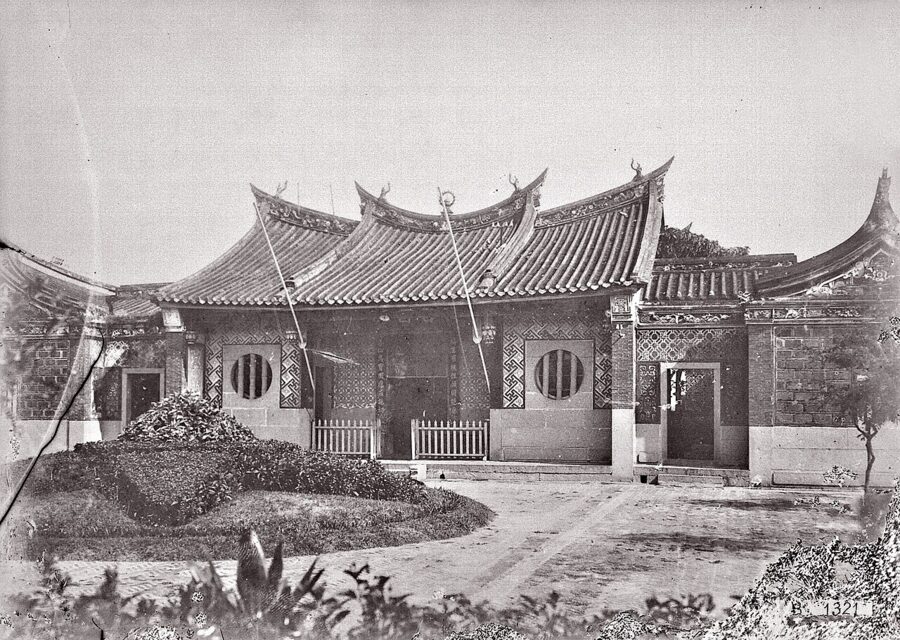
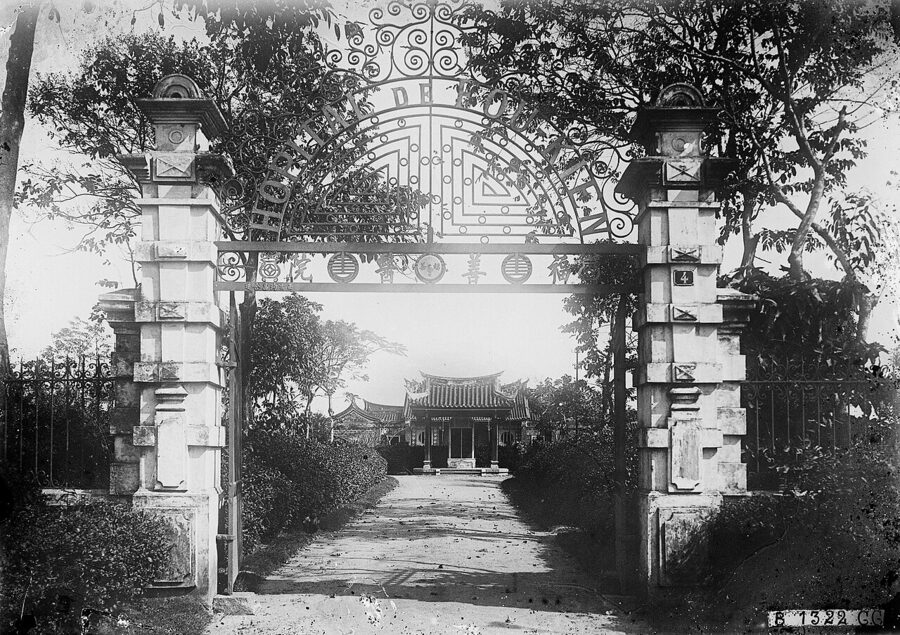
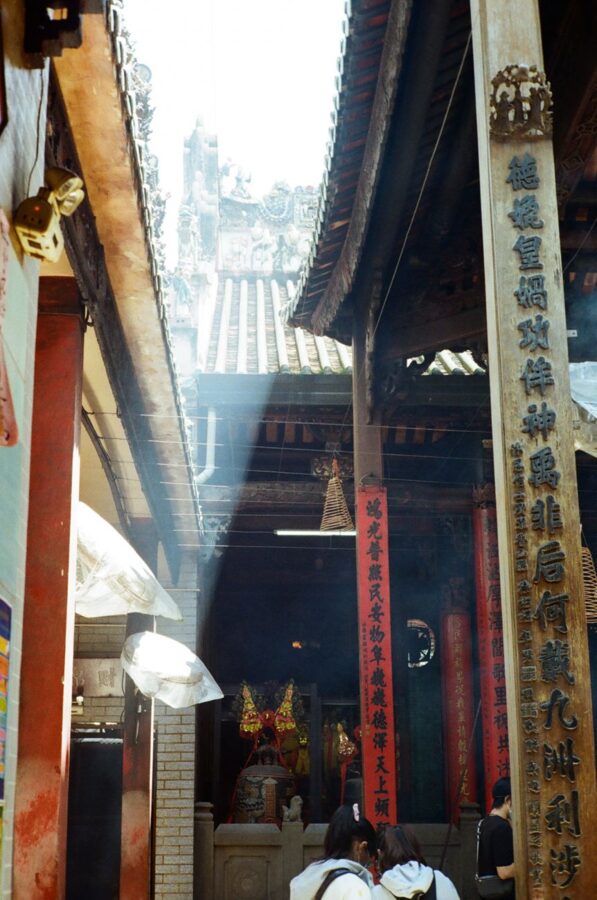
The Chinese halls of Chợ Lớn are called hội quán, assembly halls, and they were never only temples. A stele of 1869 at Ôn Lăng says the founders built it to discuss public business, honor the gods, help people from their home district and keep their customs straight. Each hall was its congregation’s meeting house, mutual-aid society and shrine at once.
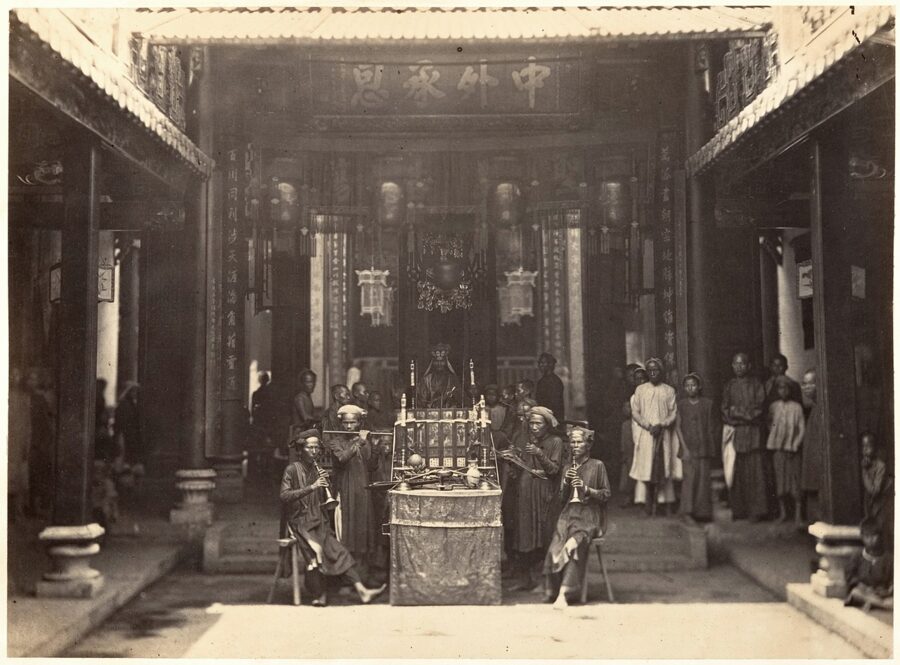
The best known is the Thiên Hậu Temple, the Cantonese Tuệ Thành Assembly Hall at 710 Nguyễn Trãi, dedicated to the sea goddess; the site’s guide to the Thiên Hậu Pagoda covers it in full. The others see fewer visitors and are often more rewarding for it.
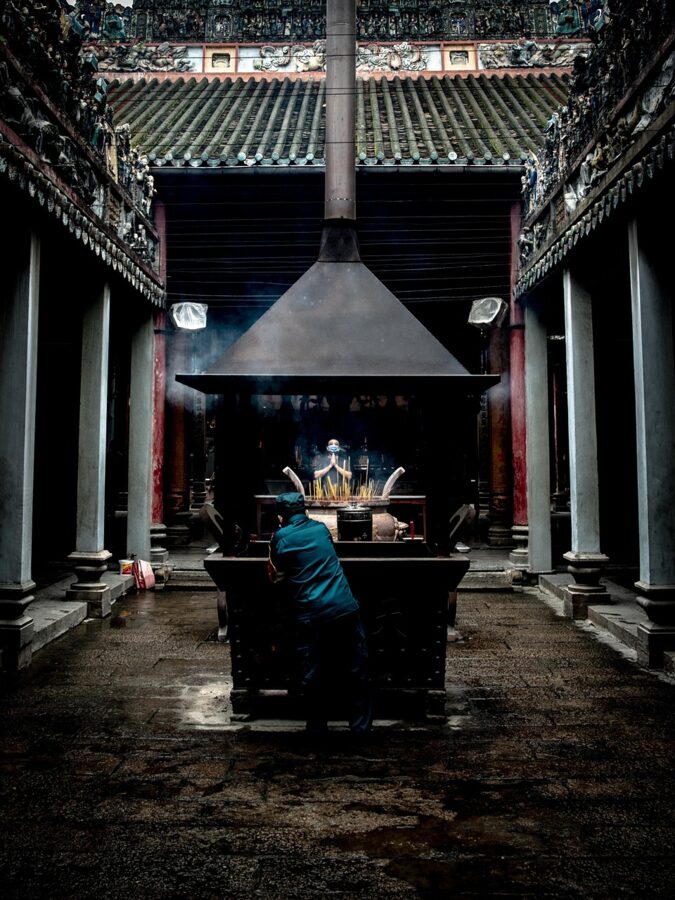
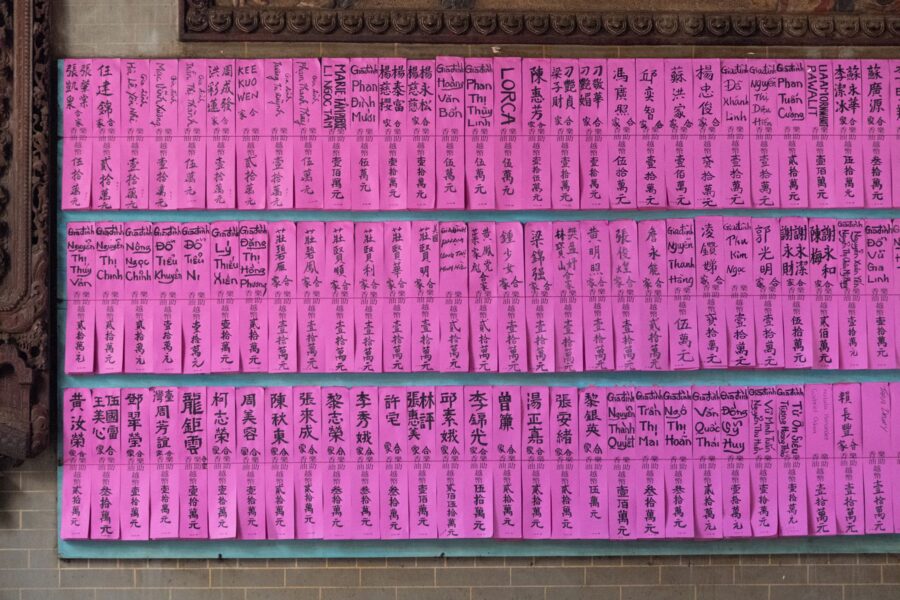
Nghĩa An Assembly Hall (Quan Đế)
A few doors east of Thiên Hậu, at 678 Nguyễn Trãi, the Teochew Nghĩa An Assembly Hall is dedicated to Quan Vũ, the loyal general of the Three Kingdoms, worshipped as Quan Đế; locals call it Chùa Ông. Nghĩa An was an old Teochew name for their home prefecture. Trịnh Hoài Đức listed the hall around 1820, and its steles record repairs in 1866, 1902, 1966 and 1984, then a long restoration from 2009 to 2014.
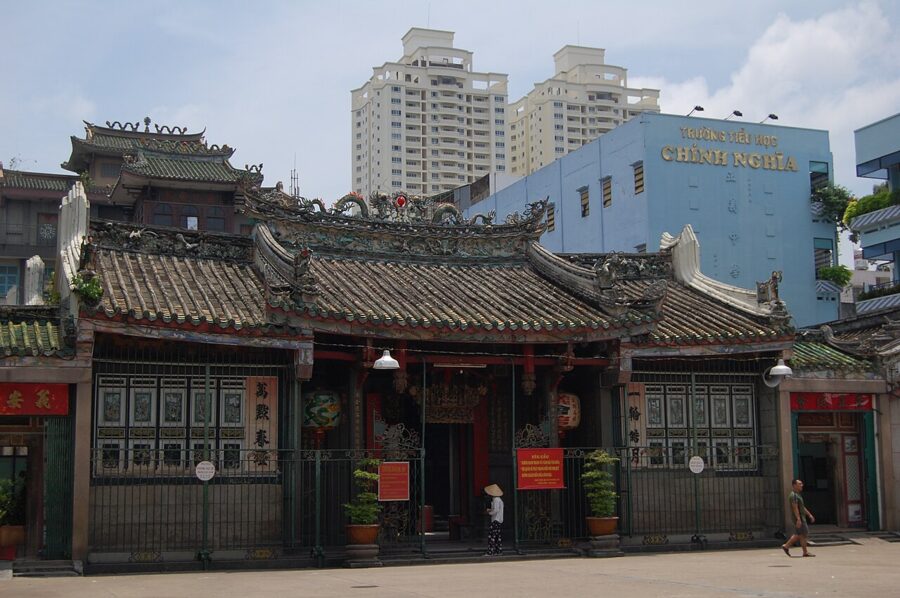

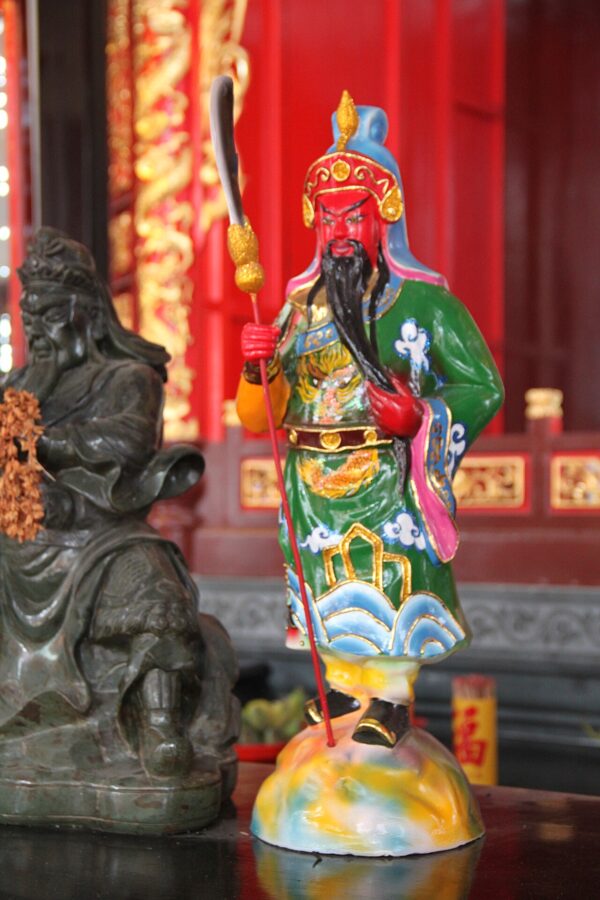
Inside the front hall stands a painted wooden statue of Quan Vũ’s red horse, Xích Thố, more than two meters tall, with its groom; many worshippers touch the horse for luck before a journey. The main altar holds a three-meter Quan Vũ with red face and long beard, flanked by his son Quan Bình and his sword-bearer Châu Xương. The hall has been a national architectural and artistic relic since 1993.
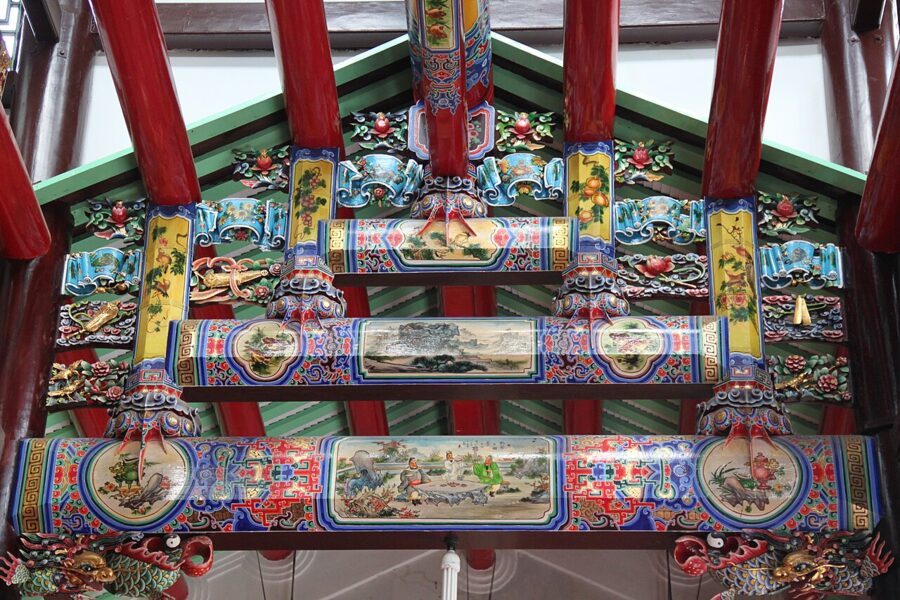
Ôn Lăng Assembly Hall (Quan Âm Pagoda)
Ôn Lăng, at 12 Lão Tử Street, was founded in 1740 by Hokkien families from Quanzhou, for which Ôn Lăng is an old literary name. It began as a temple to Thiên Hậu, but a later altar to the bodhisattva Quan Âm gave it the name most people use, Chùa Quan Âm. Its roofs are crowded with ceramic palaces, warriors and animals, Hokkien work at its most theatrical.
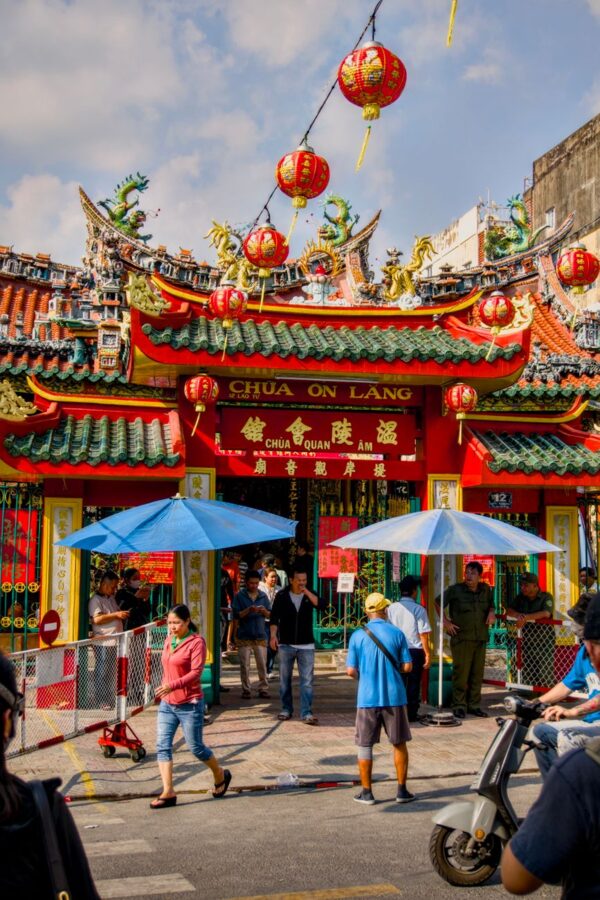
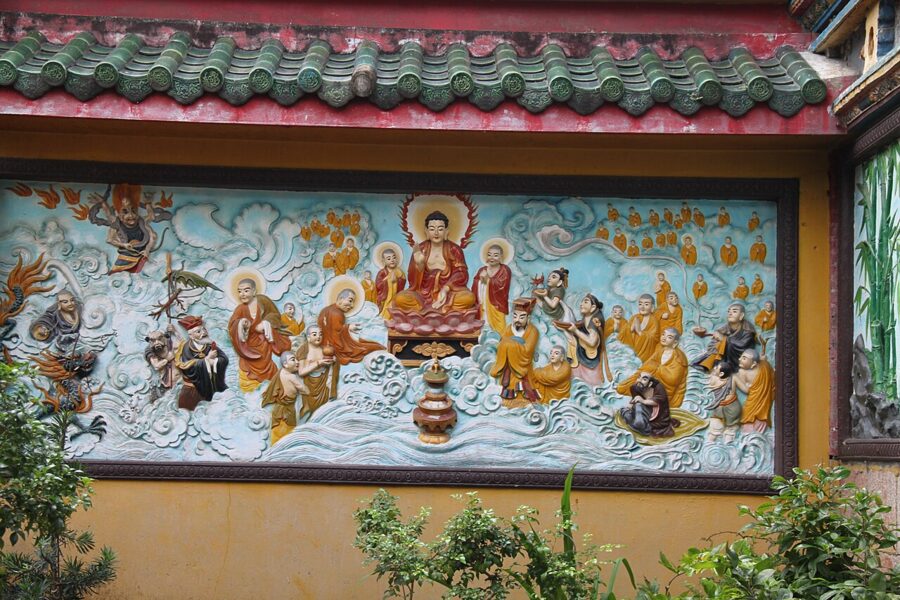
Around Kinh Trập, the “waking of insects” in the solar calendar, usually 5 or 6 March, Ôn Lăng hosts a ritual found in few other temples in the city: worshippers beat paper figures of petty enemies with sandals in front of the tiger altar, to keep slander and bad luck away. The hall was listed as a national relic in 2004.
Hà Chương Assembly Hall
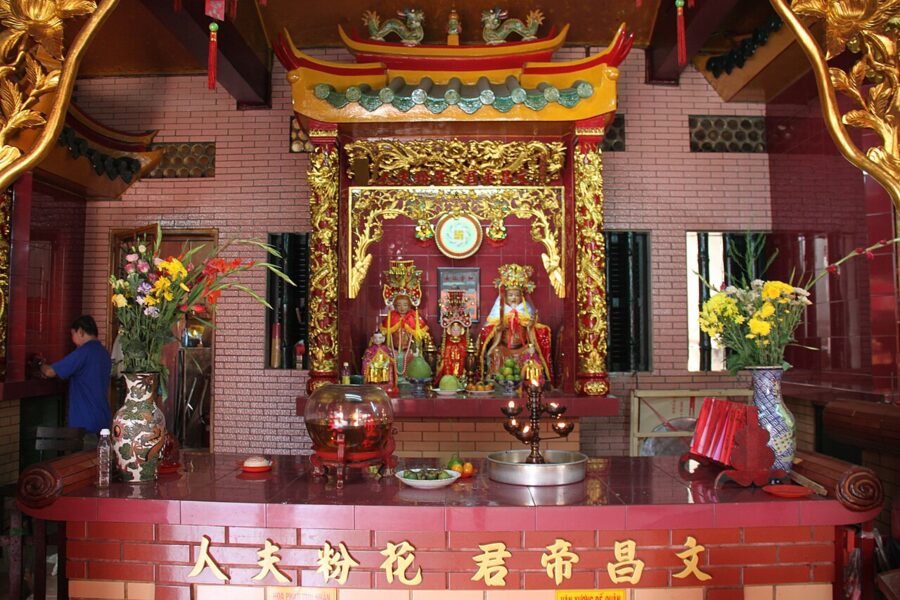
A block south of Ôn Lăng, at 802 Nguyễn Trãi, Hà Chương was built in 1809 by Hokkien families from Zhangzhou after a split with the Quanzhou group, and is dedicated to Thiên Hậu. Vương Hồng Sển wrote that old Chợ Lớn people said “as big as the Ông Hược temple” of anything enormous, because this was once the grandest hall in the quarter.
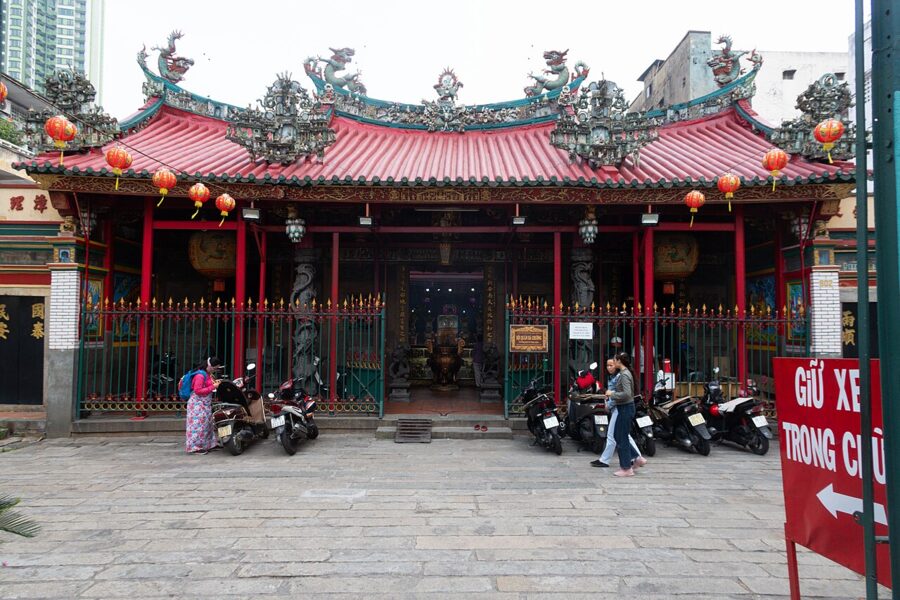

Look for the monolithic stone columns in the main hall, carved with dragons coiling their full height. Vương Hồng Sển counted four and recorded that there had once been six, until an earlier government borrowed two and never returned them. The hall became a national historical and cultural relic in 2001.
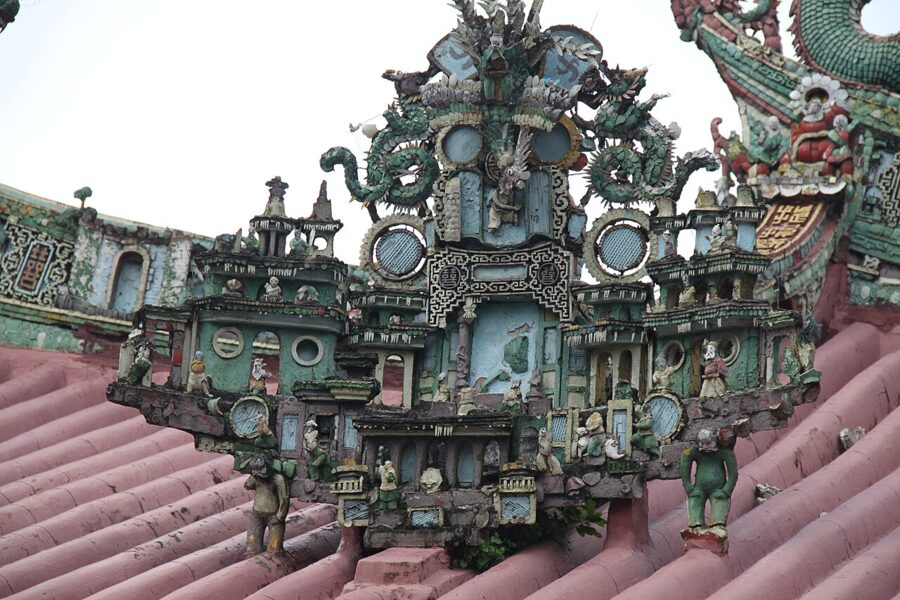
The smaller halls
Four more repay a detour. Nhị Phủ, the Ông Bổn temple at 264 Hải Thượng Lãn Ông, was founded around 1730 by Hokkien settlers before the Quanzhou and Zhangzhou groups split, among the oldest Chinese foundations in the city. Tam Sơn, at 118 Triệu Quang Phục, belongs to the Fuzhou community and keeps an altar to Kim Hoa Thánh Mẫu, the goddess of childbirth.
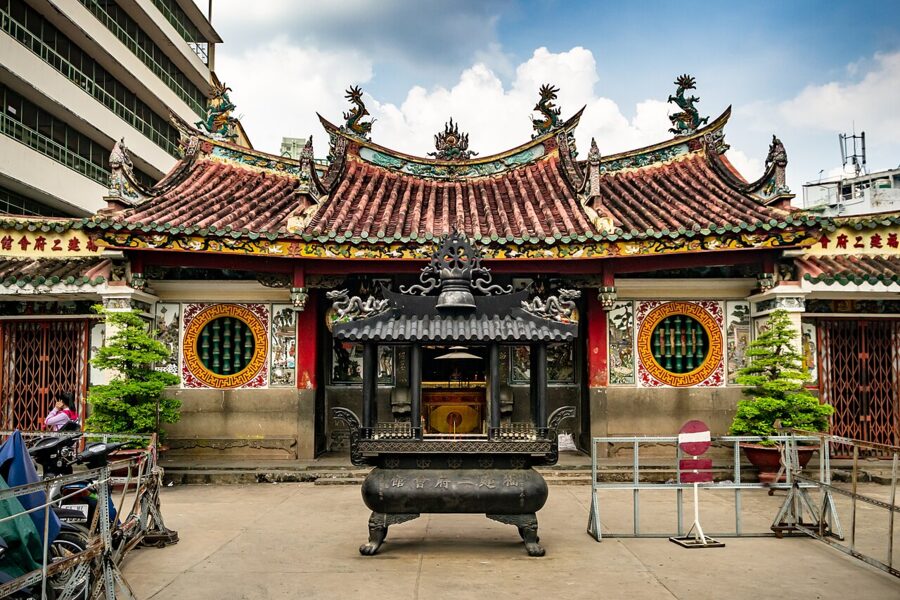

Quỳnh Phủ, at 276 Trần Hưng Đạo, is the Hainanese hall, founded in 1824 by its steles, and unusual for honoring the “108 heroic spirits,” merchants said to have been murdered at sea by corrupt officials and later cleared by the emperor; Hainanese sailors prayed to them in storms. Phước An, at 184 Hồng Bàng, is younger and smaller, rebuilt in the late 19th century around a shrine of 1865, with fine gilded woodcarving. On Trần Hưng Đạo, the goldsmiths’ Lệ Châu hall is the guild temple of a trade rather than a dialect.
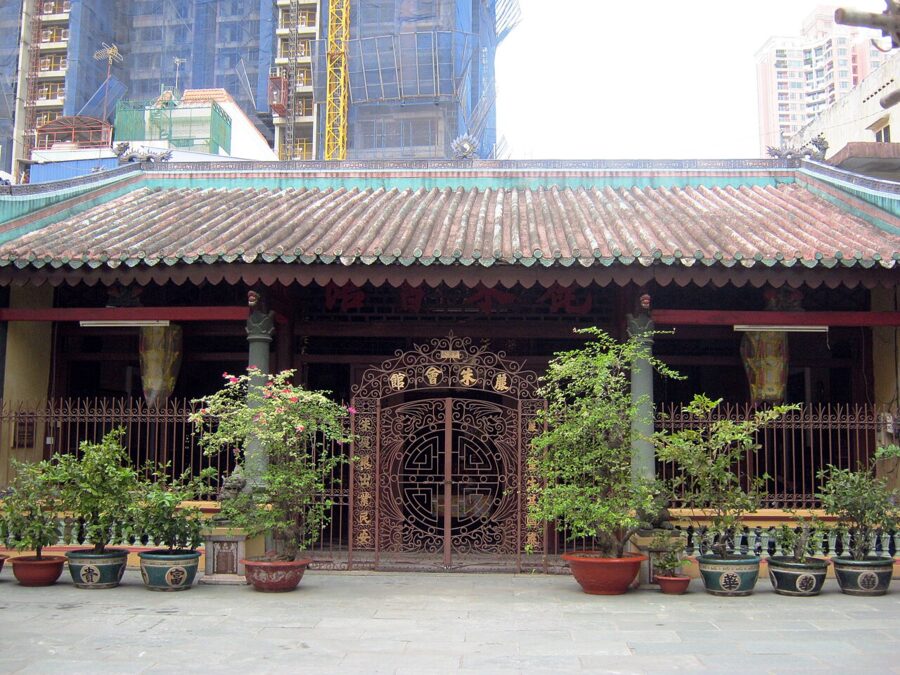

Cha Tam Church
Chợ Lớn’s Catholic church closes the view where Trần Hưng Đạo ends, at 25 Học Lạc Street in Chợ Lớn ward. Its formal name is the Church of Saint Francis Xavier, but everyone calls it Nhà thờ Cha Tam, after its builder, the Macau-born priest Pierre d’Assou, whose Chinese name, read Đàm Á Tố in Vietnamese and Tam in Cantonese, gave “Father Tam.” Born in 1855 and raised by French nuns, he spoke Teochew and Hakka, and was sent to Chợ Lớn in 1898 to revive a Chinese Catholic community that had dwindled to about forty people.
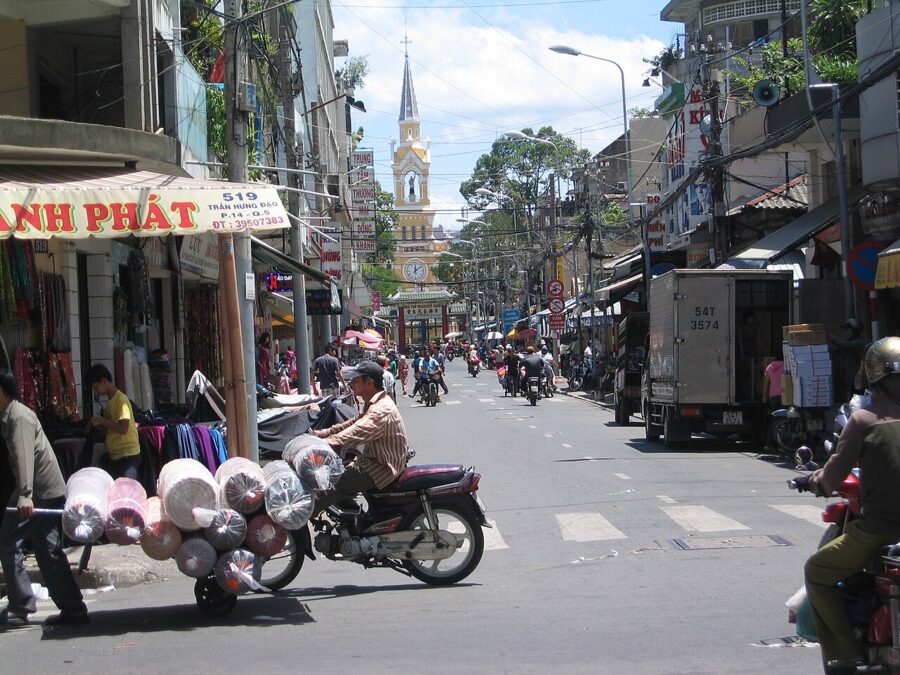

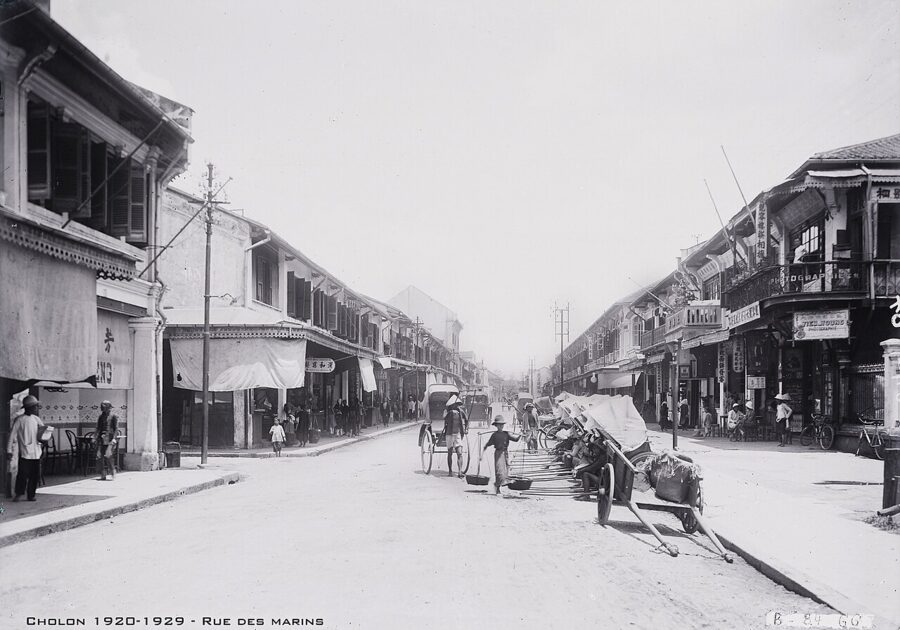
He bought a plot of about three hectares owned jointly by nine Chinese families, some of whom had gone back to China, and tracked down every heir. The foundation stone was laid on 3 December 1900, the feast of Saint Francis Xavier, and the church was consecrated in early 1902; sources give 10 January or 10 February. Cha Tam died in 1934 and is buried beside the church wall near the door.
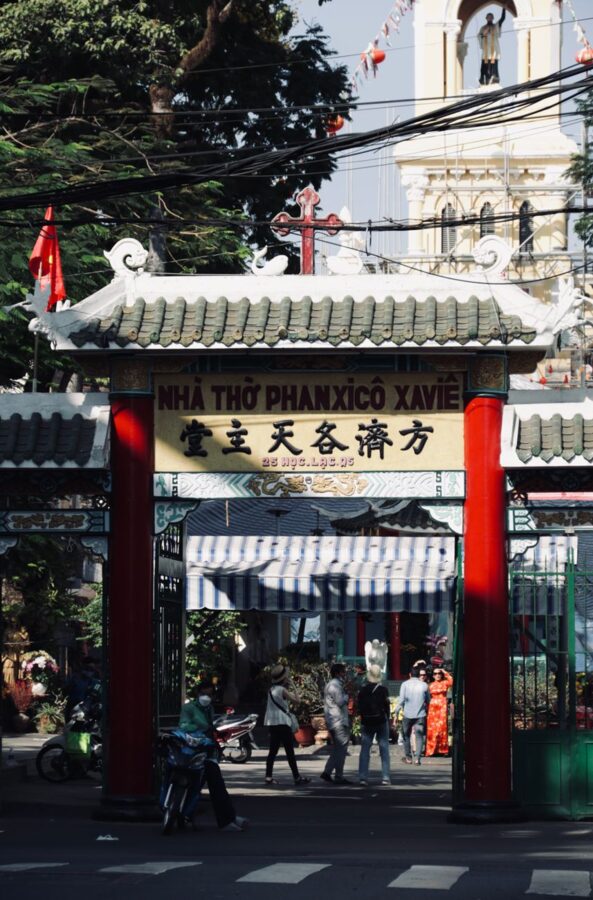
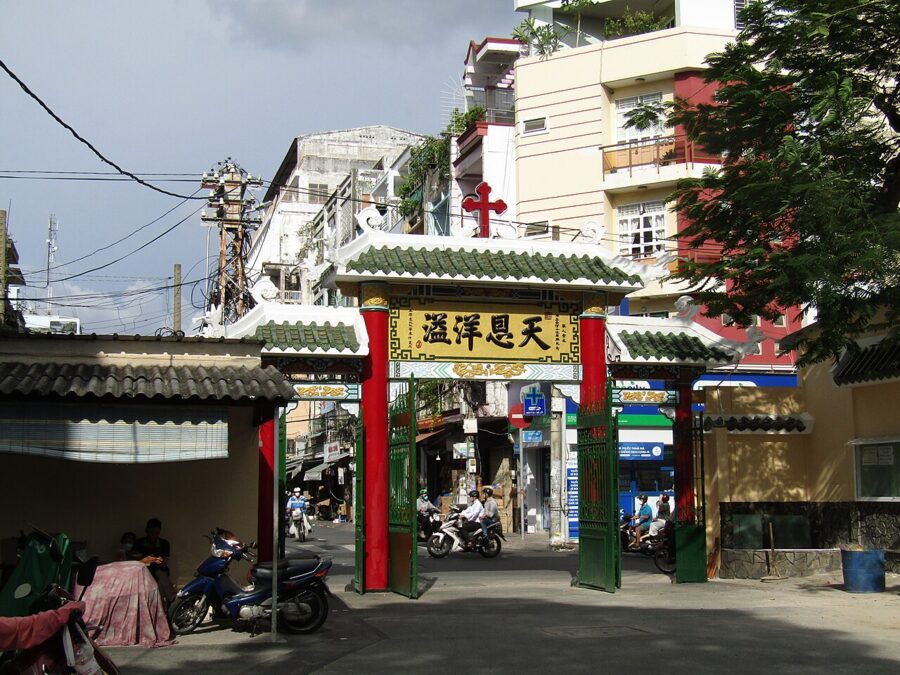
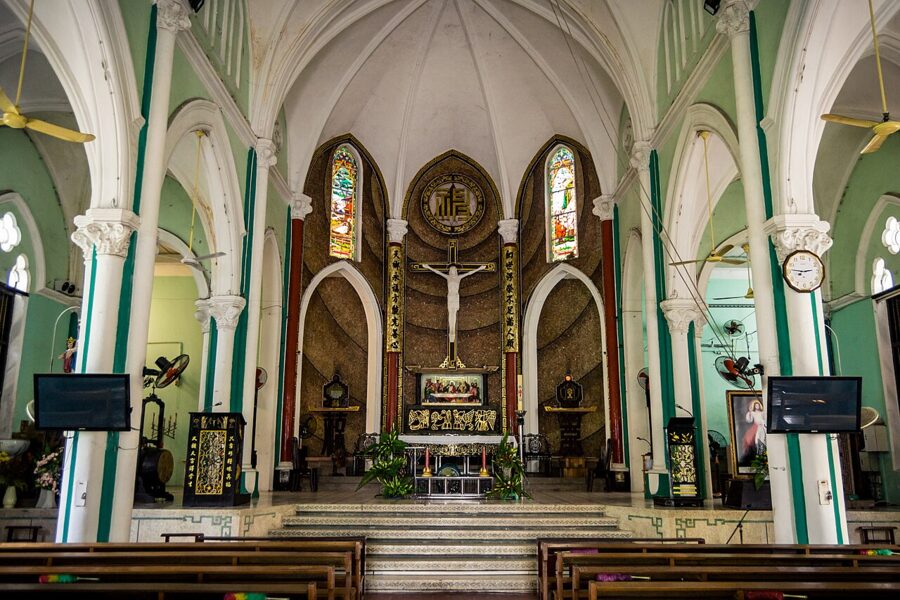
The building is Gothic Revival in outline, a generation younger than Notre-Dame Cathedral downtown, but the details are Chinese. Yin-yang tiles cover the roofs, carp flank the cross, lotus flowers sit on the ridge, red-lacquered columns stand in the nave and gilded Chinese couplets hang beside the crucifix. In the courtyard the Virgin stands under a hexagonal Chinese pavilion.
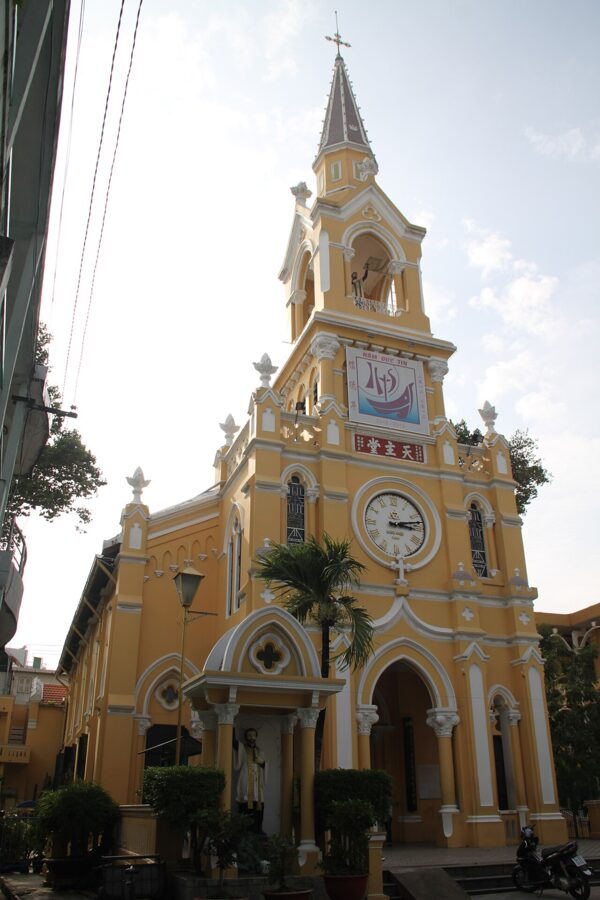
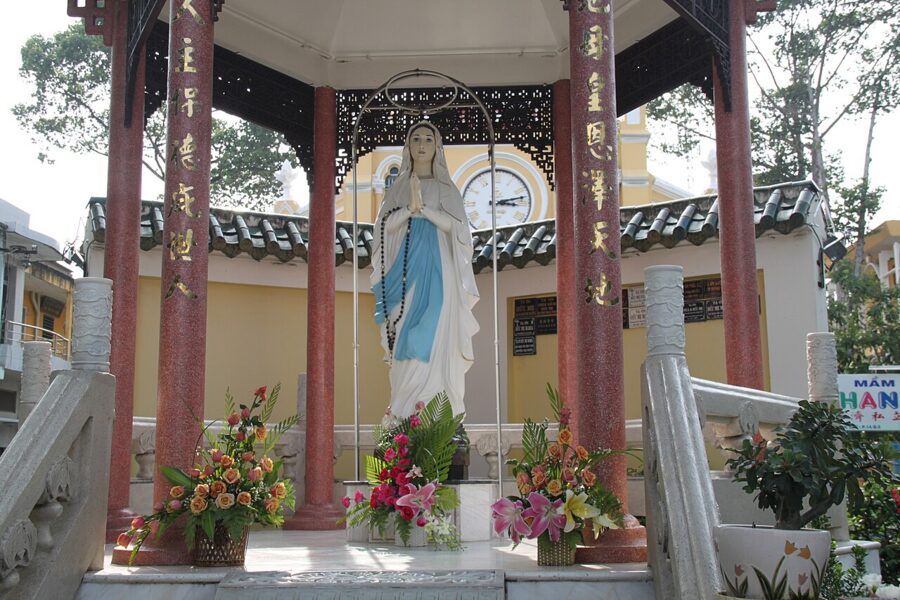
The church has a place in the history of the Republic of Vietnam. During the coup of 1 November 1963, President Ngô Đình Diệm and his brother Ngô Đình Nhu left the palace and spent the night at the house of a Chinese supporter in Chợ Lớn. On the morning of 2 November they came to Cha Tam to pray and then gave themselves up; both were killed in the armored personnel carrier taking them to the army’s general staff headquarters.

Temple manners
The halls are working places of worship, and entry is generally free. Cover shoulders and knees, take off a hat in the main hall, and step over, not on, the raised threshold. Photographing the buildings is generally accepted, but do not photograph people praying at close range, and never use a flash at an altar.
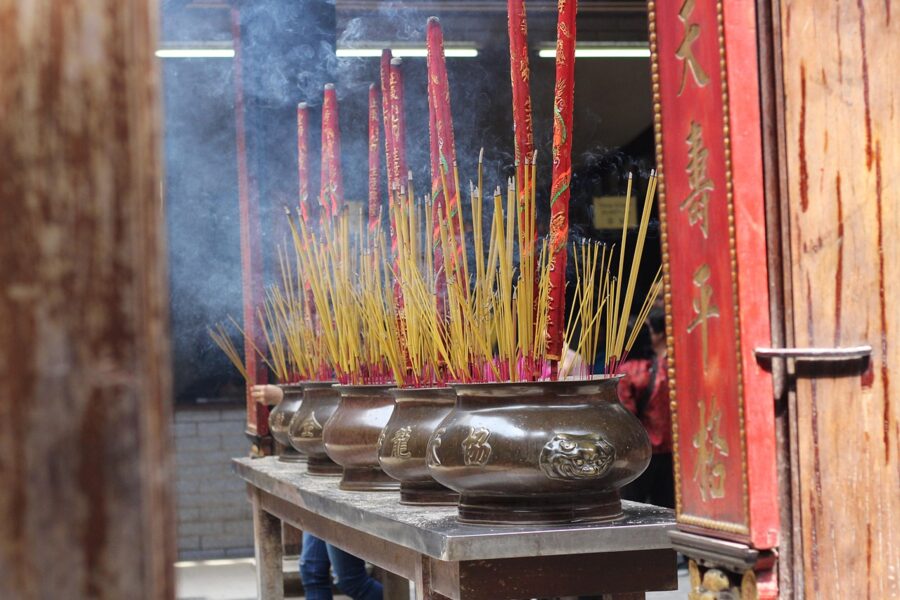
To light incense, buy a bundle at the counter or the stalls by the gate, light it from the lamp provided, and follow the regulars’ order round the urns, starting in the outer court. A small note in the donation box is the usual thanks.
Eating in Chợ Lớn
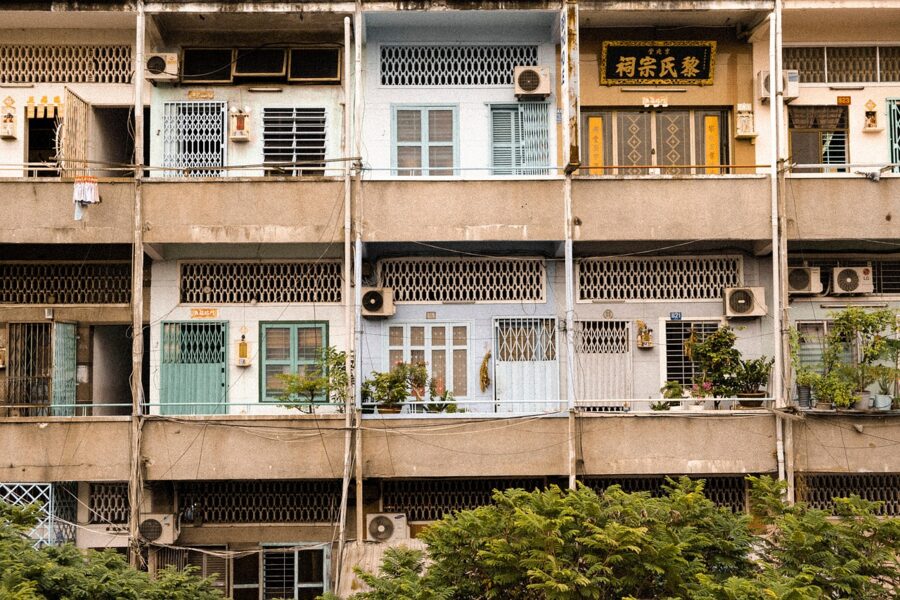
The food of Chợ Lớn is Chinese food that has lived in the south for two centuries: Teochew noodles in clear pork broth, Cantonese dim sum and roast meats, Hokkien fried noodles, all eaten with Vietnamese herbs and chili on the side. Most of it is cheap, quick and eaten at a shophouse table or on a plastic stool.
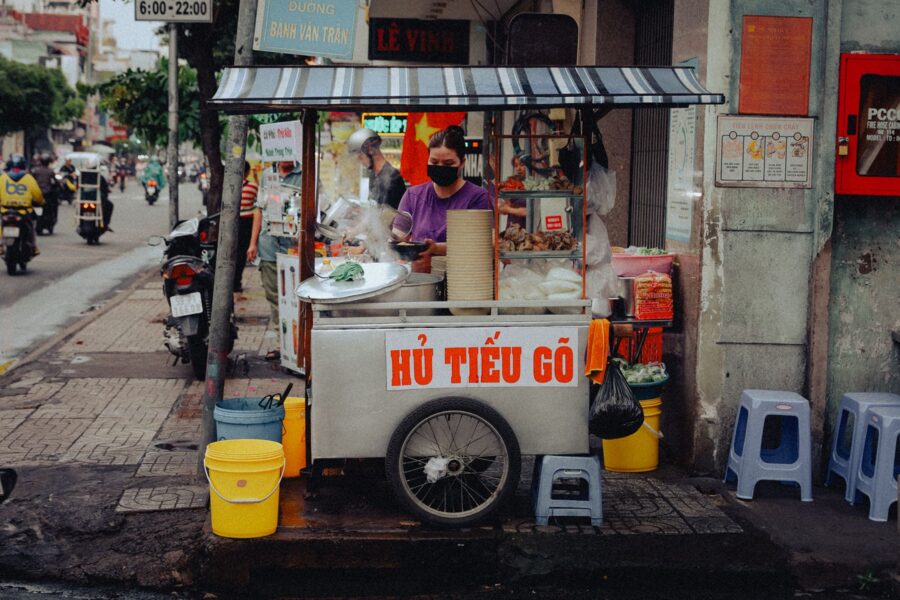
Start with hủ tiếu, the rice noodle soup that came with the Teochew and became a Saigon staple, served with pork, shrimp, liver and quail eggs, or dry with the broth on the side. The egg-noodle shops serve mì with wontons (hoành thánh) and char siu, and a local favorite, mì vịt tiềm: egg noodles with duck braised in a dark herbal broth.
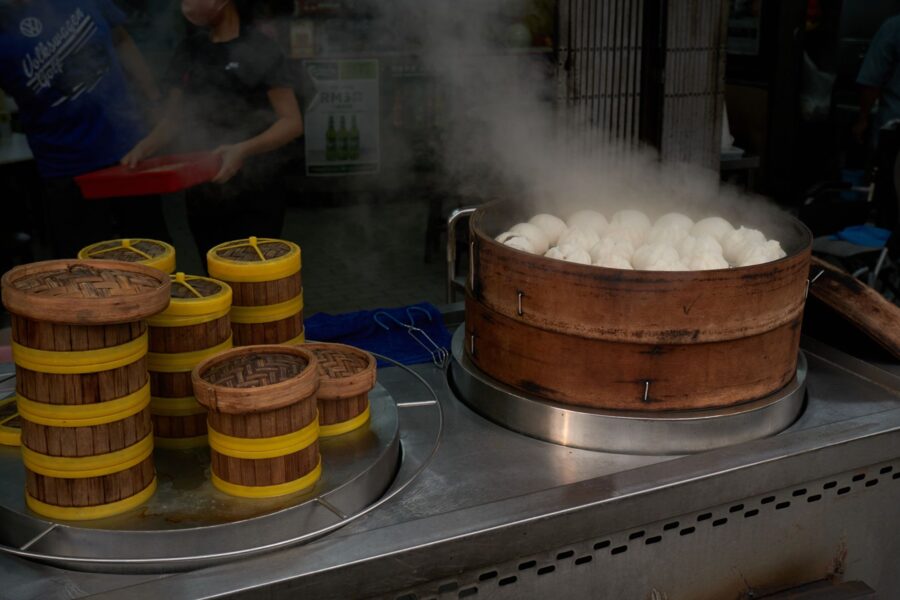
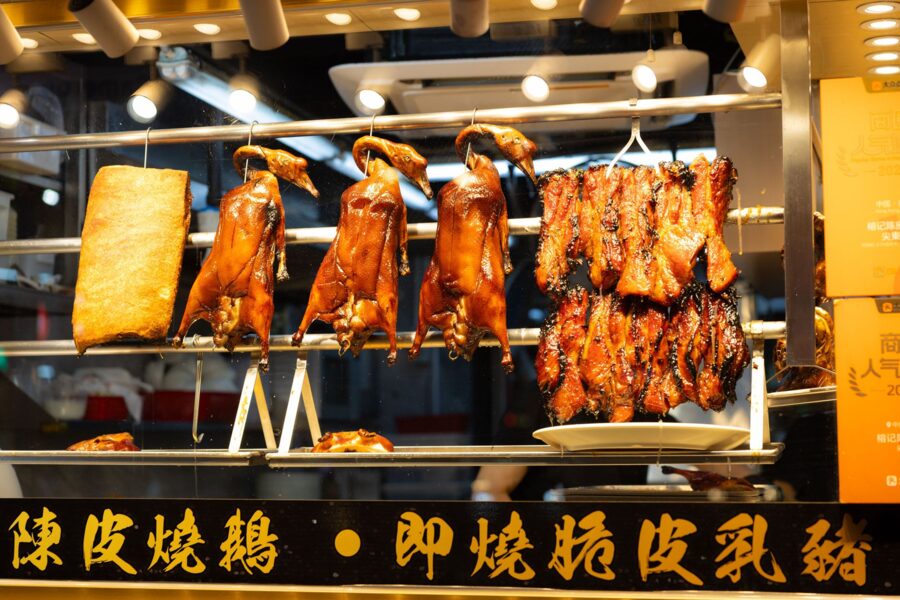
For breakfast, Chợ Lớn’s dim sum houses open early, serving há cảo (har gow), xíu mại, bánh bao and pots of tea. Steamed buns, sweet or filled with pork and egg, are sold from pavement steamers in the morning, and roast-meat shops hang ducks, crackling pork and char siu in the window for the lunch trade.
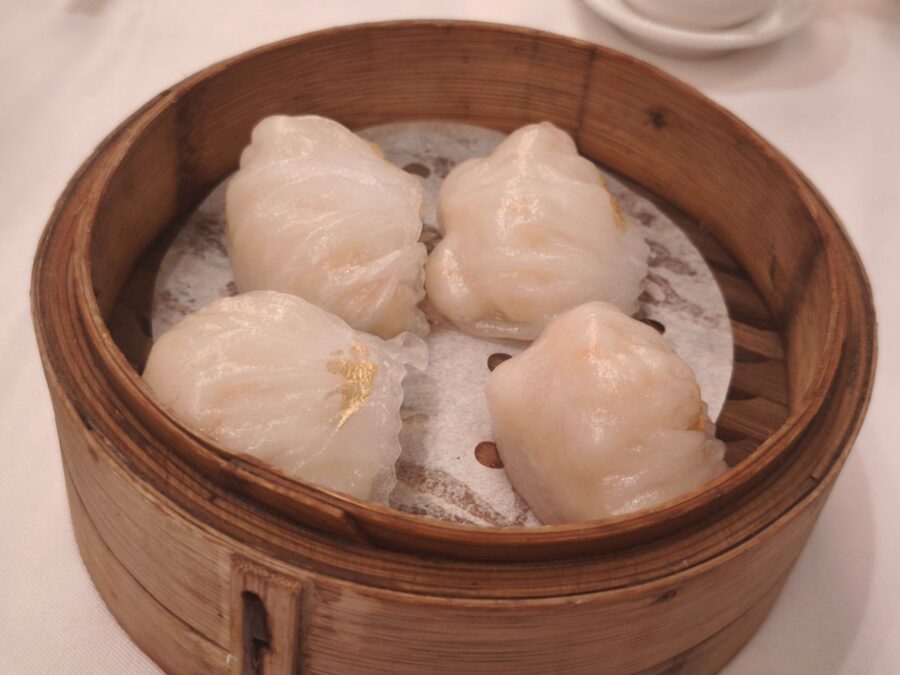
Sủi cảo, boiled dumplings, have their own street: Hà Tôn Quyền, north of Bình Tây in what is now Minh Phụng ward, known locally as the dumpling street and busiest in the evening. For dessert, look for chè shops serving black sesame soup (chè mè đen), glutinous rice balls (chè thang viên), herbal jelly (quy linh cao) and almond tofu, and for Hong Kong-style milk tea.
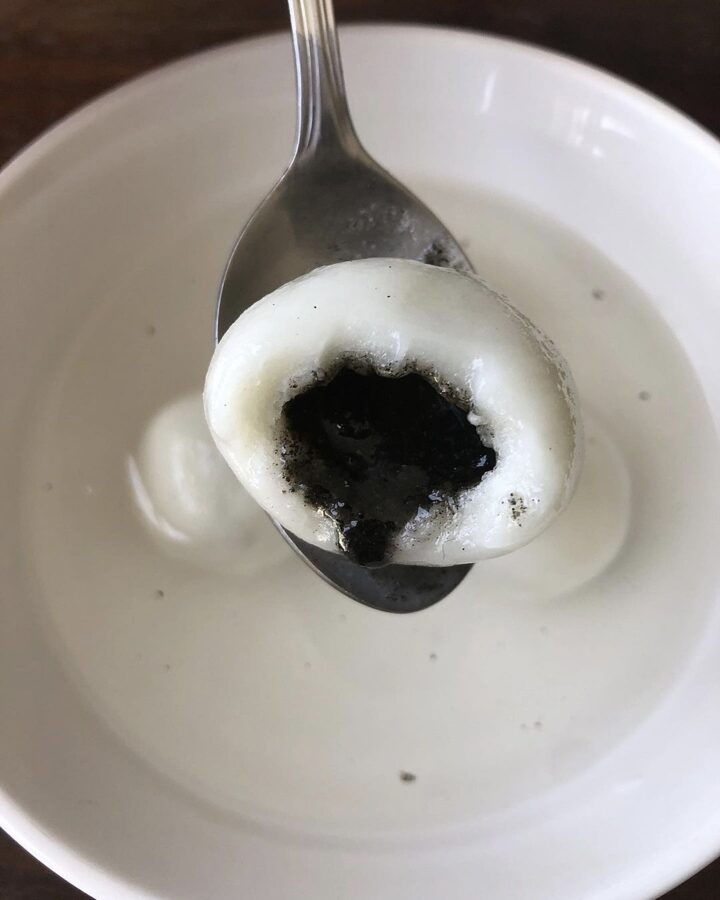

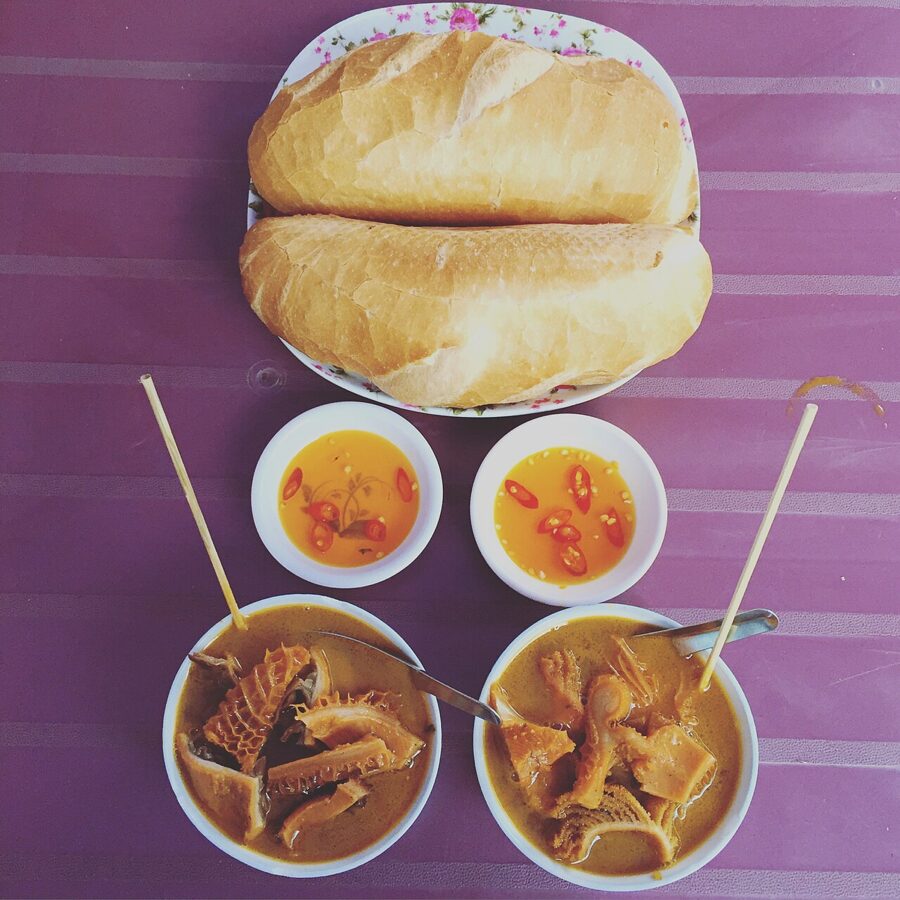
The food court at the back of Bình Tây serves breakfast and lunch to traders: hủ tiếu, fried noodles with beef, xíu mại, phá lấu (offal stewed with five-spice and coconut), braised duck, sủi cảo, chè and iced coffee. A recent listing put dishes at about 30,000₫ to 60,000₫ (about US$1.15 to US$2.30). It is the easiest place to eat without hunting, and the quality matches the price.

Chợ Lớn also holds a food festival each December, the Chợ Lớn Food Story, first run in 2023; the 2025 edition ran from 5 to 7 December at the cultural center of An Đông ward. Dates for 2026 had not been announced at the time of writing.
How to visit
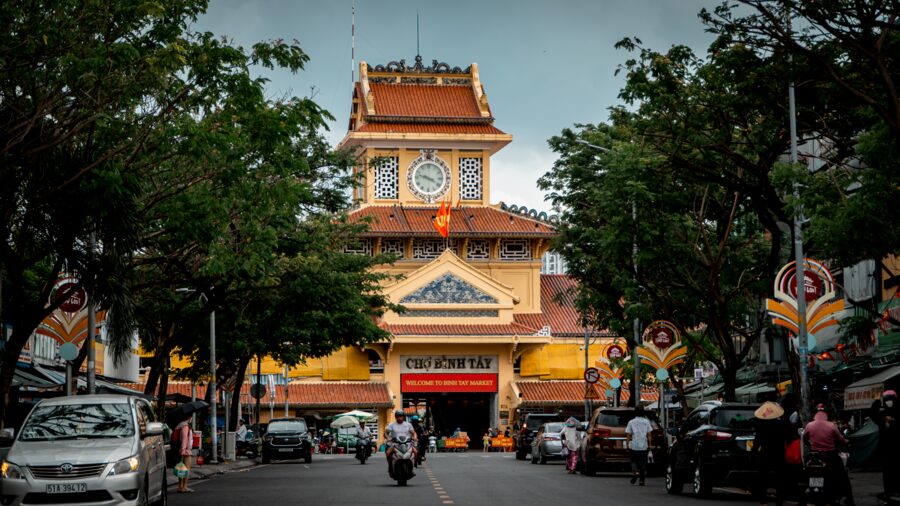
| Bình Tây Market | 57A Tháp Mười, Bình Tây ward (old Ward 2, District 6) |
|---|---|
| Market hours | Indoor stalls about 6am to 6pm, shutters coming down from about 4pm; the wet market on Phan Văn Khỏe is busiest 5am to 9am. Hours vary by stall. |
| Entry | Free. Toilets a few thousand dong; motorbike parking about 5,000₫. |
| Night street | Daily, 6pm to midnight, on the sidewalks around the market |
| Heritage program | “Chạm vào dấu xưa,” Saturday mornings and Sundays; ask the management board for times and price |
| Assembly halls | Usually free. No reliable published hours; go in the morning or before 4pm |
| Closures | Most market stalls close for several days around Tết, which falls on 6 February in 2027 |
Getting there
Chợ Lớn is about six kilometers west of the old center. A Grab or Be car from the Bến Thành area takes 20 to 35 minutes and recently cost about 90,000₫ to 150,000₫ (about US$3.40 to US$5.70); a motorbike taxi about 35,000₫ to 60,000₫ (about US$1.30 to US$2.30). Avoid 7am to 8:30am and 4:30pm to 6:30pm, when the trip can take twice as long.
Metro Line 1, opened in December 2024, runs from Bến Thành northeast to Suối Tiên and does not come near Chợ Lớn. City bus route 1 runs from Bến Thành to the Chợ Lớn bus station beside the market, every 10 to 15 minutes from early morning to about 8pm; check it in the BusMap app before relying on it.
On foot, Bình Tây is about 15 to 20 minutes from the Thiên Hậu Temple: walk west along Nguyễn Trãi past Hà Chương to Cha Tam Church, then south toward Tháp Mười. From Cha Tam alone it is about ten minutes.
When to go and how long to allow
Go early. Between 6:30am and 9am the wet market is at its peak, breakfast is out, the air is cooler and the temples have their morning regulars. From 11:30am to 2:30pm the heat inside the market is hard work, and many traders nap at their stalls.
Allow at least an hour for Bình Tây and half a day for the walk below. Weekdays are better for the market, when the wholesale trade is in full swing; weekends suit the heritage program and the halls. Carry small notes, keep your phone in a front pocket in the crowded aisles, and bargain politely in the outer ring, where retail prices are not fixed.
A walking route
This loop covers about four kilometers and takes three to four hours at an easy pace, starting and ending at Bình Tây.
- Bình Tây Market (7am): the courtyard altar, the upper gallery, a lap of the outer ring and breakfast at the food court.
- Cha Tam Church: about ten minutes northeast via Học Lạc, for the gate, the Virgin’s pavilion and, if open, the nave.
- Hà Chương: east along Nguyễn Trãi, five minutes. Detour a block north to Ôn Lăng on Lão Tử, and on to Phước An on Hồng Bàng if you have time.
- Lương Nhữ Học: back on Nguyễn Trãi, the lantern block runs south toward Trần Hưng Đạo.
- Thiên Hậu and Nghĩa An, side by side at 710 and 678 Nguyễn Trãi. Tam Sơn and Quỳnh Phủ are a block south.
- Hải Thượng Lãn Ông: cut south to the medicine street and walk west past the Chợ Lớn post office, on the old market site, and Nhị Phủ.
- Back to Bình Tây past Kim Biên market for lunch, or north to Hà Tôn Quyền for dumplings.
Pair the walk with the Fine Arts Museum on the same day, since it is near Bến Thành, where most visitors stay. If you can choose, see the statue first, then come out to the market and look at the plinth it left behind.
Come back in the evening if you can. At six the shutters on Tháp Mười are down, the food trucks pull up along the pavement, and the clock tower Quách Đàm paid for lights up over the night street. The incense at the old plinth has burned down by then; somebody will light more at half past six tomorrow.