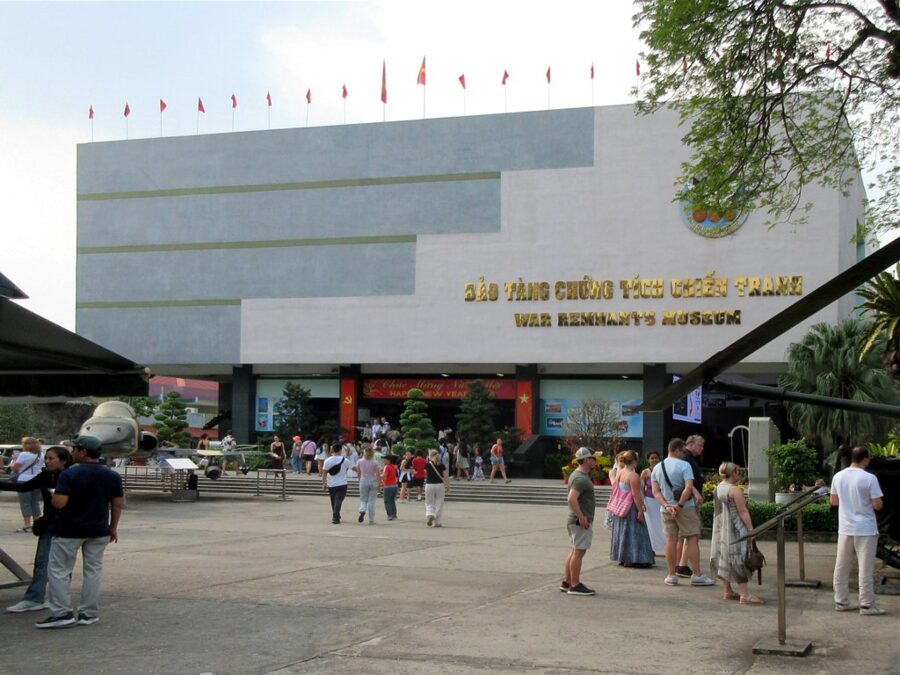
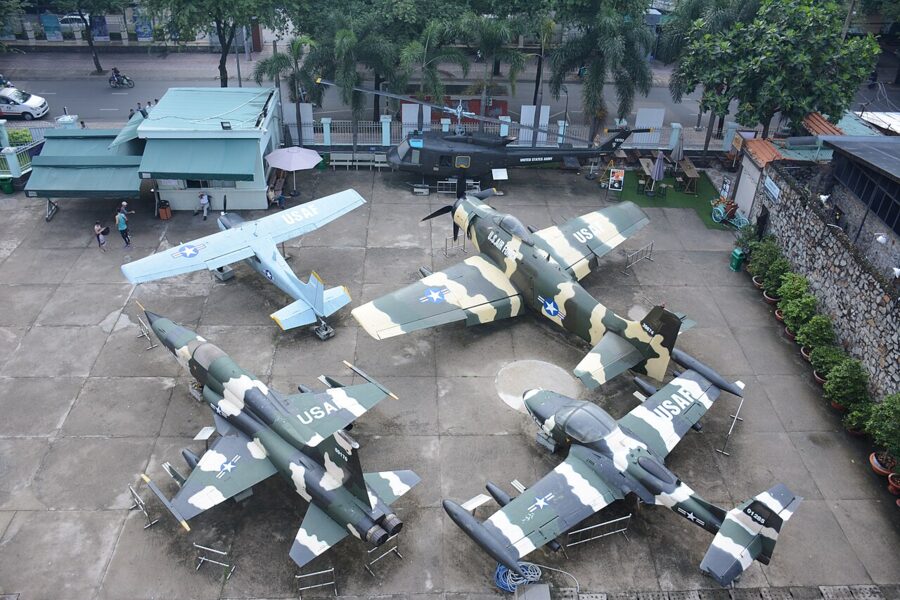
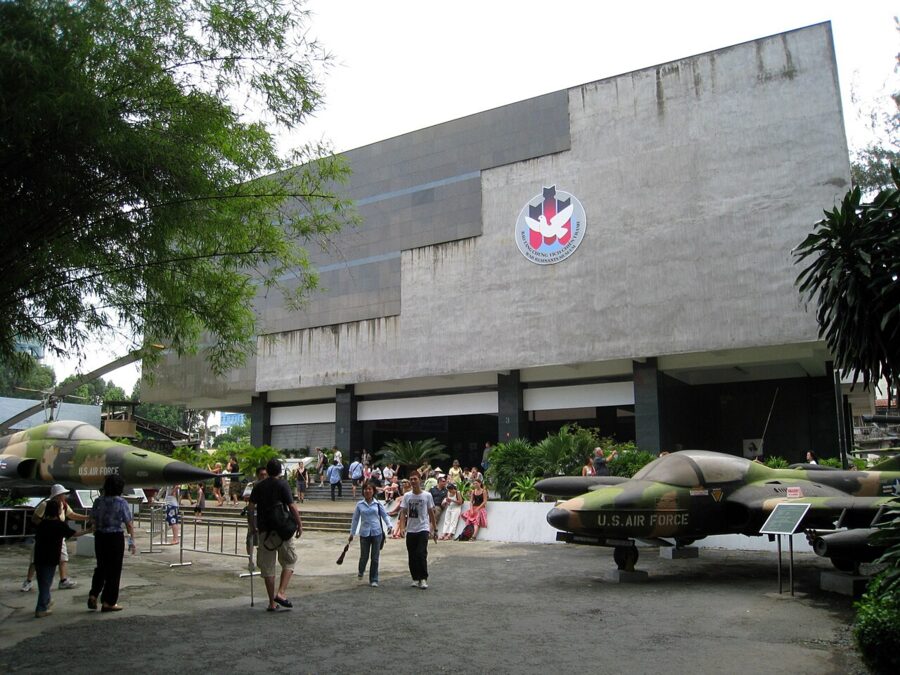
At 7:30am, when the gate on Võ Văn Tần street opens, one of the first things in the yard is a small attack jet with “U.S.AIR FORCE” painted along its side. The paint is newer than the plane. Like several aircraft around it, the jet served with South Vietnam’s air force, and the American lettering was added for display. That is a fair summary of the War Remnants Museum (Bảo tàng Chứng tích Chiến tranh): real objects, real photographs, arranged to make a case.
It is one of the most visited museums in Vietnam, with more than a million people a year and some 25 million since it opened in 1975. Many come for an hour between other sights and leave shaken. Give it longer and read it more carefully, and it becomes one of the most instructive places in the country: about the war, and about how a state that won it chose to remember it.

The museum redrew its visitor route in April 2026: twelve numbered stops across three floors, a separate prison building and the yard. The ticket price and the visitor rules changed in 2026 as well. The rooms make most sense in the museum’s own order, from the top floor down, with the yard first while it is cool.

On this page
- From a royal birthplace to an exhibition of crimes
- The yard: aircraft, armor and a seven-ton bomb
- The second floor: Historical Truths, Requiem and two Japanese photographers
- The first floor: War Crimes and Agent Orange Effects
- The ground floor and the prison building
- How the museum tells its story, and how to read it
- Before you go: children, weight and photography
- How to visit
From a royal birthplace to an exhibition of crimes
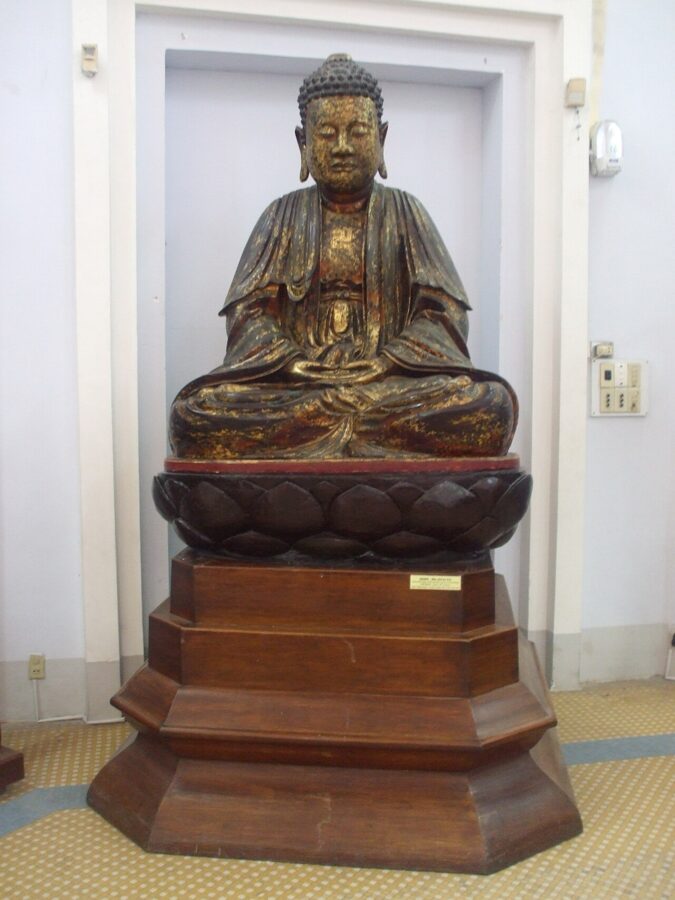
The ground under the museum has changed hands more often than its name. From the 1750s it held Khải Tường pagoda, where in 1791 a consort of Nguyễn Ánh, the future Emperor Gia Long, gave birth to the prince who became Emperor Minh Mạng. Minh Mạng later paid for the pagoda’s rebuilding as a royal foundation.
When French and Spanish forces took the Gia Định citadel in 1859, the pagoda became a fortified post. Its commander, Captain Nicolas Barbé, was ambushed and killed outside it in December 1860, and for years the French called the place the Barbé pagoda. By the end of the century the buildings were gone, and villas stood on the plot along rue Testard, the street now called Võ Văn Tần.

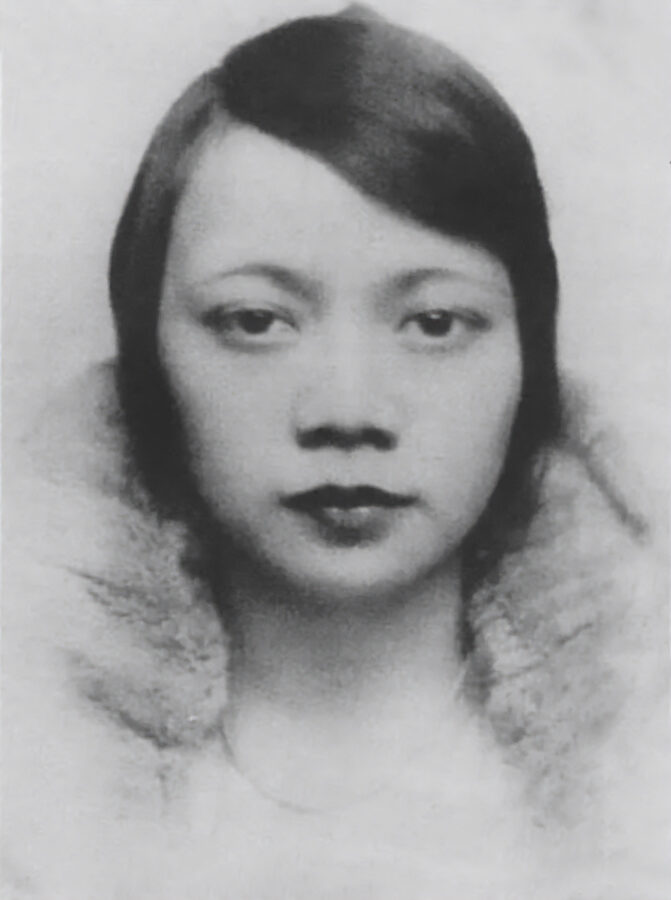
In the 20th century the lot belonged to Bùi Quang Chiêu, a Cochinchina politician, whose daughter Henriette Bùi, one of the first Vietnamese women to qualify as a doctor, opened a maternity clinic in the villa in 1940. She gave the building to the Saigon medical school in 1947. In 1961 the school moved out and American agencies moved in.
Which agencies depends on the source. Many English accounts call it the United States Information Agency building, one widely repeated account calls it an American military intelligence headquarters, and the museum’s own Vietnamese history names the Office of Civilian Personnel and an American aid inspection office, with a security unit for American installations after 1973. The plain point all of them agree on is that 28 Trần Quý Cáp, as the street was then called, was an American government address until April 1975.
Three names in twenty years
Five months after the war ended, on 4 September 1975, the building opened as the Exhibition House of American and Puppet Crimes (Nhà trưng bày tội ác Mỹ-ngụy), “puppet” meaning the Saigon government. It was the work of an investigation committee set up by the city’s Party leadership in August 1975 to gather evidence of war crimes, and it was assembled in weeks from material held by army units, city departments and private individuals.
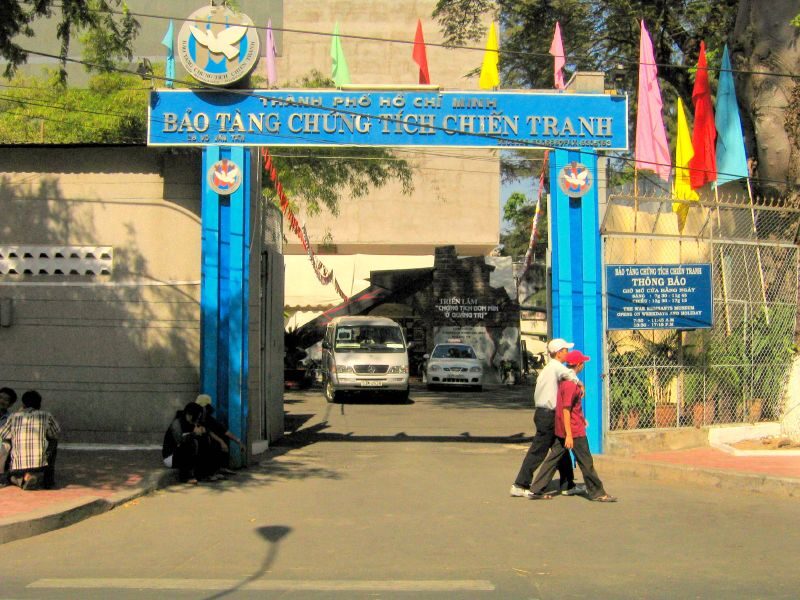

On 10 November 1990 it became the Exhibition House of Crimes of War and Aggression, dropping “American” and “puppet”. On 4 July 1995, a week before Washington and Hanoi restored diplomatic relations, it took its present name. Older guidebooks also give a “Museum of Chinese and American War Crimes”, a title that does not appear in the museum’s own account of its history, so treat it as hearsay.

In 1998 the museum joined the International Network of Museums for Peace, and it is still the only Vietnamese member. The name changes track the diplomacy. The exhibits have changed more slowly than the name on the gate.
The yard: aircraft, armor and a seven-ton bomb
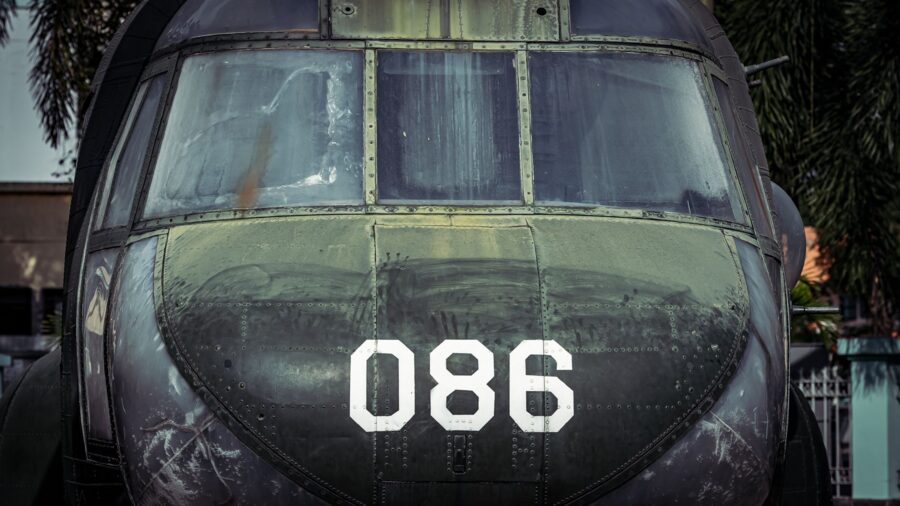
Stop 12 on the museum’s map is the open-air exhibition, and it is the best place to start. At 7:30am the yard is shaded and nearly empty; by eleven the sun is on the concrete and the tour groups are taking turns in front of the Chinook. Most of the hardware was handed over by the Ministry of Defence and the Military Region 7 command, and almost all of it was captured or abandoned in 1975.
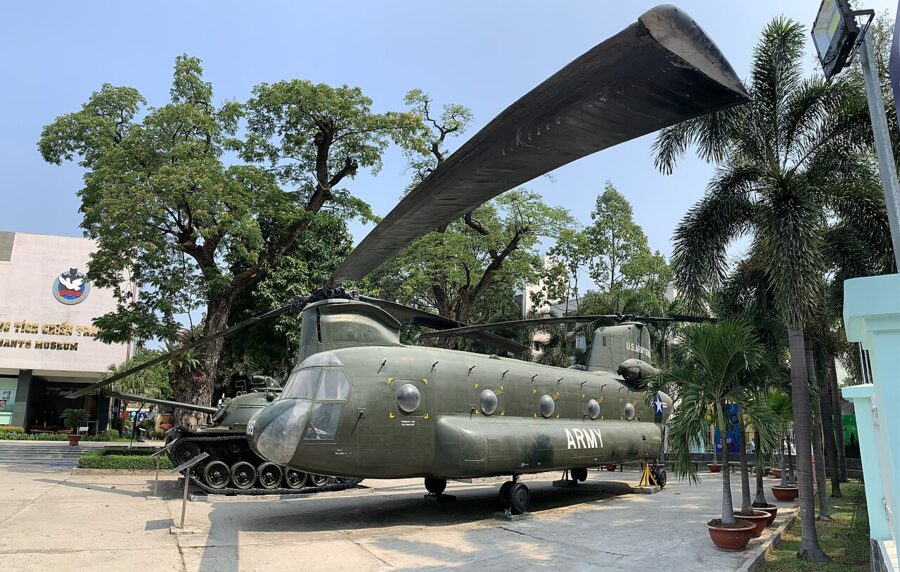

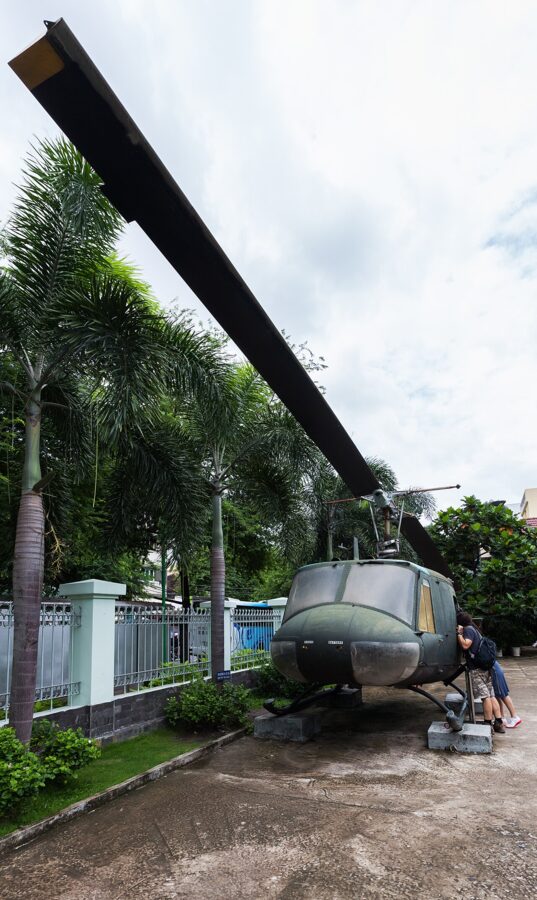
The aircraft line the left side of the yard: the Chinook, a UH-1H “Huey” helicopter, a Northrop F-5A fighter, a Cessna A-37 attack jet, a Douglas A-1 Skyraider and a Cessna U-17 spotter plane. Several were South Vietnamese Air Force machines, and their American service lettering is a later addition.


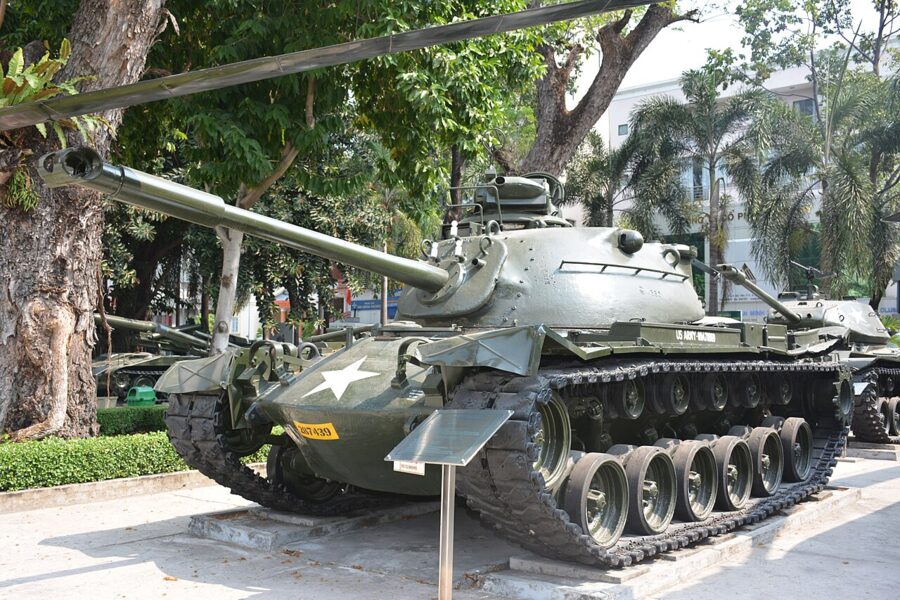
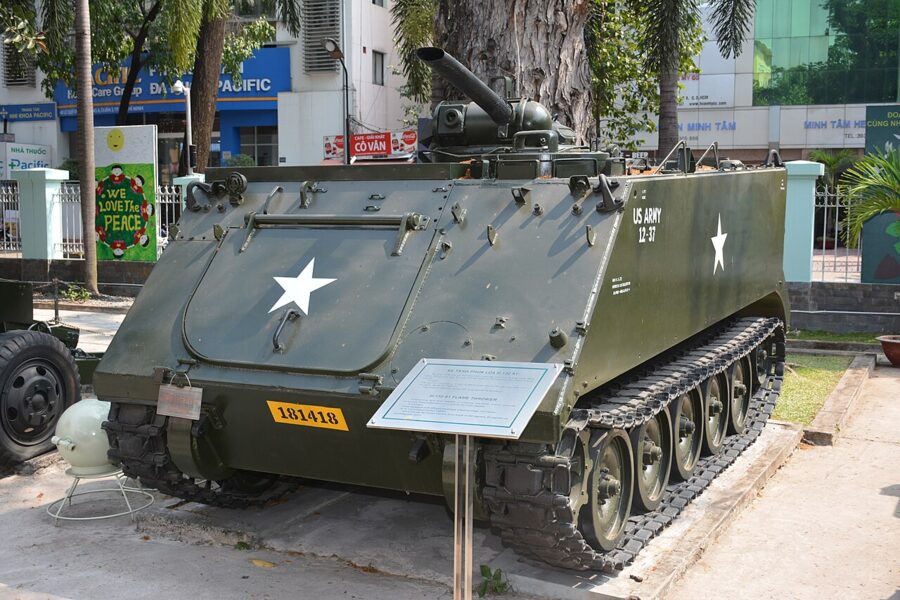
The armor fills the right side and the far end: an M48 Patton tank, an M41 Walker Bulldog, an M113 armored personnel carrier, an M132 flamethrower built on the same chassis, a bulldozer used for land clearing, and the long barrel of an M107 175mm self-propelled gun. Read the labels on the flamethrower and the bulldozer. They are where the yard stops being a vehicle park and starts the argument the galleries continue.


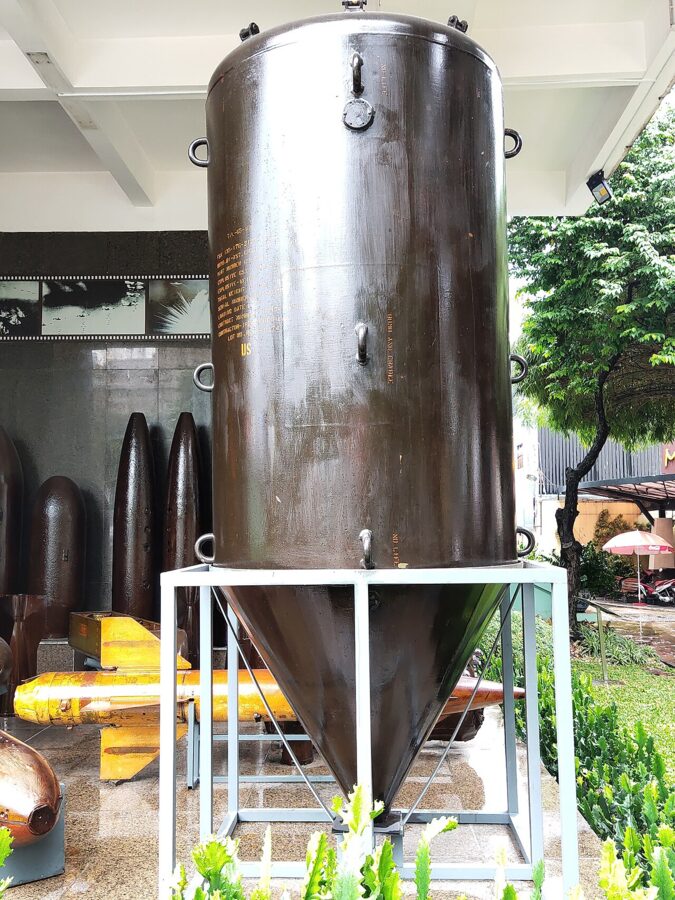
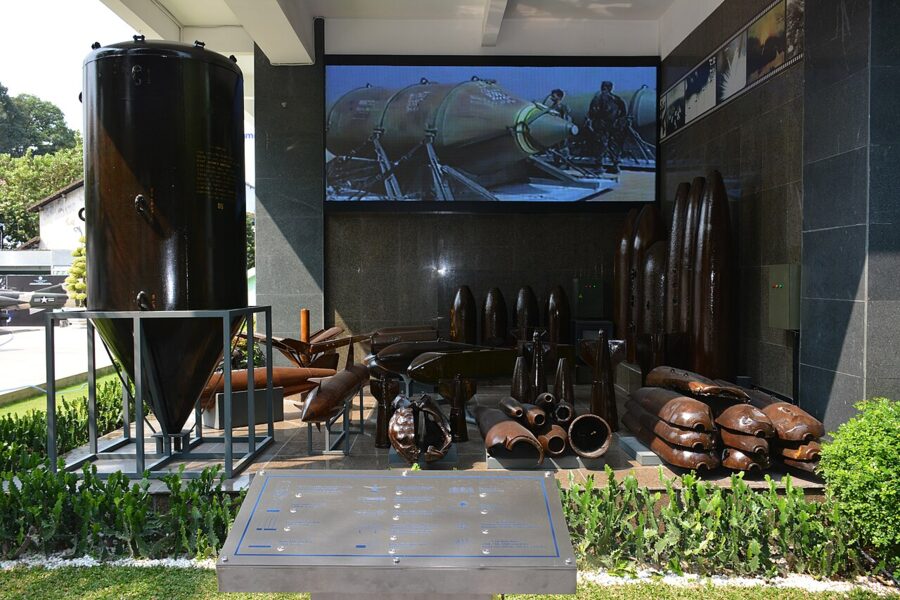
The far corner holds the ordnance: a BLU-82 bomb casing, the seven-ton “Daisy Cutter” dropped from transport planes to blast helicopter landing zones out of jungle, beside rows of artillery shells, cluster bomb canisters and bombs with their fuses and charges removed. It is the only place in the museum where the scale of the bombing becomes something you can stand next to.


The second floor: Historical Truths, Requiem and two Japanese photographers
The route map starts at the top. Take the stairs to the second floor (the Vietnamese “Lầu 2”, which is the third level) and work down, room 1 to room 8. The galleries are air-conditioned and the labels are in Vietnamese and English. QR codes on the panels lead to more detail, and the museum runs an audio guide in six languages: Vietnamese, English, French, Russian, Japanese and Chinese.

Room 1: Historical Truths
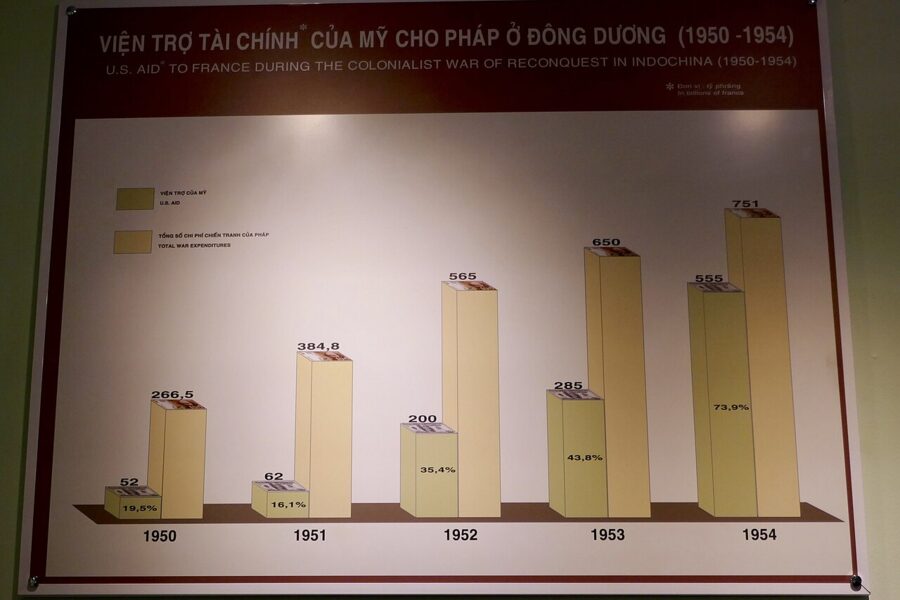
The first room sets out the frame for everything below it: 66 photographs, 20 documents and 153 objects tracing American involvement from aid to France in 1950 to the fall of Saigon. Its introduction states the argument. After the August Revolution of 1945 and the French defeat, the United States “sabotaged” the 1954 Geneva Agreements and waged a war of aggression to divide the country.
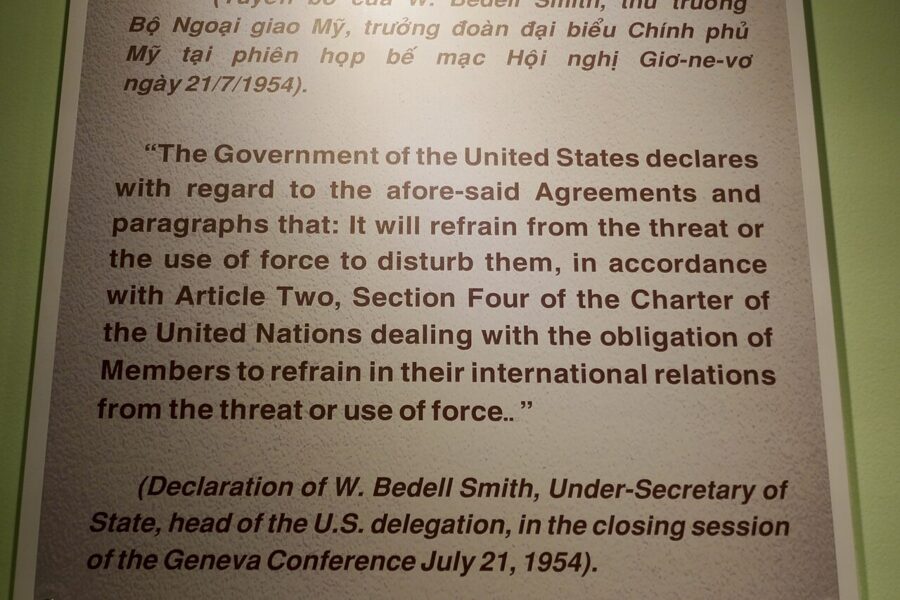
The evidence is mostly American. A bar chart shows American financial aid to the French war, rising year by year to 1954. A panel quotes Walter Bedell Smith’s statement at Geneva that the United States would “refrain from the threat or the use of force to disturb” the agreements. The introduction ends on Robert McNamara’s admission, decades later, that “we were wrong, terribly wrong.”


The totals on the walls are the museum’s own: more than six million American troop deployments, 14.3 million tons of bombs and ammunition, and US$676 billion spent. The tonnage counts bombs and shells together; aerial bombing alone is usually put at around seven to eight million tons, still more than the Allies dropped in the whole of the Second World War.
Room 2: Requiem
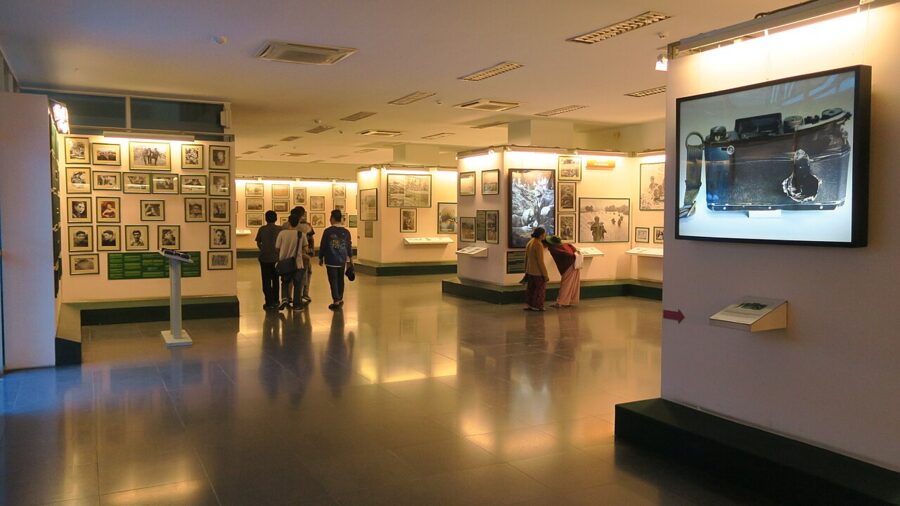
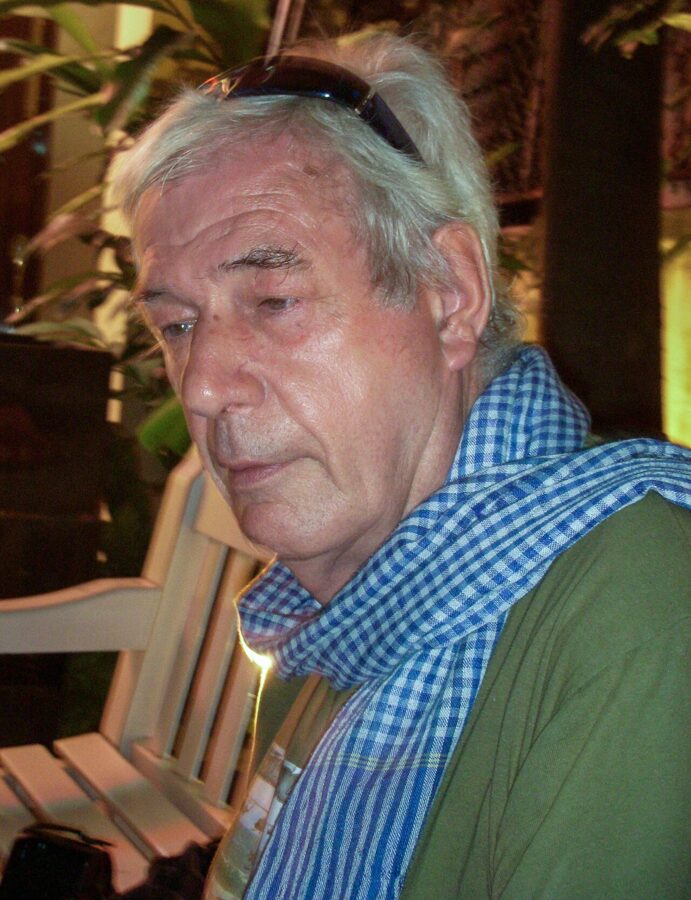
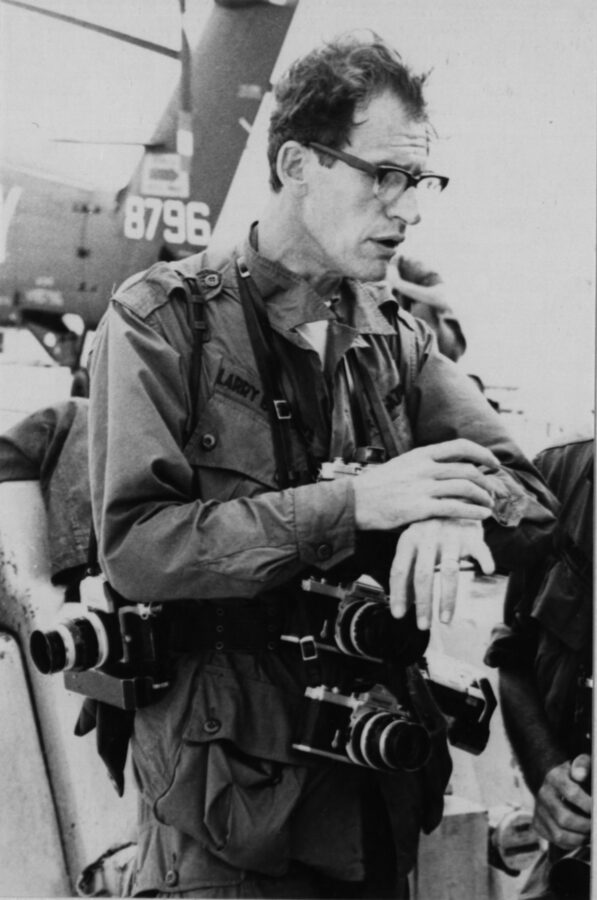
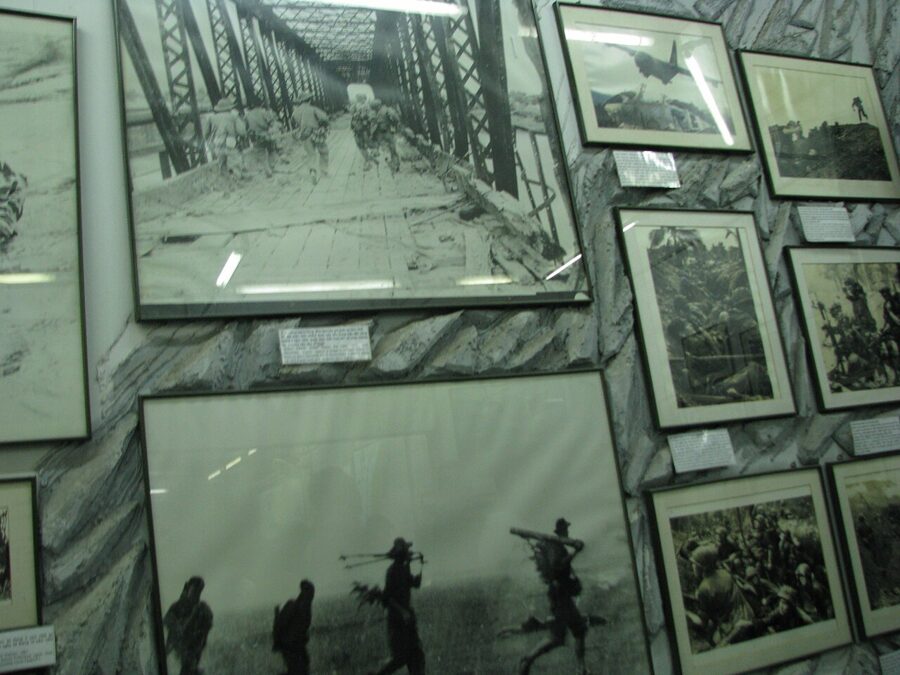
Room 2 holds the collection most people remember. “Requiem” was put together by two photographers who covered the war, the German Horst Faas and the Briton Tim Page, with help from the Vietnam News Agency. (The museum’s own text calls them both British.) It holds 275 photographs by 134 photographers of 11 nationalities, and every one of them died covering the wars in Indochina.
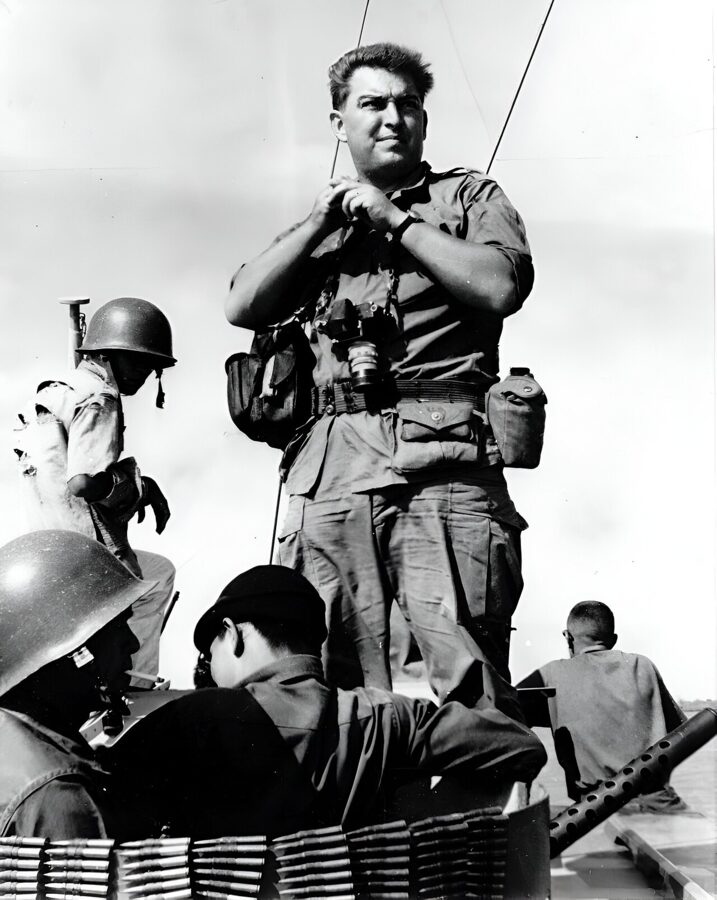

The names run from Robert Capa, killed by a landmine in Thái Bình province in May 1954, to the last losses of 1975. Larry Burrows of Life, Henri Huet of the Associated Press, Kent Potter and Keisaburo Shimamoto died together when their helicopter was shot down over Laos in February 1971. The room also hangs the work of North Vietnamese and Viet Cong photographers, which is what made the collection unusual when it was first published in 1997.
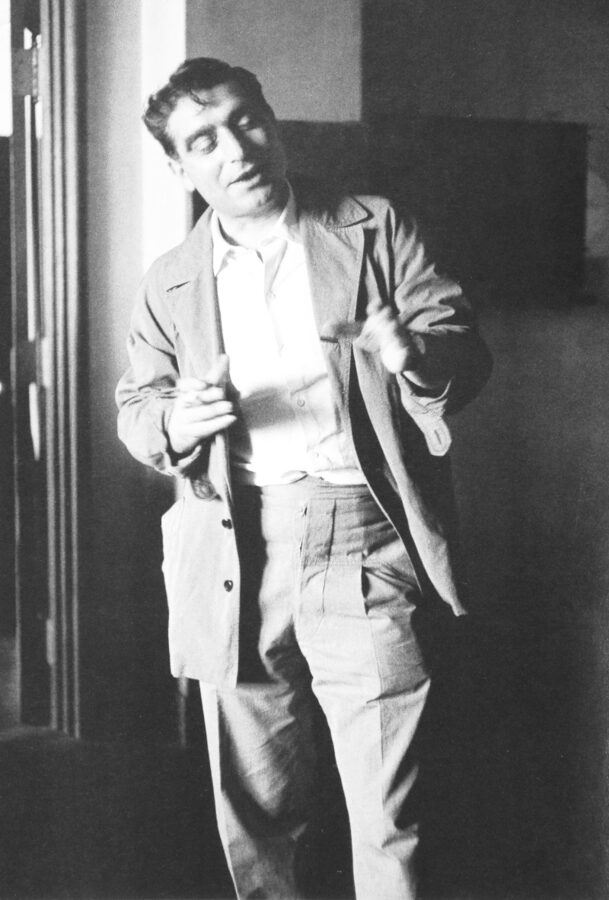
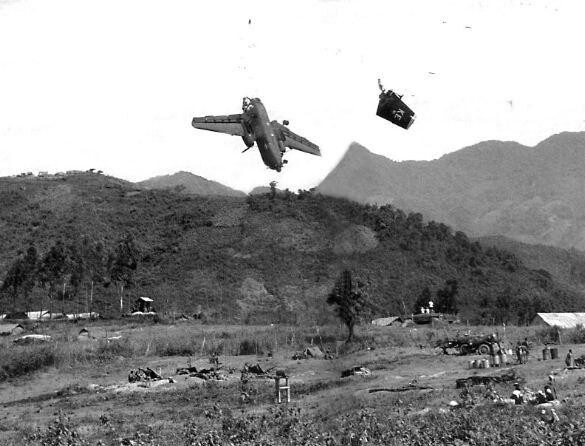
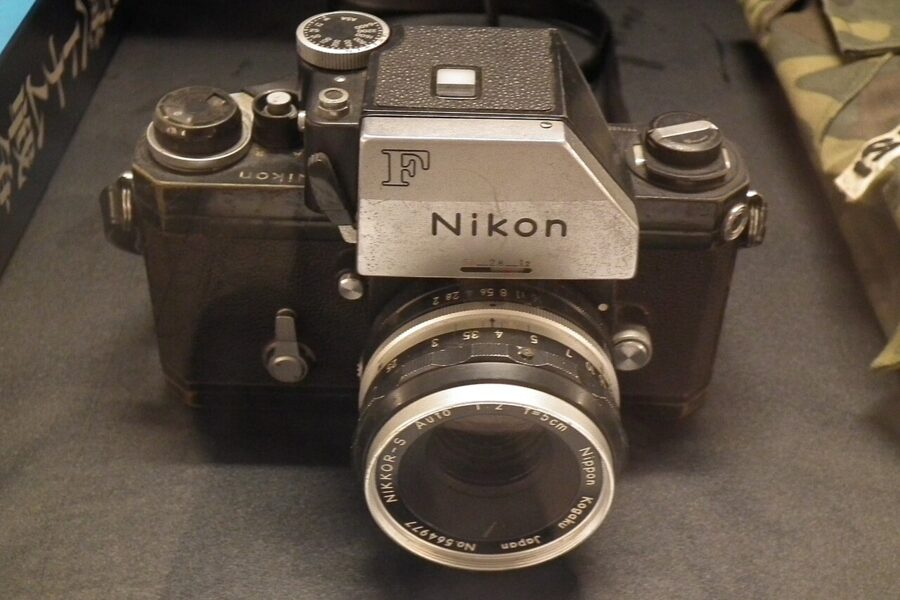
Look for the Caribou. On 3 August 1967 Hiromichi Mine photographed an American transport plane at Đức Phổ at the moment friendly artillery fire took off its tail; Mine was killed the following year. Look, too, for the camera of the Japanese photographer Taizo Ichinose, pierced by a bullet, which the museum displays as a symbol of the trade. Ichinose disappeared in Cambodia in 1973.
Requiem is the room where the museum’s case and the photographers’ intentions sit furthest apart. The pictures were made for American and European magazines, by people who often supported neither side, and many of them document American suffering as closely as Vietnamese. Here they hang under a Vietnamese title, in a sequence that serves the argument of the floor.

Rooms 3 to 5: Nakamura, Ishikawa and the White Doves
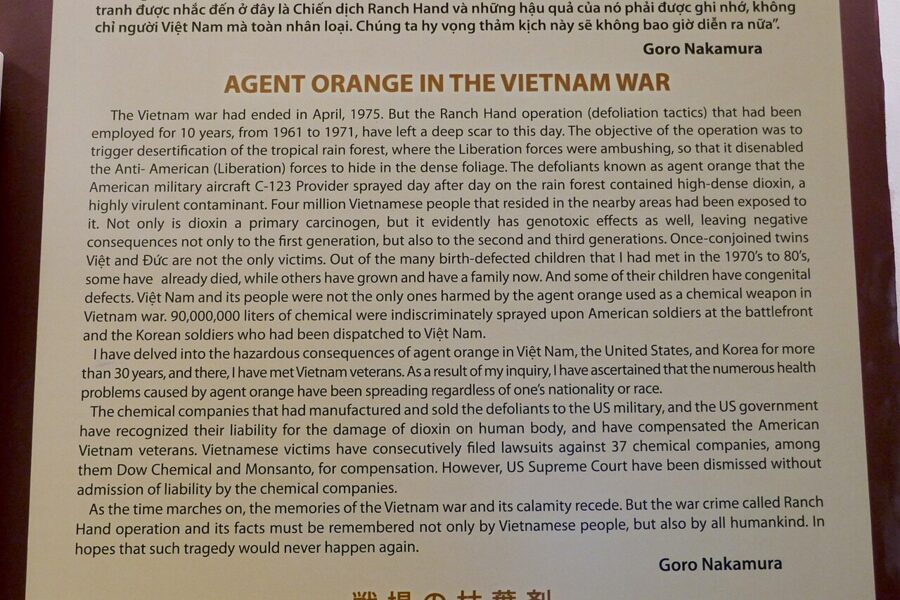
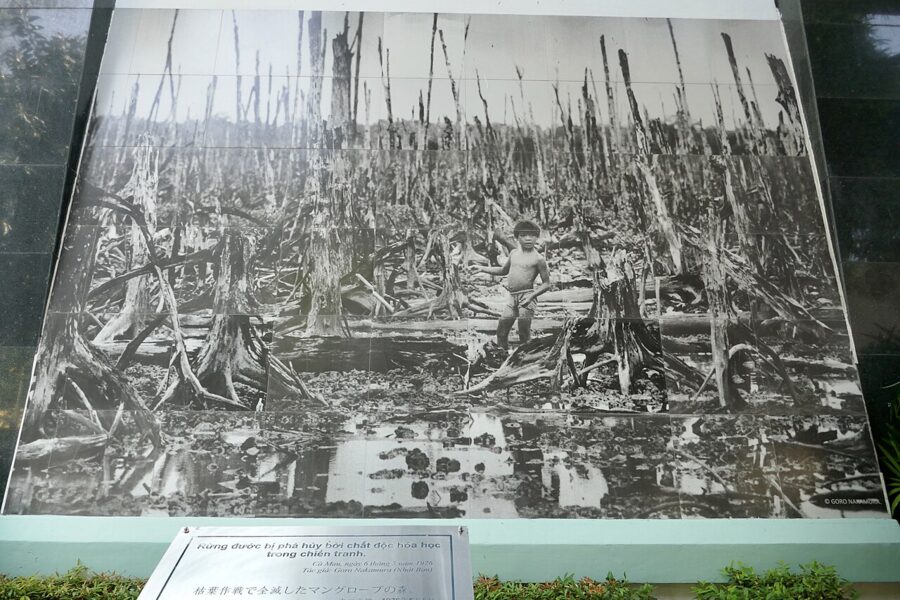
Room 3, “Agent Orange during the Vietnam War”, holds 42 photographs by Goro Nakamura, a Japanese photojournalist who spent some thirty years documenting the effects of the defoliant. He photographed victims in Vietnam, the United States and South Korea, and won the W. Eugene Smith award in 1988. His pictures are the gentlest way into a subject the floor below treats much harder.

Room 4 is “Vietnam – War and Peace”, 123 photographs by Ishikawa Bunyo, an Okinawan photographer who worked in Vietnam from 1965 to the end of the war for a Hong Kong agency. In 1998 he gave most of his archive to the museum, and his camera has been shown there too.

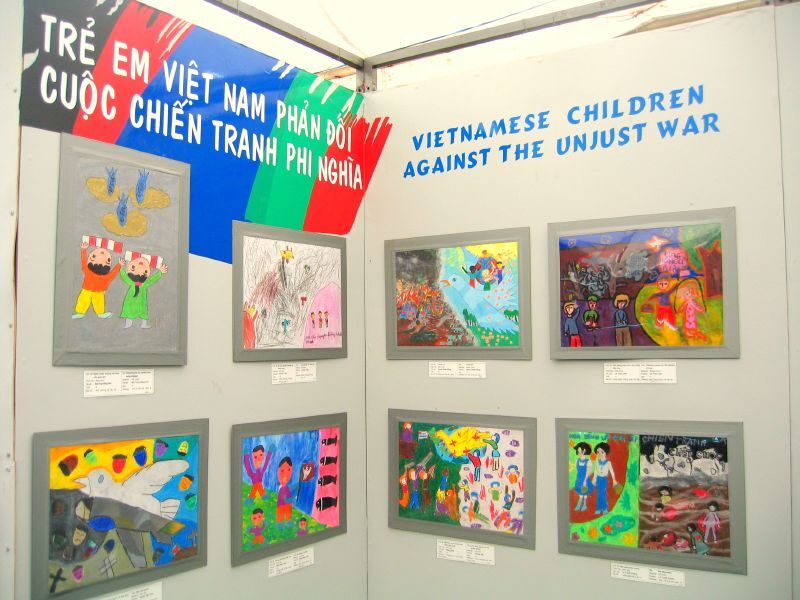
Room 5, the White Doves (Bồ Câu Trắng), is a hands-on education room for children, with a much lighter touch. If you are visiting with children, this is the room to bring them to while another adult goes through the first floor.

The first floor: War Crimes and Agent Orange Effects
Room 6 and room 7 are the hardest rooms in the museum, and they are the reason it has its reputation. Room 8 on this floor is a conference room.
Room 6: War Crimes of the War of Aggression
The room’s introduction quotes the American Declaration of Independence: “all men are created equal”, with the right to “Life, Liberty and the pursuit of Happiness”. What follows, in 125 photographs, 22 documents and 243 objects, is the museum’s charge sheet: the killing of civilians and prisoners, torture, napalm and phosphorus, cluster bombs, and General Curtis LeMay’s 1965 line about bombing North Vietnam “back into the Stone Age”.
Its best-known section covers Sơn Mỹ, the village complex in Quảng Ngãi known in English as Mỹ Lai. On 16 March 1968 soldiers of the U.S. Army’s Charlie Company killed hundreds of unarmed villagers there. Among the photographs on the wall are those of Ronald Haeberle, an Army photographer who carried his own camera that day; his pictures appeared in the Cleveland Plain Dealer in November 1969 and in Life soon after.
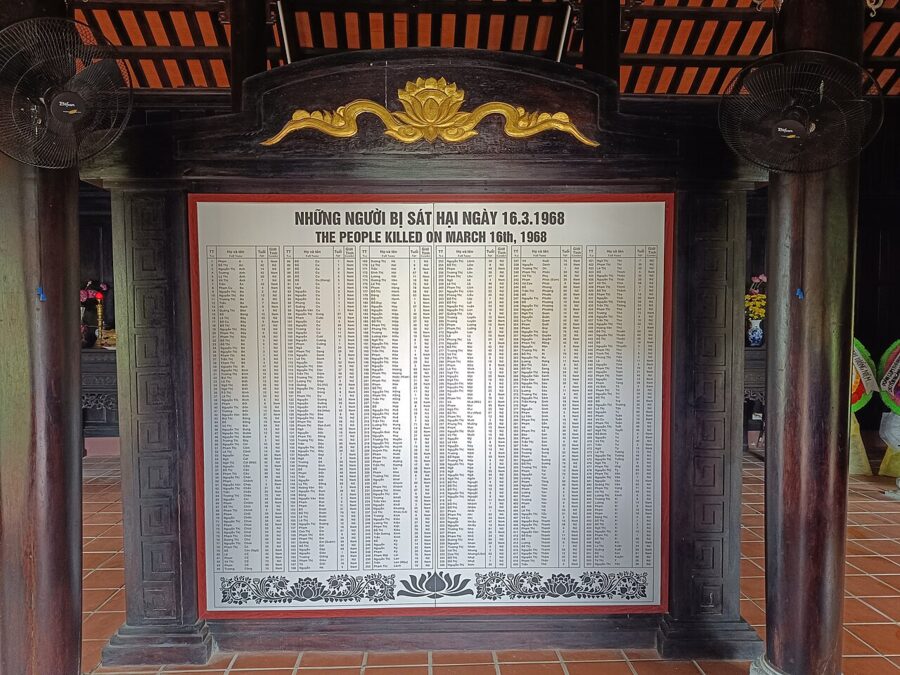

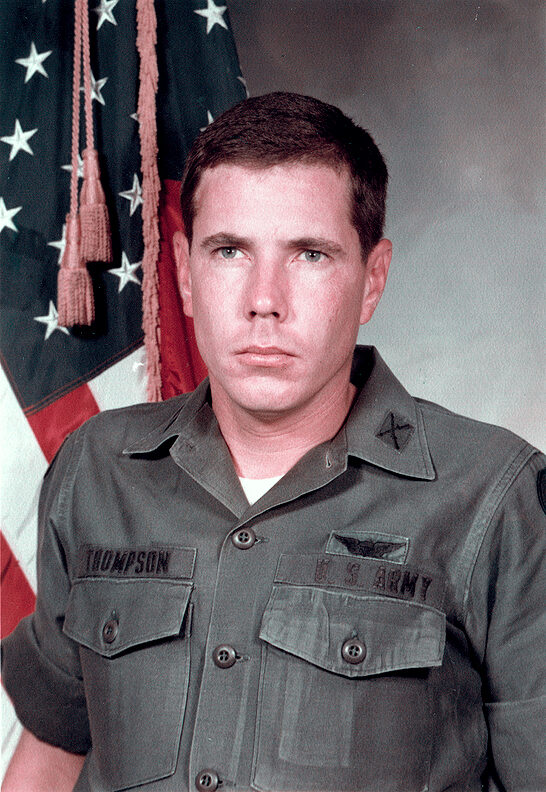
Only one soldier, Lieutenant William Calley, was convicted, in 1971, and he served about three and a half years, most of it under house arrest. Two things are worth adding as you read. An American helicopter pilot, Hugh Thompson, landed between the soldiers and the villagers and stopped part of the killing, and it was an American reporter, Seymour Hersh, and the Army’s own inquiry that brought the massacre to light.
Another display tells a story that is still argued over. On the night of 25 February 1969 a Navy SEAL team led by Lieutenant Bob Kerrey, later a senator for Nebraska, raided Thạnh Phong village in Bến Tre province, and women and children died. The museum’s panel lists the names and describes the unit as Army rangers; they were Navy SEALs. Kerrey acknowledged the deaths in 2001 but said his men had come under fire; a member of his team gave a different account.
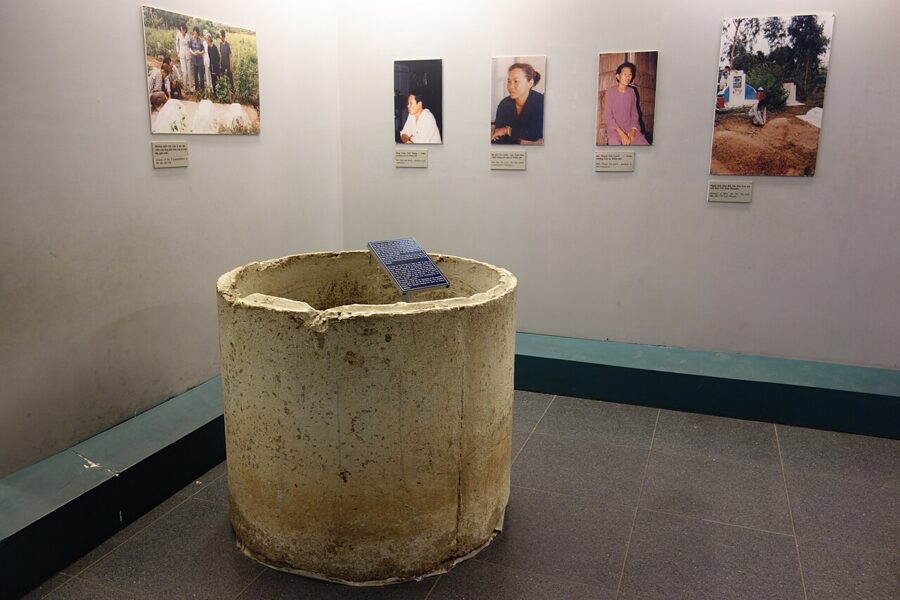

Room 7: Agent Orange Effects
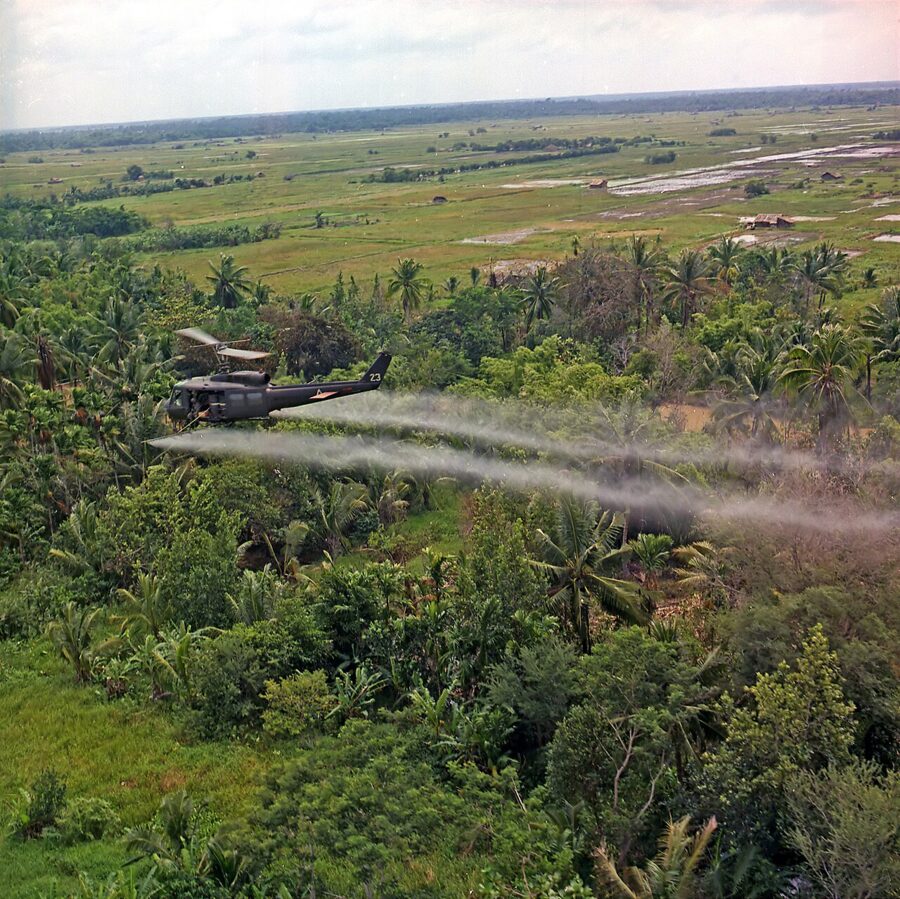
Between 1961 and 1971, in an operation called Ranch Hand, American aircraft sprayed herbicides over the forests and crops of the south. The room’s figures are blunt: more than 100 million liters of chemicals, 65 percent of it Agent Orange carrying 386 kilograms of dioxin, over 2.6 million hectares, and between 2.1 and 4.8 million Vietnamese affected.
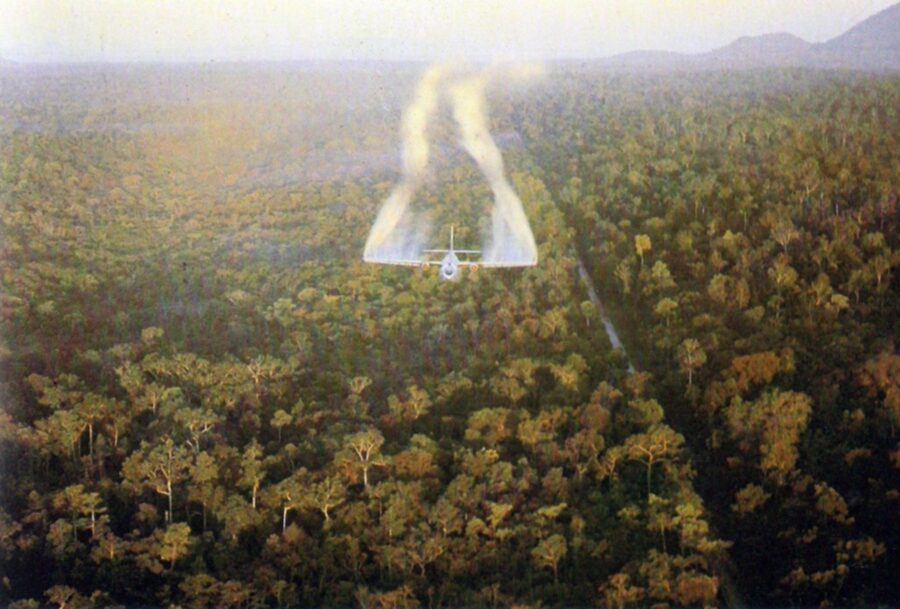
Other sources refine those numbers rather than overturn them. A Columbia University team that went through U.S. military spraying records in 2003 put the herbicides at about 77 million liters, and it estimated that between 2.1 and 4.8 million people lived in hamlets that were sprayed directly. That range measures exposure, not illness; the museum’s wording turns it into harm, which is a claim the science cannot settle village by village.
The photographs of children born with severe disabilities are the reason many people leave this room early, and the glass jars holding deformed fetuses are the reason others never enter it. The room also shows victims at work, at school and in rehabilitation, which is easy to miss if you move fast.

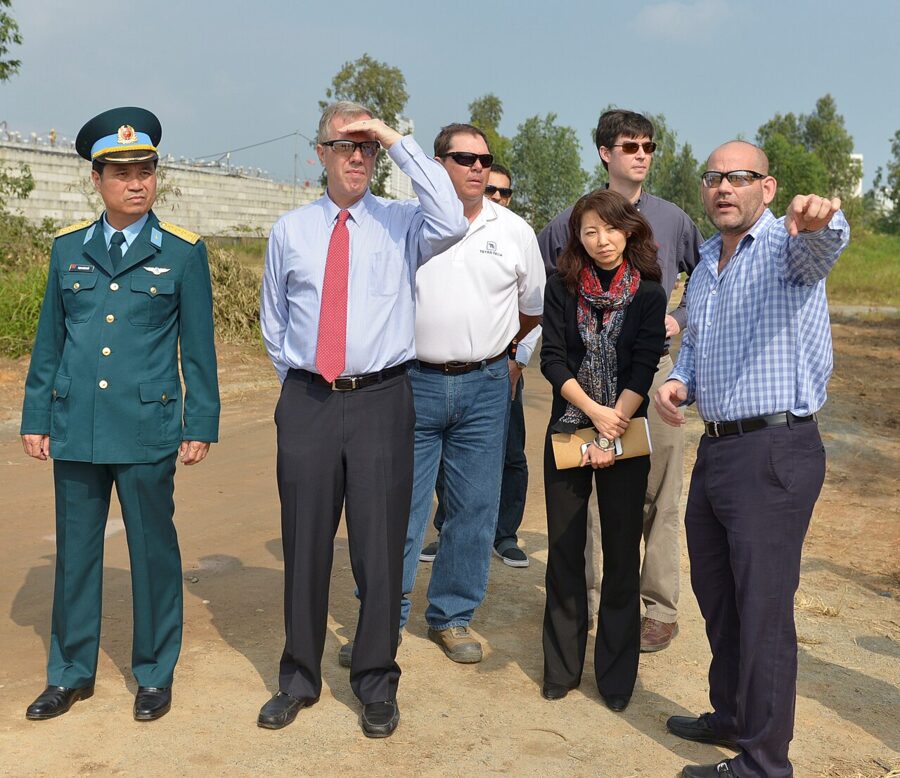
What the room leaves out is the American story that runs alongside. The United States government recognizes a long list of diseases as linked to Agent Orange for its own veterans, and chemical makers settled a class action by American veterans in 1984. Vietnamese victims’ lawsuits against the same companies were dismissed in American courts between 2005 and 2009, and a French court rejected a similar case in 2021, a ruling upheld on appeal in 2024. Washington paid to clean the dioxin from Đà Nẵng airport, finished in 2018, and started on the Biên Hòa air base in 2019.
The ground floor and the prison building
Back on the ground floor, room 9 covers the worldwide movement against the war, room 10 holds temporary exhibitions, and room 11, in the low building along the left side of the yard, is the prison exhibition.
Room 9: The World Supports Vietnam
The 100 photographs and 145 documents and objects in room 9 show that movement at work: rallies on every continent, the United States included, and posters, banners and badges. The most affecting cases hold memorabilia given by American veterans who came back to Vietnam, in the museum’s words, to show their respect for the Vietnamese people and their regret at having fought.

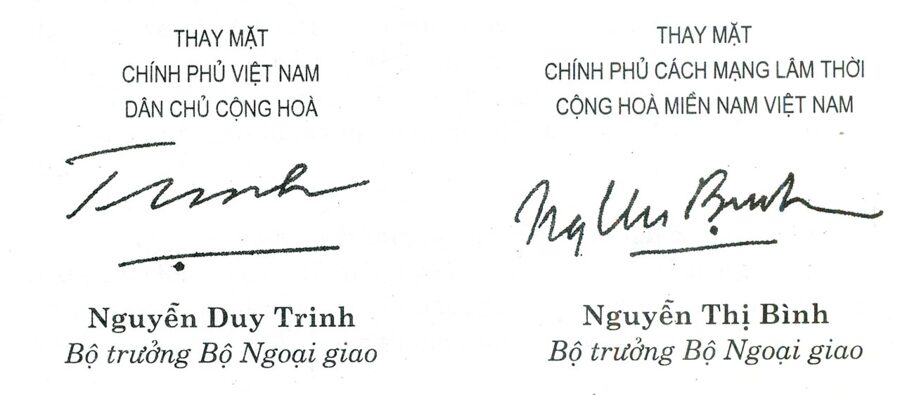
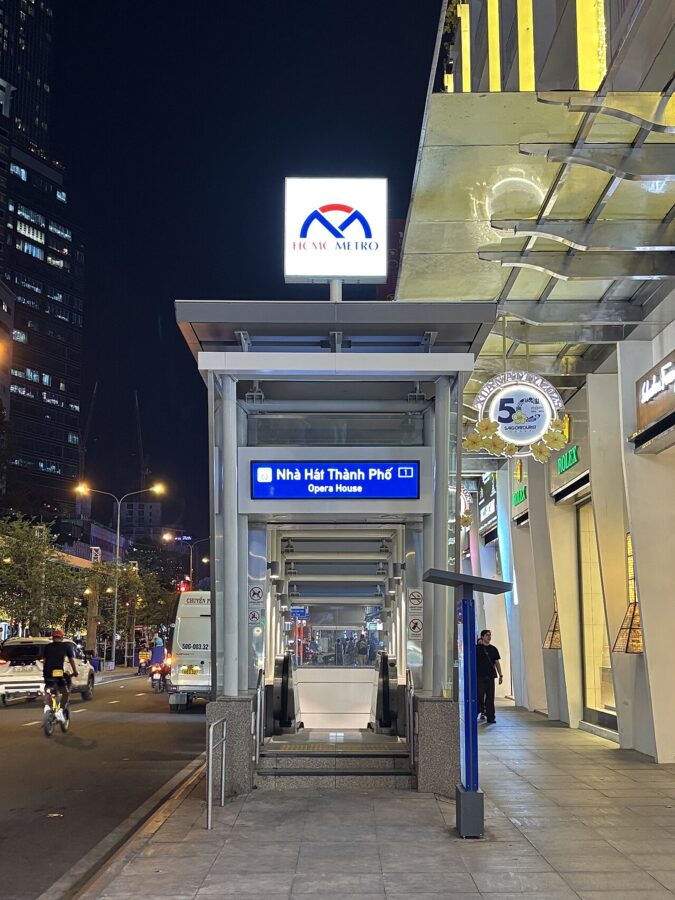
Room 10 changes several times a year. In 2026 it held exhibitions on Nguyễn Thị Bình, the only woman to sign the 1973 Paris peace agreement, and on the youth volunteers who kept Route 1C open in the southwest; in late 2025 it showed southern food during the resistance war. The museum also travels: in May and June 2026 it set up an exhibition on children in wartime in the Opera House metro station under the Municipal Theatre (Nhà hát Thành phố). Check the museum’s website before you go if a particular exhibition is the reason for the visit.
Room 11: Tiger cages and the guillotine
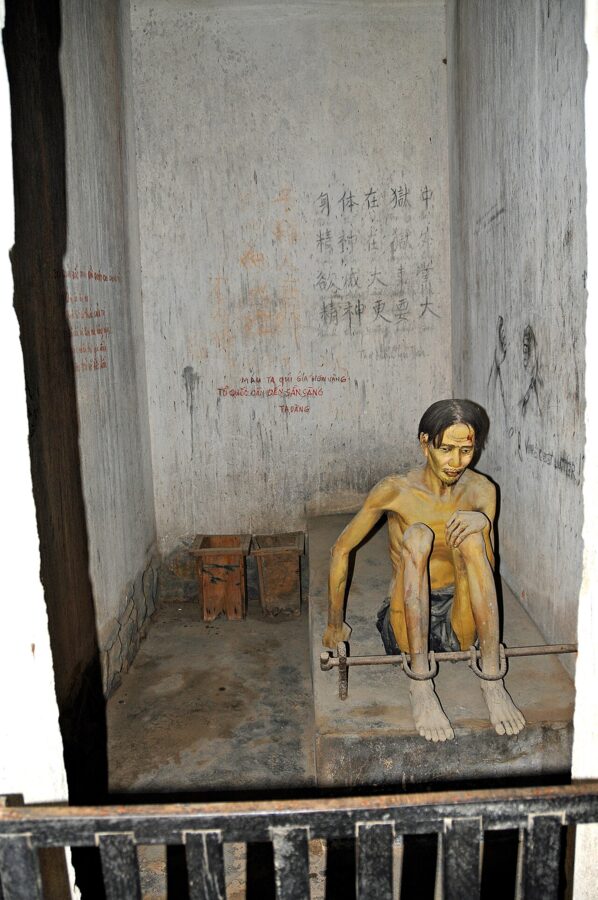
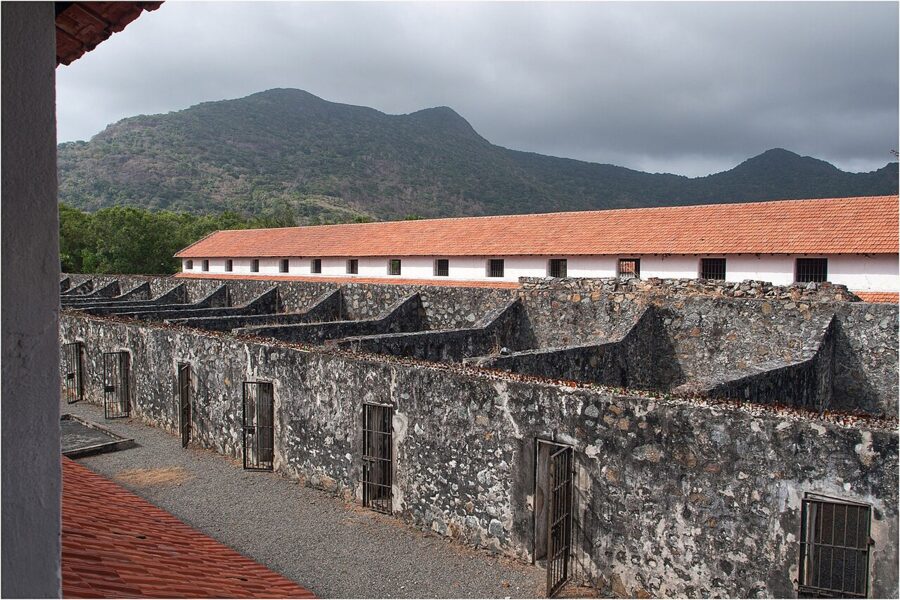
The prison building presents what the museum counts as more than 200 prisons run by the Saigon government with American support, among them Côn Đảo, Phú Quốc, Chí Hòa, Tân Hiệp and Thủ Đức. It holds 40 photographs, maps and 21 objects, including shackles and instruments of torture, and a walk-through reconstruction of the “tiger cages” (chuồng cọp).
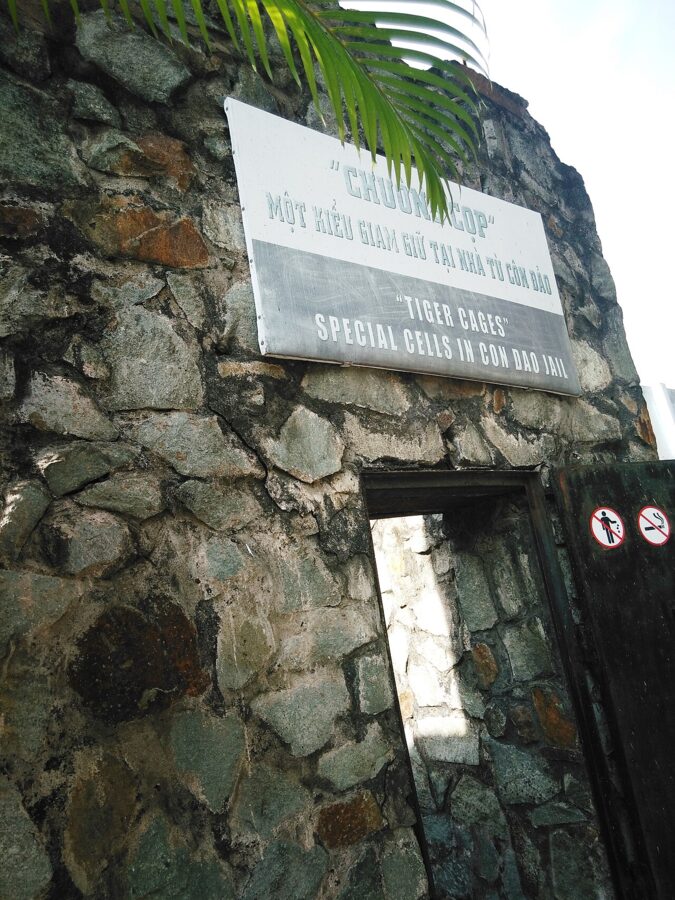

The original cages on Côn Sơn island were built by the French in 1940. They became known abroad in July 1970, when two American congressmen on a fact-finding trip were taken to the prison and an aide, Tom Harkin, and the aid worker Don Luce, who had guided them in, slipped away from the official tour and photographed the cells. Life magazine published the pictures, and the scandal fed the American antiwar movement.


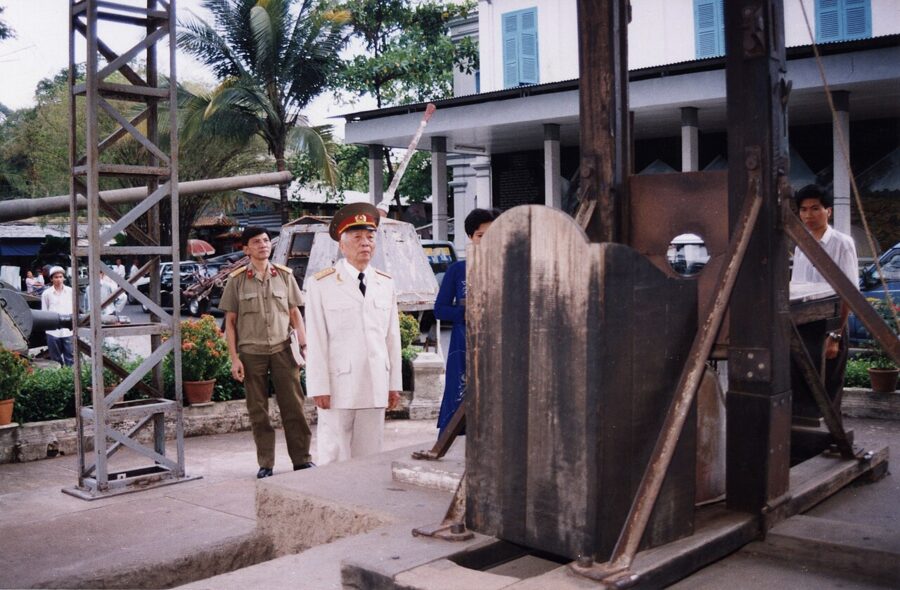
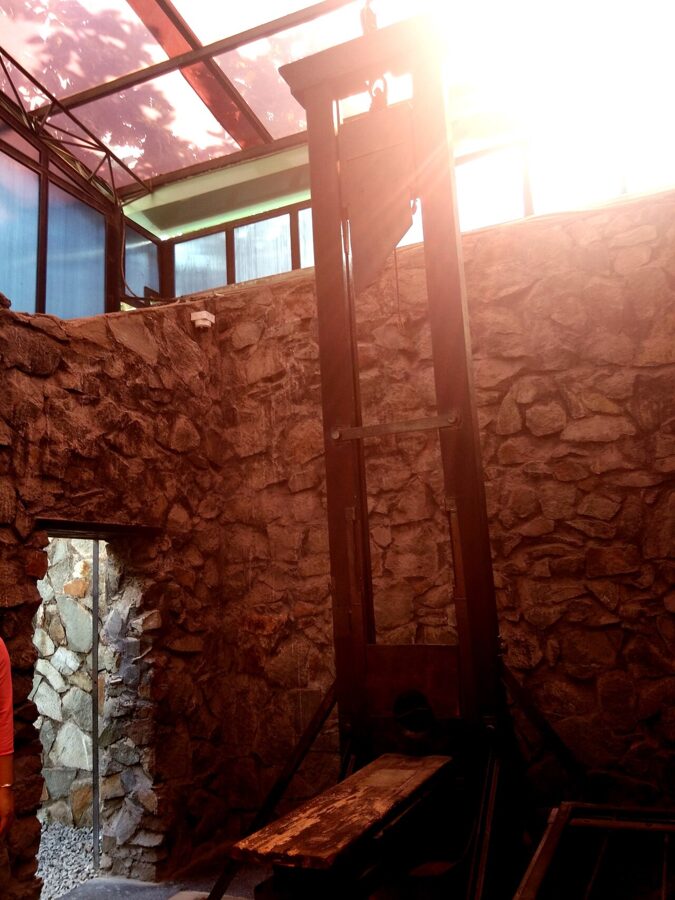
Then there is the guillotine. French colonial courts brought it to Indochina, and Ngô Đình Diệm’s government used guillotines under a 1959 law against communists, carrying them from province to province; the museum says this one was last used in 1960. It once stood outdoors near the main gate and is now shown inside the prison building.

How the museum tells its story, and how to read it
The museum is a city institution under Ho Chi Minh City’s Department of Culture and Sports, and it says plainly what it is for: to research and display the evidence of wars of aggression in Vietnam, and to teach opposition to “unjust” war. It is not trying to be balanced. Its rooms are arranged by theme, not chronology, and almost everything in them is a photograph or a document offered as proof.
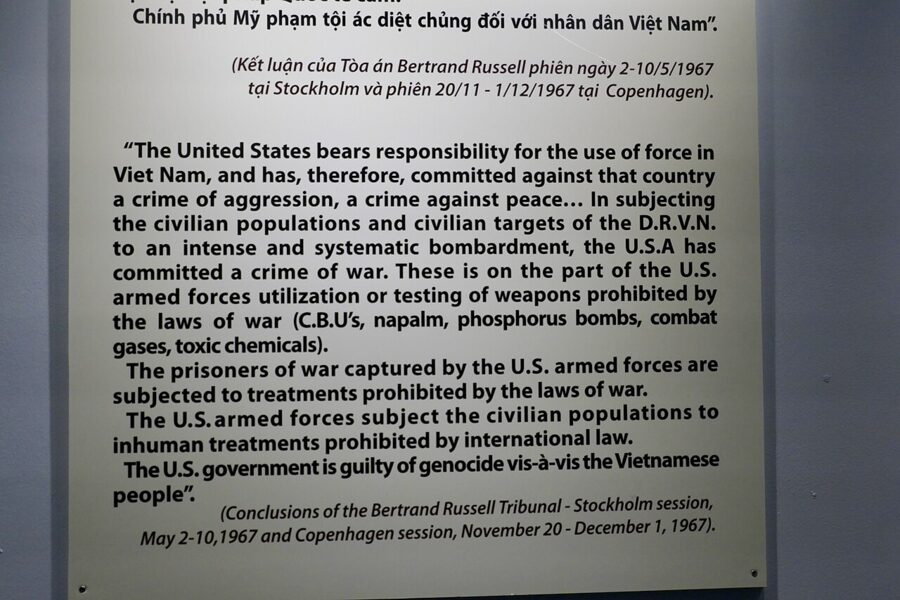

The anthropologist Christina Schwenkel, who studied the museum for her book “The American War in Contemporary Vietnam” (2009), points out how much of that proof was made by foreigners, including Americans, and how it is shown with little context, as if it could speak for itself. Photographs taken for Life, the Associated Press or the U.S. Army are hard for an American visitor to wave away as someone else’s propaganda. The historian Scott Laderman, in “Tours of Vietnam” (2009), turned the question around and showed how quickly Western guidebooks labeled the museum propaganda while taking American accounts of the war on trust.
Read it that way and the rooms become clearer. What they show is, for the most part, documented and widely accepted, from Mỹ Lai to the spraying. What they leave out is as telling. There is almost nothing on the South Vietnamese army’s own dead, on the killing of civilians by communist forces at Huế in 1968, on the re-education camps after 1975 or on the boat people; older rooms on “counter-revolutionary” crimes have gone from the current route.
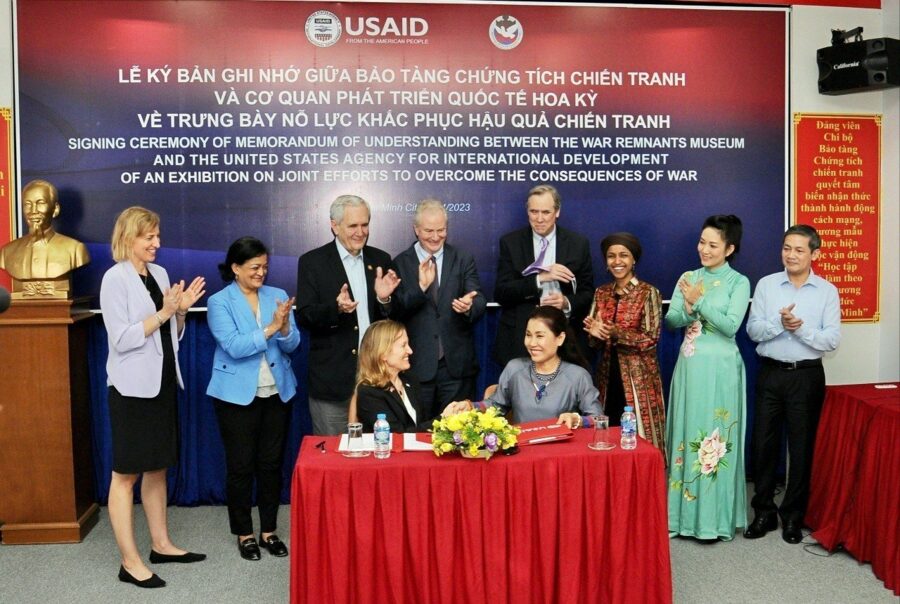

The museum is also changing. A gallery of Vietnamese and American cooperation on war legacies was agreed in 2023, the museum describes itself as a “museum for peace”, and its recent temporary rooms have looked at food, women and youth rather than at atrocity. The permanent rooms upstairs have hardly moved.

Before you go: children, weight and photography
Budget your attention. The yard and the second floor are manageable for most adults; rooms 6 and 7 on the first floor show dead and maimed people, including children, in close detail. It is entirely reasonable to walk through room 7 without stopping, or to skip it.
For children, the museum’s rule is that under-10s must be with an adult at all times. Keep children under about twelve to the yard, the ground floor and the White Doves room, and to look at rooms 6 and 7 first yourself if you are unsure about older ones.
Photography is allowed in the galleries without flash. Tripods and selfie sticks are banned, and professional filming needs advance registration. Do not touch the objects or lean on the cases; there is no eating, drinking or smoking in the exhibition areas, and large bags go in lockers. The rules ask for clothes that respect the setting; everyday city clothes are fine, beachwear is not.
How to visit
| Address | 28 Võ Văn Tần, Xuân Hòa Ward (formerly Ward 6, District 3), Ho Chi Minh City. Parking at the back gate on Lê Quý Đôn. |
|---|---|
| Hours | 7:30am to 5:30pm every day, including public holidays, with no lunch closure. The ticket counter closes at 5pm. |
| Tickets | From 1 October 2026: 60,000₫ (about US$2.30) for Vietnamese and foreign adults; 30,000₫ for older people, people with severe disabilities and other groups eligible under Vietnamese law, with documents. |
| Free entry | Children, collected at the counter; school pupils and students who register online before the visit and bring ID and a student card; people from poor and near-poor households. |
| Online | Tickets can be bought on the museum’s website up to 30 days ahead, up to 20 per order, by card or Vietnamese e-wallet. The QR ticket is emailed and is valid only on the date chosen. |
The price rose from 40,000₫ on 1 October 2026 under a new city fee schedule for its museums. The free entry for students is part of the same change; the museum’s pages do not say whether foreign student cards qualify, so expect to pay the full price if you are a student from abroad. Refunds are given only for cancellations at least 24 hours before the visit date.
Getting there
Grab or Be will take you to the gate at 28 Võ Văn Tần; the drop-off on the street is easy and the ride from the backpacker streets around Phạm Ngũ Lão takes about ten minutes outside rush hour. On foot, it is about ten minutes from the Reunification Palace (Dinh Độc Lập): follow Nguyễn Thị Minh Khai street to Lê Quý Đôn, turn right, and the museum fills the next corner, at Võ Văn Tần.
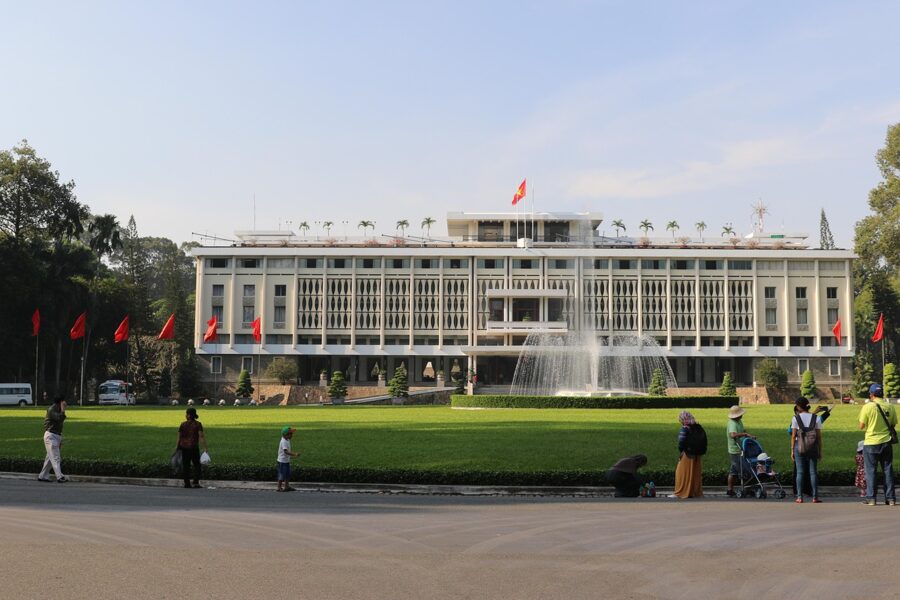
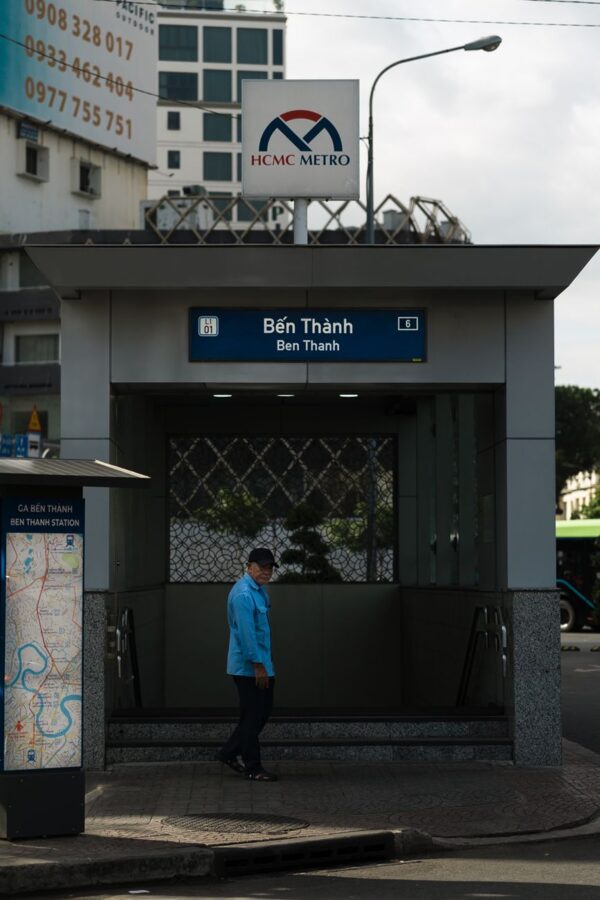
Metro Line 1, which opened in December 2024, does not come close. The nearest station is Bến Thành, about 1.4 kilometers away on foot, a 20-minute walk past the palace grounds, or a short Grab ride. It is useful if you are staying out along the line toward Thủ Đức.
How long, when, and what to pair it with
Allow two to three hours. Ninety minutes is enough for the yard, Requiem and a walk through the first floor; a full reading of every room takes most of a morning. Go at 7:30am on a weekday, when the yard is cool and the groups have not arrived, and avoid the days around 30 April and 2 September, when domestic visitors pack the rooms. There is a café inside the grounds for a break between floors.
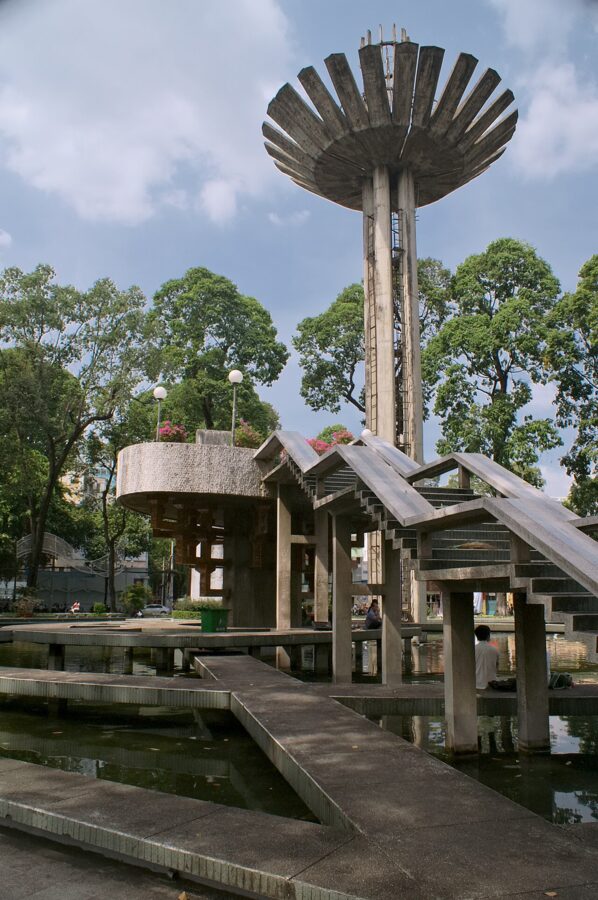
The Reunification Palace is the obvious companion, and the Notre-Dame Cathedral and the Central Post Office are about a 13-minute walk east. Bến Thành Market is a little further south, and Turtle Lake (Hồ Con Rùa), a roundabout with a pool and snack sellers, is eight minutes north. If the museum leaves you wanting to see the war from the guerrilla side, the Cu Chi Tunnels are the next step, a half-day out of the city.

On the way out, look again at the lettering on the jets in the yard. The paint is wrong, the planes are real, and both facts belong to the story the museum tells.